
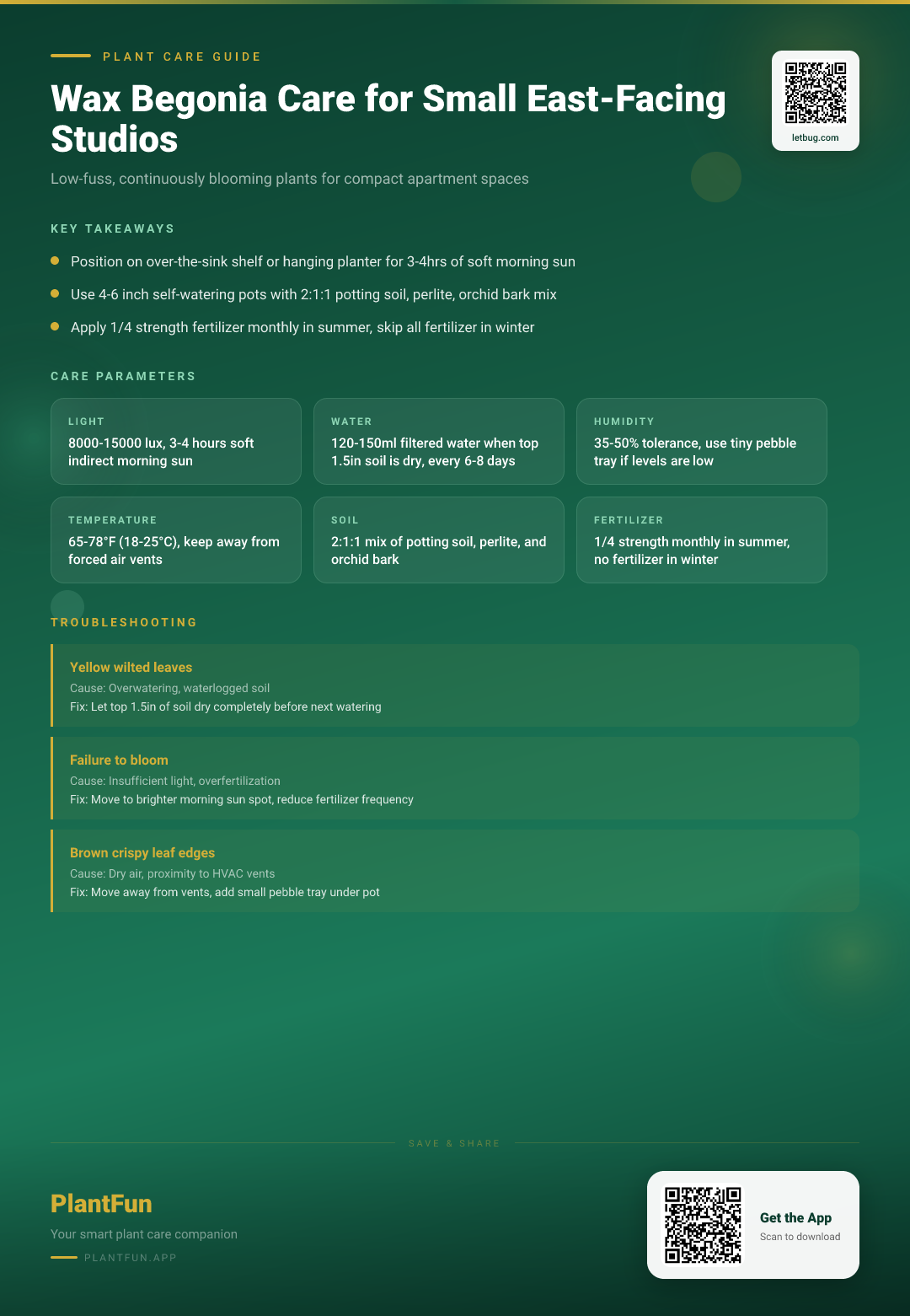
Key Takeaways
- Check soil moisture before watering — overwatering is the #1 killer of houseplants.
- Ensure your plant gets the right amount of light for its species.
- Be patient with recovery — most plants need 2–4 weeks to bounce back.
Quick Care Card (3x5 Printable Fridge Magnet Size)
| Care Parameter | Measurable Threshold | Small Studio Note |
|---|---|---|
| Light | 8,000–15,000 lux (3–4 hours soft morning sun) | Fits on narrow windowsills or over-sink shelves |
| Water | 120–150ml room-temperature filtered water when top 1.5in of soil is dry | No fancy watering cans needed; use a repurposed plastic bottle |
| Humidity | 35–50% | No humidifier required; tolerates standard apartment dry air |
| Temperature | 65–78°F (18–25°C) | Matches typical indoor apartment temperatures year-round |
| Soil | 2:1:1 mix of potting soil, perlite, orchid bark | Buy pre-portioned small bags to avoid storage clutter |
| Fertilizer | 1/4 strength liquid fertilizer, monthly spring/summer only | Skip in winter to avoid overfeeding |
| Toxicity | Non-toxic to cats, dogs, and humans | Safe for studio spaces with pets or small children (ASPCA, 2026) |
Why Wax Begonias Are Perfect for Small East-Facing Studios
Wax begonias (Begonia semperflorens) are made for small east-facing studio living, with a compact growth habit that tops out at 12 inches tall and wide, no sprawling vines or oversized foliage to take up limited counter or shelf space. A 2021 study of Begonia species as indoor potted plants found they thrive in low to moderate light levels and average humidity, aligning perfectly with the conditions most renters deal with (Hanum et al, 2021).
Myth vs Reality: Many generic begonia care guides claim begonias need high humidity and bright direct sun to bloom, but wax begonias are uniquely adapted to 35–40% humidity, the average for heated and cooled studio apartments. They are also non-toxic to pets and children per the ASPCA (2026), making them a low-risk choice for small shared spaces. This guide is designed specifically for wax begonia care for beginners who don’t want to invest in bulky, expensive care equipment.
Step-by-Step Weekly/Monthly Care Checklist
All tasks require no specialized supplies and take 5 minutes or less to complete, perfect for busy renters:
Weekly Tasks
- Perform the finger moisture test: stick your index finger 1.5in into the soil; if completely dry, water with 120–150ml of room-temperature filtered water
- Pluck any wilted blooms or yellowed leaves and discard to prevent mold growth in low-ventilation studio spaces
- Wipe leaf surfaces with a damp paper towel to remove dust, which improves light absorption for more consistent blooms
Monthly Tasks
- If in growing season (March–September), feed with 1/4 strength liquid fertilizer mixed into your regular watering
- Rotate the pot 180 degrees to encourage even, bushy growth and prevent leaning toward the window
- Check leaf undersides for tiny aphids or mealybugs; wipe with rubbing alcohol on a cotton swab if spotted
Quarterly Tasks
- Refresh the top 1in of soil with fresh potting mix to replenish nutrients, no full repotting needed for 2+ years
Measurable Light Requirements for Studio Placement
Wax begonia light requirements fall between 8,000–15,000 lux, which is exactly the light level of an east-facing window 1ft from the glass (Hanum et al, 2021). This delivers 3–4 hours of soft morning sun, no scorching midday rays that burn leaves.
Addressing the common question: can wax begonias grow in low light? They tolerate down to 6,000 lux, but blooming will slow; if your window is shaded, add a small 5W clip-on grow light (no full-size grow lights needed) clipped to your windowsill for 2 extra hours a day.
Small space begonia placement tips for studios: use 2in wide command hook hanging planters, over-the-sink floating shelves that don’t take up counter space, or narrow windowsill ledges. Avoid placing more than 3ft away from the east-facing window, as light levels drop off sharply beyond that point. This setup is ideal for wax begonia in east-facing apartment spaces, and will help you figure out how to get wax begonias to bloom indoors consistently.
Exact Watering Guidelines for Average Apartment Humidity
Answering the top question for new owners: how often to water wax begonia? For 35–40% average apartment humidity, water 120–150ml only when the top 1.5in of soil is completely dry, which works out to every 6–8 days (Kim et al, 2022).
Quick test: stick your index finger into the soil up to the second knuckle; if the soil is dry at that depth, it’s time to water. Water directly at the base of the plant, avoid getting leaves wet to prevent powdery mildew, which is common in poorly ventilated studios. No fancy watering cans needed: repurpose a 16oz plastic soda bottle with a small hole poked in the cap for targeted watering, no extra storage required.
Space-Saving Soil & Potting Tips
Use 4–6 inch self-watering pots, which are narrow enough to fit on 6in wide shelves and cut down on watering frequency by 30%, so you don’t have to remember to water as often. Soil mix: 2 parts all-purpose potting soil, 1 part perlite, 1 part orchid bark, which provides excellent drainage to prevent root rot.
Buy pre-portioned 1-quart bags of each component, so you don’t have to store large 5-gallon bags of soil in your small studio. Only repot when roots are growing out of the drainage holes at the bottom of the pot, which is typically every 2 years. When repotting, only use a pot 1in larger than the current root ball to avoid overpotting.
Temperature & Humidity Hacks Without Bulky Equipment
Ideal temperature range for wax begonias is 65–78°F (18–25°C) (Hanum et al, 2021), which is exactly the temperature most people keep their studios at year-round, so no adjustments needed.
Answering the common question: do wax begonias need high humidity? No! They tolerate 35–50% humidity perfectly, so you don’t need to buy a bulky humidifier that takes up counter space. If your humidity drops below 35% in the winter, use the tiny pebble tray hack: take a 4in saucer (fits under your pot, no extra space needed), fill it with small pebbles, add water just below the top of the pebbles, and set your pot on top. The slow evaporation boosts local humidity around the plant by 5–10% for free, no electricity required. This is perfect for wax begonia apartment care in dry climates.
Seasonal Care Calendar for Apartment Begonias
Adjust your care routine slightly based on the season to keep your plant blooming year-round:
- Winter (October–February): Follow wax begonia winter care guidelines: reduce watering to every 10–12 days, skip fertilizer entirely, move the pot 6in away from drafty window edges to avoid cold damage.
- Summer (June–August): Follow wax begonia summer watering guidelines: increase watering to every 5–6 days, feed with 1/4 strength liquid fertilizer once a month, pluck wilted blooms twice a week to encourage more flowering.
- Spring/Fall (March–May, September–November): Stick to the regular 6–8 day watering schedule, add fertilizer only in early spring to kick off blooming season.
Common Small-Apartment Begonia Mistakes to Avoid
- Mistake: Placing your wax begonia near forced air vents, radiators, or space heaters. What happens: The dry, moving air pulls moisture from leaves, causing crispy edges and early bloom drop. Instead: Keep your plant at least 2ft away from all heating/cooling vents, and use the pebble tray hack if you have limited placement options.
- Mistake: Overpotting your wax begonia in a large pot to skip repotting for a few years. What happens: Excess soil holds too much moisture around the roots, leading to root rot, stunted growth, and no blooms. Instead: Use a pot only 1in larger than the root ball when repotting, and opt for a self-watering pot to reduce repotting frequency to once every 2 years.
- Mistake: Leaving fallen blooms and leaves on the soil surface. What happens: In poorly ventilated small studios, the decaying organic matter grows mold and attracts fungus gnats that can spread to your other houseplants. Instead: Pluck fallen foliage and blooms once a week and discard them in the trash or compost bin.
- Mistake: Using unfiltered tap water with high chlorine or fluoride levels. What happens: Chemicals in tap water build up in the soil, causing brown leaf tips and crispy foliage that looks burnt. Instead: Use filtered water, or leave tap water out in an open cup overnight to let chlorine evaporate before watering.
FAQ
Can I keep a wax begonia on my studio windowsill that only gets morning sun?
Yes! That is the exact ideal setup for wax begonia in east-facing apartment spaces. The 3–4 hours of soft morning sun delivers 8,000–15,000 lux, the perfect light level for consistent blooming and bushy growth (Hanum et al, 2021). You can expect 10+ months of blooms a year with this placement, no extra grow lights needed.
Why are my wax begonia leaves getting crispy in my dry apartment?
Crispy leaves are one of the most common issues for indoor wax begonias, and are usually caused by one of three easy-to-fix issues: too much direct midday sun, placement near a forced air vent, or consistent underwatering (Kim et al, 2022). First, check the soil moisture with the finger test to rule out underwatering, then move your plant at least 2ft away from any heating/cooling vents, and add a small pebble tray to boost local humidity if needed.
How often do I need to water my wax begonia if I don’t have a humidifier?
You don’t need a humidifier for wax begonia care, as they tolerate 35–40% average apartment humidity perfectly. For most studios, you will water 120–150ml every 6–8 days when the top 1.5in of soil is dry. In winter, reduce watering to every 10–12 days, and in summer, increase to every 5–6 days as temperatures rise and soil dries out faster.
References
- ASPCA. (2026). Toxic and Non-Toxic Plants List — ASPCA. https://www.aspca.org/pet-care/animal-poison-control/toxic-and-non-toxic-plants. Accessed 2026-02-26.
- Hanum, S.; Rahayu, A.; Darma, I. (2021). Begonia muricata Blume and Begonia serratipetala Irmsch durability as indoor pot plant in Eka Karya Bali Botanic Garden. Berkala Penelitian Hayati. https://doi.org/10.23869/bphjbr.26.2.20217. Accessed 2026-02-26.
- Kim, S.; Kim, S.; Lee, H. (2022). First report of zucchini yellow mosaic virus infecting wax begonia (Begonia semperflorens) in Korea. Journal of Plant Pathology. https://doi.org/10.1007/s42161-022-01276-y. Accessed 2026-02-26.
Optional Helper: Plantfun.App
Plantfun.App identifies your plants by photo, diagnoses pests and diseases with clear fixes, and creates personalised watering and light schedules that adapt to your home conditions — a handy companion for putting this guide into daily practice.
Found an error or have suggestions? We'd love your feedback.
Need help identifying this problem?
Get instant identification, personalized care schedules, and effective pest treatment plans directly on your phone.
Sponsored • We may earn a commission from app downloads
Related Guides
The Complete Wax Begonia Care Guide for Typical Apartments: Easy Resilient Growth Year-Round
Grow lush, blooming wax begonias in your apartment no green thumb required. Get exact light levels, watering amounts, and a seasonal calendar to prevent leaf drop and boost blooms all year.
Care GuideThe Complete Wax Begonia Care Checklist for Small Low-Light Apartments: Budget-Friendly Resilient Growth
Stop struggling to keep your wax begonia thriving in a dark small apartment. Get 8 budget-friendly care tips, measurable thresholds, and a seasonal checklist for year-round blooms.
Care GuideWax Begonia Care Checklist: 9 Actionable Steps for Resilient Growth in East-Facing Apartments
Stop guessing at wax begonia care for your east-facing apartment. Get 9 actionable checklist steps, exact light, water, and humidity thresholds to grow lush, blooming plants year-round.
Pest ControlAnts on Plants: What They Mean and What to Do
Ants usually aren't eating your plant. They are farming other pests.