
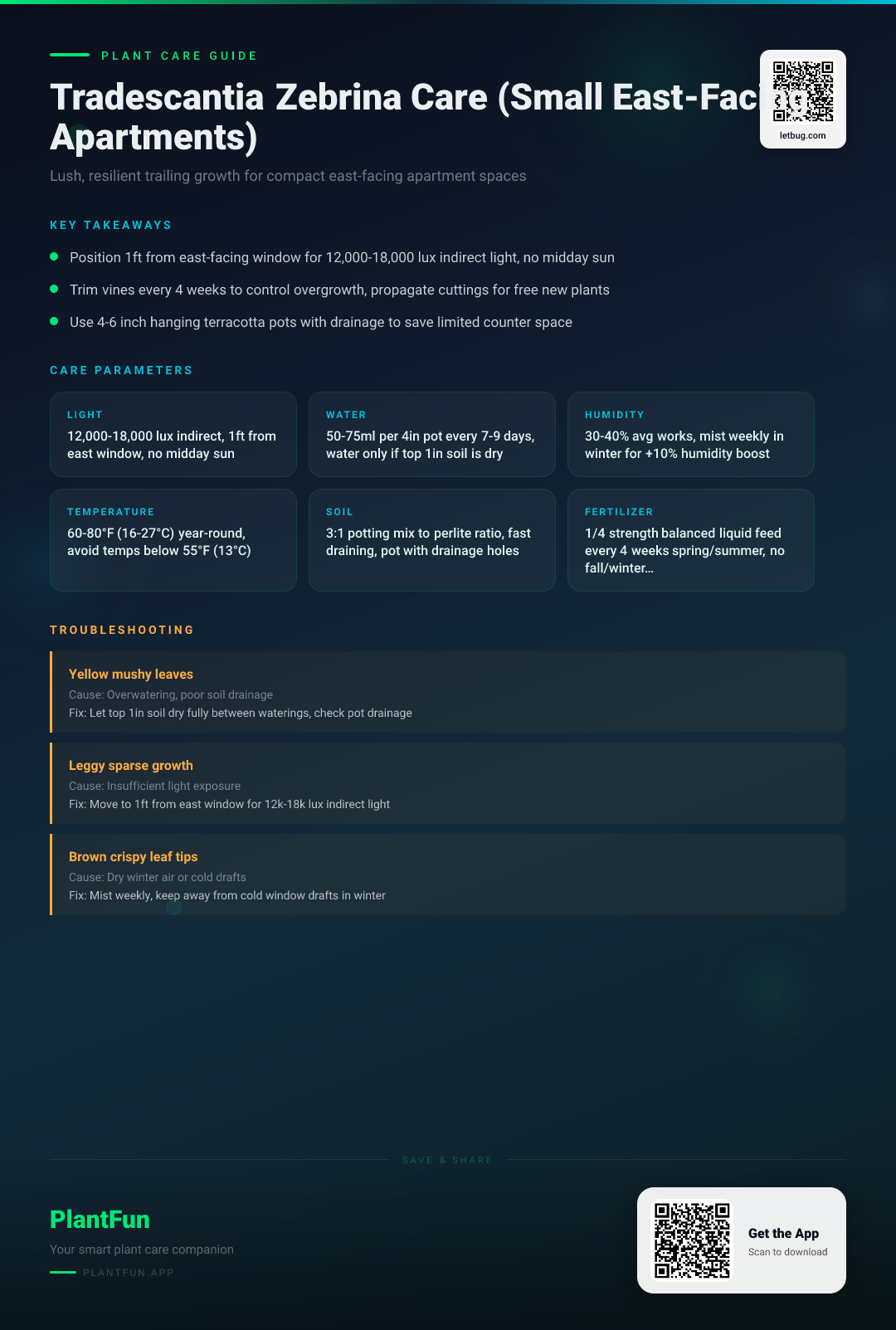
Key Takeaways
- Check soil moisture before watering — overwatering is the #1 killer of houseplants.
- Ensure your plant gets the right amount of light for its species.
- Be patient with recovery — most plants need 2–4 weeks to bounce back.
Quick Care Card
| Care Factor | Threshold for Small East-Facing Apartments |
|---|---|
| Light | 12,000-18,000 lux, 1ft from east-facing window, no midday direct sun |
| Water | 50-75ml per 4-inch pot every 7-9 days, only when top 1 inch of soil is fully dry |
| Humidity | 30-40% (typical apartment level) is sufficient; 10% boost via weekly misting in winter |
| Temperature | 60-80°F (16-27°C) year-round, no exposure below 55°F (13°C) |
| Soil | 3:1 all-purpose potting mix to perlite for fast drainage |
| Fertilizer | 1/4 strength balanced liquid fertilizer every 4 weeks spring/summer; skip fall/winter |
| Pot Size | 4-6 inch hanging terracotta pot with drainage holes |
| Trailing Space | 12-18 inches of vertical clearance for vines |
| Toxicity | Non-toxic to cats, dogs, and humans (ASPCA, 2026) |
Why This Guide Is Different
Generic Tradescantia zebrina care advice often calls for 6+ hours of full sun, large 8+ inch pots, and 50%+ humidity, which is completely unrealistic for renters in <700 sq ft east-facing apartments. A common myth is that this species needs intense light to thrive, but the reality is that east-facing exposures deliver 2-3 hours of gentle morning sun (the exact level this plant prefers) and most rented apartments have consistent 30-40% humidity levels that Tradescantia zebrina tolerates well (NC State Extension, 2026). This guide skips generic filler to deliver space-optimized, measurable care thresholds tailored specifically to your living situation, so you can grow a lush plant without sacrificing counter or walkway space.
Step 1: Light Placement for Small Spaces
Tradescantia zebrina east facing window placement delivers the perfect 12,000-18,000 lux of light this species needs to retain its iconic purple stripes (NC State Extension, 2026). You have two space-saving placement options:
- Window ledge (if you have unused ledge space and no clutter blocking the glass)
- Hanging hook installed 1ft from the window (the best Tradescantia zebrina hanging placement, as it frees up 100% of your counter and floor space)
Quick test: If you can read a book comfortably at the placement spot at 9am without squinting, the light level is ideal. Never place the plant more than 2ft from the window, as light levels drop sharply beyond that point.
Step 2: Watering Routine for Compact Pots
If you’ve ever wondered how often to water Tradescantia zebrina in small pots, this exact routine eliminates guesswork: Give 50-75ml of water per 4-inch pot every 7-9 days, only when the top 1 inch of soil is completely dry. To test, stick your index finger 1 inch into the soil: if no moisture sticks to your skin, it’s time to water. Small pots hold far less soil than standard planters, so overwatering is the #1 cause of root rot in small apartments. Underwatering is always safer than overwatering for this drought-tolerant species (NC State Extension, 2026). Adjust the schedule by 1 day earlier if your apartment is extra dry, or 1 day later if you’ve had a week of rainy, cloudy weather.
Step 3: Soil & Pot Selection for Limited Counter Space
The ideal Tradescantia zebrina pot size for small spaces is 4-6 inches, with hanging terracotta pots being the top choice. Terracotta wicks excess moisture away from roots, preventing rot even if you accidentally overwater, and hanging designs keep the plant entirely off your counters. Use a 3:1 mix of all-purpose potting soil to perlite for fast drainage, which prevents compacted soil in small pots. Never use a pot larger than 6 inches: it will take up unnecessary space and hold excess moisture that can damage roots.
Step 4: Space-Saving Pruning Routine
Tradescantia zebrina pruning for small spaces keeps vines from trailing into walkways, collecting dust, or cluttering your counters, while also encouraging fuller, lusher growth. Follow this routine every 4 weeks:
- Use clean, sharp scissors to snip vines back to 12-18 inches long, cutting 1/4 inch above a leaf node (the small bump where leaves attach to the stem).
- Remove any sparse, leggy growth at the base of the plant to redirect energy to new, colorful foliage.
Pruning above a leaf node triggers the growth of two new vines at the cut point, so your plant will get bushier rather than longer over time (Pizzolato, 2006). This is also the easiest way to learn how to keep Tradescantia from getting leggy. You can propagate the cuttings by sticking them in a small glass of water on your windowsill: they root in 7-10 days, and you can either give them to friends or plant them back in the same pot for a fuller plant without taking up extra space.
Step 5: Humidity & Temperature Adjustments
Tradescantia zebrina humidity requirements are far lower than most tropical houseplants: the typical 30-40% humidity in rented apartments is completely sufficient for healthy growth (NC State Extension, 2026). The only adjustment you need to make is in winter, when central heating can drop humidity to 20-25%: mist the foliage once a week to boost local humidity by 10% and prevent brown leaf edges.
Keep the plant between 60-80°F (16-27°C) year-round, and never expose it to temperatures below 55°F (13°C). Avoid placing the pot directly on the window sill in winter, as cold drafts from window seams can damage leaves.
Step 6: Fertilizing Routine for Small Pots
Small 4-6 inch pots have limited soil volume, so fertilizer salt buildup is a common issue that can burn roots and damage foliage. Use 1/4 strength balanced (10-10-10) liquid fertilizer every 4 weeks only in spring and summer, when the plant is actively growing. Skip fertilizing entirely in fall and winter, when growth slows down. Always water the plant before applying fertilizer to avoid burning dry roots.
Seasonal Care Calendar
Winter (Tradescantia winter care apartment)
- Reduce watering to every 10-12 days, as growth slows and soil takes longer to dry out
- Mist once a week if humidity drops below 30%
- Move the plant 6 inches away from window edges to avoid cold draft exposure
- Skip all fertilizing
Summer (Tradescantia summer watering routine)
- Keep watering every 7-9 days, checking soil moisture more frequently if temperatures exceed 80°F
- Increase misting to twice a week to offset dry, hot air
- Use a free lux meter app to test light levels: if they exceed 20,000 lux, move the hanging hook 6 inches back from the window to avoid leaf scorch
Common Small-Apartment Care Mistakes to Avoid
- Mistake: Watering on a fixed schedule without checking if the top 1 inch of soil is dry What happens: Overwatering leads to root rot, yellow leaves, and mushy stems, the #1 killer of Tradescantia zebrina in small pots Instead: Use the 1-inch finger test every 7 days, and only give 50-75ml of water per 4-inch pot when the soil is fully dry
- Mistake: Placing the plant more than 2ft from the east-facing window to save counter space What happens: Light levels drop below 12,000 lux, leading to leggy growth, loss of purple stripe color, and sparse foliage Instead: Install a low-cost hanging hook 1ft from the window to get ideal light without using counter space
- Mistake: Letting vines grow longer than 2ft to avoid pruning What happens: Vines trail into walkways, get knocked over, collect dust, and grow sparse at the base Instead: Prune vines back to 12-18 inches every 4 weeks to encourage bushier growth and avoid clutter
- Mistake: Placing the pot directly on the window sill in winter What happens: Cold drafts from window seams cause leaf drop and stunted growth Instead: Hang the plant 1ft from the window, or place it on a 2-inch riser if using the ledge to lift it above drafty seams
Voice Search FAQ
Why is my Tradescantia zebrina losing its purple stripe color in my apartment?
The most common cause is light levels below 12,000 lux (NC State Extension, 2026). If your plant is more than 2ft away from your east-facing window, move it to a hanging hook 1ft from the glass, and prune leggy, solid-green growth to encourage new colorful foliage. Overfertilizing can also cause solid green growth, so make sure you only use 1/4 strength fertilizer in spring and summer, and skip it entirely in fall and winter.
Can I hang my Tradescantia zebrina above my kitchen counter to save floor space?
Absolutely, this is one of the best small space Tradescantia care hacks, as long as the spot is 1ft from your east-facing window and gets 12,000-18,000 lux of morning light. The gentle steam from cooking will also provide a small humidity boost the plant loves. Note that Tradescantia zebrina is non-toxic (ASPCA, 2026) so it’s safe around food prep surfaces, kids, and pets.
How often do I need to repot my Tradescantia zebrina if I only have a 4-inch pot?
You only need to repot every 2-3 years, or when you see roots growing out of the drainage holes. To keep it in the 4-inch pot long-term, prune 1/3 of the root ball every 2 years when you refresh the soil, and continue regular pruning of vines to keep growth compact. This lets you keep the plant in a small pot indefinitely without sacrificing health.
References
- NC State Extension. (2026). The Complete Tradescantia Zebrina — NC State Extension Gardener Plant Toolbox. https://plants.ces.ncsu.edu/plants/tradescantia-zebrina/. Accessed 2026-03-09.
- Pizzolato, T. (2006). Procambial Initiation for the Vascular System in the Shoot of <i>Tradescantia zebrina</i> (Commelinaceae). International Journal of Plant Sciences. https://doi.org/10.1086/497842. Accessed 2026-03-09.
- Korn, R. (2008). Quantitative Analysis of the Cross Veins of <i>Tradescantia zebrina</i> hort. ex Bosse (Commelinaceae). International Journal of Plant Sciences. https://doi.org/10.1086/589696. Accessed 2026-03-09.
- ASPCA. (2026). Toxic and Non-Toxic Plants List — ASPCA. https://www.aspca.org/pet-care/animal-poison-control/toxic-and-non-toxic-plants. Accessed 2026-03-09.
Optional Helper: Plantfun.App
Plantfun.App identifies your plants by photo, diagnoses pests and diseases with clear fixes, and creates personalised watering and light schedules that adapt to your home conditions — a handy companion for putting this guide into daily practice.
Found an error or have suggestions? We'd love your feedback.
Need help identifying this problem?
Get instant identification, personalized care schedules, and effective pest treatment plans directly on your phone.
Sponsored • We may earn a commission from app downloads
Related Guides
Tradescantia Zebrina Care Checklist for East-Facing Studio Apartments: Stop Leggy Growth & Yellow Leaves
Keep your Tradescantia zebrina full and vibrant with this apartment-specific care checklist. Get exact light, water, and humidity thresholds to stop leggy growth and yellow leaves fast.
Care GuideThe Budget Tradescantia Zebrina Care Checklist for Resilient Growth in Small Urban Apartments
Grab this zero-cost care checklist to grow full, trailing Tradescantia zebrina in your small apartment, with exact light, water, and humidity thresholds that require no fancy specialty supplies.
Care GuideThe Complete Tradescantia Zebrina Care Checklist for Resilient Growth in Small Urban Apartments
Stop dealing with leggy, yellowing Tradescantia zebrina. Get 7 actionable care steps, exact light/water thresholds, and a printable weekly checklist for lush, resilient growth in your apartment.
Pest ControlAnts on Plants: What They Mean and What to Do
Ants usually aren't eating your plant. They are farming other pests.