
Key Takeaways
- Check soil moisture before watering — overwatering is the #1 killer of houseplants.
- Ensure your plant gets the right amount of light for its species.
- Be patient with recovery — most plants need 2–4 weeks to bounce back.
Quick Care Card
| Parameter | 1-Sentence Rule |
|---|---|
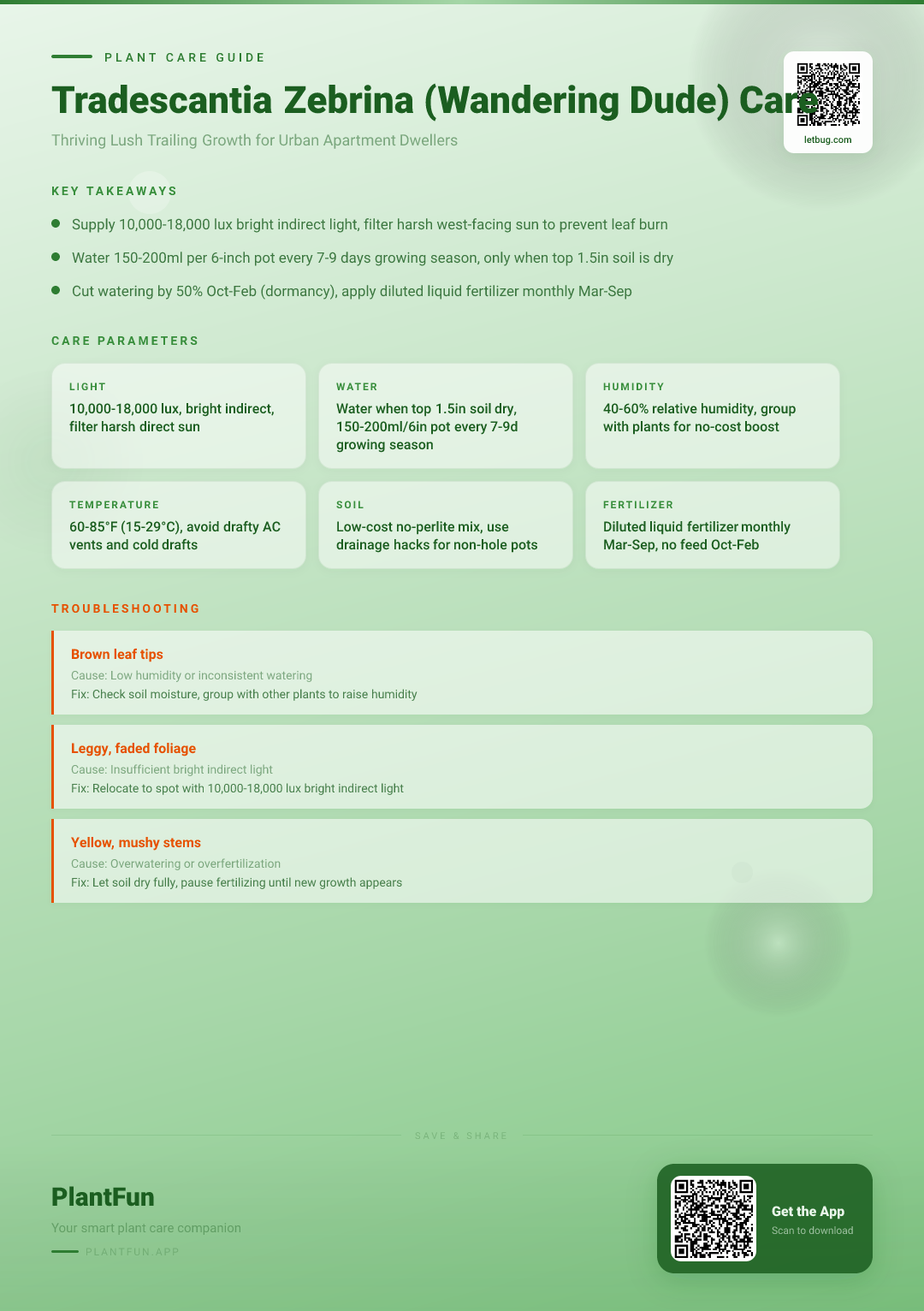
| Light | 10,000–18,000 lux bright indirect light, no direct midday sun to avoid leaf burn |
| Water | Water only when the top 1.5 inches of soil are completely dry, 150–200ml per 6-inch pot every 7–9 days in the growing season |
| Humidity | Tolerates average 35–45% apartment humidity, thrives in 40–60% relative humidity |
| Temperature | Keep in 60–85°F (15–29°C) range, avoid sudden swings over 10°F per hour |
| Soil | 2 parts regular potting mix + 1 part crushed coffee grounds + 1 part crushed eggshells, no perlite required |
| Fertilizer | 1/4 strength diluted all-purpose liquid fertilizer once monthly March–September, no fertilizer October–February |
| Toxicity | Mildly toxic to cats, dogs, and horses if ingested (ASPCA, 2026), keep out of reach of chewing pets |
Why This Guide Exists
Generic Tradescantia zebrina care guides often assume you have controllable humidity, unlimited window space, and permission to modify your rental space — a reality almost no urban apartment renter has. Most city apartments have fluctuating temperatures from constant AC and heating use, average 35–45% indoor humidity, limited south or east-facing window space, and strict rules against drilling holes in walls or pots. This guide is tailored specifically for these conditions, with zero-cost, renter-friendly hacks, measurable thresholds to eliminate guesswork, and a quick weekly checklist designed for busy 9-5 workers who don’t have time for complex plant care routines. If you’ve wondered is Tradescantia easy to care for, the answer is yes — as long as you skip the generic advice and follow these apartment-specific rules.
Step 1: Light Setup for No Leaf Burn
The ideal Tradescantia light levels for apartments fall between 10,000 and 18,000 lux of bright indirect light (NC State Extension, 2026). To test if your spot meets this requirement, hold your hand 6 inches above the plant’s location at 2pm, when sun is strongest: if you see a soft, blurred shadow, it’s perfect; if you see a sharp, defined shadow, it’s too bright, and if you see no shadow at all, it’s too dim. If you only have a harsh west-facing window, use these zero-cost hacks to filter light:
- Hang a white cotton bed sheet or sheer curtain 1 foot in front of the window to diffuse midday sun
- Place the plant 3 feet back from the window, instead of directly on the windowsill Myth vs Reality: Myth: Tradescantia needs full direct sun to develop its signature purple stripes. Reality: Direct midday sun will burn leaf edges and fade its color in 2–3 days, so filtered light is always better for apartment growing.
Step 2: Exact Watering Schedule & Amounts
Wondering how often to water Tradescantia? The rule is simple: water only when the top 1.5 inches of soil feel completely dry (stick your index finger into the soil up to your second knuckle to test). For a standard 6-inch nursery pot, that works out to 150–200ml of water every 7–9 days between March and September, the active growing season (PlantwisePlus Knowledge Bank, 2022). Adjust your schedule using these clear cues:
- If your apartment runs AC 24/7 in summer, check the soil 1 day early; if it’s still damp, wait 2 extra days to water
- If you have 3+ consecutive days of rain, wait 3 extra days to water, as ambient humidity will slow soil drying
- For smaller 4-inch pots, reduce water amount to 75–100ml per watering This Tradescantia summer watering schedule eliminates the guesswork of generic “water when dry” advice.
Step 3: Budget Soil & Renter-Friendly Potting
The best soil for Tradescantia doesn’t require expensive perlite or specialty mixes. Use this zero-to-low cost recipe:
- 2 parts regular, all-purpose potting mix (any cheap brand works)
- 1 part crushed dry coffee grounds (ask for free used grounds at your local coffee shop)
- 1 part crushed, washed eggshells (save your kitchen scraps, crush into small pieces) This mix drains well and adds slow-release nutrients without the cost of specialty amendments. If you want to use a decorative pot with no drainage holes (and can’t drill holes per your rental rules), use this renter-friendly drainage hack: add 1 inch of washed pebbles to the bottom of the decorative pot before setting the nursery pot inside. The pebbles catch excess water so roots never sit in soggy soil, and you won’t get water stains on your rental surfaces.
Step 4: Humidity & Temperature Rules
Tradescantia humidity requirements are far more flexible than generic guides claim: it tolerates the average 35–45% humidity of most urban apartments, and thrives in 40–60% relative humidity (NC State Extension, 2026). You don’t need an expensive humidifier to hit this range: use these zero-cost hacks:
- Group your Tradescantia with 2+ other tropical plants: transpiration from the plants will raise local humidity by 10–15% naturally
- Move it to your bathroom for 1 day after a hot shower to get a quick humidity boost Keep temperatures between 60–85°F (15–29°C), and avoid placing the plant within 3 feet of AC vents, space heaters, or drafty exterior doors, as sudden temperature swings over 10°F per hour will cause leaf drop.
Seasonal Care Calendar
Adjust your care routine month-by-month to match your plant’s growth cycle:
- March–September (Growing Season): Follow the standard 7–9 day watering schedule, add 1/4 strength diluted liquid fertilizer once per month, and rotate the pot 1/4 turn weekly for even growth.
- October–February (Dormancy): This is Tradescantia winter care season: reduce watering by 50% (75–100ml per 6-inch pot every 14–18 days), skip all fertilizer, and move the plant 1 foot closer to your window to compensate for weaker winter light.
Common Mistakes to Avoid
- Mistake: Overfertilizing with full-strength fertilizer every 2 weeks. What happens: Salt buildup in the soil causes brown leaf tips, stunted growth, and root burn, which is one of the top answers to why is my Tradescantia turning brown. Instead: Only use 1/4 strength diluted fertilizer once per month, exclusively in the growing season.
- Mistake: Placing the plant 6+ feet from any window in a dark corner. What happens: Faded purple leaf color, leggy growth with large gaps between leaves, and slowed or stopped growth. Instead: Keep the plant within 3 feet of a north, east, or filtered west/south-facing window.
- Mistake: Placing the plant directly under an AC vent or next to a space heater. What happens: Dry, crispy leaf edges, sudden leaf drop, and increased risk of pest infestations. Instead: Keep the plant at least 3 feet away from all heating and cooling vents.
FAQ
Why is my Tradescantia zebrina getting brown tips even when I water it regularly?
Brown tips have three common causes, even with consistent watering: salt buildup from overfertilizing, prolonged exposure to dry drafts, or consistent humidity below 35% (PlantwisePlus Knowledge Bank, 2022). First, check the top of the soil: if you see a white, crusty residue, it’s salt buildup — leach the soil by running 3x the pot’s volume of water through the soil until it drains out the bottom, then skip fertilizer for 2 months. If there’s no salt residue, move the plant away from any nearby vents, and group it with other plants to raise local humidity.
Can I keep my Tradescantia in my apartment bedroom with no direct sunlight?
Tradescantia can grow in low light, but it will have slower growth, less vibrant purple leaf color, and may develop leggy growth over time (NC State Extension, 2026). If your bedroom only has ambient overhead light, use a cheap 10W 6500K clip-on LED grow light placed 1 foot above the plant for 8 hours per day, or move it to a window for 4 hours per day if possible to keep it healthy.
How do I make my Tradescantia grow fuller and less leggy?
The easiest Tradescantia leggy growth fix is to pinch off the top 1 inch of each stem once every 2 months during the growing season: this triggers the plant to grow new side branches instead of growing longer vertically (Korn, 2008). You can propagate the pinched cuttings by sticking them directly into the soil of the same pot to fill in gaps for a fuller look. To prevent new leggy growth, make sure the plant is getting at least 10,000 lux of bright indirect light, and rotate it 1/4 turn weekly so all sides get equal light exposure. This is the most reliable method for how to make Tradescantia fuller without buying any special products.
Printable Weekly Care Checklist
This 3-item, 2-minute checklist is designed for busy 9-5 workers, and can be printed and taped to your fridge for easy reference:
- 30 seconds: Stick your index finger 1.5 inches into the soil — only water if it’s completely dry.
- 45 seconds: Inspect leaves for brown tips, yellow spots, or leggy growth, and adjust light/water placement as needed.
- 15 seconds: Rotate the pot 1/4 turn to ensure even growth on all sides. Total time: 1.5 minutes, no special tools required.
References
- NC State Extension. (2026). The Complete Tradescantia Zebrina — NC State Extension Gardener Plant Toolbox. https://plants.ces.ncsu.edu/plants/tradescantia-zebrina/. Accessed 2026-02-26.
- PlantwisePlus Knowledge Bank. (2022). Tradescantia zebrina (wandering jew). https://doi.org/10.1079/pwkb.species.110354. Accessed 2026-02-26.
- Korn, R. (2008). Quantitative Analysis of the Cross Veins of <i>Tradescantia zebrina</i> hort. ex Bosse (Commelinaceae). International Journal of Plant Sciences. https://doi.org/10.1086/589696. Accessed 2026-02-26.
- ASPCA. (2026). Toxic and Non-Toxic Plants List — ASPCA. https://www.aspca.org/pet-care/animal-poison-control/toxic-and-non-toxic-plants. Accessed 2026-02-26.
Optional Helper: Plantfun.App
Plantfun.App identifies your plants by photo, diagnoses pests and diseases with clear fixes, and creates personalised watering and light schedules that adapt to your home conditions — a handy companion for putting this guide into daily practice.
Found an error or have suggestions? We'd love your feedback.
Need help identifying this problem?
Get instant identification, personalized care schedules, and effective pest treatment plans directly on your phone.
Sponsored • We may earn a commission from app downloads
Related Guides
The Complete Tradescantia Care Checklist for Lush, Resilient Growth in Small Urban Apartments
Grow full, vibrant Tradescantia in your small urban apartment with our seasonal care checklist, including exact light, water, and humidity thresholds to prevent leggy growth and yellow leaves.
Care GuideTradescantia Zebrina Care Checklist for Urban Apartments: 9 Tips for Lush Resilient Growth
Grow lush, trailing Tradescantia Zebrina even in small, dry urban apartments. Get 9 science-backed care tips, symptom fixes, and a free printable checklist to avoid common growing mistakes.
Care GuideTradescantia Zebrina in Low-Light Apartments: The Budget-Friendly Guide to Lush, Resilient Growth
Transform your leggy Tradescantia zebrina into a dense, vibrant masterpiece. Master 4 specific light and water thresholds to ensure year-round growth on a budget.
Pest ControlAnts on Plants: What They Mean and What to Do
Ants usually aren't eating your plant. They are farming other pests.