
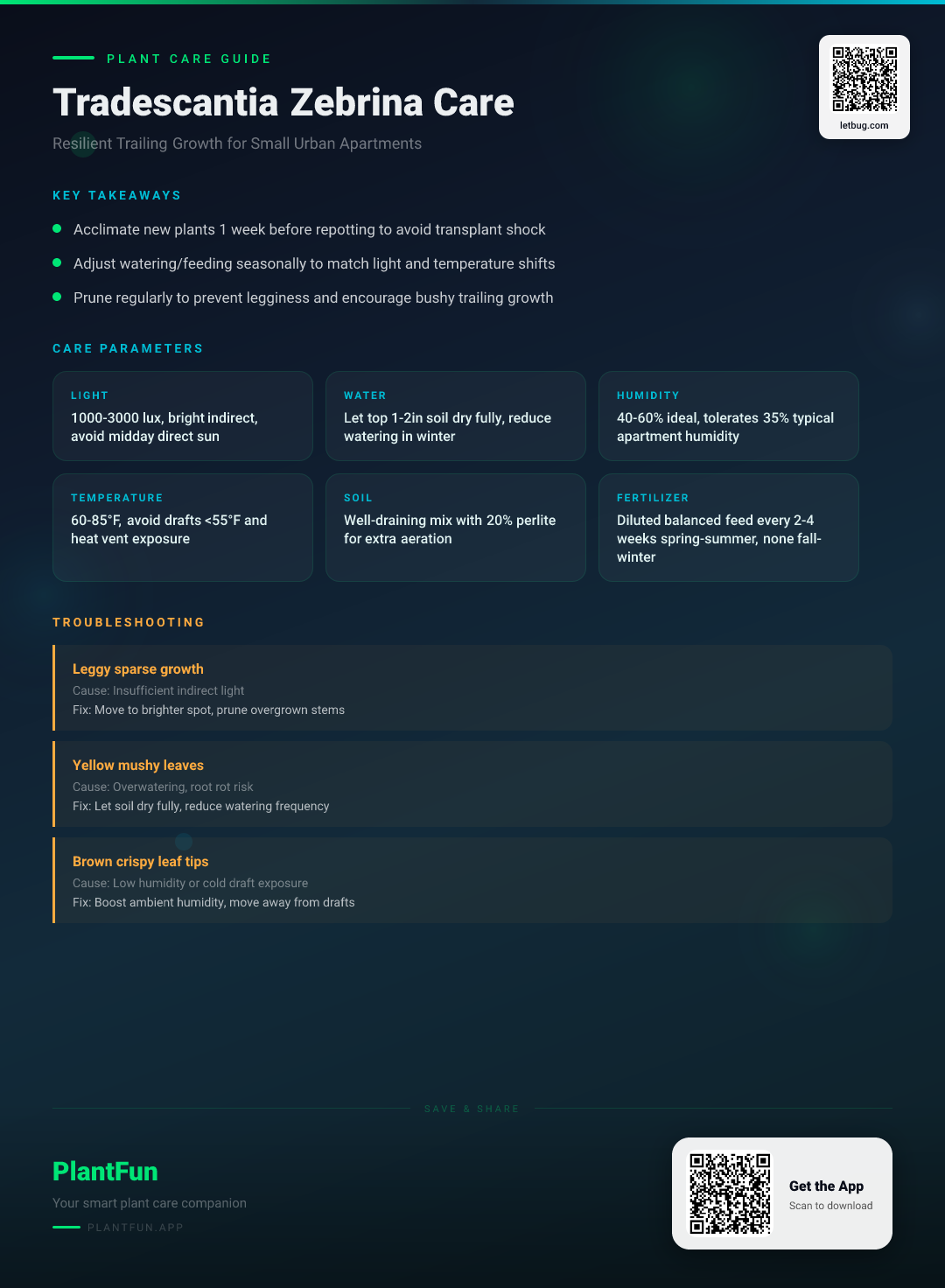
Key Takeaways
- Check soil moisture before watering — overwatering is the #1 killer of houseplants.
- Ensure your plant gets the right amount of light for its species.
- Be patient with recovery — most plants need 2–4 weeks to bounce back.
Quick Care Card
| Parameter | Rule | Measurable Threshold |
|---|---|---|
| Light | Bright indirect light | 10,000-25,000 lux |
| Water | Only water when top 1.5 inches of soil is dry | 50-100ml per watering |
| Humidity | Tolerates average apartment humidity | 35-50% RH, no humidifier required |
| Temperature | Consistent room temperature | 65-80°F (18-27°C), avoid below 55°F (13°C) |
| Soil | Well-draining potting mix | 20% perlite added to standard potting mix |
| Fertilizer | Diluted feed only in growing season | Half-strength liquid houseplant fertilizer, monthly in summer |
| Toxicity | Mildly toxic to pets and humans | Ingestion causes mild mouth and stomach irritation (ASPCA, 2026) |
Why Tradescantia Zebrina Thrives (or Fails) in Small Urban Apartments
Tradescantia zebrina (commonly called wandering dude) is native to the understory of Mexican and Central American forests, making it well-adapted to the consistent, warm, moderately bright conditions that match most 500-700 sq ft urban apartments (NC State Extension, 2026). But three common apartment stressors often derail healthy growth: dry forced air from heating and AC systems, fluctuating temperatures near drafty windows or vents, and limited natural light from small, and inconsistent watering schedules from busy renters with packed schedules. This care guide is tailored explicitly to solve these exact pain points for Tradescantia care for beginners living in small spaces.
Myth vs Reality: Many generic care guides claim this plant requires high humidity to thrive. Reality: It tolerates average apartment humidity levels of 35-50% RH perfectly, no humidifier required (PlantwisePlus Knowledge Bank, 2022).
Symptom-to-Action Quick Reference Cheat Sheet
Tradescantia Zebrina Yellow Leaves
Symptom: Pale or bright yellow leaves, often with mushy stems if severe.
Likely cause: Overwatering from fixed watering schedules common in busy apartment dwellers.
Fix:
- Tip out any pooled water from the plant saucer immediately
- Let the top 1.5 inches of soil dry completely before your next watering
Tradescantia Zebrina Leggy Growth
Symptom: Long gaps between leaf nodes, sparse growth stretching toward light sources.
Likely cause: Insufficient light from limited natural light in north-facing or dark apartment corners.
Fix:
- Move the plant to within 2 feet of an east-facing window
- Prune the top 2-3 inches of leggy stems to encourage bushy growth
Why Is My Tradescantia Zebrina Turning Brown
Symptom: Dry, crispy brown edges on leaf tips, no accompanying yellowing.
Likely cause: Dry forced air from heating/AC vents blowing directly on the plant.
Fix:
- Relocate the plant 3+ feet away from all heating and cooling vents
- Mist leaves once weekly with room-temperature water if humidity drops below 30%
Faded Variegation
Symptom: Purple and silver stripes on leaves fade to solid green.
Likely cause: Too much unfiltered direct sun from south-facing windows.
Fix:
- Add a sheer curtain to filter midday sun
- Move the plant 1 foot back from the window to reduce light exposure
Understanding the Science of Tradescantia Zebrina Growth
A 2006 study from the International Journal of Plant Sciences found that Tradescantia zebrina has specialized vascular systems that respond quickly to light availability, which is why pruning stem tips encourages fast new bushy growth (Pizzolato, 2006). This is why targeted pruning is such an effective fix for leggy growth in apartment environments.
Step-by-Step Weekly Care Routine
Follow this 2-minute routine tailored for busy apartment dwellers:
- Stick your index finger 1.5 inches into the soil: if completely dry, add 50-100ml of room-temperature filtered water, draining excess from the saucer within 10 minutes
- Do a 30-second leaf dusting with a damp microfiber cloth to remove dust that blocks light absorption
- Check for new growth at stem tips: 2-3 new leaves per week is a sign of healthy growth
- Snip any yellow or brown leaves at the base of the stem to redirect energy to new growth
- Rotate the pot ¼ turn to ensure even light hits all sides of the plant, preventing lopsided growth
If you’re new to plant care, check out our beginner’s guide to houseplant maintenance for more simple routines that work for small apartment spaces.
Exact Light Requirements for Apartment Placement
Tradescantia zebrina light requirements fall in apartments are 10,000-25,000 lux of bright indirect light (NC State Extension, 2026). The ideal spot is 1-2 feet away from an east-facing window, where it gets 2-3 hours of soft morning sun and bright indirect light for the rest of the day.
Quick test to check if your light spot is sufficient: Hold your hand 6 inches above the plant at midday. If you see a soft, fuzzy shadow, you’re in the ideal bright indirect light range. A sharp, dark shadow means too much direct sun, and no shadow means light is too low for healthy growth.
If you only have north-facing exposure, add a 10W full-spectrum grow light 12 inches above the plant, run for 10 hours daily. This works perfectly addresses the question of can Tradescantia grow in low light apartments with no natural sun exposure. For more options for dark apartments, check out our guide to the best low light houseplants for small apartments.
Optimal Temperature & Humidity Thresholds for Apartment Living
Stick to these exact ranges to match average apartment conditions:
- Temperature: 65-80°F (18-27°C) range, no exposure below 55°F (13°C) (PlantwisePlus Knowledge Bank, 2022)
- Humidity: 35-50% relative humidity, which matches average apartment levels, no humidifier required
If you have extra dry air in winter, group your Tradescantia with other plants to raise ambient humidity, or place the pot on a pebble tray with water to add 1-2 inches of pebbles below the pot so the roots don’t sit in standing water.
Soil & Potting Best Practices for Small Spaces
Follow these tips to avoid root rot and save space in your small apartment:
- Use a well-draining potting mix with 20% perlite added to standard potting mix to prevent excess moisture retention
- Choose a 4-6 inch pot with drainage holes, the perfect size for apartment shelves and windowsills
- Repot only every 18 months, when you see roots growing out of the drainage holes, to avoid root bound stress
You can learn more about making your own mix in our guide to DIY potting mixes for small apartment plants.
Seasonal Care Calendar Adjustments
Adjust your routine to match apartment heating and cooling cycles:
- **Summer (when AC runs frequently, warmer temperatures): Tradescantia summer watering schedule is every 6-8 days, add one diluted half-strength liquid houseplant fertilizer feed monthly
- **Winter (when heating runs frequently, less natural light): Tradescantia winter care requires watering only every 12-16 days, no fertilizer required as growth slows significantly in low light and cooler temperatures.
Common Apartment Care Mistakes to Avoid
- Mistake: Overwatering on a fixed schedule instead of checking soil moisture What happens: Root rot, yellow leaves, eventual plant death Instead: Only water when the top 1.5 inches of soil is completely dry, use 50-100ml per watering
- Mistake: Placing the plant within 2 feet of AC or heating vents What happens: Dry brown leaf tips, stunted growth Instead: Relocate to a spot 3+ feet away from vents, with consistent air flow
- Mistake: Leaving the plant in low light corners for weeks at a time What happens: Leggy growth, faded variegation, sparse foliage Instead: Move to a bright indirect light spot, or use a grow light if you only have low light exposure
- Mistake: Pruning only the bottom leaves instead of pinching back stem tips What happens: Stunted fullness, lopsided growth Instead: Pinch back the top 1-2 inches of stem tips every 2-3 months to encourage bushy growth
Voice Search FAQ
Why is my Tradescantia zebrina getting leggy in my apartment?
Most often, leggy growth comes from insufficient light below 8,000 lux, common in north-facing apartments or dark corners. Fix by moving to an east-facing window or adding a grow light, prune back leggy stems to encourage new bushy growth (Pizzolato, 2006).
How often do I need to water my Tradescantia zebrina if I don’t have a lot of natural light?
If you’re growing Tradescantia zebrina in low light apartments, the soil dries much slower, so you only need to water every 10-14 days, always checking the top 1.5 inches of soil first before watering.
Can I keep my Tradescantia zebrina on my apartment balcony in the summer?
Yes, as long as the spot gets bright indirect light, no direct midday sun, and temperatures stay between 65-80°F (18-27°C). Bring it inside if temperatures drop below 55°F (13°C) at night, and check soil moisture more often as wind dries soil faster. Note that ASPCA classifies Tradescantia zebrina as toxic to cats and dogs, so keep it out of reach of pets if you leave the balcony door open (ASPCA, 2026).
Printable 2-Minute Weekly Care Checklist
Download our free, fillable Tradescantia care checklist to stick on your fridge for quick, no-guesswork maintenance: □ Check soil moisture (top 1.5 inches dry? Water 50-100ml) □ Dust leaves (30 seconds) □ Remove yellow/brown leaves □ Rotate pot ¼ turn □ Check for new growth □ Confirm placement is 3+ feet away from vents □ Seasonal check (summer: add fertilizer if 4 weeks since last feed; winter: skip fertilizer)
The checklist is optimized for busy apartment dwellers, and takes less than 2 minutes to complete each week.
References
- NC State Extension. (2026). The Complete Tradescantia Zebrina — NC State Extension Gardener Plant Toolbox. https://plants.ces.ncsu.edu/plants/tradescantia-zebrina/. Accessed 2026-03-06.
- Pizzolato, T. (2006). Procambial Initiation for the Vascular System in the Shoot of <i>Tradescantia zebrina</i> (Commelinaceae). International Journal of Plant Sciences. https://doi.org/10.1086/497842. Accessed 2026-03-06.
- PlantwisePlus Knowledge Bank. (2022). Tradescantia zebrina (wandering jew). https://doi.org/10.1079/pwkb.species.110354. Accessed 2026-03-06.
- ASPCA. (2026). Toxic and Non-Toxic Plants List — ASPCA. https://www.aspca.org/pet-care/animal-poison-control/toxic-and-non-toxic-plants. Accessed 2026-03-06.
Optional Helper: Plantfun.App
Plantfun.App identifies your plants by photo, diagnoses pests and diseases with clear fixes, and creates personalised watering and light schedules that adapt to your home conditions — a handy companion for putting this guide into daily practice.
Found an error or have suggestions? We'd love your feedback.
Need help identifying this problem?
Get instant identification, personalized care schedules, and effective pest treatment plans directly on your phone.
Sponsored • We may earn a commission from app downloads
Related Guides
The Budget Tradescantia Zebrina Care Checklist for Resilient Growth in Small Urban Apartments
Grab this zero-cost care checklist to grow full, trailing Tradescantia zebrina in your small apartment, with exact light, water, and humidity thresholds that require no fancy specialty supplies.
Care GuideTradescantia Zebrina in Low-Light Apartments: The Budget-Friendly Guide to Lush, Resilient Growth
Transform your leggy Tradescantia zebrina into a dense, vibrant masterpiece. Master 4 specific light and water thresholds to ensure year-round growth on a budget.
Care GuideTradescantia Zebrina in Your Dim Apartment: 5 Fixes for Leggy Stems and Fading Colors
Revive your leggy Tradescantia with our science-backed care guide. Learn exact light thresholds, watering schedules, and pruning tips for lush indoor growth.
Pest ControlAnts on Plants: What They Mean and What to Do
Ants usually aren't eating your plant. They are farming other pests.