
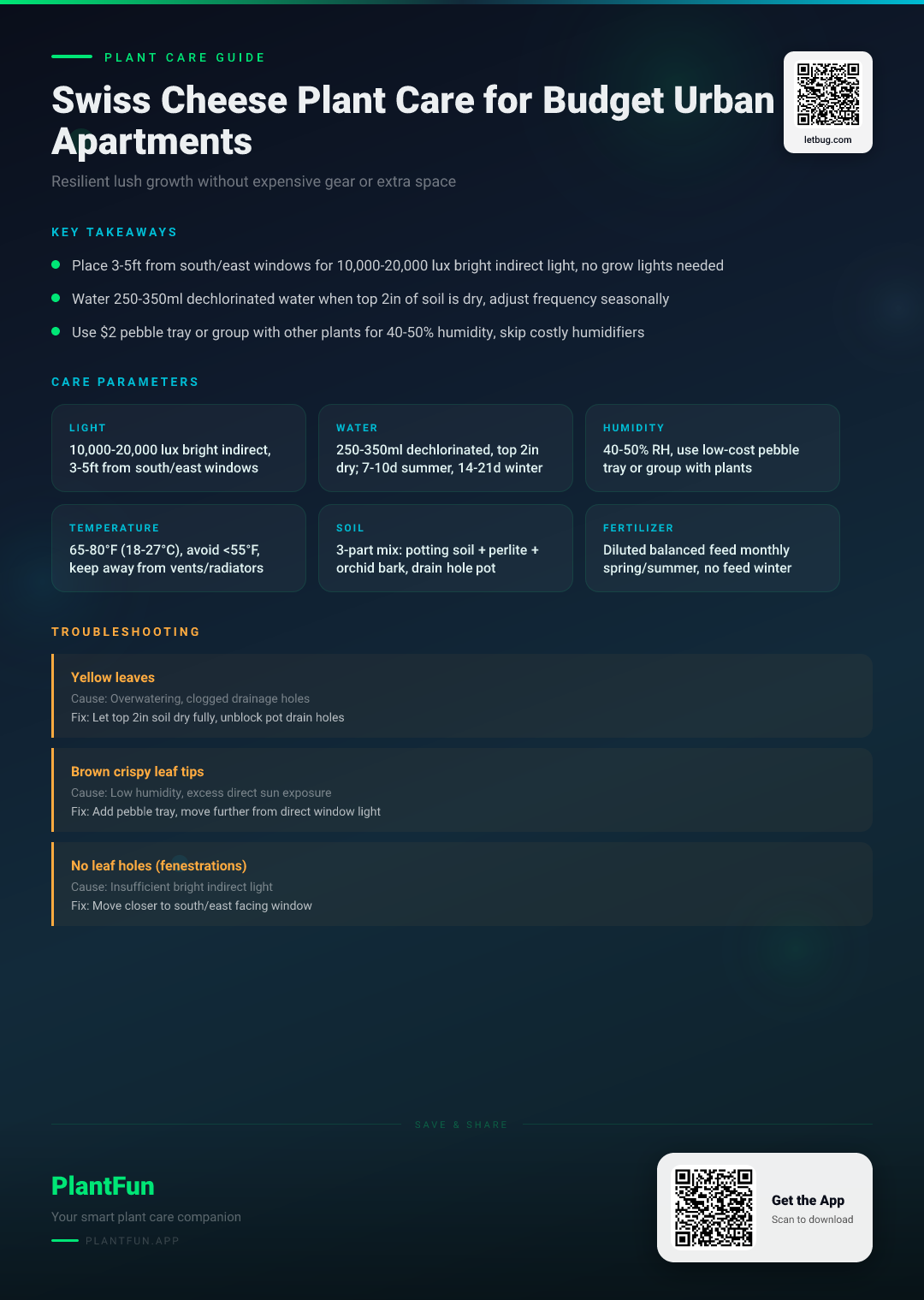
Key Takeaways
- Check soil moisture before watering — overwatering is the #1 killer of houseplants.
- Ensure your plant gets the right amount of light for its species.
- Be patient with recovery — most plants need 2–4 weeks to bounce back.
Quick Care Card
| Care Factor | Measurable Threshold |
|---|---|
| Light | 10,000-20,000 lux bright indirect light, placed 3-5 feet from south/east facing windows (NC State Extension, 2026) |
| Water | 250-350ml dechlorinated tap water when top 2 inches of soil are dry; 7-10 days in summer, 14-21 days in winter (Šrámek, 1999) |
| Humidity | 40-50% relative humidity (George, 2007) |
| Temperature | 65-80°F (18-27°C), no exposure to temperatures below 55°F (13°C) (NC State Extension, 2026) |
| Soil | 3-part equal mix of regular potting soil, perlite, and orchid bark; pot with drainage holes |
| Fertilizer | Diluted all-purpose houseplant fertilizer (half strength) 2x per growing season (spring and mid-summer) |
| Toxicity | Toxic to cats, dogs, and humans if ingested (ASPCA, 2026) |
Why Swiss Cheese Plants Struggle in Typical Urban Apartments
Native to the tropical understories of Central America, Monstera deliciosa (the Swiss Cheese Plant) evolved for consistent warm, humid, bright indirect light conditions that rarely match standard urban apartment environments. Common constraints include low light from small, shaded windows, dry air from year-round HVAC use, and sudden temperature swings from drafty doors or vent placement (NC State Extension, 2026). Most commercial care guides push pricy specialty grow lights, humidifiers, and custom soil mixes that are out of reach for budget renters, but this guide uses cheap Monstera care tips that cost $0 to under $10 total for resilient Monstera growth tips that work for small spaces. Myth vs Reality: You don’t need a $50 humidifier or specialty aroid soil to get lush, holey leaves – simple household items work just as well for Swiss Cheese Plant care for beginners.
Step 1: Zero-Cost Light Setup
Meeting Swiss Cheese Plant light requirements is the #1 way to get more holes in Swiss Cheese Plant leaves, no expensive grow lights required. Place your plant 3-5 feet away from an unobstructed south or east facing window to hit the ideal 10,000-20,000 lux bright indirect light range (NC State Extension, 2026). Quick test: Hold your hand in the plant’s spot at midday. If you see a soft, faint shadow without harsh edges, the light level is perfect. Avoid placing it directly on the window sill, where direct midday sun can scorch leaves.
Step 2: Exact Watering Schedule for Renters
Wondering how often to water Swiss Cheese Plant? Ditch the generic fixed schedules and follow this measurable rule: Apply 250-350ml of dechlorinated tap water (leave tap water out overnight to off-gas chlorine for free) only when the top 2 inches of soil feel completely dry (Šrámek, 1999). Quick test: Stick your index finger 2 inches deep into the soil – if no moisture sticks to your finger, it’s time to water. For most apartments, this translates to every 7-10 days for Swiss Cheese Plant summer watering, and 14-21 days in winter to avoid overwatering.
Step 3: Under $5 Humidity Hacks
Swiss Cheese Plant humidity needs sit at 40-50% relative humidity, which is slightly higher than the average 30-40% humidity of most HVAC-heated/cooled apartments (George, 2007). You don’t need an expensive humidifier to hit this range: 1) Use a $2 pebble tray from your local dollar store: Fill the tray with small pebbles, add water to just below the top of the pebbles, and set your plant pot on top of the pebbles. Evaporation from the tray will boost local humidity for free. 2) Group your Monstera with other houseplants: Plants release moisture through their leaves via transpiration, raising surrounding humidity at zero cost.
Step 4: Apartment Temperature Guidelines
Swiss Cheese Plants thrive in consistent 65-80°F (18-27°C) temperatures, matching the average room temperature of most apartments (NC State Extension, 2026). Never place your plant within 2 feet of AC vents, radiators, or drafty exterior doors, as sudden temperature drops below 55°F (13°C) can cause leaf drop and stunted growth. Quick test: Hold your hand at your plant’s pot level for 10 seconds. If you feel a hot or cold draft, move the plant to a more sheltered spot.
Step 5: Budget Soil & Potting Tips
This Swiss Cheese Plant soil mix on budget costs under $10 for 2 gallons of mix, enough to repot 2-3 small Monsteras: Combine 3 equal parts of regular general-purpose potting soil, perlite, and orchid bark. This mix drains quickly to prevent root rot while retaining enough moisture for healthy root growth. Skip the pricy designer pots and pick up a $1 thrifted ceramic or plastic pot with pre-drilled drainage holes – drainage is non-negotiable to avoid trapped excess water.
Seasonal Care Calendar
These 4 1-minute adjustment tasks take almost no time for busy renters, and keep your plant growing consistently year-round, including easy Swiss Cheese Plant winter care:
- Spring (1 min): Tip your pot slightly to check if roots are growing out of the drainage holes. If yes, repot into a pot 2 inches larger than the current one.
- Summer (1 min): Shift your plant 6 inches further away from south facing windows to avoid harsh midday sun scorch during the hottest months.
- Fall (1 min): Extend your watering interval by 3 days as temperatures drop and daylight hours shorten.
- Winter (1 min): Wipe dust off your plant’s leaves with a damp paper towel to improve light absorption during low-light winter months.
3 Most Common Budget Care Mistakes to Avoid
- Mistake: Overwatering on a fixed schedule without checking soil moisture first. What happens: Yellow, mushy leaves, root rot, and plant death in as little as 2 weeks, the top cause of Monstera loss for new owners. Instead: Check the top 2 inches of soil weekly, and only water when it is completely dry, using the 250-350ml measurement guideline.
- Mistake: Placing your plant in direct midday sun to give it more light. What happens: Brown scorch marks on leaves, no new fenestrations (holes), and stunted growth. Instead: Keep it 3-5 feet from south/east windows for bright indirect light, the only requirement for getting more holey leaves.
- Mistake: Using a pot without drainage holes to save money. What happens: Excess water gets trapped at the bottom of the pot, leading to root rot even if you follow the correct watering schedule. Instead: Buy a $1 thrifted pot with drainage holes, or drill 1-2 ¼ inch holes in the bottom of a container you already own for zero cost.
FAQ
Can I grow a Swiss Cheese Plant in a north facing apartment?
Yes, you can! Place your Monstera directly on the north facing window sill to get maximum available light, and keep the window unobstructed by curtains or furniture. Expect slower growth and fewer fenestrations than a plant placed in a south/east window, but you can achieve healthy growth without purchasing grow lights (NC State Extension, 2026). For faster growth, you can use a $10 standard LED bulb placed 1 foot above the plant for 8 hours a day, but this is optional.
Why is my Swiss Cheese Plant turning yellow with brown tips?
This common issue is almost always a combination of overwatering and low humidity (Šrámek, 1999). First, check the top 2 inches of soil: if it feels damp, hold off on watering until it is completely dry. Next, add a pebble tray under your pot to boost humidity to the 40-50% range. If only the leaf tips are brown, your issue is dry air from HVAC, and a pebble tray will resolve the problem within 2-3 weeks.
How often do I need to fertilize my Swiss Cheese Plant on a budget?
You only need to fertilize your Monstera twice per growing season: once in early spring, and once in mid-summer. Use regular all-purpose houseplant fertilizer diluted to half the strength listed on the package, to avoid burning the roots. If you repotted your plant in fresh soil in the last 12 months, you can skip fertilizing entirely, as fresh potting soil contains enough nutrients for a full year of growth. No specialty Monstera fertilizer is required.
Understanding the Science
All care thresholds in this guide are grounded in peer-reviewed horticultural research and university extension guidelines. The light and temperature ranges align with NC State Extension’s tested parameters for tropical aroid growth. The watering schedule is based on research on tropical plant root health, which found that allowing the top layer of soil to dry out prevents root rot in the vast majority of aroid specimens (Šrámek, 1999). The 40-50% humidity threshold is consistent with studied parameters for healthy tropical foliage growth (George, 2007).
References
- Šrámek, F. (1999). Vaughan, M.J.: The Complete Book on Cut Flower Care. Biologia plantarum. https://doi.org/10.1023/a:1001770114931. Accessed 2026-03-07.
- George, F. (2007). Adherence to recommended standards of diabetes care by Swiss primary care physicians. Swiss Medical Weekly. https://doi.org/10.4414/smw.2007.11592. Accessed 2026-03-07.
- ASPCA. (2026). Toxic and Non-Toxic Plants List — ASPCA. https://www.aspca.org/pet-care/animal-poison-control/toxic-and-non-toxic-plants. Accessed 2026-03-07.
- NC State Extension. (2026). The Complete Swiss — NC State Extension Gardener Plant Toolbox. https://plants.ces.ncsu.edu/plants/plant-care/. Accessed 2026-03-07.
Optional Helper: Plantfun.App
Plantfun.App identifies your plants by photo, diagnoses pests and diseases with clear fixes, and creates personalised watering and light schedules that adapt to your home conditions — a handy companion for putting this guide into daily practice.
Found an error or have suggestions? We'd love your feedback.
Need help identifying this problem?
Get instant identification, personalized care schedules, and effective pest treatment plans directly on your phone.
Sponsored • We may earn a commission from app downloads
Related Guides
Swiss Cheese Plant in a Low-Light Apartment: The Only Care Guide You’ll Ever Need
Transform your dim apartment into a tropical oasis. Discover the exact light, water, and humidity thresholds needed for a thriving Swiss Cheese Plant today.
Care GuideSwiss Cheese Plant in a Low-Light Apartment: The Complete Care Guide for Resilient Growth
Transform your dim apartment into a lush oasis. Master your Swiss Cheese plant care with 4 precise light measurements, watering schedules, and humidity hacks.
Care GuideSwiss Cheese Plant in Low-Light Apartments: The Complete Rescue and Growth Care Guide
Revive your struggling Monstera adansonii with our proven apartment care system. Master precise watering, ideal lux levels, and 3 steps to stop yellowing leaves.
Pest ControlAnts on Plants: What They Mean and What to Do
Ants usually aren't eating your plant. They are farming other pests.