
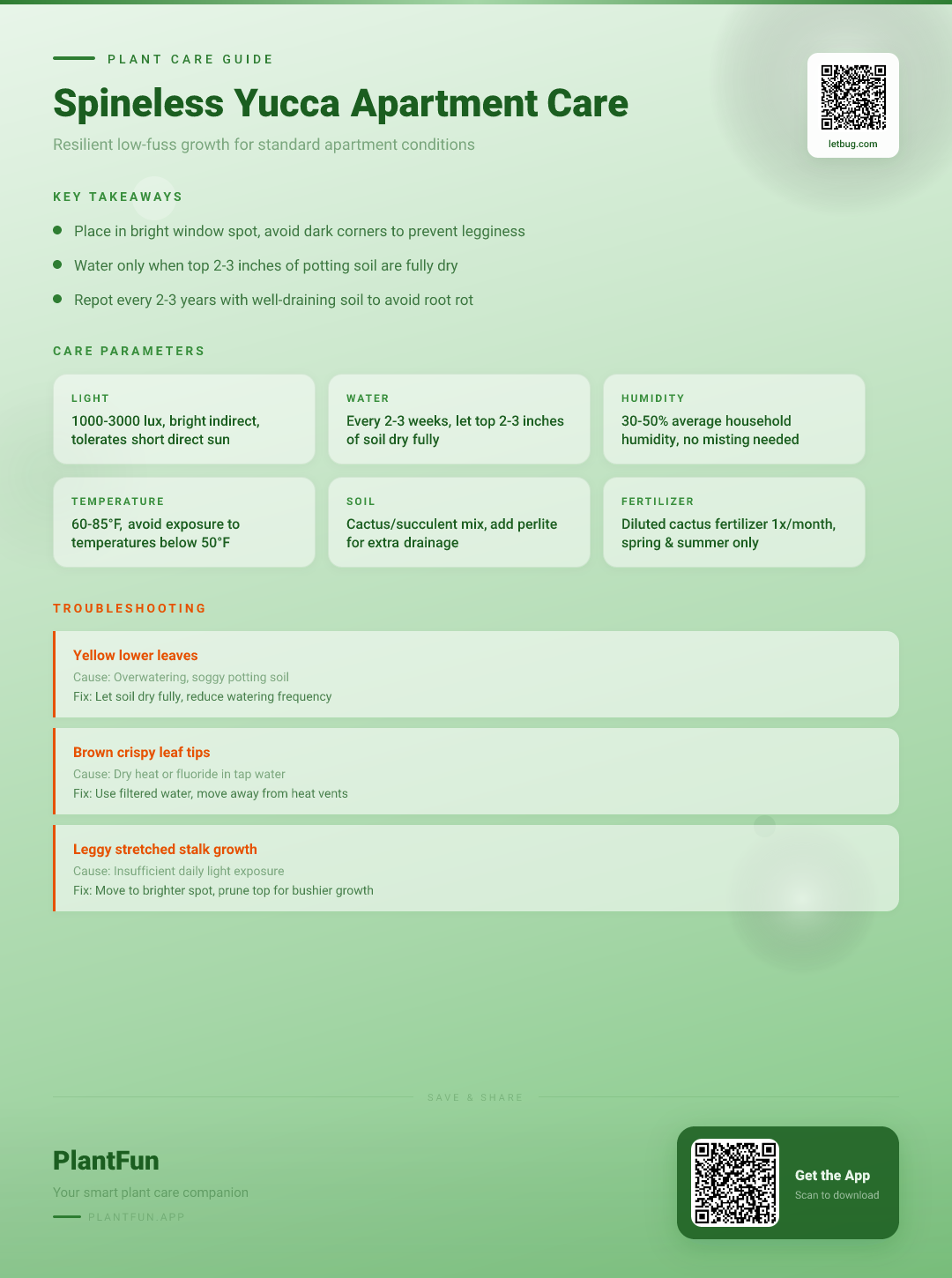
Key Takeaways
- Check soil moisture before watering — overwatering is the #1 killer of houseplants.
- Ensure your plant gets the right amount of light for its species.
- Be patient with recovery — most plants need 2–4 weeks to bounce back.
Spineless yuccas (Yucca elephantipes) are one of our top picks for low-maintenance apartment houseplants for busy renters, but most owners accidentally harm them with overwatering or poor placement. This guide uses measurable, apartment-specific parameters to help you grow a hardy, long-lived yucca with minimal effort, plus a free printable checklist for no-guess care.
Quick Care Card: At-a-glance 1-sentence care rules for spineless yucca in apartments, with a free downloadable printable checklist link
| Category | 1-Sentence Care Rule |
|---|---|
| Light | 10,000 to 25,000 lux (3-6 hours of direct or bright indirect sun daily, south or east-facing window preferred) |
| Water | Only water when the top 4 inches of soil are completely dry, using 300ml for 6-inch pots, 750ml for 10-inch pots, 1200ml for 14-inch pots |
| Humidity | 30% to 50% (matches standard apartment humidity, no extra humidification required) |
| Temperature | 60°F to 90°F (15°C to 32°C), avoid sudden drafts from AC, radiators, or windows |
| Soil | 60% potting soil, 30% perlite, 10% coarse sand, with a pot that has a 1.5-inch minimum drainage hole |
| Fertilizer | Half-strength 10-10-10 liquid fertilizer once every 2 months in spring and summer only |
| Toxicity | Toxic to dogs, cats, and small children if ingested (ASPCA, 2026) |
Download your free printable spineless yucca care checklist here to keep by your plant for fast reference.
Why Spineless Yuccas Thrive (And Fail) In Typical Apartments: Break down common apartment conditions vs the yucca’s native arid Mexican habitat
Myth: Yuccas are high-maintenance desert plants that don’t work well indoors. Reality: Spineless yuccas evolved in arid, sunny regions of Mexico, so they are perfectly adapted to the low humidity, consistent 60-75°F temperatures of most urban apartments (Al Johani, 2019).
The only common failure points for apartment yuccas are mismatches to their native preferences: overwatering (they evolved to survive months of drought), low light (they get full sun in their natural habitat), and compact, water-retentive soil (they grow in fast-draining sandy soil in the wild). This guide addresses all three gaps to set your yucca up for success.
Step 1: Light Placement For Steady, Non-Leggy Growth: Exact lux requirements, best window spots, and 2 quick fixes for existing leggy growth
When asking how much light does a yucca need indoors, stick to this measurable rule: 10,000 to 25,000 lux of light daily (Al Johani, 2019). This translates to:
- Ideal spot: South-facing window with 3-6 hours of direct morning/early afternoon sun
- Acceptable spot: East-facing window with 2-4 hours of gentle morning sun, or west-facing window filtered with a sheer curtain to avoid leaf burn
- Avoid: North-facing windows or dim corners with less than 5,000 lux, which cause leggy growth, pale leaves, and stunted development
If you’re wondering can yucca grow in low light apartments, the short answer is no without supplemental light. If you only have dim spaces, use a full-spectrum grow light 12 hours a day, positioned 6 inches above the top of the plant.
If you already have a leggy yucca, use these two 10-minute fixes:
- Prune the top 1/3 of the stalk in spring, just above a leaf node, to encourage new, compact branch growth below the cut. Follow our step-by-step guide to fixing leggy houseplants for detailed pruning instructions.
- Move the plant to a brighter spot immediately; new growth will be compact, and you can remove old, leggy lower leaves after 3 months of improved light exposure.
Step 2: Exact Watering Schedule For Busy Apartment Renters: Measurable watering thresholds, ml amounts per pot size, and clear signs of over/under watering
The number one cause of yucca death in apartments is overwatering, so ditch fixed schedules and use this measurable test instead: Insert a wooden skewer 4 inches deep into the soil. If it comes out completely clean with no damp soil stuck to it, it’s time to water (Al Johani, 2019).
Use these exact water amounts based on your pot size:
- 6-inch diameter pot: 300ml of room-temperature water
- 10-inch diameter pot: 750ml of room-temperature water
- 14-inch diameter pot: 1200ml of room-temperature water
Always pour water slowly across the top of the soil until excess water runs out the drainage hole, then discard any standing water in the saucer immediately to avoid root rot.
Signs of overwatering: Mushy, yellow leaves, soft drooping stalk, and sour-smelling soil. If you notice these signs, stop watering immediately and check roots for rot, using our root rot treatment guide for indoor plants to rescue your plant. Signs of underwatering: Crispy brown leaf edges, dry, drooping leaves, and soil that pulls away from the edges of the pot.
On average, this translates to watering every 2-3 weeks in summer and 4-6 weeks in winter, but always use the skewer test first to adjust for your apartment’s unique light and humidity levels.
Step 3: Soil & Potting Requirements To Avoid Root Rot: Best affordable soil mix specs, drainage requirements, and repotting frequency for indoor yuccas
The right yucca soil mix for indoor pots mimics their native fast-draining sandy habitat. Use this affordable, easy-to-mix recipe: 60% standard potting soil, 30% perlite, 10% coarse construction sand (Mejia-Aguilera et al., 2025). This mix drains fast and avoids the compaction that causes root rot.
Pot requirements:
- Must have at least a 1.5-inch drainage hole (no decorative pots without drainage, unless you use them as a cachepot and empty standing water after every watering)
- Add a 1-inch layer of pebbles at the bottom of the pot to improve drainage
- Only go up 1 pot size when repotting: yuccas thrive when slightly root bound, and overly large pots hold excess water that causes rot
Repotting frequency: Every 2-3 years in early spring, only if you see roots growing out of the drainage hole or the plant is pushing itself up out of the pot.
Step 4: Temperature & Humidity Adjustments For Low-Humidity Apartments: Exact safe temperature ranges, and zero-cost hacks for periods of extreme dry heat
Spineless yuccas tolerate a wide range of apartment temperatures: 60°F to 90°F (15°C to 32°C) is ideal (Al Johani, 2019). Avoid placing your yucca near drafty windows, AC vents, or radiators, as sudden temperature swings cause leaf drop and stress.
Humidity requirements are perfectly matched to standard apartment levels: 30% to 50% humidity is ideal, so you never need a humidifier for your yucca. During periods of extreme dry heat (winter when heating runs nonstop, or summer heatwaves with humidity below 20%), use these zero-cost hacks to avoid crispy brown tips:
- Place a tray of water near the base of the plant (evaporation raises ambient humidity locally)
- Group your yucca with other houseplants to create a microclimate with higher shared humidity
Step 5: Fertilizing Routine For Slow, Resilient Growth: What fertilizer to use, application frequency, and when you should skip feeding entirely
Yuccas are slow-growing plants that need minimal fertilizing to thrive. Overfertilizing is a top yucca brown tips cause, so follow this strict routine:
- Use a balanced 10-10-10 liquid fertilizer, diluted to half the strength listed on the package
- Apply once every 2 months only in spring and summer, when the plant is actively growing
Skip fertilizing entirely if:
- It is winter (the plant is dormant and won’t absorb extra nutrients)
- You repotted the plant in the last 3 months (fresh potting soil has enough nutrients to support growth)
- Your plant is showing signs of stress (yellow leaves, root rot, or pest infestations)
Seasonal Care Calendar For Apartment Yuccas: Simple adjustments for winter vs summer, including reduced watering schedules for cold, low-light months
Summer (yucca summer watering schedule)
- Water every 2-3 weeks, always using the skewer test first
- Fertilize once every 2 months
- Rotate the pot ¼ turn every month to encourage even, non-lopsided growth
- You can move your yucca to a shaded outdoor patio if temperatures stay consistently above 60°F, but bring it back inside before night temperatures drop below 55°F
Winter (yucca winter care indoors)
- Water every 4-6 weeks, as lower light and cooler temperatures slow water evaporation
- No fertilizing at all during winter months
- Move the plant at least 1 foot away from cold drafty windows and radiators to avoid temperature stress
- Keep in the brightest spot in your apartment to avoid leggy winter growth, and follow our complete winter houseplant care guide for more seasonal tips
7 Most Common Yucca Care Mistakes (And 10-Minute Fixes)
- Mistake: Watering on a fixed schedule instead of checking soil moisture What happens: Overwatering, root rot, and yellow leaves Instead: Do the 10-second skewer test every 2 weeks, only water when the top 4 inches of soil are completely dry
- Mistake: Placing your yucca in a dim corner with less than 5,000 lux of light What happens: Leggy growth, pale leaves, and eventual plant death Instead: Move to a south or east-facing window, or install a grow light 6 inches above the plant running 12 hours a day
- Mistake: Using regular compact potting soil with no amendments What happens: Poor drainage, root rot, and drooping stalks Instead: Repot using the 60/30/10 soil mix listed earlier, and make sure your pot has a functional drainage hole
- Mistake: Overfertilizing to speed up growth What happens: Brown leaf tips, salt buildup in soil, and root burn Instead: Dilute fertilizer to half strength, only feed in spring and summer, and skip all winter feeding
- Mistake: Repotting into a pot more than 2 inches larger than the current one What happens: Excess soil holds unused water, leading to root rot and stunted growth Instead: Only go up 1 pot size every 2-3 years, and keep your yucca slightly root bound for best growth
- Mistake: Ignoring small pest infestations (mealybugs, scale) until they spread What happens: Yellowing leaves, stunted growth, and plant death Instead: Wipe leaves with a damp cloth weekly, and dab any visible pests with rubbing alcohol on a cotton swab, repeating every 3 days for 2 weeks
- Mistake: Cutting brown leaf tips off flush with the healthy green tissue What happens: Further browning and permanent leaf damage Instead: Cut brown tips off at a 45-degree angle, leaving a 1mm thin brown edge to avoid damaging healthy leaf tissue
FAQ (Voice Search Optimized)
Why is my yucca getting yellow leaves?
The most common cause is overwatering (Al Johani, 2019). First, check if the top 4 inches of soil are damp; if yes, stop watering until it dries completely. If the leaves are mushy, gently remove the plant from its pot to check for brown, mushy roots, trim any rotten roots, and repot in fresh dry soil. Other less common causes include sudden temperature swings, extremely low light, or heavy pest infestations.
Can I keep my yucca in a dark apartment corner?
No, yuccas need at least 10,000 lux of light daily to grow well (Al Johani, 2019). Dim corners with less than 5,000 lux will cause leggy growth, pale leaves, and eventually the plant will die after 6-12 months of low light exposure. If you don’t have a bright window, use a full-spectrum grow light running 12 hours a day to support healthy growth.
How often do I need to water my apartment yucca?
There is no universal fixed schedule, as watering frequency depends on your apartment’s light, temperature, and humidity levels. On average, you will water every 2-3 weeks in summer and 4-6 weeks in winter. Always use the skewer test first: insert a wooden skewer 4 inches into the soil, and only water if it comes out completely dry. Use the pot-specific water amounts listed earlier to avoid overwatering.
Are spineless yuccas safe for pets?
According to the ASPCA (2026), all Yucca species are toxic to dogs, cats, and horses, causing vomiting, diarrhea, drooling, and weakness if ingested. Keep your yucca on a high shelf or out of reach of curious pets and small children to avoid accidental ingestion.
How To Use Your Free Printable Yucca Care Checklist
- Download the free checklist from the link in the Quick Care Card section
- Fill in your pot size, window direction, and last watering/fertilizing/repotting dates at the top of the checklist
- Mark off each task as you complete it: weekly leaf check for pests, bi-weekly soil moisture check, monthly pot rotation, bi-monthly fertilizing in summer, and repotting every 2-3 years
- Hang the checklist on the wall near your yucca so you can reference it in 10 seconds, no guesswork needed. The back of the checklist includes a quick troubleshooting cheat sheet for common issues like yellow leaves and brown tips.
References: Peer-reviewed horticultural sources and university extension data on Yucca elephantipes indoor care standards
- Al Johani, A.S. (2019). Optimizing BA and IBA Concentrations for Micro Propagation of Spineless Yucca (Yucca Elephantipes). International Journal of Engineering Research and Technology. https://doi.org/10.17577/ijertv8is010004. Accessed 2026-03-02.
- Mejia-Aguilera, N., Nunez Sanchez, M., Flores Magallon, R. (2025). Elaboración de un Cultivo Iniciador a partir de Bacterias Acido Lácticas de un Queso Crema Adicionado con Yucca gigantea (Spineless yucca). Ciencia Latina Revista Científica Multidisciplinar. https://doi.org/10.37811/cl_rcm.v9i4.18939. Accessed 2026-03-02.
- American Society for the Prevention of Cruelty to Animals. (2026). Toxic and Non-Toxic Plants List. https://www.aspca.org/pet-care/animal-poison-control/toxic-and-non-toxic-plants. Accessed 2026-03-02.
Optional Helper: Plantfun.App
Plantfun.App identifies your plants by photo, diagnoses pests and diseases with clear fixes, and creates personalised watering and light schedules that adapt to your home conditions — a handy companion for putting this guide into daily practice.
Found an error or have suggestions? We'd love your feedback.
Need help identifying this problem?
Get instant identification, personalized care schedules, and effective pest treatment plans directly on your phone.
Sponsored • We may earn a commission from app downloads
Related Guides
The Complete Yucca Elephantipes Care Guide for Typical Apartments: Resilient Year-Round Growth
Get a seasonally adjusted yucca care checklist made just for typical apartment conditions, with exact light, water, and soil specs to keep your plant lush, healthy, and resilient for years.
Care GuideThe Complete Spineless Yucca Care Checklist for Thriving Growth in Typical Urban Apartments
Skip expensive plant gadgets with this free spineless yucca care checklist. Get exact light, water, and soil parameters to keep your yucca thriving in even the driest, sunniest urban apartment.
Care GuideThe Complete Yucca Elephantipes Care Guide for Small Urban Apartments: Resilient Growth Tips That Work
Grow a thriving yucca elephantipes in your small urban apartment with exact light levels, watering amounts, and a 5-minute monthly checklist that prevents yellow leaves and root rot. Follow our science-backed care tips today.
Pest ControlAnts on Plants: What They Mean and What to Do
Ants usually aren't eating your plant. They are farming other pests.