
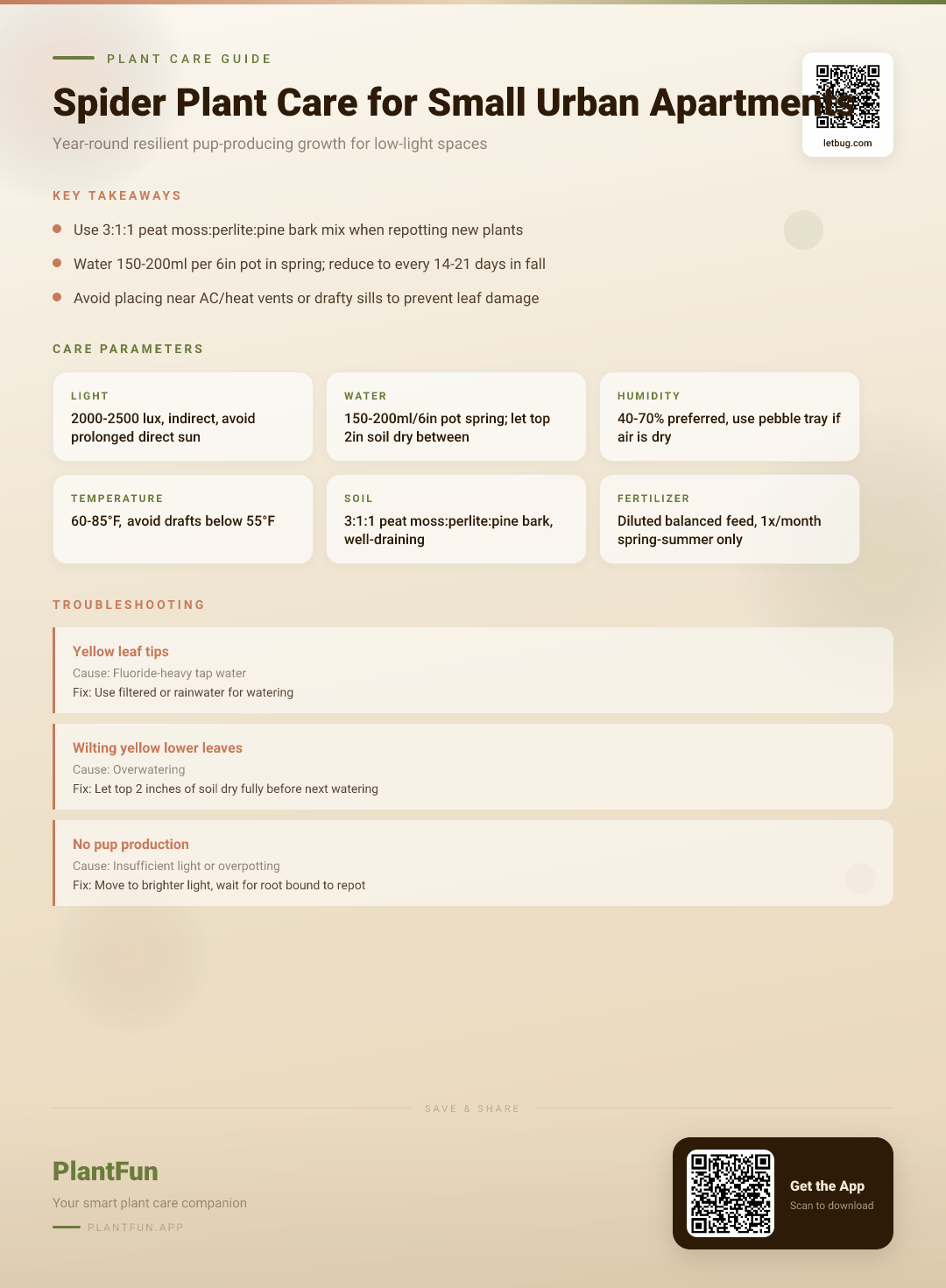
Key Takeaways
- Check soil moisture before watering — overwatering is the #1 killer of houseplants.
- Ensure your plant gets the right amount of light for its species.
- Be patient with recovery — most plants need 2–4 weeks to bounce back.
Quick Care Card
| Parameter | Measurable Apartment-Specific Guideline |
|---|---|
| Light | 2,000–10,000 lux, avoid >1 hour of midday direct sun (Idrissi Azami et al, 2022) |
| Water | 150–200ml per 6-inch pot, only when top 2 inches of soil are dry |
| Humidity | 30–60%, tolerant of standard household levels (Šrámek, 1999) |
| Temperature | 15–27°C (59–81°F), avoid drafts below 10°C |
| Soil | 3:1:1 peat moss:perlite:pine bark spider plant soil mix |
| Fertilizer | Balanced 10-10-10 liquid, diluted 50%, once monthly spring-summer |
| Toxicity | Non-toxic to cats, dogs, and humans (ASPCA, 2026) |
Why Small Urban Apartments Are Perfect (But Tricky) for Spider Plants
Spider plants (Chlorophytum comosum) are made for renter life: they are low-effort, pet-safe, and tolerant of the variable conditions common to small urban spaces (ASPCA, 2026). A common myth says spider plants need bright direct sun to grow, but they evolved under forest canopies, so they handle low to medium indirect light far better than most houseplants (Idrissi Azami et al, 2022), making them a top pick for spider plant care for beginners.
That said, apartment conditions do present unique challenges: drafty window sills, forced air heating/cooling, and consistent low light can slow growth, cause brown tips, or prevent pup production if unaddressed. This spider plant care for apartments guide is tailored to solve these exact pain points, with no generic one-size-fits-all advice.
Step-by-Step Initial Setup for New Spider Plants in Apartments
Follow these steps to set your plant up for success as soon as you bring it home:
- Choose a pot 1–2 inches larger than the nursery pot, with at least 2 drainage holes to prevent standing water.
- Mix your custom spider plant soil mix using a 3:1:1 ratio of peat moss, perlite, and fine pine bark to ensure fast drainage even if you overwater occasionally.
- Gently loosen tangled roots from the nursery soil, being careful not to tear healthy root tissue, then place the plant in the new pot and fill with soil, leaving ½ inch of space at the top for watering.
- Place the plant 2–3 feet away from a north or east-facing window, and at least 4 feet away from AC/heat vents to avoid dry air blasts that damage leaves.
To check if your placement is right, use a free phone lux app to confirm light levels meet spider plant light requirements for apartments (minimum 2,000 lux).
Spring Care Routine (March–May)
Spring is the peak growth season for spider plants, as light levels rise after winter. Follow this routine to trigger healthy new growth and pup production:
- Watering: 150–200ml per 6-inch pot every 7–10 days, when the top 2 inches of soil are completely dry (this answers the common question of how often to water spider plant during active growth). Use the finger test: stick your index finger 2 inches into soil, water only if it feels fully dry.
- Fertilizing: Apply diluted 50% strength 10-10-10 liquid fertilizer once every 4 weeks, making sure to wet the soil evenly.
- Pruning: Snip any brown or yellow leaves at the base with sterile scissors to redirect energy to new growth and pup production. For more tips to encourage baby plant production, check out our full guide on how to get spider plant to grow pups.
Summer Care Routine (June–August)
Adjust your routine to handle higher heat, occasional direct sun, and higher humidity from open windows:
- Spider plant summer watering: Increase frequency to 150–200ml every 5–7 days, testing soil moisture twice weekly if indoor temps rise above 27°C.
- Light protection: If your plant gets more than 1 hour of midday direct sun, hang a sheer curtain to prevent leaf scorch.
- Gnat prevention: Top dress the soil with ¼ inch of horticultural sand to prevent fungus gnat eggs from hatching, and empty any standing water from the saucer within 30 minutes of watering.
- Humidity checks: Open windows naturally meet spider plant humidity needs for most apartments in summer, so no extra humidification is required.
Fall Care Routine (September–November)
Prep your plant for colder, darker months with these simple steps:
- Reduce watering frequency to every 14–21 days, only watering when the top 3 inches of soil are completely dry.
- Stop fertilizing entirely, as growth slows significantly in lower light.
- Move plants 1+ foot away from window sills if you feel cold drafts near the glass (temps below 10°C can damage leaf tissue and cause brown tips).
- Wipe leaves with a damp cloth to remove dust that blocks light absorption as daylight hours shorten.
Winter Care Routine (December–February)
Spider plant winter care is tailored to solve the two biggest apartment winter issues: low light and dry forced air:
- Low light adjustments: Spider plants can survive in light levels as low as 2,000 lux (Idrissi Azami et al, 2022), so they answer the question of can spider plants live in low light apartments long term. If your corner is darker than 2,000 lux, move the plant closer to a window or use a cheap grow light set to 4 hours a day.
- Watering: Only water 150ml per 6-inch pot every 21–28 days. Forced air dries the top of soil quickly, but the lower layers stay moist, so overwatering is the most common winter mistake.
- Humidity hacks: 1. Group your spider plant with other houseplants to raise ambient humidity, 2. Place a tray of pebbles and water under the pot, making sure the pot is not sitting directly in the water. For more cold-season tips, see our complete spider plant winter care guide.
12-Point Monthly Resilient Growth Checklist
Print this checklist to track your plant’s health and stay on top of your spider plant seasonal care routine:
- Check light exposure with a free phone lux app to confirm levels are above 2,000 lux
- Stick your finger 2 inches into soil to test moisture before watering
- Measure out 150–200ml of water per 6-inch pot to avoid over/under watering
- Inspect all leaves for brown tips, yellowing, or pest damage
- Wipe leaves with a damp cloth to remove light-blocking dust
- Check for new pup growth on long trailing runners
- Empty the saucer of any standing water 30 minutes after watering
- Confirm the plant is at least 4 feet away from heat/AC vents
- Check that drainage holes are not clogged with soil or roots
- Fertilize only during spring and summer, skip applications in fall/winter
- Trim any dead or damaged leaves at the base to encourage new growth
- If roots are growing out of drainage holes, schedule repotting for spring
Common Apartment-Specific Spider Plant Mistakes to Avoid
- Mistake: Placing your spider plant directly next to a forced air vent or drafty window What happens: Dry air blasts or cold drafts cause rapid leaf moisture loss, leading to brown tips (the most common answer to why is my spider plant getting brown tips) Instead: Keep plants 4 feet away from vents and 1 foot away from drafty window sills in fall/winter
- Mistake: Overpotting your spider plant in a pot more than 2 inches larger than the root ball What happens: Excess soil holds onto moisture for too long, leading to root rot Instead: Use a pot only 1–2 inches larger than the nursery pot when repotting, and follow our step-by-step instructions for how to repot a spider plant for apartment growth to avoid common errors
- Mistake: Using untreated fluoride-heavy tap water for watering What happens: Fluoride builds up in leaf tips, causing permanent brown discoloration Instead: Use rainwater, distilled water, or leave tap water out overnight to let chlorine/fluoride evaporate before use. See our full guide for a permanent spider plant brown tip fix if discoloration persists
- Mistake: Ignoring root bound signs for more than 6 months What happens: Roots circle the pot and can’t absorb water or nutrients, leading to stunted growth and no pup production Instead: Repot in spring once you see roots growing out of the drainage holes
FAQ
Why is my spider plant getting brown tips even when I water it?
Brown tips in apartments are almost always caused by dry forced air blasts from vents, cold drafts, or fluoride buildup in tap water, not under watering. Trim brown tips with clean scissors at a 45° angle and adjust your plant’s placement or water source as needed.
Can I put my spider plant in a dark apartment corner?
Spider plants can survive in light levels as low as 2,000 lux (Idrissi Azami et al, 2022), which is typical of a bright corner 3 feet away from a window. If your corner is darker than that, add a cheap grow light set to 4 hours a day to keep growth consistent.
How often will my apartment spider plant grow pups?
Healthy, established spider plants grown in appropriate light will produce 2–4 sets of pups per year, usually in late spring and early summer. If you’re not seeing pups, check that your light levels are above 3,000 lux and that your plant is slightly root bound (root bound plants produce more pups).
Can spider plants live in low light apartments long term?
Yes, as long as light levels stay above 2,000 lux, they will grow slowly and stay healthy for decades without special care.
Troubleshooting Quick Reference
Yellow Leaves
Symptom: Soft, yellow lower leaves that fall off easily.
Likely cause: Overwatering leading to early root rot.
Fix:
- Stop watering immediately and let the top 3 inches of soil dry completely
- If soil stays soggy for more than 7 days, repot into fresh, dry 3:1:1 soil mix
Drooping Leaves
Symptom: Limp, floppy leaves that look wilted even right after watering.
Likely cause: Root rot from overwatering or extreme cold draft exposure.
Fix:
- Check root health by gently removing the plant from its pot; trim any brown, mushy roots with sterile scissors
- Repot into fresh soil and move to a spot with consistent temperatures between 15–27°C
No Pup Growth
Symptom: Mature plant (1+ year old) with no long runners or baby spider plants.
Likely cause: Light levels too low, or plant is in a pot that is too large (not root bound enough).
Fix:
- Move the plant to a spot with at least 3,000 lux of indirect light for 6+ hours a day
- Hold off on repotting until roots are growing out of the drainage holes; slightly root bound plants produce more pups
Brown Leaf Tips
Symptom: Dry, crispy brown tips on otherwise healthy green leaves.
Likely cause: Dry forced air, cold drafts, or fluoride buildup in soil from tap water.
Fix:
- Trim brown tips at a 45° angle with clean scissors to match the natural leaf shape
- Move the plant away from vents and windows, and switch to distilled or rainwater for watering
References
- ASPCA. (2026). Toxic and Non-Toxic Plants List — ASPCA. https://www.aspca.org/pet-care/animal-poison-control/toxic-and-non-toxic-plants. Accessed 2026-03-01.
- Šrámek, F. (1999). Vaughan, M.J.: The Complete Book on Cut Flower Care. Biologia plantarum. https://doi.org/10.1023/a:1001770114931. Accessed 2026-03-01.
- Idrissi Azami, A.; O’Neill, K.; Pirro, S. (2022). The Complete Genome Sequence of Chlorophytum comosum (Asparagaceae, Asparagales), the Spider Plant. Biodiversity Genomes. https://doi.org/10.56179/001c.55588. Accessed 2026-03-01.
Optional Helper: Plantfun.App
Plantfun.App identifies your plants by photo, diagnoses pests and diseases with clear fixes, and creates personalised watering and light schedules that adapt to your home conditions — a handy companion for putting this guide into daily practice.
Found an error or have suggestions? We'd love your feedback.
Need help identifying this problem?
Get instant identification, personalized care schedules, and effective pest treatment plans directly on your phone.
Sponsored • We may earn a commission from app downloads
Related Guides
The Complete Spider Plant Care Checklist for Lush Resilient Growth in Typical Apartments
Stop struggling to keep your spider plant thriving in your apartment. Get exact light, water, humidity thresholds plus a printable checklist for lush, resilient growth all year.
Care GuideThe Complete Spider Plant Care Checklist for Thriving Growth in Small City Apartments
Grow lush, baby-producing spider plants even in tiny apartments. Get exact light, water, and humidity thresholds plus a free printable weekly checklist to take the guesswork out of care.
Care GuideThe Complete Spider Plant Care Checklist for Small Apartments: Grow Lush Resilient Plants Easily
Stop struggling to keep your spider plant thriving in a cramped apartment. Get exact light, water, and space-saving tips to grow lush, resilient foliage even with limited square footage.
Pest ControlAnts on Plants: What They Mean and What to Do
Ants usually aren't eating your plant. They are farming other pests.