
Key Takeaways
- Check soil moisture before watering — overwatering is the #1 killer of houseplants.
- Ensure your plant gets the right amount of light for its species.
- Be patient with recovery — most plants need 2–4 weeks to bounce back.
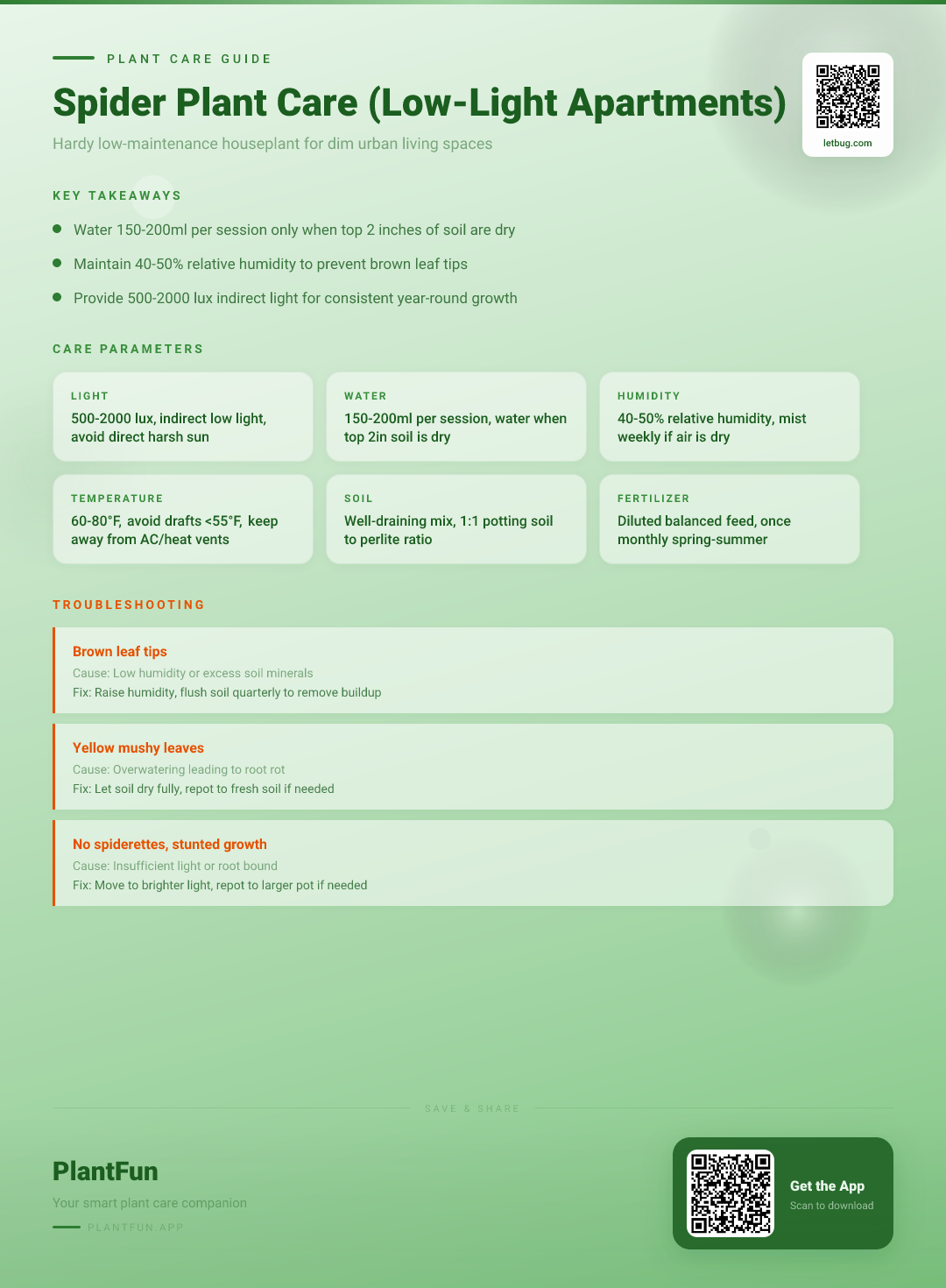
TL;DR: The Spider Plant (Chlorophytum comosum) is a top-tier apartment dweller that tolerates low-light levels (as low as 500 lux). To keep yours vibrant, use a fast-draining potting mix, water with 150ml-200ml of room-temperature water only when the top 2 inches of soil are dry, and maintain 40-50% humidity to prevent brown tips.
Quick Care Card: Essential Thresholds for Apartment Resiliency
| Feature | Requirement |
|---|---|
| Light | 500–2,000 Lux (Bright indirect to low light) |
| Water | 150ml–200ml when top 2” dry |
| Humidity | 40%–50% |
| Temperature | 60°F–80°F (15°C–27°C) |
| Soil | Well-draining, peat-based mix |
| Fertilizer | Balanced liquid feed, diluted (monthly in spring/summer) |
| Toxicity | Non-toxic to cats and dogs (ASPCA, 2026) |
Why the Spider Plant is the Ultimate Urban Survivor
When I first started collecting plants in my tiny, North-facing studio apartment, I struggled with everything from Ferns to Fiddle Leaf Figs. They all wilted under the lack of natural light. That’s when I turned to the Spider Plant. Known scientifically as Chlorophytum comosum, its genome has been extensively studied to understand its hardy nature and adaptability (Idrissi Azami, O’Neill, & Pirro, 2022). It isn’t just a decorative piece; it is a budget-friendly air-purifying powerhouse that remains one of the best indoor plants for small apartments because it doesn’t demand a solarium to survive.
Assessing Your Apartment Light: Defining the 500-2,000 Lux Threshold
Many beginners think “low light” means “no light.” In reality, your Spider Plant needs a minimum of 500 lux to maintain metabolic function. If you can comfortably read a book in the corner of your room, you are likely hitting that 500 lux mark. If your plant is stretching, leaves are pale, or growth has stalled, it is signaling a need for more light—try moving it 2-3 feet closer to your nearest window.
The Watering Protocol: Measuring the 150ml-200ml Sweet Spot
Overwatering is the number one killer of indoor houseplants. In my experience, most owners drown their plants by following a calendar instead of the plant’s needs.
- Use a moisture meter or simply stick your finger 2 inches into the soil. If it feels damp, wait.
- When dry, apply 150ml-200ml of water.
- Ensure your pot has drainage holes; never let the roots sit in standing water, as this leads to root rot (Šrámek, 1999).
Soil Science: Creating a Drainage-First Mix for Apartment Humidity
Standard potting soil is often too dense for indoor environments. I create a “drainage-first” mix by combining:
- 60% high-quality peat or coco-coir based indoor potting mix
- 20% perlite (for aeration)
- 20% orchid bark or coarse sand
This blend ensures that excess moisture evaporates quickly, preventing the soggy conditions that lead to fungal issues.
Seasonal Care Calendar: Adjusting for AC and Winter Heating
Your apartment environment changes drastically throughout the year. In winter, your heating system can drop the humidity to under 30%, which will cause the tips of your plant to brown. Conversely, air conditioning in the summer can dry out the foliage. During these months, you may need to reduce your watering frequency by half.
Step-by-Step: Managing Humidity and Preventing Brown Tips (Target 40-50%)
- Monitor: Use a digital hygrometer to ensure your room is in the 40-50% humidity range.
- Group: Place your Spider Plant near other easy-care indoor plants to create a micro-climate.
- Tray: If humidity is consistently low, place the plant on a pebble tray filled with water, ensuring the pot bottom sits above the waterline.
FAQ: Why is my Spider Plant turning brown at the ends?
This is almost always a humidity issue or a sign of mineral buildup from tap water. Try switching to filtered water and increasing local humidity levels. If you want to master indoor plant care basics, identifying these signs early is key.
FAQ: Can I keep my Spider Plant in a room with no windows?
While it will survive temporarily, it will not thrive. If your room has no natural light, you must supplement with a full-spectrum LED grow light for at least 8-10 hours a day.
FAQ: How do I know when it is time to repot my spiderettes?
When you see thick, tuberous roots emerging from the drainage holes or pushing the plant out of its pot, it is time to move to a container one size larger. This is the perfect time to practice spider plant propagation for beginners by removing the babies.
Common Mistakes: Avoiding Overwatering and Mineral Buildup
- Mistake: Watering on a strict weekly schedule. What happens: Root rot and yellowing leaves. Instead: Always check the top 2 inches of soil before adding water.
- Mistake: Using straight tap water. What happens: Salt and chlorine buildup causing brown leaf tips. Instead: Let tap water sit for 24 hours or use distilled/filtered water.
References and Further Reading
- ASPCA. (2026). Toxic and Non-Toxic Plants List — ASPCA. https://www.aspca.org/pet-care/animal-poison-control/toxic-and-non-toxic-plants. Accessed 2026-03-19.
- Idrissi Azami, A.; O’Neill, K.; Pirro, S. (2022). The Complete Genome Sequence of Chlorophytum comosum (Asparagaceae, Asparagales), the Spider Plant. Biodiversity Genomes. https://doi.org/10.56179/001c.55588. Accessed 2026-03-19.
- Šrámek, F. (1999). Vaughan, M.J.: The Complete Book on Cut Flower Care. Biologia plantarum. https://doi.org/10.1023/a:1001770114931. Accessed 2026-03-19.
Optional Helper: Plantfun.App
Plantfun.App identifies your plants by photo, diagnoses pests and diseases with clear fixes, and creates personalised watering and light schedules that adapt to your home conditions — a handy companion for putting this guide into daily practice.
Found an error or have suggestions? We'd love your feedback.
Need help identifying this problem?
Get instant identification, personalized care schedules, and effective pest treatment plans directly on your phone.
Sponsored • We may earn a commission from app downloads
Related Guides
Chlorophytum Comosum in a Low-Light Apartment: The Ultimate Budget-Friendly Resilient Growth Care Plan
Master your Spider Plant care with this 0-dollar apartment strategy. Learn exact watering frequencies, light placement, and propagation tips for lush growth.
Care GuideSpider Plant Care in Apartment Living: The Ultimate Resilient Growth Guide for Beginners
Revive your Spider Plant with this science-backed apartment guide. Learn exact watering frequencies, light thresholds, and growth hacks for 100% leaf health.
Care GuideSpider Plant Care in Low-Light Apartments: A Resilient Guide for Every City Dweller
Stop guessing with your Chlorophytum comosum. Learn the exact light thresholds and watering frequency to keep your Spider Plant lush and vibrant in any room.
Pest ControlAnts on Plants: What They Mean and What to Do
Ants usually aren't eating your plant. They are farming other pests.