
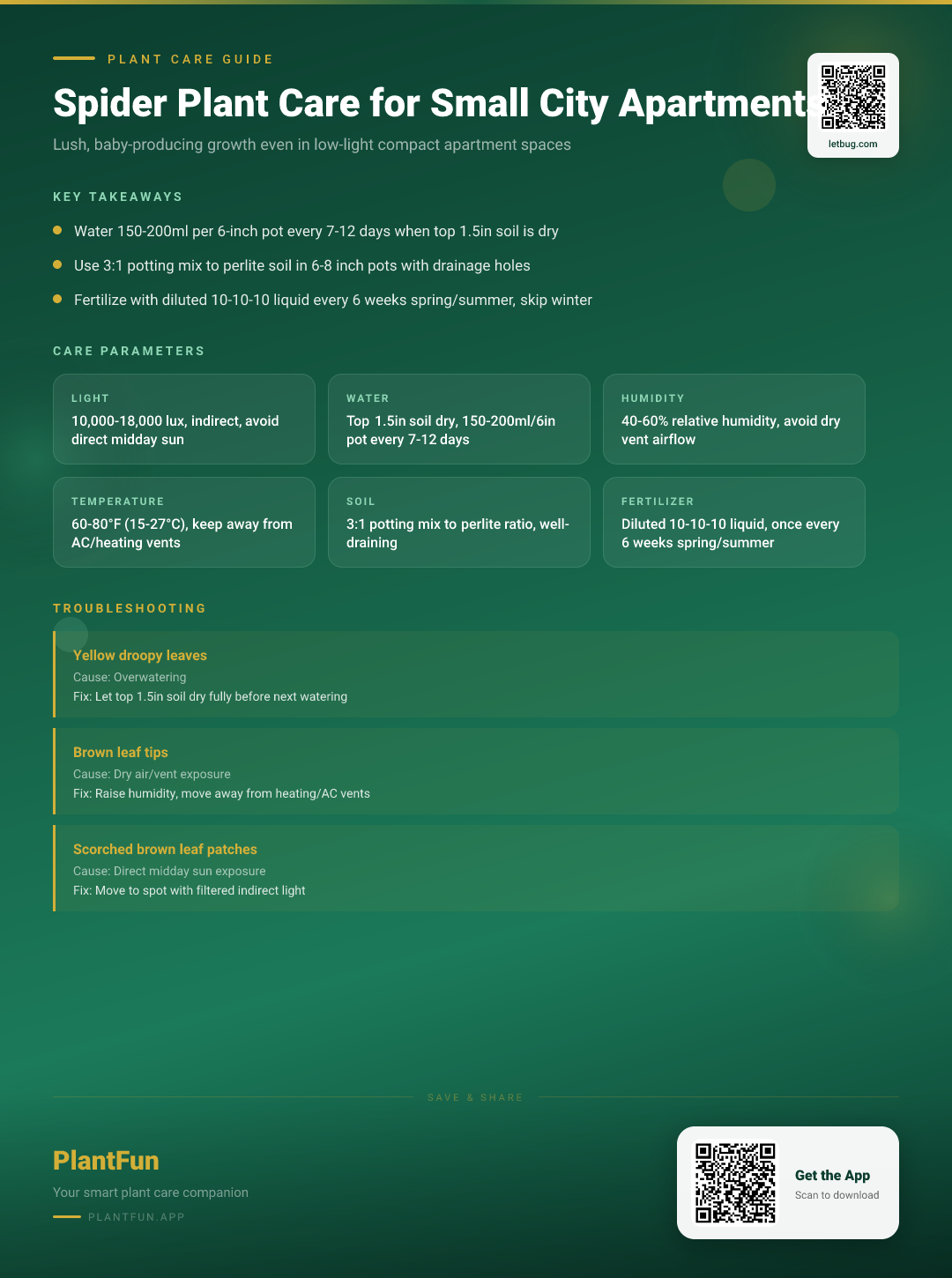
Key Takeaways
- Check soil moisture before watering — overwatering is the #1 killer of houseplants.
- Ensure your plant gets the right amount of light for its species.
- Be patient with recovery — most plants need 2–4 weeks to bounce back.
Quick Care Card
| Category | 1-Sentence Care Rule for Apartments |
|---|---|
| Light | 10,000-18,000 lux of bright indirect light, avoid direct midday sun, suitable for low-light apartment corners (Idrissi Azami et al., 2022) |
| Water | 150-200ml per 6-inch pot when the top 1.5 inches of soil is dry, roughly every 7-12 days (Šrámek, 1999) |
| Humidity | 40-60% relative humidity, matches average apartment air, with simple adjustments for dry heating/AC seasons |
| Temperature | 60-80°F (15-27°C), avoid sudden drafts from vents or entry doors (Idrissi Azami et al., 2022) |
| Soil | 3:1 ratio of all-purpose potting mix to perlite for fast drainage to prevent root rot in compact containers |
| Fertilizer | Half-diluted 10-10-10 liquid fertilizer once every 6 weeks in spring and summer, skip entirely in winter |
| Toxicity | Non-toxic to cats, dogs, and humans, making it safe for family-friendly apartments (ASPCA, 2026) |
Grab your free printable 2-minute weekly spider plant care checklist for instant access to all these thresholds at a glance, perfect for busy renters and beginner plant owners.
Why This Guide Exists
Generic spider plant care tips are often written for single-family homes with large, unobstructed windows, consistent humidity, and unlimited floor space—conditions that almost never apply to small city apartments. If you’ve ever followed a tip to “place in full sun” only to get burnt leaf tips, or repotted into a 12-inch pot that takes up half your counter space, you know how frustrating generic advice can be.
This guide is built exclusively for apartment living, with space-saving hacks, measurable care thresholds tailored to dry, low-light apartment conditions, and zero-fuss routines that fit busy renter schedules. Myth vs reality: Contrary to popular myth, spider plants do not need full sun to thrive, and they actually grow better in the smaller pots ideal for compact spaces (Idrissi Azami et al., 2022). This spider plant care for beginners guide also prioritizes non-toxic, pet-safe practices per ASPCA guidelines, so you don’t have to worry about curious cats or kids.
Step 1: Perfect Small-Space Placement for Maximum Growth
Optimizing placement is key for spider plant small space care—you want to maximize light access without sacrificing valuable counter or shelf space.
- Hanging planters (top recommendation): Hang from ceiling hooks or curtain rods 2-3 feet from north-facing windows, or 3-5 feet from south, east, or west-facing windows. This uses unused vertical space and keeps the plant out of the way of foot traffic and counter clutter.
- Shelf placement: Place on the top shelf of a bookcase within 5 feet of a window, making sure no taller furniture blocks light access.
Spider plant light requirements are 10,000-18,000 lux of bright indirect light, but they tolerate levels as low as 5,000 lux for low-light apartments. Quick test: Hold your hand up at the planned placement spot at midday. If you see a soft, blurry shadow, the light is perfect. If you see a sharp, defined shadow, the spot gets too much direct sun and will burn leaves. Wondering can spider plants grow in low light apartments? Yes—they will just grow slower and produce fewer baby pups, which is completely normal for lower-light conditions.
Step 2: Exact Watering Schedule for Apartment Conditions
One of the most common questions we get is how often to water spider plant in apartments where AC or heating dries out soil at inconsistent rates.
Stick to this measurable rule: Water 150-200ml per 6-inch pot only when the top 1.5 inches of soil is completely dry, which works out to every 7-12 days for most apartments (Šrámek, 1999). Quick test: Stick your index finger 1.5 inches into the soil. If it feels completely dry to the touch, it’s time to water. If it’s even slightly damp, wait 2 more days and check again.
Adjust for seasonal apartment conditions:
- Spider plant summer watering: If you run AC regularly, check soil every 6 days, as AC dries out soil faster.
- Winter heating: Check soil every 10-12 days, as heat also dries out air but plants go dormant and need less water.
Step 3: Soil & Potting Tips for Compact Containers
Spider plant pot size for small spaces is a non-negotiable for both healthy growth and space conservation.
- Soil mix: Use a 3:1 ratio of all-purpose potting mix to perlite to create fast-draining soil that prevents root rot in compact pots.
- Pot size: Stick to 6-8 inch pots max. Spider plants prefer being slightly root-bound, so larger pots waste space, hold excess moisture, and delay baby plant production (Šrámek, 1999). Only repot when you see roots growing out of the drainage holes, and size up just 1 inch at a time.
- Drainage requirement: Always use a pot with at least one drainage hole. If you want to use a decorative cachepot for aesthetic reasons, add a 1-inch layer of pebbles at the bottom to catch excess water and prevent roots from sitting in standing moisture.
Step 4: Humidity & Temperature Adjustments for Apartment Air
Spider plant humidity needs are perfectly aligned with average apartment conditions, but small adjustments prevent common issues like brown tips.
- Humidity: Aim for 40-60% relative humidity. If your apartment drops below 40% (common in winter when heating runs nonstop), mist the leaves once weekly or set the pot on a tray of pebbles filled with water to boost local humidity.
- Temperature: Keep your plant in 60-80°F (15-27°C) temperatures, the standard range for most heated/cooled apartments (Idrissi Azami et al., 2022). Avoid placing the plant within 2 feet of heating vents, AC units, or drafty front doors, as sudden temperature changes shock the plant and cause brown leaf tips.
Step 5: Low-Effort Fertilizing for Resilient Growth
Spider plants are low-feeders, so you don’t need to fertilize often to keep them healthy.
Use half-diluted 10-10-10 liquid fertilizer once every 6 weeks only in spring and summer, when the plant is actively growing. Skip fertilizing entirely in winter, when the plant is dormant and won’t absorb extra nutrients. Too much fertilizer is a top cause of brown tips, so less is always more for potted spider plants in small apartments.
Seasonal Care Calendar for Apartment Dwellers
Adjust your routine with these month-by-month tweaks tailored to common apartment seasonal changes:
- January-February (Winter): Follow spider plant winter care rules: Water every 10-12 days, skip fertilizer, move 1 foot further from drafty windows if outdoor temps drop below 30°F, and mist weekly if your heating runs nonstop.
- March-April (Spring): Gradually increase watering to every 7-9 days as daylight hours lengthen, start your every-6-week fertilizing routine, and move the plant 1 foot closer to windows to catch more spring light.
- May-August (Summer): Water every 7-8 days, adjust for AC use as needed, and hang a sheer curtain over south-facing windows to filter harsh midday sun. If you’re going on holiday for up to 2 weeks, water thoroughly before you leave and set the pot on a tray of wet pebbles to maintain humidity while you’re gone.
- September-December (Fall): Gradually reduce watering to every 9-12 days, stop fertilizing in October, and move the plant away from windows as daylight hours shorten and outdoor temps drop.
5 Common Apartment Spider Plant Mistakes to Avoid
Avoid these frequent errors that trip up even experienced apartment plant owners:
- Mistake: Overwatering on a fixed schedule without checking soil moisture first. What happens: Excess water causes root rot, yellow leaves, and eventual plant death. Instead: Check soil moisture every 7 days with the finger test, and only water when the top 1.5 inches is completely dry.
- Mistake: Placing the plant in direct midday sun through unfiltered apartment windows. What happens: Burnt brown leaf tips and bleached, pale foliage. Instead: Place 3-5 feet away from south-facing windows, or hang a sheer curtain to filter harsh direct sun.
- Mistake: Using a pot larger than 8 inches to “let the plant grow”. What happens: Wasted floor/counter space, excess soil holds too much moisture leading to root rot, and delayed baby plant production. Instead: Stick to 6-8 inch pots, and only size up 1 inch when roots grow out of the drainage holes.
- Mistake: Placing the plant within 2 feet of heating vents or AC units. What happens: Dry air causes brown leaf tips, and sudden temperature changes shock the plant. Instead: Keep the plant at least 3 feet away from vents, and mist weekly if your apartment air is consistently dry.
- Mistake: Letting baby spider plant pups grow unpruned for months. What happens: Overcrowded foliage that takes up extra space, and drained energy for the mother plant. Instead: Prune pups once they reach 3-4 inches tall, propagate them to give to friends, or pot them in small 4-inch pots for extra greenery without taking up much space.
Frequently Asked Questions
Why is my spider plant getting brown tips in my apartment?
Brown tips are the most common issue for apartment spider plants, and they are almost always caused by one of three easy-to-fix issues: dry air from heating/AC, overfertilizing, or fluoride/chlorine in tap water (Idrissi Azami et al., 2022). Try these 3 quick fixes:
- Mist the leaves once weekly to boost local humidity around the plant
- Skip fertilizing for 3 months, then only use half-diluted fertilizer once every 6 weeks in spring and summer
- Use filtered or rainwater for watering instead of tap water to avoid harsh chemicals
Can I keep a spider plant on my apartment kitchen windowsill?
Yes! Kitchens are actually great spots for spider plants because they often have higher humidity from cooking and dishwashing. Just follow two simple rules: make sure the windowsill gets no more than 2 hours of direct midday sun per day, and keep the plant at least 2 feet away from the stove to avoid heat damage from open flames or hot surfaces. North-facing kitchen windowsills are perfect for direct placement with no extra light filtering needed.
How often do spider plants produce babies in small apartments?
Healthy spider plants grown in 6-8 inch pots with 10,000+ lux of light will produce baby pups 1-2 times per year, usually in late spring or early summer. If your plant is in a lower-light apartment, it may only produce pups once every 2 years, which is completely normal. Wondering how to get spider plant babies faster? Let the plant become slightly root-bound before repotting, and use half-diluted fertilizer once every 6 weeks during the growing season to encourage pup growth.
References
- ASPCA. (2026). Toxic and Non-Toxic Plants List — ASPCA. https://www.aspca.org/pet-care/animal-poison-control/toxic-and-non-toxic-plants. Accessed 2026-02-27.
- Šrámek, F. (1999). Vaughan, M.J.: The Complete Book on Cut Flower Care. Biologia plantarum. https://doi.org/10.1023/a:1001770114931. Accessed 2026-02-27.
- Idrissi Azami, A.; O’Neill, K.; Pirro, S. (2022). The Complete Genome Sequence of Chlorophytum comosum (Asparagaceae, Asparagales), the Spider Plant. Biodiversity Genomes. https://doi.org/10.56179/001c.55588. Accessed 2026-02-27.
Optional Helper: Plantfun.App
Plantfun.App identifies your plants by photo, diagnoses pests and diseases with clear fixes, and creates personalised watering and light schedules that adapt to your home conditions — a handy companion for putting this guide into daily practice.
Found an error or have suggestions? We'd love your feedback.
Need help identifying this problem?
Get instant identification, personalized care schedules, and effective pest treatment plans directly on your phone.
Sponsored • We may earn a commission from app downloads
Related Guides
The Complete Spider Plant Care Checklist for Small Apartments: Grow Lush Resilient Plants Easily
Stop struggling to keep your spider plant thriving in a cramped apartment. Get exact light, water, and space-saving tips to grow lush, resilient foliage even with limited square footage.
Care GuideThe Complete Spider Plant Care Checklist for Lush Resilient Growth in Typical Apartments
Stop struggling to keep your spider plant thriving in your apartment. Get exact light, water, humidity thresholds plus a printable checklist for lush, resilient growth all year.
Care GuideThe Complete Spider Plant Care Guide for Small Urban Apartments: Year-Round Resilient Growth
Grow a lush, pup-producing spider plant even in a cramped, low-light apartment. Get exact light levels, watering amounts, and a free seasonal checklist for stress-free year-round care.
Pest ControlAnts on Plants: What They Mean and What to Do
Ants usually aren't eating your plant. They are farming other pests.