
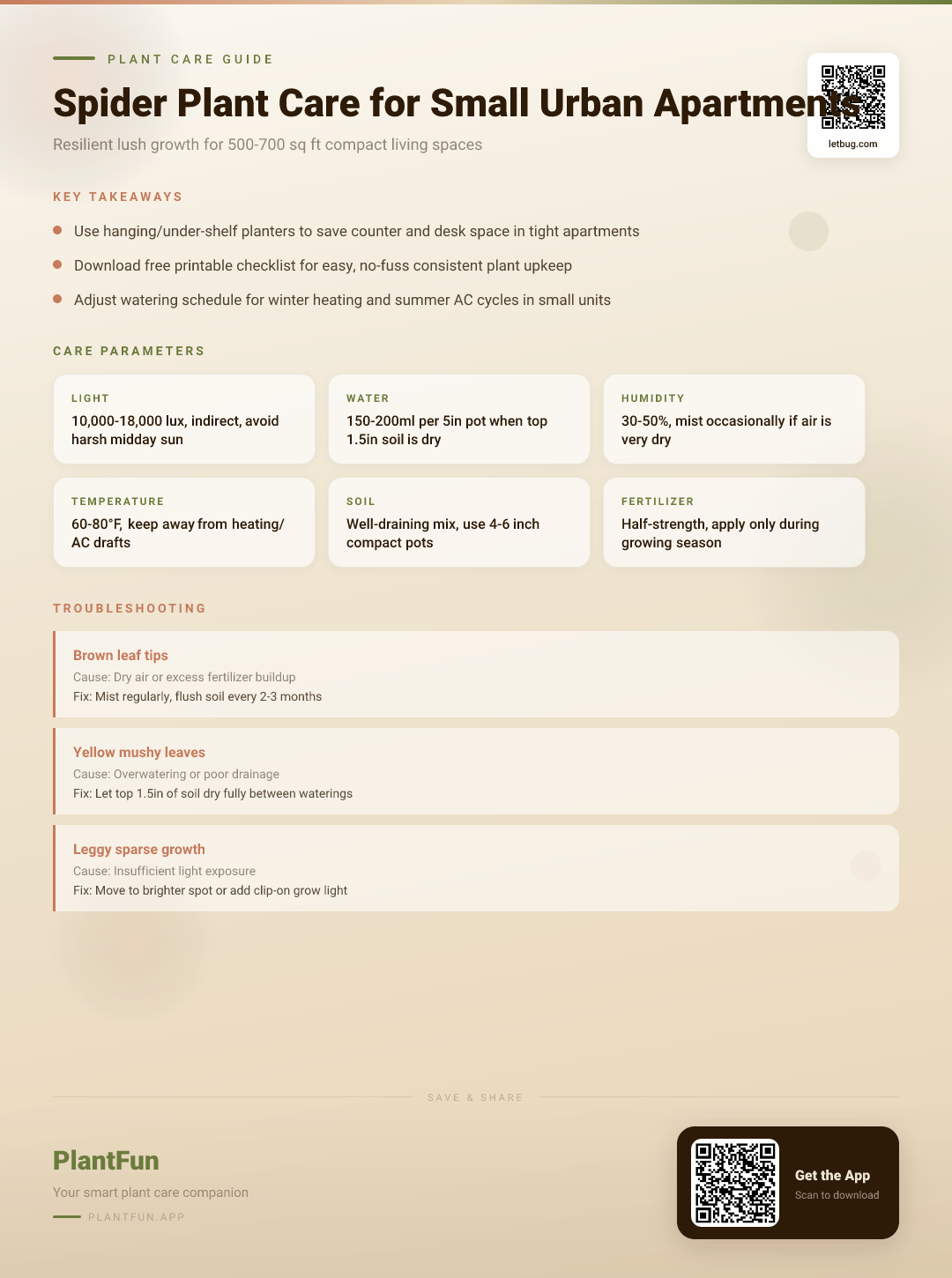
Key Takeaways
- Check soil moisture before watering — overwatering is the #1 killer of houseplants.
- Ensure your plant gets the right amount of light for its species.
- Be patient with recovery — most plants need 2–4 weeks to bounce back.
Quick Care Card
| Parameter | Exact Threshold for 500-700 sq ft Apartments |
|---|---|
| Light | 10,000-18,000 lux (bright indirect light) |
| Water | 150-200ml per 5in pot when top 1.5in of soil is dry |
| Humidity | 30-50% (matches standard apartment baseline humidity) |
| Temperature | 60-80°F (15-27°C) |
| Soil | 2 parts indoor potting mix + 1 part perlite |
| Fertilizer | Half-strength balanced 10-10-10 fertilizer every 6 weeks (March-October only) |
| Toxicity | Non-toxic to cats, dogs, and humans (ASPCA, 2026) |
Free printable fridge-friendly checklist download: letbug.com/spider-plant-apartment-checklist
Why This Guide Differs From Generic Spider Plant Care
Generic spider plant care guides are written for average residential homes with ample surface space, consistent light, and adjustable humidity levels. This guide is tailored exclusively for 500-700 sq ft urban apartments, where patchy window light, limited counter and floor space, 30-40% baseline humidity from heating and AC systems, and regular drafts are the norm. We skip vague advice like “bright indirect light” and give measurable, testable thresholds that work for your space, plus zero-waste space-saving hacks that don’t sacrifice plant health.
Myth vs Reality:
- Myth: Spider plants need large 8+ inch pots to grow full and lush.
- Reality: Spider plants prefer slightly root-bound conditions, and 4-6 inch pots are sufficient for 2-3 years of healthy growth in small apartments (Šrámek, 1999). Oversized pots only take up valuable living space and increase risk of root rot.
Spider plants are ideal for apartment renters: they are highly resilient, air-purifying, and non-toxic to pets and kids (ASPCA, 2026), making them perfect for compact shared living spaces.
Step 1: Optimal Small-Space Placement for Spider Plants
The goal of small space spider plant placement is to hit required light levels without blocking walkways or using up precious counter, desk, or floor space. Follow these rules:
- Hanging planter placement: Hang planters 12 inches below upper kitchen or living room shelves, 3 feet away from unobstructed east or west facing windows. This keeps them out of your line of sight and avoids head bumps while delivering ideal light levels. These spider plant hanging planter tips work for even the smallest studio apartments.
- Under-shelf placement: Use adhesive hook under-shelf planters mounted above kitchen sinks or desk edges. These take up zero surface space and get consistent indirect light from nearby windows.
- Avoid these spots: Keep plants at least 1 foot away from radiators, AC vents, drafty window sills, and high-traffic walkways where they can be knocked over.
Step 2: Exact Watering Schedule for Apartment Humidity Levels
Wondering how often to water spider plant in a dry apartment? Ditch fixed weekly schedules and use these measurable guidelines tailored to 30-40% baseline indoor humidity:
- 4 inch pot: 100-125ml of water when top 1.5in of soil is dry
- 5 inch pot: 150-200ml of water when top 1.5in of soil is dry
- 6 inch pot: 225-275ml of water when top 1.5in of soil is dry
Quick test: Stick your index finger 1.5 inches into the soil. If no soil sticks to your finger, it’s time to water. If soil clings to your skin, wait 2-3 more days and test again.
Seasonal adjustments:
- Winter (heating running 8+ hours a day): Reduce watering amount by 30% as growth slows and dry air reduces plant water uptake.
- Summer (AC running 8+ hours a day): Check soil dryness 1 day earlier each week, as AC dehumidifies air and speeds up moisture loss from soil (Šrámek, 1999).
Step 3: Light Requirements for Patchy Apartment Sunlight
Spider plant light requirements for apartments are specific: 10,000-18,000 lux of bright indirect light, which is easy to hit even with patchy window access.
- Ideal spot: 3 feet away from an east or west facing window, which delivers 12,000-16,000 lux during midday growing season months.
- Low light fix (north facing windows): North facing windows only deliver 4,000-7,000 lux, which is too low for consistent growth. Use a cheap clip-on grow light clipped to the shelf above your plant, run it 6 hours a day during March-October. This takes no extra surface space and delivers the exact light levels your plant needs.
Signs of incorrect light:
- Too much light: Yellow, scorched leaf edges
- Too little light: Leggy, stretched growth with wide gaps between leaves, no spiderette (pup) production. Wondering how to fix leggy spider plant? Move it 1 foot closer to a window or add a clip-on grow light, and prune back leggy stems to encourage new, bushy growth.
A 2022 genome study of Chlorophytum comosum confirmed its natural adaptation to moderate indirect light, making it far more tolerant of patchy apartment light than most other common houseplants (Idrissi Azami et al, 2022).
Step 4: Soil & Potting Tips for Compact Apartment Living
Spider plant pot size for small apartments and soil mix are critical to avoid wasting space and preventing root rot:
- Pot size rule: Stick to 4-6 inch pots for the first 2-3 years of growth. Spider plants prefer slightly root-bound conditions, so repot only when roots are growing out of the drainage holes, and go up a maximum of 1 inch in pot size each time. Skip 8+ inch pots entirely for apartment use, as they take up unnecessary space and hold excess moisture.
- Spider plant soil mix for apartments: Use a blend of 2 parts standard indoor potting mix + 1 part perlite. This mix drains fast, preventing root rot in enclosed apartment spaces with low air flow.
- Space-saving pot options: Use adhesive under-shelf planters, or hanging planters that hook onto shelf edges, to store your spider plant without using any counter, desk, or floor space.
Step 5: Fertilizing Routine for Steady Resilient Growth
Follow this simple routine for spider plant resilient growth tips that work in small enclosed apartment spaces:
- Frequency: Fertilize every 6 weeks only during the growing season (March-October). Skip fertilizing entirely from November-February, when growth slows.
- Dilution: Use half-strength balanced 10-10-10 houseplant fertilizer. Never use full-strength fertilizer in apartments: enclosed spaces have less air flow, leading to faster salt buildup in soil, which causes brown leaf tips.
- Over-fertilizing fix: If you see white crust on the top of your soil, leach it by pouring 2x your pot volume of filtered water through the soil to flush out excess salts.
Seasonal Care Calendar for Apartment Spider Plants
Adjust your care routine month-by-month to account for apartment-specific conditions like winter heating dryness and summer AC drafts:
- March-April: Return to regular watering amounts, start half-strength fertilizing every 6 weeks, move plants 6 inches closer to windows as sun intensity increases.
- May-August: Keep plants 3 feet away from west facing windows to avoid leaf scorch, mist leaves once a week if AC runs 8+ hours a day to boost humidity slightly, check soil dryness every 5 days.
- September-October: Gradually reduce watering amount by 20%, stop fertilizing, move plants 6 inches closer to windows as day length shortens.
- November-February: Reduce watering amount by 30%, no fertilizing, keep plants at least 1 foot away from radiators, run clip-on grow lights 4 hours a day if light levels drop below 8,000 lux. This spider plant winter care apartments routine prevents brown tips and stunted growth during cold, dry months.
Common Small-Apartment Spider Plant Mistakes to Avoid
- Mistake: Using an 8+ inch pot to “let the plant grow bigger” What happens: Extra soil holds excess moisture, leading to root rot, and the pot takes up valuable counter or floor space in your small apartment. Instead: Stick to 4-6 inch pots, repot only once every 2-3 years when roots are growing out of the drainage holes, go up max 1 inch in pot size each time.
- Mistake: Placing the plant within 1 foot of a radiator or AC vent What happens: Dry drafts cause rapid moisture loss from leaves, leading to brown tips and stunted growth. Instead: Keep all spider plants at least 12 inches away from heating/cooling vents, radiators, and drafty window sills in winter.
- Mistake: Watering on a fixed schedule instead of testing soil dryness What happens: Overwatering in winter when heating reduces plant water needs, or underwatering in summer when AC dehumidifies the air, both cause leaf damage. Instead: Test the top 1.5 inches of soil with your finger every 5-7 days, water only when no soil sticks to your finger, using the ml amounts specified for your pot size.
Voice Search Optimized FAQ Section
Can I keep my spider plant on my apartment fire escape?
Only if temperatures stay between 60-80°F (15-27°C) and it gets 1-2 hours of morning sun only, no harsh midday sun. If your fire escape gets more than 2 hours of direct afternoon sun, leaves will scorch. Bring it inside if temperatures drop below 55°F or rise above 85°F, as extreme temperatures damage foliage (Idrissi Azami et al, 2022). Avoid leaving it on the fire escape during heavy rain, as excess water can cause root rot.
Why is my apartment spider plant getting brown tip leaves?
The most common causes in small apartments are dry drafts from heating/AC, over-fertilizing leading to salt buildup, or using tap water with high fluoride/chlorine content. First, flush the soil with 2x your pot volume of filtered water to remove excess salts, then move the plant at least 1 foot away from vents, and use filtered or rain water for future waterings. Brown tips don’t harm the plant, so you can trim them off with clean scissors for a neater appearance if you want.
How do I propagate spider plants without extra apartment space?
The easiest way is to leave the spiderette (pup) attached to the mother plant, and place a small 3-inch pot with soil on the same shelf or hanging next to the mother’s planter so the pup’s base touches the soil. Once it roots in 2-3 weeks, snip the connecting stem, and you can either keep the small plant in a hidden under-shelf spot or gift it to a friend, no extra surface space needed. This method is perfect for spider plant care for beginners, as it has a near 100% success rate.
References
- Šrámek, F. (1999). Vaughan, M.J.: The Complete Book on Cut Flower Care. Biologia plantarum. https://doi.org/10.1023/a:1001770114931. Accessed 2026-03-02.
- Idrissi Azami, A.; O’Neill, K.; Pirro, S. (2022). The Complete Genome Sequence of <i>Chlorophytum comosum</i> (Asparagaceae, Asparagales), the Spider Plant. Biodiversity Genomes. https://doi.org/10.56179/001c.55588. Accessed 2026-03-02.
- American Society for the Prevention of Cruelty to Animals. (2026). Toxic and Non-Toxic Plants List — ASPCA. https://www.aspca.org/pet-care/animal-poison-control/toxic-and-non-toxic-plants. Accessed 2026-03-02
Optional Helper: Plantfun.App
Plantfun.App identifies your plants by photo, diagnoses pests and diseases with clear fixes, and creates personalised watering and light schedules that adapt to your home conditions — a handy companion for putting this guide into daily practice.
Found an error or have suggestions? We'd love your feedback.
Need help identifying this problem?
Get instant identification, personalized care schedules, and effective pest treatment plans directly on your phone.
Sponsored • We may earn a commission from app downloads
Related Guides
The Complete Spider Plant Care Checklist for Small Apartments: Grow Lush Resilient Plants Easily
Stop struggling to keep your spider plant thriving in a cramped apartment. Get exact light, water, and space-saving tips to grow lush, resilient foliage even with limited square footage.
Care GuideThe Complete Spider Plant Care Checklist for Thriving Growth in Small City Apartments
Grow lush, baby-producing spider plants even in tiny apartments. Get exact light, water, and humidity thresholds plus a free printable weekly checklist to take the guesswork out of care.
Care GuideThe Complete Spider Plant Care Checklist for Resilient Growth in Small Urban Apartments
Grow lush, trailing spider plants in your small urban apartment without fancy expensive tools. Grab our free 7-item checklist, exact light, water, and soil parameters for zero-fuss, resilient growth year-round.
Pest ControlAnts on Plants: What They Mean and What to Do
Ants usually aren't eating your plant. They are farming other pests.