
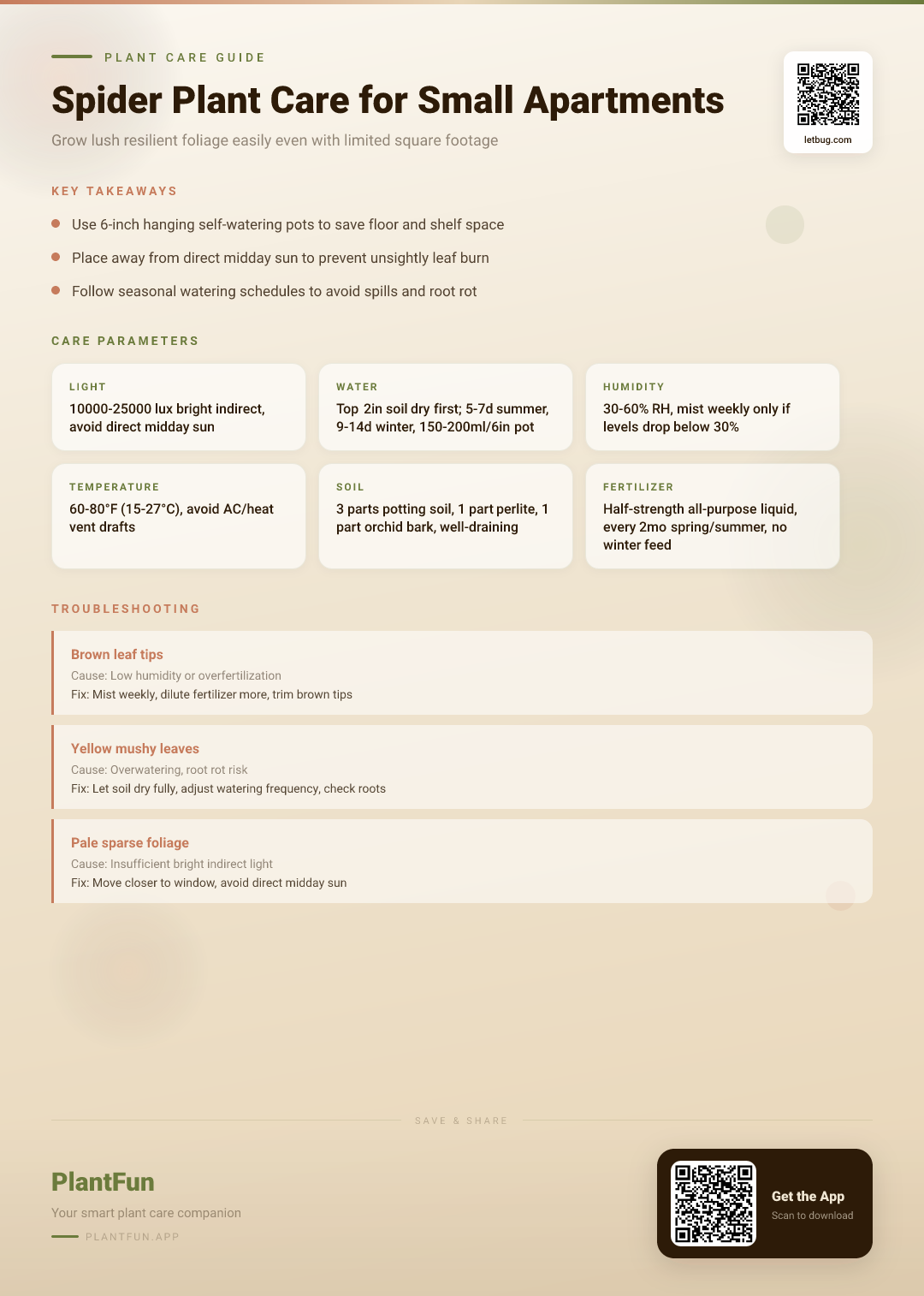
Key Takeaways
- Check soil moisture before watering — overwatering is the #1 killer of houseplants.
- Ensure your plant gets the right amount of light for its species.
- Be patient with recovery — most plants need 2–4 weeks to bounce back.
Quick Care Card: At-a-glance 1-minute cheat sheet with all measurable care thresholds, space-saving placement recommendations, and monthly maintenance tasks for busy apartment dwellers
| Care Factor | Exact Threshold for Small Apartments | Space-Saving Tip |
|---|---|---|
| Light | 10,000–25,000 lux bright indirect light, avoid direct midday sun (Idrissi Azami et al, 2022) | Hang 6–7ft from floor, 2–3ft from north/east windows to free up shelf/floor space |
| Water | Top 2 inches of soil fully dry; 150–200ml per 6-inch pot (Šrámek, 1999) | Use self-watering hanging pots to avoid messy spills in tight spaces |
| Humidity | 30–60% relative humidity (no humidifier required) | Mist once weekly if humidity drops below 30% |
| Temperature | 60–80°F (15–27°C), avoid AC/heat vent drafts | Keep 3ft away from vents, stovetops, and exterior doors |
| Soil | 3 parts potting soil + 1 part perlite + 1 part orchid bark | Use compact 6-inch pots to reduce repotting frequency to every 2–3 years |
| Fertilizer | Half-strength all-purpose liquid fertilizer every 2 months (spring/summer only) | Skip winter feeding to avoid salt buildup in small pots |
| Toxicity | Non-toxic to cats, dogs, and humans (ASPCA, 2026) | Place within reach of kids/pets without risk |
Why This Guide Is Different for Small Apartment Spider Plants
Generic spider plant care guides often assume you have full-sun south-facing windows, extra floor space for large pots, and control over your home’s humidity levels — but that’s rarely the case for renters in 600–1,500 sq ft apartments with north/east-facing windows and baseline 30–50% humidity. A common myth is that spider plants need constant bright light to thrive, but research confirms they are highly adaptable to typical indoor apartment conditions (Idrissi Azami et al, 2022). This guide skips generic filler to give you exact, testable parameters and space-saving hacks that work for your limited square footage, no fancy equipment required. If you’re new to houseplants, check out our spider plant care for beginners guide for additional basics.
Step 1: Optimal Small-Space Placement for Spider Plants
The ideal spider plant light requirements for apartments are 10,000–25,000 lux of bright indirect light, which is exactly what you’ll get 2–3 feet away from a north or east-facing window (Idrissi Azami et al, 2022). If you’re unsure of your light levels, use our guide to testing indoor light levels to get an accurate reading. For space-saving placement: hang your plant 6–7 feet from the floor using renter-friendly adhesive hooks, so it doesn’t take up any shelf or floor space. You can also place it on the top of 12-inch deep floating shelves, 1 foot below the ceiling, to use unused vertical space. Avoid placing it more than 3 feet away from a window, as this leads to leggy growth and lost variegation — perfect for anyone wondering can spider plants grow in low light apartments: they can tolerate levels as low as 8,000 lux for short periods, but will grow best in the 10,000–25,000 lux range. For hanging planter recommendations, see our best renter-friendly hanging planters roundup.
Step 2: Watering Schedule Tailored to Apartment Humidity
The most common question we get is how often to water spider plant in small apartments. The exact rule is: only water when the top 2 inches of soil are fully dry (test this by sticking your index finger 2 inches into the soil, no moisture should stick to your skin). For most apartments, this means 9–14 days between waterings in winter, and 5–7 days in summer (Šrámek, 1999). Use exactly 150–200ml of water per 6-inch pot to avoid overwatering and messy spills that can damage your rental floors or furniture. This spider plant summer watering schedule is calibrated for the 30–50% baseline humidity of most apartments, so you don’t have to guess.
Step 3: Space-Efficient Soil & Potting Tips
For compact spider plant potting tips, use a 6-inch hanging self-watering pot, which takes up zero shelf or floor space and reduces watering frequency by 30%. The ideal well-draining soil mix is 3 parts standard potting soil, 1 part perlite, and 1 part orchid bark — this mix prevents root rot and reduces repotting frequency to every 2–3 years, so you don’t have to deal with messy repotting in a small space often. If you want to make your own mix, check out our DIY well-draining soil mix guide. For spider plant hanging planter tips, pick a pot with a built-in drainage saucer to avoid leaks onto your floors or furniture.
Step 4: Temperature & Humidity Adjustments for Typical Apartments
Spider plants thrive in the standard 60–80°F (15–27°C) temperature range of most apartments (Idrissi Azami et al, 2022). Avoid placing your plant near AC or heat vents, as sudden temperature swings of more than 10°F can cause leaf drop. Spider plant humidity needs are perfectly matched to most apartment’s 30–50% baseline humidity, so you don’t need a humidifier. If your humidity drops below 30% in winter (common with central heat), mist the leaves once weekly to prevent brown tips.
Step 5: Low-Effort Fertilizing for Resilient Growth
For spider plant resilient growth tips, fertilize once every 2 months in spring and summer with half-strength all-purpose liquid fertilizer. Skip fertilizing entirely in winter, as this causes excess salt buildup in small pots that leads to brown leaf tips. This low-effort schedule is perfect for busy renters who don’t have time for frequent plant maintenance.
Seasonal Care Calendar for Apartment Spider Plants
This month-by-month calendar is tailored to typical apartment conditions, so you know exactly what to do each season:
- January–February (Winter Dormancy): Follow spider plant winter care for apartments rules: water only every 10–14 days, skip fertilizer, and keep your plant 3 feet away from heat vents.
- March–April (Spring Growth): Increase watering to every 7–10 days, start your bi-monthly fertilizing schedule, and prune any brown or leggy growth to keep your plant compact.
- May–June (Peak Growth): Check for new pups (baby spider plants) growing on long stolons, and move your plant 1 foot further back from east-facing windows if midday sun starts to hit the leaves.
- July–August (Summer): Follow the spider plant summer watering schedule of every 5–7 days, and propagate any new pups if you want to share them with friends.
- September–October (Fall): Reduce fertilizing to once a month, then stop entirely by mid-October, and prune any overgrown stolons to keep your plant compact for winter.
- November–December (Pre-Dormancy): Reduce watering to every 10–14 days, and move your plant away from drafty exterior doors or windows.
Common Small-Apartment Spider Plant Mistakes to Avoid
- Mistake: Using hanging pots without drainage holes. What happens: Overwatering leads to root rot, and excess water leaks onto your rental floors or furniture, causing damage you might be charged for. Instead: Use a hanging pot with a built-in drainage saucer, or line the bottom 1 inch of the pot with pebbles to catch excess water before it leaks.
- Mistake: Placing your spider plant more than 3 feet away from a north/east-facing window. What happens: Low light leads to leggy growth, lost variegation, and no new pups growing. Instead: Hang your plant within 2–3 feet of the window, or add a low-wattage grow bulb if your light levels are below 10,000 lux.
- Mistake: Crowding your spider plant with 3 or more other plants on a small shelf. What happens: Poor air flow leads to fungal growth on the soil and pest infestations like spider mites that can spread to your other plants. Instead: Keep 6 inches of space between your spider plant and other foliage, or hang it above your plant shelf to use unused vertical space.
- Mistake: Repotting your spider plant every year. What happens: You waste valuable storage space on extra pots and soil, and the extra root space leads to faster overgrowth that takes up more of your small space. Instead: Repot only every 2–3 years, when you see roots growing out of the drainage holes.
Voice Search FAQ 1: Can I keep a spider plant on my small apartment kitchen windowsill?
Yes, as long as it gets 10,000–25,000 lux of bright indirect light, and is not exposed to direct midday sun that can burn the leaves (Idrissi Azami et al, 2022). Keep your plant at least 2 feet away from your stovetop to avoid heat damage from cooking steam, open flames, and oil splatters. Kitchens often have slightly higher humidity than other rooms, which is perfect for spider plants, making this a great placement option if you have limited space elsewhere.
Voice Search FAQ 2: Why is my apartment spider plant growing brown leaf tips?
The two most common causes of brown tips in apartment spider plants are dry air below 30% RH (common in winter with central heat) and chlorine or fluoride in tap water that builds up in the small potting soil. Quick fixes: Mist the leaves once weekly to raise humidity around the plant, switch to filtered or rainwater for watering, and snip off brown tips with clean scissors at a 45-degree angle for a natural look. This is one of the most common questions about spider plant care for beginners, and it’s almost always easy to fix with minor adjustments.
Voice Search FAQ 3: How do I propagate spider plant pups without extra pot space?
If you don’t have extra space for new pots, you can propagate spider plant pups easily without taking up extra storage space. First, snip off the pup with 1 inch of the attached stolon (the long stem it grows on). Place the base of the pup in a small 4-ounce mason jar of water on your windowsill, which fits easily even on the smallest kitchen or bathroom shelf, until the roots grow 1–2 inches long. Instead of potting the rooted pup yourself, gift it to a friend, neighbor, or coworker who wants a new houseplant. For more easy propagation tips, check out our low-effort houseplant propagation guide.
References
- ASPCA. (2026). Toxic and Non-Toxic Plants List — ASPCA. https://www.aspca.org/pet-care/animal-poison-control/toxic-and-non-toxic-plants. Accessed 2026-03-02.
- Idrissi Azami, A.; O’Neill, K.; Pirro, S. (2022). The Complete Genome Sequence of <i>Chlorophytum comosum</i> (Asparagaceae, Asparagales), the Spider Plant. Biodiversity Genomes. https://doi.org/10.56179/001c.55588. Accessed 2026-03-02.
- Šrámek, F. (1999). Vaughan, M.J.: The Complete Book on Cut Flower Care. Biologia plantarum. https://doi.org/10.1023/a:1001770114931. Accessed 2026-03-02.
Optional Helper: Plantfun.App
Plantfun.App identifies your plants by photo, diagnoses pests and diseases with clear fixes, and creates personalised watering and light schedules that adapt to your home conditions — a handy companion for putting this guide into daily practice.
Found an error or have suggestions? We'd love your feedback.
Need help identifying this problem?
Get instant identification, personalized care schedules, and effective pest treatment plans directly on your phone.
Sponsored • We may earn a commission from app downloads
Related Guides
The Complete Spider Plant Care Checklist for Thriving Growth in Small City Apartments
Grow lush, baby-producing spider plants even in tiny apartments. Get exact light, water, and humidity thresholds plus a free printable weekly checklist to take the guesswork out of care.
Care GuideThe Complete Spider Plant Care Checklist for Small Urban Apartments: Resilient Lush Growth Tips
Grow a lush, thriving spider plant even in a cramped 500-700 sq ft urban apartment. Get exact light levels, watering amounts, space-saving hacks, and a free printable checklist for no-fuss resilient growth.
Care GuideThe Complete Spider Plant Care Checklist for Lush Resilient Growth in Typical Apartments
Stop struggling to keep your spider plant thriving in your apartment. Get exact light, water, humidity thresholds plus a printable checklist for lush, resilient growth all year.
Pest ControlAnts on Plants: What They Mean and What to Do
Ants usually aren't eating your plant. They are farming other pests.