
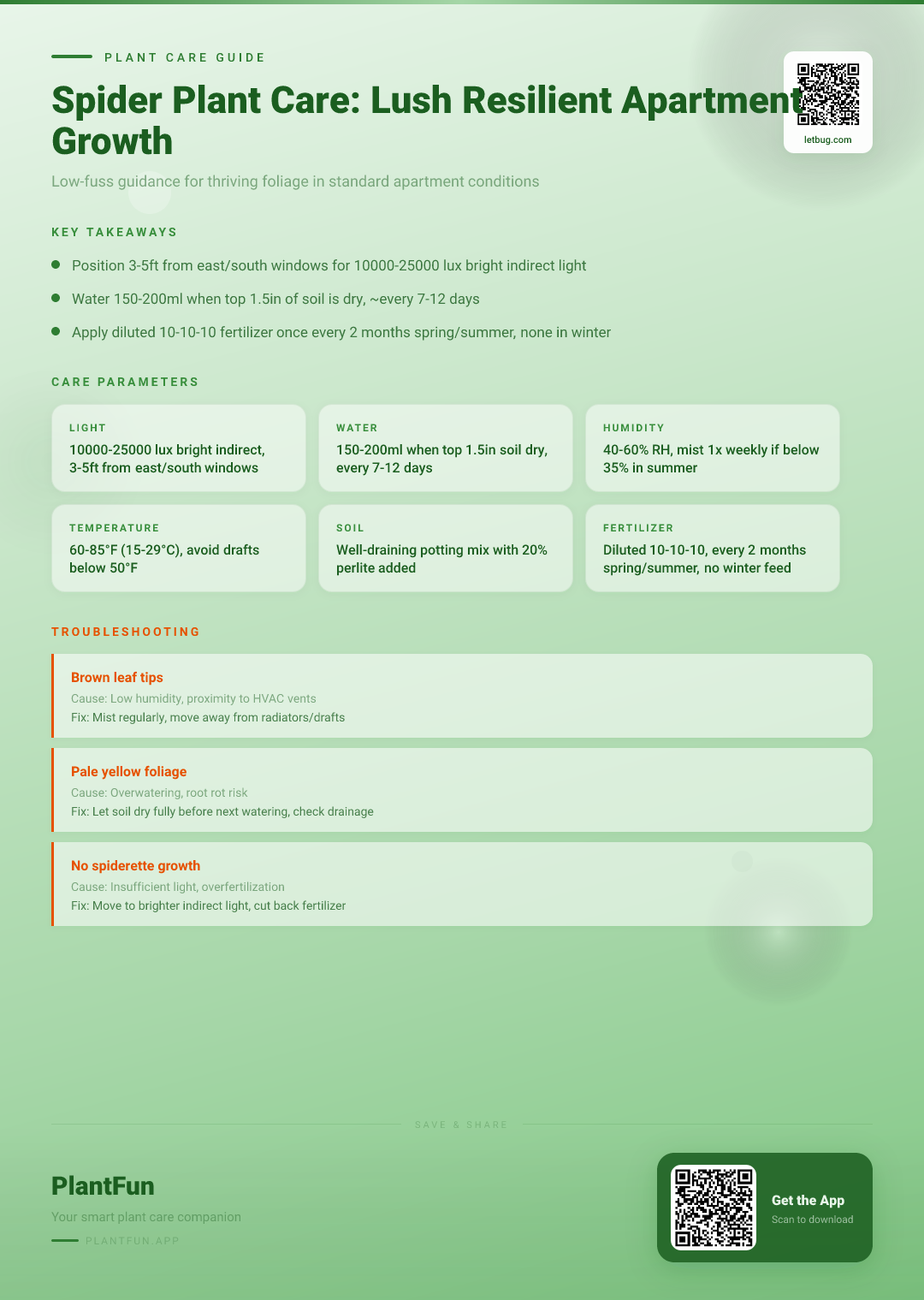
Key Takeaways
- Check soil moisture before watering — overwatering is the #1 killer of houseplants.
- Ensure your plant gets the right amount of light for its species.
- Be patient with recovery — most plants need 2–4 weeks to bounce back.
Quick Care Card
| Parameter | Exact Threshold for Apartments |
|---|---|
| Light | 10,000-25,000 lux bright indirect |
| Water | 150-200ml when top 1.5 inches of soil is dry (every 7-12 days) |
| Humidity | 40-60% relative humidity |
| Temperature | 60-85°F (15-29°C), no exposure below 50°F (10°C) |
| Soil | Standard potting mix + 20% perlite for drainage |
| Fertilizer | Diluted 10-10-10 once every 2 months (spring/summer only) |
| Toxicity | Non-toxic to cats, dogs, and humans (ASPCA, 2026) |
Download our free printable spider plant care checklist to stick on your fridge and never miss a care task again, perfect for spider plant care for beginners.
Why Spider Plants Struggle in Typical Apartments
Spider plants (Chlorophytum comosum) are widely celebrated as low-fuss houseplants, but apartment-specific conditions often push even these hardy specimens off track. Common stressors include dry forced air from HVAC systems that strips moisture from foliage, limited natural light from small, shaded apartment windows, and irregular watering schedules from busy renters who travel or work long hours. Unlike generic spider plant care guides, this checklist is tailored exclusively to these urban constraints, with no specialized equipment required.
Diagnosis First: Spot 3 Common Early Warning Signs of Stress
Catch these symptoms early to reverse damage before it becomes permanent:
- Brown leaf tips: The most common early stress sign, often mistaken for under-watering at first glance.
- Pale yellow foliage: A signal that light, water, or nutrient levels are out of balance, and answers why is my spider plant turning yellow for many renters.
- Lack of spiderette growth: Mature plants (1+ year old) that don’t produce baby offshoots are indicating unmet care needs.
Step 1: Light Requirements for Apartment Spider Plants
Spider plants thrive in 10,000-25,000 lux of bright indirect light, the equivalent of light filtered through a sheer curtain or indirect sun exposure (Idrissi Azami et al., 2022). The ideal placement is 3-5 feet from an east or south-facing window, where they get 4-6 hours of gentle morning sun and avoid harsh midday rays that can scorch leaves. If you’re wondering can spider plants live in low light apartments with only north-facing windows? Yes, they will survive, but growth will be slower and they will rarely produce spiderettes. For low-light spaces, add a basic grow light set to run 6 hours a day to hit the minimum lux threshold. This section covers all your spider plant light requirements for urban spaces.
Step 2: Exact Watering Schedule for Apartment Conditions
Wondering how often to water spider plant in an apartment? Stick to this measurable rule: give 150-200ml of filtered or rain water only when the top 1.5 inches of soil feels completely dry to the touch (Šrámek, 1999). For most apartments, this works out to every 7-12 days. Adjust based on your HVAC use: if your heating is running constantly in winter, check soil moisture every 6 days, as dry air will speed up evaporation. If your AC is running at full blast in summer, you may only need to water every 10-12 days. Avoid watering on a fixed schedule regardless of soil moisture, as this is the leading cause of stress for apartment spider plants.
Step 3: Humidity & Temperature Thresholds
Spider plant humidity needs fall between 40-60% relative humidity, the sweet spot for most apartment foliage plants. If you don’t have a hygrometer, use this quick test: if your skin feels tight or dry after 10 minutes in the room, humidity is likely below 40%. Keep temperatures between 60-85°F (15-29°C) year round, and avoid placing your plant near drafty windows or exterior doors where temperatures can drop below 50°F (10°C) for extended periods, as this will cause leaf damage.
Step 4: Soil & Fertilizer Checklist
Use a standard well-draining potting mix amended with 20% perlite to prevent waterlogging around the roots, a common issue in plastic nursery pots used by most renters. Follow this simple spider plant fertilizer schedule: use a diluted 10-10-10 liquid fertilizer once every 2 months only during spring and summer growing months. Skip all fertilizer in winter, when the plant is dormant, to avoid salt buildup that causes brown tips.
Seasonal Care Calendar for Apartment Dwellers
Adjust your care routine with the seasons to avoid stress:
- Winter (spider plant winter care): Reduce watering volume by 50%, as plants take up less moisture when dormant. Move your spider plant at least 2 feet away from radiators and baseboard heaters to avoid dry air damage.
- Summer (spider plant summer watering): If humidity drops below 35%, mist your plant’s foliage once a week to boost moisture. Move it 1 foot further back from south-facing windows during heatwaves to avoid leaf scorch.
3 Common Apartment Care Mistakes to Avoid
- Mistake: Overwatering your spider plant on a fixed schedule, even when soil is still moist. What happens: Soggy soil leads to root rot, which causes pale yellow foliage and eventual plant death if unaddressed. Instead: Stick to the 1.5-inch soil dryness test before every watering, even if it’s been longer than your usual interval.
- Mistake: Placing your spider plant directly on top of a heating vent or under an AC vent. What happens: Rapid air flow strips moisture from leaves in 2-3 days, leading to widespread spider plant brown tips even if you’re watering correctly. Instead: Place your plant on a shelf 1 foot above the vent, or use a cheap vent deflector to redirect air away from the plant.
- Mistake: Repotting your spider plant more than once every 2-3 years. What happens: Spider plants prefer to be slightly root bound, and unnecessary repotting causes root shock that stunts growth for 6+ months. Instead: Only repot when you see roots growing out of the drainage holes at the bottom of the pot.
Frequently Asked Questions
Why is my spider plant getting brown tips even when I water it regularly?
This is one of the most common spider plant care for apartments questions for renters. The most likely causes are fluoride or chlorine in tap water, dry HVAC air, or excess salt buildup from overfertilizing. To learn how to fix brown tips on spider plant: switch to filtered or rain water, mist foliage every other day if humidity is below 40%, and flush the soil with 3x the pot volume of water every 3 months to wash away salt buildup.
Can I keep my spider plant in a dark apartment bedroom?
Yes, spider plants are highly tolerant of low light, but they will grow much slower and will not produce spiderettes in spaces with less than 2 hours of indirect light per day. If your bedroom gets no natural light, add a basic clip-on grow light set to run 6 hours a day to support healthy growth.
How do I get my spider plant to grow more baby spiderettes?
Mature spider plants (1-2 years old) will produce spiderettes when they get 15,000+ lux of bright indirect light, are slightly root bound, and are not overfertilized. Avoid repotting until roots are coming out of the drainage holes, and stick to the recommended fertilizer schedule to encourage offshoot growth.
Troubleshooting Quick Reference
Brown Leaf Tips
Symptom: Dry, crispy brown tips on the ends of otherwise healthy green leaves. Likely cause: Dry air, tap water contaminants, or fertilizer salt buildup. Fix:
- Switch to filtered water for all waterings
- Mist foliage 2x a week if humidity is below 40%
- Flush soil with 3x pot volume of water every 3 months to remove salt buildup
Pale Yellow Foliage
Symptom: Leaves lose their deep green color, turn pale yellow, and may feel soft to the touch. Likely cause: Overwatering leading to early root rot, or insufficient light. Fix:
- Stop watering until the top 2 inches of soil are completely dry
- Move the plant 2 feet closer to an east or south-facing window to increase light exposure
- If root rot is advanced, trim black mushy roots and repot in fresh dry soil
No Spiderette Growth
Symptom: A mature 1+ year old plant shows no signs of growing long stems with baby spiderettes. Likely cause: Insufficient light, too much fertilizer, or the plant is not root bound enough. Fix:
- Move the plant to a spot with 15,000+ lux of bright indirect light
- Skip fertilizer for 3 months to encourage offshoot growth
- Avoid repotting until roots are visible through the drainage holes
Mushy Black Roots
Symptom: Leaves turn yellow and wilt, and roots visible through drainage holes are black and mushy instead of white and firm. Likely cause: Severe root rot from consistent overwatering. Fix:
- Remove the plant from its pot and trim all black mushy roots with sterile scissors
- Repot in fresh, dry potting mix with 20% perlite
- Wait 7 days before watering to give remaining healthy roots time to recover
References
- American Society for the Prevention of Cruelty to Animals. (2026). Toxic and Non-Toxic Plants List — ASPCA. https://www.aspca.org/pet-care/animal-poison-control/toxic-and-non-toxic-plants. Accessed 2026-03-06.
- Šrámek, F. (1999). Vaughan, M.J.: The Complete Book on Cut Flower Care. Biologia plantarum. https://doi.org/10.1023/a:1001770114931. Accessed 2026-03-06.
- Idrissi Azami, A.; O’Neill, K.; Pirro, S. (2022). The Complete Genome Sequence of Chlorophytum comosum (Asparagaceae, Asparagales), the Spider Plant. Biodiversity Genomes. https://doi.org/10.56179/001c.55588. Accessed 2026-03-06.
Optional Helper: Plantfun.App
Plantfun.App identifies your plants by photo, diagnoses pests and diseases with clear fixes, and creates personalised watering and light schedules that adapt to your home conditions — a handy companion for putting this guide into daily practice.
Found an error or have suggestions? We'd love your feedback.
Need help identifying this problem?
Get instant identification, personalized care schedules, and effective pest treatment plans directly on your phone.
Sponsored • We may earn a commission from app downloads
Related Guides
The Complete Spider Plant Care Checklist for Thriving Growth in Small City Apartments
Grow lush, baby-producing spider plants even in tiny apartments. Get exact light, water, and humidity thresholds plus a free printable weekly checklist to take the guesswork out of care.
Care GuideThe Complete Spider Plant Care Guide for Small Urban Apartments: Year-Round Resilient Growth
Grow a lush, pup-producing spider plant even in a cramped, low-light apartment. Get exact light levels, watering amounts, and a free seasonal checklist for stress-free year-round care.
Care GuideThe Complete Spider Plant Care Checklist for Resilient Growth in Small Urban Apartments
Grow lush, trailing spider plants in your small urban apartment without fancy expensive tools. Grab our free 7-item checklist, exact light, water, and soil parameters for zero-fuss, resilient growth year-round.
Pest ControlAnts on Plants: What They Mean and What to Do
Ants usually aren't eating your plant. They are farming other pests.