
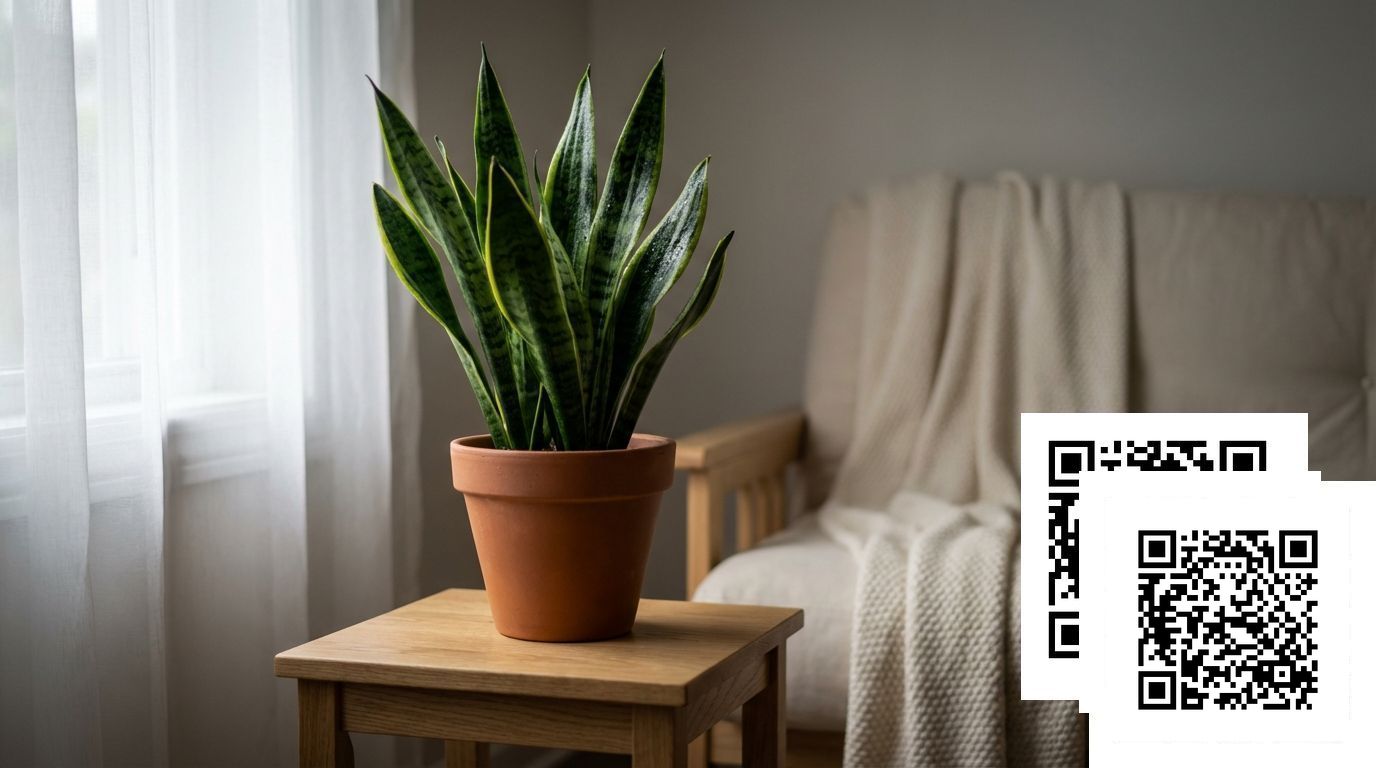
Key Takeaways
- Check soil moisture before watering — overwatering is the #1 killer of houseplants.
- Ensure your plant gets the right amount of light for its species.
- Be patient with recovery — most plants need 2–4 weeks to bounce back.
Quick Care Card
| Parameter | Exact Values & Notes |
|---|---|
| Light | 500-2,500 lux ideal, tolerates <500 lux for up to 3 months |
| Water | 100-150 ml per 6-inch pot every 21-28 days in low light, only when 4 inches of soil is fully dry |
| Humidity | 30-50% ideal, no extra humidification needed for most studio environments |
| Temperature | 60-85°F (15-29°C) preferred, avoid exposure below 50°F (10°C) |
| Soil | 80% cactus potting mix + 20% perlite for fast drainage |
| Fertilizer | 1/4 strength balanced liquid feed once yearly in spring only |
| Toxicity | Mildly toxic to cats and dogs if ingested (ASPCA, 2026) |
Why This Matters
If you’re a renter in a north-facing studio, you’ve probably heard snake plants are the “unkillable” starter plant—only to watch yours develop yellow mushy leaves or stop growing entirely after a few months. Generic snake plant care advice is designed for bright indirect light conditions, not the dim, cool ambient light of most north-facing apartments, leading to easily avoidable mistakes like overwatering or cold damage. This guide skips generic tips to deliver renter-friendly, measurable parameters that require no drilling, no expensive equipment, and work even for total beginner plant parents.
Understanding the Science
Snake plants use crassulacean acid metabolism (CAM) photosynthesis, a specialized adaptation to arid environments that lets them open their leaf stomata at night to absorb carbon dioxide, reducing water loss by up to 80% compared to standard houseplants (Šrámek, 1999). This adaptation makes them uniquely suited to low-light environments, as they can store carbon for daytime photosynthesis even when light levels are low. A 2021 study of indoor ornamental plant growth under artificial light found snake plants maintain steady growth at light levels as low as 300 lux, far lower than most common houseplants (Gautam et al., 2021). The tradeoff of this slow, efficient metabolism is that snake plants use far less water in low light than they do in bright conditions, making overwatering the leading cause of death for indoor snake plants in dim apartments.
Step-by-Step Guide
- Test your light levels first: Download a free lux meter app on your phone, hold it at plant height for 10 seconds to get a reading. Target 500-2,500 lux (typically 1 foot away from a north-facing window) for consistent growth (Gautam et al., 2021). If your reading is below 300 lux, your plant will survive for up to 3 months but will not put out new growth long-term.
- Check soil moisture before every watering: Stick your index finger 4 inches deep into the soil—only water if the entire depth is completely dry, with no dampness when you rub the soil between your fingers. This quick test eliminates the risk of overwatering, the most common snake plant killer.
- Water with a measured amount: For a standard 6-inch nursery pot, pour 120ml (about ½ cup) of filtered or tap water left out overnight to dissipate chlorine directly onto the soil, avoiding the center of the leaf rosette. This exact volume is enough to moisten the root ball without leaving standing water at the bottom of the pot.
- Adjust humidity as needed: Most north-facing studios have ambient humidity between 30-50%, the ideal range for snake plants (Gautam et al., 2021). If you use a space heater in winter that drops humidity below 30%, mist the leaves once weekly with room temperature water to prevent brown tips.
- Rotate for even growth: Turn your snake plant 180 degrees every 14 days. Snake plants grow toward the nearest light source, so regular rotation prevents leaning and lopsided growth without any extra equipment.
- Boost growth with a no-drill grow light if needed: If your light levels are consistently below 300 lux, use a 10W clip-on LED grow light attached to a nearby shelf or furniture 12 inches above the plant, run for 4 hours daily. This setup delivers 10,000 lux at plant height, costs less than $2 per year in electricity, and requires no drilling or wall modifications (Gautam et al., 2021).
- Repot only when root bound: Snake plants prefer tight pots, so only repot every 2-3 years when roots grow out of the drainage holes. Use a 80/20 mix of cactus potting mix and perlite for fast drainage, and size up only 1-2 inches larger than the current pot to avoid excess soil holding water.
Seasonal Care Calendar
Spring
- Start checking for new pup growth at the base of the plant in early spring, when light levels begin to increase.
- Apply 1/4 strength balanced liquid fertilizer once per year in mid-spring, only if your plant is putting out new growth. Skip fertilizing entirely if your plant has shown no new growth in the past 6 months.
Summer
- If indoor temperatures regularly exceed 80°F (27°C), increase watering frequency to every 21 days, still only watering when the top 4 inches of soil is completely dry.
- Wipe leaves with a damp cloth once monthly to remove dust that blocks light absorption in low-light conditions.
Fall
- Gradually reduce watering frequency to every 28 days as temperatures drop and light levels decrease.
- Move your snake plant at least 1 foot away from north-facing windows to avoid draft damage from cold glass.
Winter
- Skip all fertilizer during winter dormancy, when growth slows almost to a halt in low light.
- Only water if leaves appear wrinkled or soft, a clear sign of underwatering. Overwatering in winter is the leading cause of snake plant root rot in north-facing apartments.
Common Mistakes to Avoid
-
Mistake: Watering on a fixed weekly or biweekly schedule instead of checking soil dryness first
What happens: Low light slows photosynthesis and water use, so scheduled watering almost always leads to overwatering and root rot, the leading cause of snake plant death in low light settings.
Instead: Check soil moisture every 2 weeks, only water when the top 4 inches of soil is completely dry, and use a measured amount of water per pot size. -
Mistake: Placing your snake plant directly on a cold north-facing window sill in winter
What happens: North-facing window glass can drop to 40°F (4°C) or lower in winter, leading to irreversible leaf cell damage that causes brown, water-soaked spots on leaves touching the glass.
Instead: Keep plants at least 1 foot away from cold glass in winter, and place a cork trivet under the pot to insulate roots from cold window ledges. -
Mistake: Overfertilizing to compensate for low light levels
What happens: Snake plants use very few nutrients in low light, so extra fertilizer builds up in the soil and causes brown tip burn, stunted growth, and even root damage.
Instead: Fertilize only once per year in spring with 1/4 strength balanced feed, and skip fertilizing entirely if your plant shows no new growth. If you notice brown tip burn from overfertilizing, flush the soil with 3x the pot volume of filtered water to remove excess nutrients, and skip fertilizing for 12 months. -
Mistake: Using a decorative pot without drainage holes
What happens: Standing water collects at the bottom of the pot, leading to saturated soil and root rot even if you water the correct amount.
Instead: Keep your snake plant in its original nursery pot with drainage holes, and place it inside the decorative pot. If you must plant directly in a non-draining pot, add a 1-inch layer of pebbles at the bottom to catch excess water, and reduce your watering volume by 30%.
Troubleshooting Guide
Yellow Mushy Leaves
Symptom: Soft, yellow, translucent lower leaves that fall off easily when touched, often accompanied by a sour smell from the soil.
Likely cause: Overwatering leading to root rot, the most common issue for snake plants in low-light north-facing apartments.
Fix:
- Stop watering immediately, and let the entire soil volume dry completely for 2-3 weeks.
- If leaves continue to turn yellow after the soil is dry, unpot the plant, trim all brown, mushy roots with clean scissors, and repot in fresh dry 80/20 cactus mix and perlite.
- Hold water for 2 weeks after repotting to let roots recover.
Brown Crispy Leaf Tips
Symptom: Dry, brown tips on the ends of leaves, with the rest of the leaf remaining firm and green.
Likely cause: Either humidity levels below 30%, or excess fertilizer buildup in the soil.
Fix:
- Test your ambient humidity with a cheap hygrometer, and mist leaves twice weekly if levels are below 30%.
- If humidity is within the 30-50% ideal range, flush the soil with 3x the pot volume of filtered water to remove excess fertilizer salts.
- Trim brown tips with clean scissors following the natural shape of the leaf for a neat appearance.
No New Growth
Symptom: No new leaves or pup growth for 6+ months, with existing leaves remaining green and firm.
Likely cause: Light levels consistently below 300 lux, which is too low for steady growth even for shade-tolerant snake plants (Gautam et al., 2021).
Fix:
- Move the plant to 1 foot away from your north-facing window to increase light exposure.
- Add a no-drill 10W clip-on grow light 12 inches above the plant, run for 4 hours daily to boost light levels to the ideal 500-2500 lux range.
- Avoid fertilizing until you see new growth, as extra nutrients will not compensate for low light.
Wrinkled or Shriveled Leaves
Symptom: Firm leaves that appear wrinkled, shriveled, or soft to the touch, with no yellow discoloration.
Likely cause: Severe underwatering, most common in summer when temperatures are high.
Fix:
- Water with 150ml of filtered water per 6-inch pot, making sure the entire root ball is moistened.
- Check soil moisture 2 weeks later, and water again only when the top 4 inches of soil is dry.
- Increase watering frequency to every 21 days if summer temperatures regularly exceed 80°F (27°C).
White Mold on Soil Surface
Symptom: Fuzzy white or gray mold growing on the top layer of soil, with no leaf discoloration or damage.
Likely cause: Soil that stays consistently damp for long periods, usually from overwatering or poor air circulation in closed studios.
Fix:
- Scrape off the top ½ inch of moldy soil and discard it, replace with fresh dry cactus mix.
- Let the entire soil volume dry completely before watering again, and increase air circulation near the plant by running a small fan for 1 hour daily if possible.
- Reduce your watering volume by 20% to prevent future mold growth.
Leaning or Sideways Growth
Symptom: Tall stalks that grow toward the nearest window, leading to lopsided or leaning growth.
Likely cause: Uneven light exposure, common in north-facing studios where light only comes from one direction.
Fix:
- Rotate the plant 180 degrees every 14 days to encourage even growth on all sides.
- Move the plant closer to the north-facing window to increase overall light levels, which reduces stretching toward the light source.
- For severely leaning stalks, tie them to a small bamboo stake for support until they straighten out.
Frequently Asked Questions
Can I keep a snake plant in a windowless north-facing studio apartment?
Yes, snake plants can survive in windowless apartments for up to 3 months at light levels below 500 lux (Gautam et al., 2021). For long-term growth, add a no-drill 10W clip-on LED grow light 12 inches above the plant, run for 4 hours daily to provide the 500 lux minimum needed for steady growth. This setup uses very little electricity and requires no permanent modifications to your rental.
Why is my snake plant growing sideways in my low-light apartment?
Snake plants grow toward their primary light source, so sideways or leaning growth is almost always caused by uneven light exposure in single-exposure north-facing studios. Rotate your plant 180 degrees every 14 days to encourage even growth, and move it closer to the window to reduce stretching toward the light. Severely leaning stalks can be tied to a small bamboo stake for support until they straighten out.
How often do I need to water my snake plant in a dark apartment?
In dark north-facing apartments with light levels below 1000 lux, you will only need to water your snake plant every 21-28 days, depending on temperature. Always check that the top 4 inches of soil is completely dry before watering, as overwatering is far more common than underwatering in low light conditions. For a standard 6-inch pot, use 100-150ml of water per watering to avoid over-saturating the soil.
What causes snake plant brown tips in low light?
Snake plant brown tips in low light are usually caused by either humidity levels below 30% or excess fertilizer buildup in the soil. Most north-facing studios have ideal 30-50% humidity, but space heaters in winter can drop humidity to damaging levels. If humidity is in the ideal range, flush the soil with 3x the pot volume of filtered water to remove excess fertilizer salts, and skip fertilizing for 12 months.
How do I fix snake plant root rot in a north-facing apartment?
To fix snake plant root rot, first unpot the plant and trim all brown, mushy roots with clean, sterilized scissors. Discard all old soil, and repot the plant in fresh dry 80% cactus mix + 20% perlite in a pot with drainage holes. Hold water for 2 weeks after repotting to let the remaining healthy roots recover, and only water when the top 4 inches of soil is completely dry going forward.
What are snake plant humidity requirements for indoor studios?
Snake plants are very tolerant of standard indoor humidity levels, with an ideal range of 30-50% (Gautam et al., 2021). Most north-facing studios naturally fall within this range, so no extra humidification is needed for most of the year. If you use a space heater or air conditioner that drops humidity below 30%, mist the leaves once weekly to prevent brown tip burn.
How to make snake plant grow faster in low light?
To make your snake plant grow faster in low light, first ensure it is getting at least 500 lux of light, either from a north-facing window 1 foot away or a 10W clip-on grow light run for 4 hours daily. Fertilize once per year in spring with 1/4 strength balanced liquid feed, and wipe leaves monthly with a damp cloth to remove dust that blocks light absorption. Avoid overwatering, as slow growth from overwatering is often mistaken for low light-related growth issues.
Key Takeaways
- Maintain light levels above 500 lux for consistent snake plant growth, use a free phone lux meter app to test your studio’s light levels at plant height.
- Water 100-150ml per 6-inch pot every 21-28 days, only when the top 4 inches of soil is completely dry to avoid root rot.
- Keep ambient humidity between 30-50%, mist leaves once weekly if levels drop below 30% in winter when using space heaters.
- Avoid temperatures below 50°F (10°C), move plants 1 foot away from cold north-facing window glass in winter to prevent leaf damage.
- Fertilize only once per year in spring with 1/4 strength balanced liquid feed, never overfertilize to compensate for low light levels.
- Use a no-drill 10W clip-on grow light 12 inches above the plant for 4 hours daily if your light levels are consistently below 300 lux to encourage growth without rental modifications.
References
- Šrámek, F. (1999). Vaughan, M.J.: The Complete Book on Cut Flower Care. Biologia plantarum. https://doi.org/10.1023/a:1001770114931. Accessed 2026-02-19.
- Gautam, B.; Dubey, R.; Kaur, N. (2021). GROWTH RESPONSE OF INDOOR ORNAMENTAL PLANT SPECIES TO VARIOUS ARTIFICIAL LIGHT INTENSITIES (LED) IN AN INDOOR VERTICAL GARDEN. PLANT ARCHIVES. https://doi.org/10.51470/plantarchives.2021.v21.no1.096. Accessed 2026-02-19.
- ASPCA. (2026). Toxic and Non-Toxic Plants List — ASPCA. https://www.aspca.org/pet-care/animal-poison-control/toxic-and-non-toxic-plants. Accessed 2026-02-19.
Optional Helper: Plantfun.App
Plantfun.App identifies your plants by photo, diagnoses pests and diseases with clear fixes, and creates personalised watering and light schedules that adapt to your home conditions — a handy companion for putting this guide into daily practice.
Found an error or have suggestions? We'd love your feedback.
Need help identifying this problem?
Get instant identification, personalized care schedules, and effective pest treatment plans directly on your phone.
Sponsored • We may earn a commission from app downloads
Related Guides
The Complete Sansevieria Trifasciata Care Guide for North-Facing Low-Light Apartments for Lush, Resilient Growth
Stop guessing snake plant care for your dark north-facing apartment. Get exact light thresholds, water amounts, and a 12-month seasonal calendar for lush, resilient growth all year long.
Care GuideSnake Plant Care for Dim North-Facing Studio Apartments: 7 Tips for Resilient Growth
Stop guessing at low-light snake plant care. Get exact light thresholds, watering volumes, and a seasonal schedule to keep your north-facing apartment snake plant lush and resilient for years, no guesswork required.
Care GuideThe Complete Snake Plant Care Checklist for North-Facing Studios for Resilient Lush Growth
Stop guessing at low-light snake plant care. Get exact light levels, watering amounts, and a seasonal checklist to grow resilient, lush snake plants in your north-facing studio easily.
Pest ControlAnts on Plants: What They Mean and What to Do
Ants usually aren't eating your plant. They are farming other pests.