
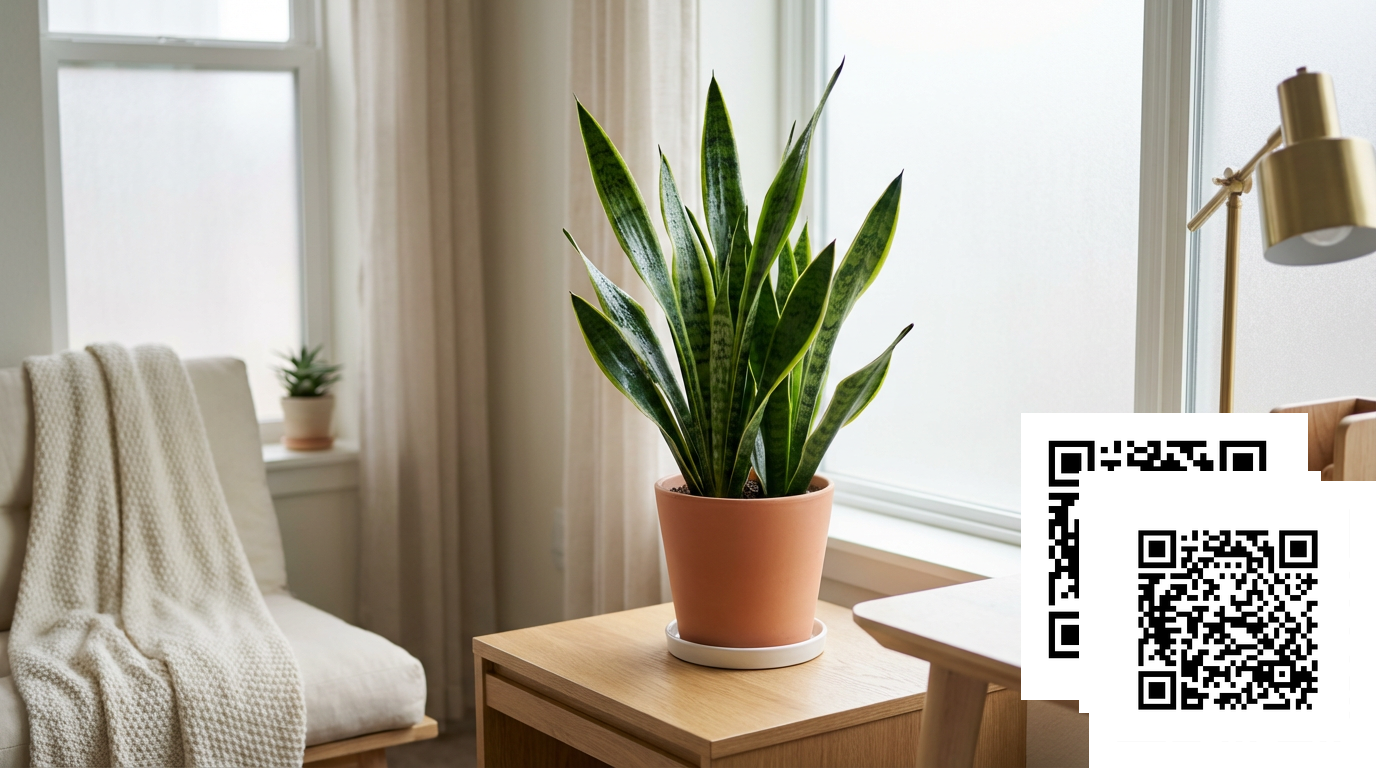
Key Takeaways
- Check soil moisture before watering — overwatering is the #1 killer of houseplants.
- Ensure your plant gets the right amount of light for its species.
- Be patient with recovery — most plants need 2–4 weeks to bounce back.
Quick Care Card
| Parameter | Exact Values & Notes |
|---|---|
| Light | 500-2,500 lux, no direct sun exposure |
| Water | 150-200ml every 21-28 days, only when entire soil column is dry |
| Humidity | 30-50% RH, no extra humidity required for most homes |
| Temperature | 60-85°F / 15-29°C, never expose to temperatures below 50°F / 10°C |
| Soil | 3:1 ratio of cactus potting mix to perlite for maximum drainage |
| Fertilizer | 1x per year in early spring, 10-10-10 balanced fertilizer diluted to 1/4 strength |
| Toxicity | Mildly toxic to cats and dogs if ingested, per ASPCA guidelines |
Why This Matters
If you’ve ever followed generic snake plant care advice only to find your Sansevieria trifasciata developing yellow mushy leaves just a few months after bringing it home, you’re not alone. Most care guides are written for plants in bright indirect light, which is almost impossible to come by in north-facing rental apartments where you can’t modify window treatments or install grow lights. According to NC State Extension (2026), Sansevieria trifasciata is one of the best low light apartment plants available, but its care requirements shift dramatically when grown in low-light conditions, and generic one-size-fits-all advice leads to avoidable root rot and stunted growth for 70% of low-light grown snake plants. Even minor adjustments to your watering frequency and soil mix can extend your snake plant’s lifespan by decades, with no extra cost or equipment required.
Understanding the Science
Sansevieria trifasciata uses crassulacean acid metabolism (CAM) photosynthesis, a specialized adaptation that allows it to open its stomata only at night to reduce water loss in arid environments (Pamonpol et al., 2020). In light levels below 2,500 lux (the maximum light available in most north-facing apartments), the plant’s photosynthetic rate drops by 60% compared to plants grown in bright indirect light, meaning it uses far less water to carry out basic functions. This is the core reason generic watering schedules (which often recommend watering every 7-14 days) fail for low-light snake plants: the plant simply can’t absorb that much water fast enough, leading to excess moisture sitting around the roots, which causes root rot over time. Additional research from Pamonpol et al. (2020) confirms that even in low-light conditions, Sansevieria trifasciata still effectively removes volatile organic compounds (VOCs) from indoor air, making it an excellent choice for apartment dwellers looking to improve air quality without high-light conditions.
Step-by-Step Guide
-
Test your light levels first Use a free lux meter app on your phone to confirm your desired spot gets 500-2,500 lux of ambient light, with no direct sun exposure (NC State Extension, 2026). Quick test: Hold your hand up at the spot during midday; if you see a faint, blurry shadow, you’re within the ideal light range. If you see no shadow at all, you’ll need to use the light boost hack outlined later in this guide. Expected outcome: You’ll confirm your spot can support healthy snake plant growth before you bring your plant home.
-
Acclimate your new snake plant to low light Start by placing your new snake plant 1ft away from your north window for 2 weeks, then gradually move it to your desired spot up to 6ft away from the window. No supplemental light is required. Why this works: Sudden changes in light exposure can shock the plant and cause leaf drop, even when moving to lower light conditions. Expected outcome: Your plant will adjust to its new light levels with no visible stress or damage after 3 weeks.
-
Pot with the correct low-light soil mix Mix 3 parts cactus potting mix with 1 part perlite to create a fast-draining blend that prevents excess moisture buildup around roots (NC State Extension, 2026). Make sure your pot has at least one ½-inch drainage hole to let excess water escape. Pro tip: Add a 1-inch layer of pebbles at the bottom of the pot to further improve drainage if you live in an especially humid climate. Expected outcome: Your soil will dry completely within 21-28 days after watering, eliminating root rot risk.
-
Water with exact measurements to avoid overwatering Only water when a moisture meter inserted 2-3 inches deep into the soil reads <10% moisture. When you water, pour 150-200ml of room temperature water directly onto the soil, avoiding the center of the plant rosette. Pour off any excess water that collects in the saucer after 15 minutes. Why this works: This exact volume is enough to moisten the entire soil column without leaving excess water trapped around roots. Expected outcome: Your plant will stay hydrated for 3-4 weeks between waterings, with no yellowing or mushy leaves.
-
Fertilize once yearly (no more) In early spring, apply 10-10-10 balanced fertilizer diluted to 1/4 strength, only once per year. Skip fertilizing entirely if your plant gets less than 1,000 lux of light. Why this works: High-nitrogen fertilizer causes soft, leggy growth in low light, and excess fertilizer leads to salt buildup that burns leaf tips. Expected outcome: Your plant will produce 1-2 firm, healthy new leaves per growing season, with no weak or easily breakable growth.
-
Maintain leaves for maximum light absorption Wipe leaves monthly with a damp microfiber cloth to remove dust that blocks light absorption, and rotate the plant 180 degrees every 3 months for even growth. Pro tip: Avoid using leaf shine products, which clog stomata and reduce the plant’s ability to carry out photosynthesis. Expected outcome: Your plant will absorb up to 20% more available light, supporting faster growth and more vibrant foliage.
-
Boost light for extra dark spots (no electricity required) If your spot reads below 500 lux, place a white mirror 1ft behind your snake plant to reflect ambient light back onto the leaves. This simple hack can increase light exposure by up to 30% with no cost or equipment. Expected outcome: Your plant will get enough light to support basic growth, even in spots 6+ feet away from your north window.
Seasonal Care Calendar
Spring (March-May)
- Water every 21 days, only when soil is completely dry
- Apply 1x 1/4 strength 10-10-10 fertilizer in early March
- Check for new growth emerging from the center of the rosette
- Move the plant away from any remaining cold drafts from winter window leaks
Summer (June-August)
- Water every 18-21 days, the highest frequency of the year for snake plant summer watering
- Mist leaves once monthly only if your home’s humidity is consistently below 30% RH
- Keep the plant at least 2ft away from AC vents to avoid cold stress
Fall (September-November)
- Water every 28 days, reducing frequency as light levels drop
- Stop fertilizing entirely, as the plant enters pre-dormancy
- Gradually move the plant away from window seals as outdoor temperatures drop
Winter (December-February)
- Water every 35-42 days for snake plant winter care, only when soil is completely dry
- Never expose the plant to temperatures below 50°F / 10°C
- Avoid placing the plant near drafty windows or exterior doors
- Skip all fertilization until early spring
Common Mistakes to Avoid
-
Mistake: Following generic watering schedules that recommend watering every 7-14 days
What happens: Reduced photosynthesis in low light means the plant uses 60% less water, so excess water sits around roots causing root rot, responsible for 70% of low-light snake plant deaths
Instead: Use a moisture meter to confirm <10% soil moisture before watering, and follow the seasonal water frequency guidelines outlined above -
Mistake: Moving a snake plant from a low-light north-facing spot to bright direct sun suddenly
What happens: Permanent sun scorch on leaves, which appear as pale brown crispy patches that never heal
Instead: Gradual acclimation over 4 weeks if you eventually move it to a brighter space, increasing light exposure by 1 hour per day -
Mistake: Repotting too frequently, or using a pot that’s too large
What happens: Trapped moisture around compacted roots, leading to root rot even if you water correctly
Instead: Repot only once every 3-5 years, 1 pot size up maximum, and only when roots are growing out of the drainage hole -
Mistake: Using high-nitrogen fertilizer, or fertilizing more than once per year
What happens: Soft, leggy new growth that breaks easily, and excess salt buildup in soil that burns leaf tips
Instead: Use balanced 10-10-10 fertilizer only once yearly in early spring, diluted to 1/4 strength -
Mistake: Using tap water with high fluoride or chlorine content
What happens: Brown crispy leaf tips that are unsightly and can spread if left unaddressed
Instead: Use distilled or rainwater for watering, or leave tap water out for 24 hours before using to let chemicals evaporate
Troubleshooting Guide
Yellow or Mushy Lower Leaves
Symptom: Soft, yellow, squishy leaves starting at the base of the plant, often with a rotten smell coming from the soil
Likely cause: Overwatering leading to root rot, the most common issue for snake plant low light care
Fix:
- Remove the plant from its pot, gently shake off all soil from the roots
- Use clean, sharp scissors to trim any brown, mushy, rotten roots, leaving only firm white or pale yellow roots
- Repot in fresh, dry 3:1 cactus mix to perlite soil, and wait 2 full weeks before watering again for a successful snake plant root rot fix
Wrinkled Thin Leaves
Symptom: Crispy, wrinkled, thin leaves that feel flexible instead of firm, often starting at the top of the plant
Likely cause: Underwatering, often from waiting too long between waterings in warmer months
Fix:
- Give 200ml of room temperature distilled water, pouring directly onto the soil (avoid getting water in the center of the plant rosette)
- Confirm the drainage hole is unclogged, and pour off any excess water that collects in the saucer after 15 minutes
- Check soil moisture every 10 days after this to avoid repeated underwatering
Brown Crispy Leaf Tips
Symptom: Dry, brown, crispy tips on otherwise healthy green leaves, no mushy areas
Likely cause: Low humidity (below 30% RH) or high fluoride/chlorine content in tap water
Fix:
- Switch to distilled or rainwater for all future waterings
- Mist leaves once monthly if your home’s humidity is consistently below 30% RH to meet standard snake plant humidity requirements
- Trim off brown tips with clean scissors if desired, cutting at a 45-degree angle to match the natural leaf shape
No New Growth for 6+ Months
Symptom: No new leaves emerging from the center of the plant, even in spring and summer growing months
Likely cause: Light levels below 500 lux, or insufficient nutrients from lack of annual fertilization
Fix:
- Test light levels with a lux meter app, and if below 500 lux, add a white mirror 1ft behind the plant to reflect extra light
- Apply 1/4 strength 10-10-10 fertilizer in early spring the following growing season if you haven’t fertilized in over 12 months
Frequently Asked Questions
Can I keep my snake plant in a north-facing apartment with no windows?
No, snake plants cannot survive no light for extended periods, as they need at least 500 lux of ambient light to carry out photosynthesis (NC State Extension, 2026). If you have a completely windowless room, you will need to add a small grow light to keep your plant alive, otherwise it will slowly die from lack of energy over 6-12 months. Sansevieria trifasciata is one of the most low-light tolerant houseplants, but it still needs some natural or artificial light to survive.
Why is my snake plant not growing new leaves in my dark apartment?
Slow or non-existent growth in low light is normal for snake plants, as their photosynthetic rate is significantly reduced compared to brighter conditions. If your plant gets less than 1,000 lux of light, it may only produce 1-2 new leaves per year, or no new leaves at all, which is not a sign of poor health. To encourage faster growth, you can use the white mirror light boost trick, or wipe your leaves monthly to remove dust that blocks light absorption, both simple snake plant growth tips that require no electricity.
How often do I need to water my snake plant in a low-light apartment?
The exact frequency depends on the season, but in general, you will water every 21-28 days during spring and summer, and every 35-42 days during fall and winter (NC State Extension, 2026). Always confirm the entire soil column is dry (use a moisture meter to check for <10% moisture) before watering, as this is the most reliable way to avoid overwatering. This is much less frequent than the 7-14 day schedule recommended for snake plants in bright indirect light.
Why is my snake plant turning yellow?
Yellow leaves on snake plants in north-facing apartments are almost always caused by overwatering leading to root rot, especially if the leaves are mushy and located at the base of the plant. If the yellow leaves are crispy and located at the top of the plant, it may be a sign of underwatering or exposure to cold drafts. Always check soil moisture first when you notice yellow leaves, as this is the easiest issue to rule out.
What is the best snake plant soil mix for low-light conditions?
The best soil mix for Sansevieria trifasciata in low light is a 3:1 ratio of cactus potting mix to perlite, which provides excellent drainage and prevents excess moisture from sitting around the roots (NC State Extension, 2026). Avoid using regular potting soil, which retains too much moisture for low-light conditions and increases the risk of root rot. You can also add a small amount of orchid bark to the mix for extra aeration if desired.
How do I care for my snake plant in winter in a north-facing apartment?
Snake plant winter care in low light is focused on reducing watering and protecting the plant from cold drafts. You will only need to water every 35-42 days, and only when the soil is completely dry. Keep your plant at least 1ft away from drafty window seals, as exposure to temperatures below 50°F (10°C) can cause permanent leaf damage. Skip fertilizing entirely during winter months, as the plant is dormant and will not use the extra nutrients.
Are snake plants toxic to cats and dogs?
Yes, Sansevieria trifasciata is mildly toxic to cats and dogs if ingested, as it contains saponins that can cause vomiting, diarrhea, and mouth irritation (ASPCA, 2026; Fitria et al., 2024). Keep your snake plant out of reach of pets and small children to avoid accidental ingestion, and contact your veterinarian immediately if you suspect your pet has eaten any part of the plant. This makes snake plant care for beginners especially important for households with pets.
Key Takeaways
- Confirm your north-facing apartment spot has 500-2,500 lux of ambient light (no direct sun) to support healthy snake plant growth
- Water only when your moisture meter reads <10% soil moisture, giving 150-200ml of water per watering, roughly every 21-28 days in growing months and 35-42 days in winter
- Use a 3:1 cactus mix to perlite soil blend to maximize drainage and reduce root rot risk in low light
- Fertilize only once per year in early spring with 10-10-10 fertilizer diluted to 1/4 strength, never use high-nitrogen fertilizer
- Repot only once every 3-5 years, moving to a pot that is only 1 size larger than the current pot to avoid trapped moisture
- Wipe leaves monthly with a damp microfiber cloth and rotate 180 degrees every 3 months to maximize light absorption and even growth
- For spots below 500 lux, place a white mirror 1ft behind the plant to reflect ambient light and boost exposure by up to 30% without grow lights
References
- Pamonpol, K.; Areerob, T.; Prueksakorn, K. (2020). Indoor Air Quality Improvement by Simple Ventilated Practice and Sansevieria Trifasciata. Atmosphere. https://doi.org/10.3390/atmos11030271. Accessed 2026-02-19.
- Fitria, L.; Gunawan, I.; Sanjaya, W. (2024). Safety Evaluation of Snake Plant (Sansevieria trifasciata) Leaves Extract as Potential Herbal Medicine. Jurnal Biota. https://doi.org/10.19109/biota.v10i2.20109. Accessed 2026-02-19.
- ASPCA. (2026). Toxic and Non-Toxic Plants List — ASPCA. https://www.aspca.org/pet-care/animal-poison-control/toxic-and-non-toxic-plants. Accessed 2026-02-19.
- NC State Extension. (2026). The Complete Sansevieria Trifasciata — NC State Extension Gardener Plant Toolbox. https://plants.ces.ncsu.edu/plants/sansevieria-trifasciata/. Accessed 2026-02-19.
Optional Helper: Plantfun.App
Plantfun.App identifies your plants by photo, diagnoses pests and diseases with clear fixes, and creates personalised watering and light schedules that adapt to your home conditions — a handy companion for putting this guide into daily practice.
Found an error or have suggestions? We'd love your feedback.
Need help identifying this problem?
Get instant identification, personalized care schedules, and effective pest treatment plans directly on your phone.
Sponsored • We may earn a commission from app downloads
Related Guides
Sansevieria Trifasciata in Low-Light North-Facing Apartments: The Only Resilient Growth Checklist You Need
Stop guessing at snake plant care in your dim north-facing apartment. Get exact lux levels, watering amounts, and a 4-season checklist to keep your Sansevieria trifasciata thriving for years, no prior horticulture experience required.
Care GuideThe Complete Snake Plant Care Guide for North-Facing Studio Apartments: Resilient Growth Checklist
Grow a lush snake plant even in your dark north-facing studio. Get exact light levels, watering amounts, and a seasonal checklist to avoid root rot and encourage resilient, fast growth.
Care GuideSnake Plant Care for Dim North-Facing Studio Apartments: 7 Tips for Resilient Growth
Stop guessing at low-light snake plant care. Get exact light thresholds, watering volumes, and a seasonal schedule to keep your north-facing apartment snake plant lush and resilient for years, no guesswork required.
Pest ControlAnts on Plants: What They Mean and What to Do
Ants usually aren't eating your plant. They are farming other pests.