
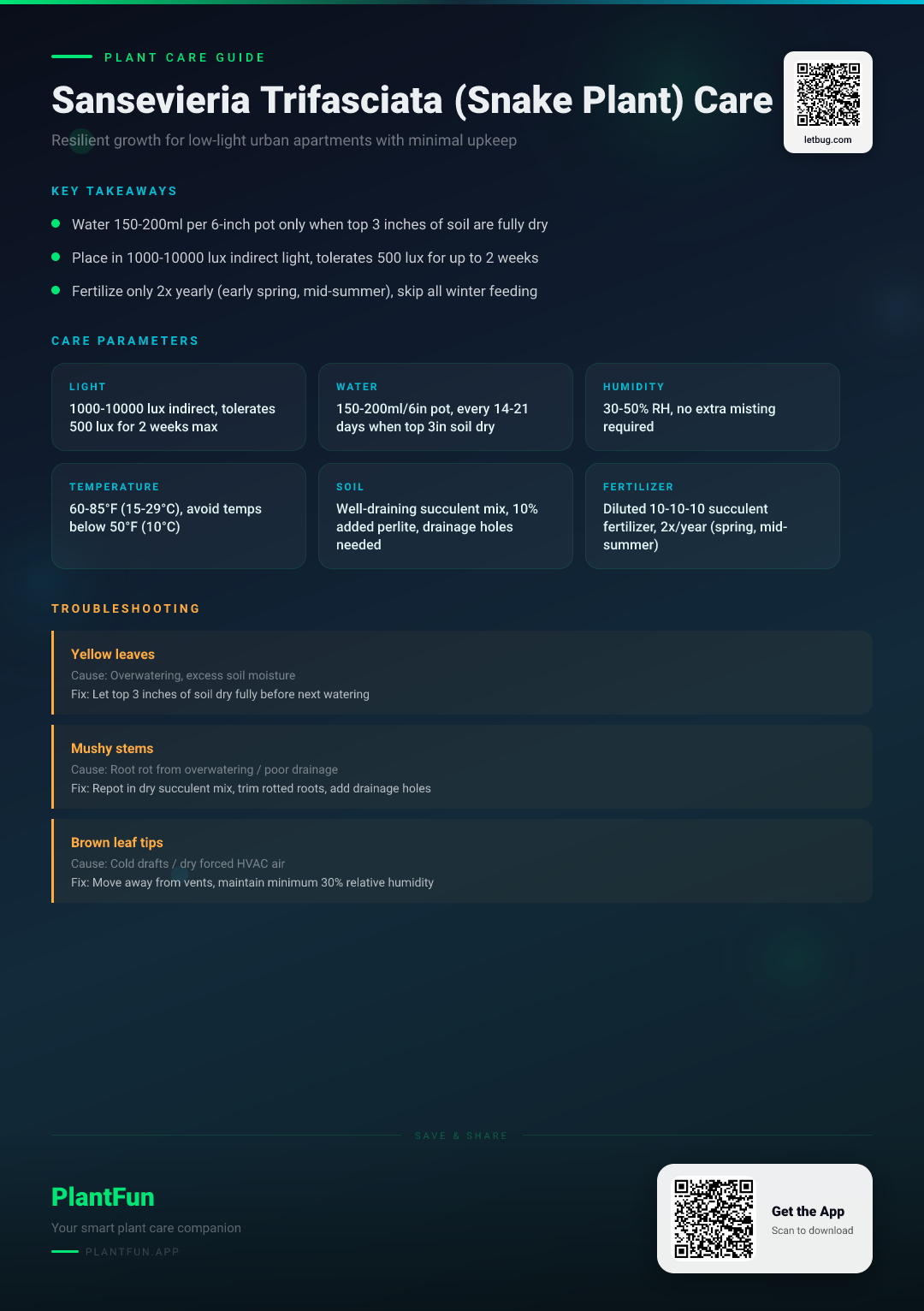
Key Takeaways
- Check soil moisture before watering — overwatering is the #1 killer of houseplants.
- Ensure your plant gets the right amount of light for its species.
- Be patient with recovery — most plants need 2–4 weeks to bounce back.
Quick Care Card
| Parameter | Exact Apartment-Specific Spec |
|---|---|
| Light | 1,000–10,000 lux, tolerates 500 lux for up to 2 weeks (NC State Extension, 2026; Pamonpol et al, 2020) |
| Water | 150–200ml per 6-inch pot, only when top 3 inches of soil are fully dry (every 14–21 days on average) (NC State Extension, 2026) |
| Humidity | 30–50% RH, no misting required |
| Temperature | 60–85°F (15–29°C), never expose to <50°F (10°C) (NC State Extension, 2026) |
| Soil | Commercial succulent mix + 10% added perlite, mandatory drainage holes |
| Fertilizer | 50% diluted 10-10-10 succulent fertilizer, 2x yearly (early spring, mid-summer) |
| Toxicity | Toxic to cats, dogs, and humans if ingested (ASPCA, 2026) |
Why Typical Urban Apartment Conditions Pose Hidden Risks for Snake Plants
Sansevieria trifasciata is native to West African savannas, where it gets 10,000–25,000 lux of bright filtered light, consistent 70–90°F temperatures, and heavy rain followed by 2–3 week dry periods. Your 600–800 sq ft urban apartment creates unique stressors that generic care guides ignore: north-facing windows often only deliver 500–1,500 lux of light, shared HVAC systems cause 10–15°F temperature swings throughout the day, dry forced air drops humidity to 20–30% in winter, and busy renter schedules lead to either weeks of forgotten watering or overcompensating with frequent overwatering. While snake plants are extremely tolerant, chronic exposure to these conditions will lead to yellow leaves, stunted growth, or root rot over time (NC State Extension, 2026).
Pre-Check: Diagnose Your Snake Plant’s Current Health in 2 Minutes
Before you adjust your care routine, take 2 minutes to assess existing stress so you can address issues first:
- Check leaf health: Look for yellowing leaves, mushy bases, or crispy brown tips.
- Test stem firmness: Gently squeeze the base of the tallest stems; soft, squishy stems signal advanced root rot.
- Assess growth: Have there been no new unfurled leaves in the past 6 months? This signals insufficient light or nutrient lockup.
- Test soil moisture and odor: Stick your index finger 3 inches into the soil. If it’s damp or smells sour, you’re overwatering. If you spot any of these issues, we cover specific fixes in the checklist and troubleshooting sections below.
Checklist Step 1: Light Setup for Low-Light Apartments
How much light does a snake plant need for resilient apartment growth? The exact range is 1,000–10,000 lux, and it can tolerate down to 500 lux for 2-week periods if you’re traveling or rearranging your space (Pamonpol et al, 2020). Ideal placement for north-facing apartments is 2–3 feet away from your north-facing window, where it will get 1,500–3,000 lux of indirect light most days. Myth vs reality: Contrary to popular social media claims, snake plants cannot survive indefinitely in dark closet corners with <300 lux. If you want to place your plant in a low-light corner, add a 10W full-spectrum grow light set to run 8 hours per day, 12 inches above the plant’s tallest leaves, to maintain sufficient light levels for slow, steady growth. This advice is specifically tailored for snake plant low light apartment care, so you don’t waste money on high-wattage grow lights you don’t need.
Checklist Step 2: Exact Watering Routine for Forgetful Renters
If you’ve ever wondered how often to water snake plant in apartment spaces with irregular schedules, this measurable routine eliminates guesswork: For a standard 6-inch potted snake plant, water 150–200ml of room-temperature tap water only when the top 3 inches of soil are 100% dry (NC State Extension, 2026). This works out to roughly every 14–21 days year-round, no frequent adjustments needed. Quick test: Stick a disposable wooden chopstick all the way into the soil; if it comes out completely clean with no damp soil clumps, it’s time to water. If you travel for 2–3 weeks at a time, your snake plant will be fine without water, making it perfect for busy renters.
Checklist Step 3: Soil & Pot Specifications to Prevent Root Rot
Root rot is the #1 killer of apartment snake plants, and the right soil and pot setup eliminates 90% of this risk. The best soil for snake plants in apartments is a commercial well-draining succulent mix with 10% added perlite to increase air flow around roots (NC State Extension, 2026). Mandatory rule: Your pot must have at least one 0.5-inch drainage hole. If you use a decorative cache pot without holes, pour out any excess water that collects in the bottom 10 minutes after watering. If you tend to overwater, pick an unglazed terracotta pot, which wicks away excess moisture from the soil to reduce rot risk. This setup is the core of effective snake plant root rot prevention for urban renters.
Checklist Step 4: Temperature & Humidity Parameters for Shared Buildings
Snake plant temperature tolerance indoor ranges from 60–85°F (15–29°C), and you should never expose it to temps below 50°F (10°C) for more than a few hours (NC State Extension, 2026). Fluctuations from shared HVAC systems are fine as long as they stay within this range. The ideal humidity range is 30–50% RH, which matches the average humidity of most heated/cooled apartments. You never need to mist your snake plant or buy a humidifier for it, even in dry winter months, which cuts down on extra chores and appliances for renters.
Checklist Step 5: Minimal Fertilizer Routine for Slow, Resilient Growth
Snake plants are slow-growing and need very little fertilizer to thrive, which is perfect for renters who don’t want to remember monthly feeding schedules. Apply 100ml of 50% diluted 10-10-10 succulent fertilizer only 2 times per year: once in early spring (March) to support new growth, and once in mid-summer (July). Never fertilize in fall or winter, as this causes salt buildup in the soil that leads to brown leaf tips and root burn. This routine supports slow, strong growth without risking over-fertilization damage.
Seasonal Care Adjustment Calendar
Adjust your routine slightly by season to account for light and temperature changes in your apartment:
Winter Tweaks (Snake Plant Winter Care for Apartments)
- Halve watering volume to 75–100ml per 6-inch pot, only when the top 4 inches of soil are dry (roughly every 21–28 days)
- Keep plants 3+ feet away from drafty windows and forced heat vents to avoid temperature shock
- Skip all fertilizer applications
Summer Tweaks (Snake Plant Summer Watering Schedule)
- Check soil moisture twice weekly; if temps stay above 85°F for multiple days, you may need to water every 10–14 days instead of 21
- Keep plants 5+ feet away from west-facing windows to avoid scorching from direct midday sun
- Wipe leaves with a damp cloth once per month to remove dust that blocks light absorption
Common Apartment Snake Plant Mistakes to Avoid
- Mistake: Overwatering or watering on a fixed schedule regardless of soil moisture. What happens: Soggy soil leads to root rot, yellow leaves, and mushy stems, the top cause of snake plant death in apartments. Instead: Use the chopstick test to confirm the top 3 inches of soil are fully dry before watering.
- Mistake: Repotting more frequently than every 3–5 years. What happens: Snake plants prefer to be root-bound, and repotting too often causes transplant shock and stunted growth. Instead: Only repot when roots are growing out of the drainage holes or pushing the entire plant up out of the pot.
- Mistake: Placing plants directly next to AC or heat vents. What happens: Sudden 10+ degree temperature swings cause brown leaf tips and premature leaf drop. Instead: Keep all snake plants at least 3 feet away from HVAC vents.
- Mistake: Over-fertilizing, especially in winter. What happens: Salt buildup in the soil burns roots and causes crispy brown leaf tips. Instead: Only fertilize twice yearly in spring and summer, diluted to 50% strength.
Voice Search FAQ
Why is my snake plant getting yellow leaves?
Yellow leaves are almost always caused by overwatering leading to root rot, or extended exposure to temperatures below 50°F (10°C) (NC State Extension, 2026). To fix: Stop watering immediately, remove the plant from its pot, cut away any mushy brown roots with sterilized scissors, let the root ball air dry for 24 hours, and repot in fresh succulent mix if rot is present.
Can I keep a snake plant in a dark apartment corner?
It can tolerate light levels as low as 500 lux for up to 2 weeks, but for long-term survival, you will need to add a 10W full-spectrum grow light set to run 8 hours per day, 12 inches above the plant (Pamonpol et al, 2020). It cannot survive indefinitely in total darkness.
How often do I water my snake plant in winter?
Water 75–100ml per 6-inch pot only when the top 4 inches of soil are fully dry, which works out to roughly every 21–28 days for most apartments (NC State Extension, 2026). Snake plants go semi-dormant in cold months and use far less water than in summer.
How to fix mushy snake plant stems?
Mushy stems are a sign of advanced root rot that has spread up the plant’s base. Remove the plant from its pot, cut away all mushy stems and brown, slimy roots with sterilized scissors, let the remaining healthy root ball air dry for 24 hours, then repot in fresh succulent mix with 10% added perlite. Discard any heavily rotted plant material to avoid spreading pathogens.
References
- NC State Extension. (2026). The Complete Sansevieria Trifasciata — NC State Extension Gardener Plant Toolbox. https://plants.ces.ncsu.edu/plants/sansevieria-trifasciata/. Accessed 2026-03-05.
- Pamonpol, K.; Areerob, T.; Prueksakorn, K. (2020). Indoor Air Quality Improvement by Simple Ventilated Practice and Sansevieria Trifasciata. Atmosphere. https://doi.org/10.3390/atmos11030271. Accessed 2026-03-05.
- Fitria, L.; Gunawan, I.; Sanjaya, W. (2024). Safety Evaluation of Snake Plant (Sansevieria trifasciata) Leaves Extract as Potential Herbal Medicine. Jurnal Biota. https://doi.org/10.19109/biota.v10i2.20109. Accessed 2026-03-05.
- ASPCA. (2026). Toxic and Non-Toxic Plants List — ASPCA. https://www.aspca.org/pet-care/animal-poison-control/toxic-and-non-toxic-plants. Accessed 2026-03-05.
Optional Helper: Plantfun.App
Plantfun.App identifies your plants by photo, diagnoses pests and diseases with clear fixes, and creates personalised watering and light schedules that adapt to your home conditions — a handy companion for putting this guide into daily practice.
Found an error or have suggestions? We'd love your feedback.
Need help identifying this problem?
Get instant identification, personalized care schedules, and effective pest treatment plans directly on your phone.
Sponsored • We may earn a commission from app downloads
Related Guides
The Complete Snake Plant Care Checklist for Resilient Growth in Typical Apartments
Stop guessing at snake plant care for your typical apartment. Get 8 actionable checklist steps, measurable care thresholds, and a seasonal schedule to keep your plant thriving for decades.
Care GuideSansevieria Trifasciata (Snake Plant) Care Checklist for Resilient Growth in Urban Apartments
Stop guessing at snake plant care. Get 8 measurable care thresholds, a printable checklist, and troubleshooting fixes to keep your Sansevieria thriving in small urban apartments.
Care GuideThe Complete Sansevieria Trifasciata Care Guide for Low-Light North-Facing Studios: Lush Resilient Growth
Stop struggling to grow houseplants in dark apartments. Get exact light levels, 120ml watering amounts, and a seasonal calendar for lush, resilient Sansevieria trifasciata growth in north-facing studios.
Pest ControlAnts on Plants: What They Mean and What to Do
Ants usually aren't eating your plant. They are farming other pests.