
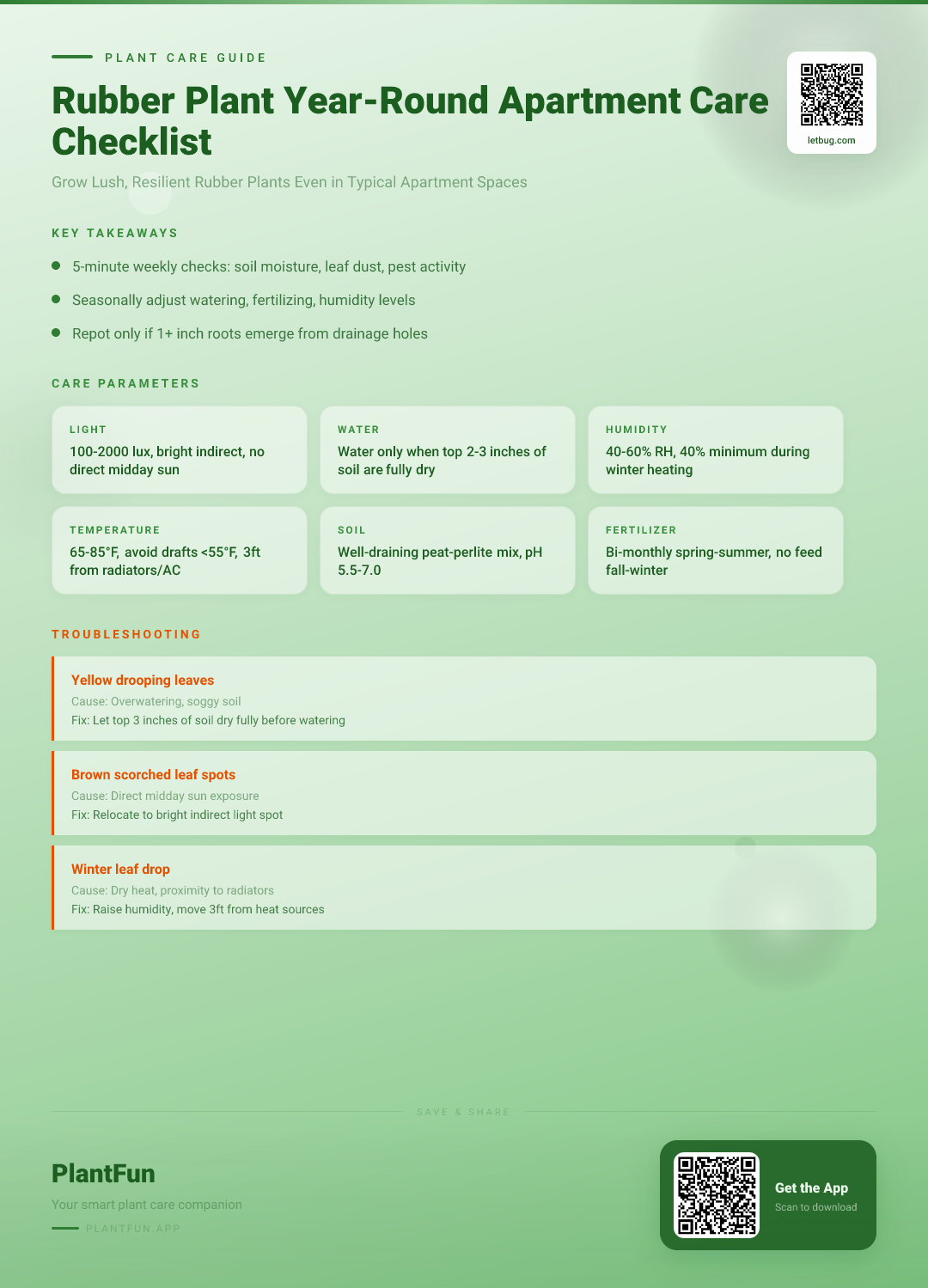
Key Takeaways
- Check soil moisture before watering — overwatering is the #1 killer of houseplants.
- Ensure your plant gets the right amount of light for its species.
- Be patient with recovery — most plants need 2–4 weeks to bounce back.
Quick Care Card
| Parameter | Measurable Apartment-Friendly Guidelines |
|---|---|
| Light | 5,000–20,000 lux, bright indirect light; avoid midday direct sun (ASPCA, 2026) |
| Water | Top 2 inches of soil fully dry in spring/summer; top 3 inches fully dry in fall/winter |
| Humidity | 40–50% ideal; tolerates 30% short-term (Šrámek, 1999) |
| Temperature | 65–85°F (18–29°C); avoid drops below 60°F (15°C) |
| Soil | Best soil for rubber plants in apartments: 3 parts all-purpose potting mix + 1 part perlite + 1 part orchid bark, pH 6.0–7.0 |
| Fertilizer | Half-strength 10-10-10 liquid fertilizer, every 2 weeks spring/summer; no fertilizer fall/winter (Hayashi, 2009) |
| Toxicity | Mildly toxic to cats, dogs, and humans if ingested (ASPCA, 2026) |
Why Rubber Plants Thrive (or Struggle) in Typical Apartments
Native to Southeast Asian rainforests, wild rubber plants grow under dappled canopy light, consistent 60–70% humidity, and stable warm temperatures with zero sudden drafts. Most apartments create very different conditions: dry forced-air heat in winter, cold AC blasts in summer, limited bright light, and drafty window sills.
Myth vs. Reality: You don’t need a tropical greenhouse to grow a healthy rubber plant. These hardy Ficus adapt well to apartment conditions with small tweaks, making them ideal for rubber plant care for beginners. If you struggle with dry air, try these easy DIY humidity tricks for small spaces.
Step-by-Step Weekly Care Routine for Rubber Plants
This 5-minute routine eliminates guesswork for consistent growth:
- Check soil moisture: Stick your index finger 2 inches deep into the soil (3 inches in winter). If no moisture sticks to your finger, it’s time to water.
- Wipe leaves: Use a damp microfiber cloth to remove dust from both sides of leaves, as dust blocks light absorption and slows growth (Hayashi, 2009).
- Inspect for pests: Check leaf undersides and stem joints for spider mites or scale, common in dry apartment air. If you spot activity, follow our natural houseplant pest treatment tips.
- Verify placement: Ensure the plant is not directly in the path of open window drafts, AC vents, or radiator heat, as poor rubber plant draft tolerance causes sudden leaf drop.
Spring Rubber Plant Care Calendar (March–May)
As daylight increases, adjust your routine to support new growth:
- Repot only when needed: Repot if you see 1+ inch of roots growing out of drainage holes. Use the recommended soil mix above, and only move up 1 pot size (1–2 inches larger diameter) to avoid overwatering. First-time repotters can follow our step-by-step repotting guide.
- First fertilizer application: Apply half-strength 10-10-10 fertilizer once day length hits 12 hours; this is an easy tip for how to make rubber plant grow faster.
- Adjust watering frequency: Gradually move from winter’s 14–21 day schedule to watering every 7–10 days as temperatures rise.
Summer Rubber Plant Care Calendar (June–August)
Rubber plant summer watering and placement adjustments prevent common seasonal damage:
- Increase watering: Water when the top 2 inches of soil are dry, usually every 5–7 days in hot, sunny apartments.
- Block midday sun: Hang a sheer curtain over south or west-facing windows to avoid leaf scorch from 10am–3pm direct sun.
- Manage AC drafts: Keep the plant at least 2 feet away from AC vents, as sudden cold blasts cause leaf drop (Šrámek, 1999).
- Fertilize bi-monthly: Apply half-strength fertilizer every 2 weeks, stopping all applications by the end of August.
Fall Rubber Plant Care Calendar (September–November)
Prep your plant for winter heating season with these tasks:
- Taper off fertilizer: Stop all fertilizer applications by mid-September, as growth slows with shorter daylight hours.
- Reduce watering: Gradually stretch time between waterings, checking the top 2.5 inches of soil for dryness before watering.
- Prep for heating: Move plants away from spots where radiators will be turned on, and stock up on humidity supplies if you don’t have a humidifier.
Winter Rubber Plant Care Calendar (December–February)
Rubber plant winter care focuses on mitigating dry forced-air damage:
- Maintain 40–50% humidity: Use a pebble tray filled with water or group your rubber plant with other tropical plants to boost nearby humidity. Avoid misting, as it only provides temporary relief.
- Keep away from heat sources: Place the plant at least 3 feet away from radiators, space heaters, and oven vents to prevent rapid leaf moisture loss.
- Water sparingly: Only water when the top 3 inches of soil are fully dry, which usually translates to a 14–21 day watering schedule in heated apartments (Hayashi, 2009).
Common Apartment Rubber Plant Mistakes to Avoid
- Mistake: Overwatering, especially in winter. What happens: Mushy yellow leaves, root rot, the #1 cause of rubber plant death in apartments. Instead: Always do the finger soil test before watering, and empty the drainage tray 10 minutes after watering to avoid standing water.
- Mistake: Placing in dark hallways or low-light rooms. What happens: Leggy growth, small new leaves, and frequent leaf drop. Instead: Place within 3 feet of a bright window, or use a grow light if you only have north-facing exposure, addressing the common question of can rubber plant grow in low light apartments.
- Mistake: Skipping leaf dusting. What happens: Dust blocks light absorption, slowing growth by up to 30% (Hayashi, 2009), and attracts spider mites. Instead: Wipe leaves once a week with a damp cloth, or give the plant a quick sink shower every 2 months.
- Mistake: Repotting in an oversized container. What happens: Excess soil holds unused moisture, leading to root rot before the plant can grow into the new space. Instead: Only move up 1 pot size when repotting, and ensure the pot has drainage holes.
- Mistake: Ignoring sudden temperature shifts. What happens: Sudden yellowing and drop of lower leaves, the top answer to why is my rubber plant dropping leaves. Instead: Keep the plant away from drafty front doors, AC vents, radiators, and windows that drop below 60°F at night.
FAQ
Why are the lower leaves of my rubber plant turning yellow and falling off?
This is almost always tied to apartment-specific stressors. The most common causes are overwatering (check if the top 2–3 inches of soil are soggy), dry air below 30% humidity from forced heating, or sudden temperature shifts from drafts or moving the plant (Šrámek, 1999). First rule out overwatering by letting the soil dry fully, then boost humidity with a pebble tray if needed, and confirm the plant is not near any vents or radiators. Rubber plant yellow leaves are almost always reversible with quick adjustments.
Can I keep my rubber plant in a north-facing apartment window?
Rubber plant light requirements are a minimum of 5,000 lux for steady growth, which most north-facing windows only provide during the summer months (ASPCA, 2026). If your north-facing window gets less than 6 hours of bright indirect light per day, you can grow a rubber plant there with supplemental grow lights set to run 12 hours per day, placed 12–18 inches above the plant. For more tips, check our beginner grow light guide for small spaces.
How often should I water my rubber plant in a heated winter apartment?
In heated apartments that stay 68–72°F with humidity around 30%, you’ll only need to water your rubber plant every 14–21 days (Hayashi, 2009). Always confirm by sticking your finger 3 inches deep into the soil — if any moisture is present, wait another 3–5 days before watering. Overwatering in winter is the top cause of rubber plant yellow leaves for apartment dwellers.
Free Printable Seasonal Care Checklist Download
Grab our one-page, printable seasonal rubber plant care checklist to tape near your plant, so you never have to memorize schedules again. The checklist includes weekly tasks, monthly checks, and seasonal to-dos tailored specifically for apartment environments. Download the free checklist here.
References
- ASPCA. (2026). Toxic and Non-Toxic Plants List — ASPCA. https://www.aspca.org/pet-care/animal-poison-control/toxic-and-non-toxic-plants. Accessed 2026-03-04.
- Šrámek, F. (1999). Vaughan, M.J.: The Complete Book on Cut Flower Care. Biologia plantarum. https://doi.org/10.1023/a:1001770114931. Accessed 2026-03-04.
- Hayashi, Y. (2009). Production of natural rubber from Para rubber tree. Plant Biotechnology. https://doi.org/10.5511/plantbiotechnology.26.67. Accessed 2026-03-04.
Optional Helper: Plantfun.App
Plantfun.App identifies your plants by photo, diagnoses pests and diseases with clear fixes, and creates personalised watering and light schedules that adapt to your home conditions — a handy companion for putting this guide into daily practice.
Found an error or have suggestions? We'd love your feedback.
Need help identifying this problem?
Get instant identification, personalized care schedules, and effective pest treatment plans directly on your phone.
Sponsored • We may earn a commission from app downloads
Related Guides
The Complete Rubber Plant Care Checklist for Resilient Growth in Small Urban Apartments
Stop stunting your rubber plant’s growth in your apartment. Get 8 actionable care steps, exact light and water thresholds, and a free printable checklist for lush, resilient foliage year-round.
Care GuideThe Complete Rubber Plant Care Checklist for Resilient Budget-Friendly Growth in Typical Urban Apartments
Grow a lush, unkillable rubber plant on a tight budget. Get exact light levels, watering amounts, and zero-cost hacks tailored for standard apartment living conditions.
Care GuideThe Complete Rubber Plant Care Guide for Typical Urban Apartments: Resilient Growth Made Easy
Grow a lush, resilient rubber plant in your typical urban apartment without guesswork. Get exact light levels, watering amounts, and a free weekly checklist to avoid yellow leaves and leggy growth.
Pest ControlAnts on Plants: What They Mean and What to Do
Ants usually aren't eating your plant. They are farming other pests.