
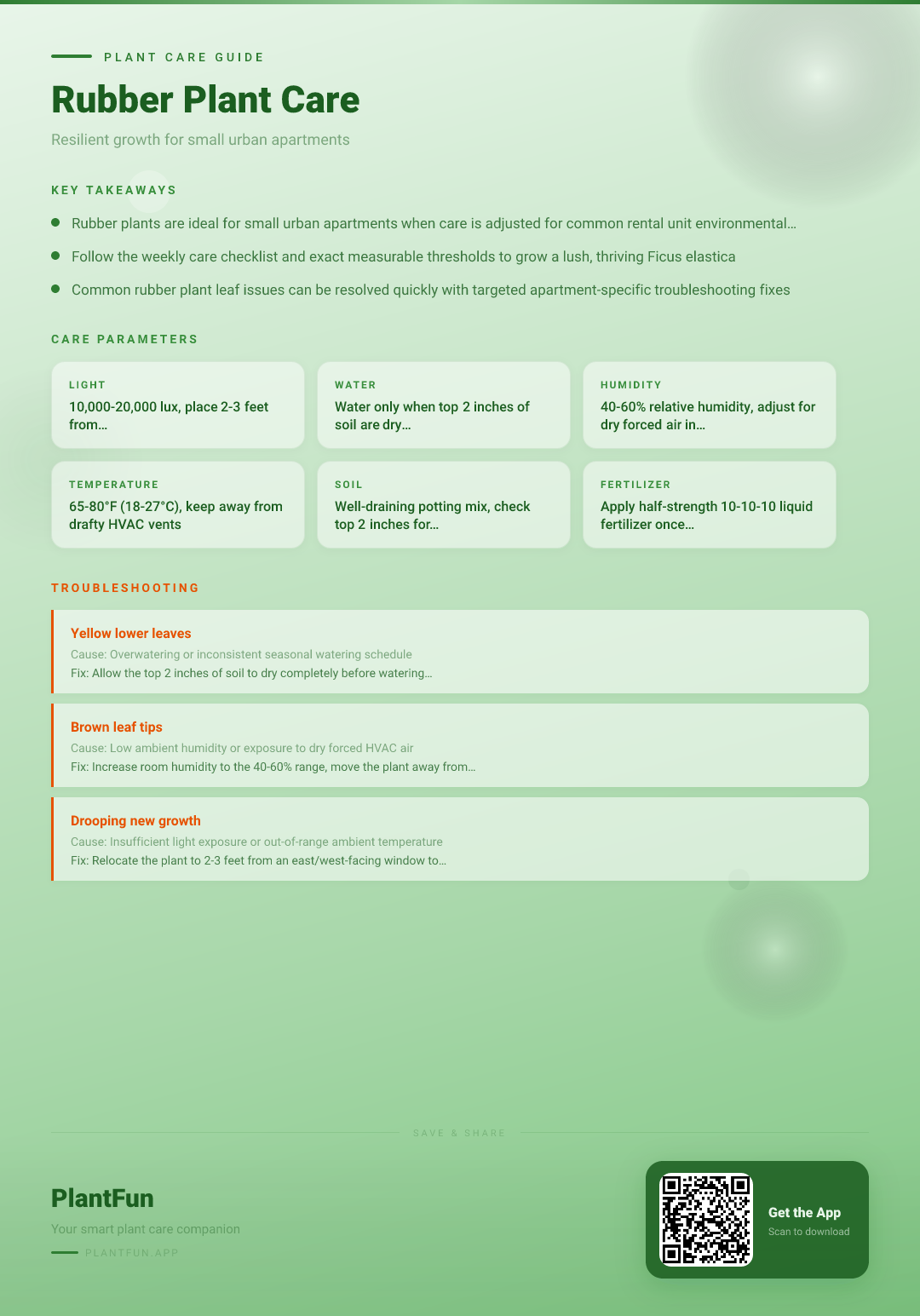
Key Takeaways
- Check soil moisture before watering — overwatering is the #1 killer of houseplants.
- Ensure your plant gets the right amount of light for its species.
- Be patient with recovery — most plants need 2–4 weeks to bounce back.
Quick Care Card
| Care Factor | Exact Threshold for Small Urban Apartments |
|---|---|
| Light | 10,000-25,000 lux bright indirect light; no unfiltered midday direct sun |
| Water | 150-250ml when top 2 inches of soil are dry (every 9-14 days on average) |
| Humidity | 35-50% minimum |
| Temperature | 60-85°F (15-29°C); no exposure below 55°F (13°C) |
| Soil | Well-draining potting mix with 30% perlite added for extra drainage |
| Fertilizer | Diluted balanced liquid fertilizer once monthly in spring and summer only |
| Toxicity | Toxic to cats, dogs, and humans if ingested (ASPCA, 2026) |
Why Rubber Plants Thrive (or Fail) in Typical Apartments
Rubber plants (Ficus elastica) are naturally hardy, making them a great pick for small apartment spaces—but they struggle with three common urban stressors: dry forced-air heating/cooling, limited natural light, and unpredictable drafts from old windows or entryways. A common myth is that rubber plants need tropical-level humidity to survive, but the reality is they adapt perfectly to the 35-50% humidity found in most apartments, as long as you avoid placing them directly next to vents (Šrámek, 1999). If you’re new to ficus care, our guide to low-effort ficus care for small apartments has more tips for acclimating new plants to your space.
Step-by-Step Weekly Care Checklist
Follow these 8 quick tasks in 5 minutes or less per week to avoid common beginner mistakes:
- Light check: Hold your hand at the plant’s height at midday. If you see a sharp, dark shadow, it’s getting too much direct sun; if you see no shadow at all, it’s too dark. Mistake to avoid: Leaving it in a dark corner leads to leggy growth. Quick fix: Move it 1-2 feet closer to a north or east-facing window.
- Soil moisture test: Stick your index finger 2 inches deep into the soil. Only water if it is completely dry. Mistake to avoid: Watering on a fixed schedule regardless of soil moisture is the top cause of overwatering. Quick fix: Mark your calendar to test soil every 7 days instead of watering on a set date.
- Dust wipe: Wipe the top and bottom of 3-4 large leaves with a damp microfiber cloth. Mistake to avoid: Dust blocks sunlight absorption, slowing growth by up to 40%. Quick fix: Do this while watching your favorite show to eliminate extra work.
- Draft check: Feel the air around the plant for cold drafts from windows or hot air from vents. Mistake to avoid: Drafts trigger sudden leaf drop that can take months to recover from. Quick fix: Move the plant 12+ inches away from any draft source.
- Humidity check: If you have a hygrometer, confirm levels are above 35%. Mistake to avoid: Dry winter heating air causes crispy brown leaf tips. Quick fix: Group the plant with other houseplants to raise ambient humidity for free.
- Pest check: Flip 2-3 lower leaves to look for tiny webbing or cottony spots. Mistake to avoid: Pests spread fast in tight apartment spaces, so early detection is key. Quick fix: Treat affected leaves with diluted rubbing alcohol at the first sign of infestation.
- Growth check: Note any new leaves or discoloration. Mistake to avoid: Ignoring early symptoms leads to irreversible damage. Quick fix: Refer to the troubleshooting table below if you spot issues.
- Rotate: Turn the plant 1/4 turn to encourage even, symmetrical growth. Mistake to avoid: Skipping rotation leads to lopsided growth that takes months to correct. Quick fix: Do this step last as a reminder to complete your weekly check-in.
Exact Care Thresholds to Follow
All guidance is backed by horticultural research for Ficus elastica grown in indoor low-light conditions (Hayashi, 2009):
- Light: 10,000-25,000 lux bright indirect light. This is equivalent to being 2-3 feet away from an unshaded east-facing window, or 4-5 feet away from a south-facing window with a sheer curtain.
- Water: 150-250ml of room-temperature water only when the top 2 inches of soil are completely dry, which works out to every 9-14 days for most apartment environments.
- Humidity: 35-50% minimum. No expensive humidifier is required unless your levels drop below 30% in winter.
- Temperature: 60-85°F (15-29°C). Never expose the plant to temperatures below 55°F (13°C), as this triggers leaf drop and permanent root damage.
Seasonal Care Adjustment Calendar
Tweak your routine based on the season to match your apartment’s changing conditions:
Winter (October to March)
- Reduce watering volume by 50% (75-125ml only when the top 3 inches of soil are dry, every 18-24 days on average) as part of your rubber plant winter care routine.
- Move the plant 12+ inches away from radiators or baseboard heaters to avoid dry air damage.
- Stop fertilizing completely, as growth slows significantly in low winter light.
Summer (April to September)
- Increase watering by 10% if temperatures rise above 80°F and soil dries out faster than 9 days for your rubber plant summer watering schedule.
- Boost humidity with occasional misting if temperatures stay above 80°F for more than 3 days in a row.
- Apply diluted balanced liquid fertilizer once per month only if the plant is putting out new growth.
The 5 Most Common Rubber Plant Care Mistakes in Apartments
Each mistake has a 10-minute or less fix to get your plant back on track:
- Mistake: Overwatering in low light. What happens: Root rot, yellow dropping leaves, the #1 cause of rubber plant death in apartments. Instead: Wait an extra 3 days after the top 2 inches of soil dry out if your plant gets less than 12,000 lux of light. If you suspect root rot, our root rot prevention guide walks you through how to save even severely damaged plants.
- Mistake: Placing in direct midday sun. What happens: Scorched brown leaf spots that never heal. Instead: Hang a cheap sheer curtain over south or west-facing windows, or move the plant 3 feet back from the glass.
- Mistake: Placing near drafty windows or AC/heating vents. What happens: Sudden, widespread leaf drop. Instead: Keep the plant at least 12 inches away from any draft source, and use a draft stopper on old windows if needed.
- Mistake: Using heavy garden potting soil. What happens: Soil holds too much moisture, leading to root rot even if you water correctly. Instead: Mix 1 part perlite into regular potting soil to improve drainage, no fancy aroid mix required.
- Mistake: Skipping dusting for months. What happens: Dust blocks sunlight absorption, slowing growth and making the plant more susceptible to pests. Instead: Wipe leaves with a damp microfiber cloth once a week while watching TV, takes less than 2 minutes.
FAQ (Voice Search Optimized)
Why is my rubber plant dropping leaves in my apartment?
The most common cause is sudden temperature changes from drafts, overwatering, or a recent move to a new light spot (Hayashi, 2009). Check for draft sources first, then test soil moisture to rule out overwatering. If you just moved the plant, give it 2-3 weeks to acclimate before making any care changes.
Can I keep my rubber plant next to my apartment AC unit?
No, cold dry air from AC units causes rapid leaf drop and brown tips. If you have no other space, keep the plant at least 24 inches away from the AC vent, and point the vent away from the plant to avoid direct air flow.
How often do I need to repot my rubber plant when I live in a small apartment?
Rubber plants grow slower in low light apartment conditions, so you only need to repot every 2-3 years, or when you see roots growing out of the drainage holes. To keep it small for your limited space, you can trim the roots by 1/3 during repotting to slow growth.
Can I keep rubber plant in low light apartment?
Yes, as long as it gets at least 10,000 lux of bright indirect light (that’s the equivalent of being 2 feet away from a bright east-facing window). If it gets less than that, it will grow leggy and lose lower leaves over time. If you don’t have access to enough natural light, our list of the best budget grow lights for apartments will help you find an option that fits your space and budget.
How to Spot Pests Early in Tight Apartment Spaces
Dry apartment air is the perfect breeding ground for spider mites and mealybugs, the two most common pests affecting rubber plants. Do this 30-second check every week during your care routine:
- Flip 2-3 lower, older leaves (pests tend to hide on the underside of leaves out of direct light)
- Look for tiny red/brown moving dots (spider mites) or cottony white clusters (mealybugs)
- If you spot signs of infestation, wipe affected leaves with a mixture of 1 part rubbing alcohol and 4 parts water, then spray with diluted neem oil once a week for 3 weeks. This treatment is non-toxic, safe for apartment use, and won’t harm pets or children if used as directed.
Printable Care Checklist Download
Grab our free, letter-sized rubber plant care checklist PDF here. It’s designed to be taped to fridges or plant shelves for quick reference, and includes all care thresholds, seasonal adjustments, and weekly tasks so you never second-guess your care choices again.
Troubleshooting Quick Reference Table
Yellow Lower Leaves
Symptom: Soft, yellow leaves falling off from the bottom of the plant first.
Likely cause: Overwatering, the most common rubber plant care mistake for apartment growers.
Fix:
- Stop watering immediately, and let the top 3 inches of soil dry out completely before watering again.
- If the soil stays soggy for more than 2 weeks, repot into fresh, well-draining soil.
Brown Leaf Tips
Symptom: Crispy, brown edges on the tips of otherwise healthy green leaves.
Likely cause: Low humidity from forced air heating or AC, or excess fertilizer buildup.
Fix:
- Mist the leaves 2-3 times a week, or group the plant with other houseplants to raise ambient humidity.
- Flush the soil with 3 times the pot volume of water once every 3 months to remove fertilizer salts.
Leggy Growth
Symptom: Long, thin stems with wide gaps between leaves, leaning towards the nearest window.
Likely cause: Too little light, not meeting rubber plant light requirements.
Fix:
- Move the plant 1-2 feet closer to a bright north or east facing window, or add a grow light if you have no natural light access.
- Prune the top of the leggy stem to encourage bushier, more compact growth.
Scorched Brown Leaf Spots
Symptom: Dry, brown spots with yellow halos on the top of leaves facing the window.
Likely cause: Too much direct midday sun, common for plants placed near unshaded south or west facing windows.
Fix:
- Move the plant 3 feet back from the window, or hang a sheer curtain to filter direct sunlight.
- Cut off severely damaged leaves to redirect energy to new growth.
Pro Low-Effort Tips for Busy Apartment Dwellers
These lazy, low-cost hacks take almost no extra time and keep your rubber plant thriving:
- Use cheap self-watering spikes if you travel for work often, they release water slowly over 7-10 days so you don’t have to ask a neighbor to water your plant.
- Keep a microfiber cloth next to your couch, and wipe your rubber plant’s leaves while watching TV, no extra time required.
- Place your rubber plant in the bathroom for 1 hour after you take a hot shower, the leftover steam boosts humidity for free, no humidifier needed.
- Use a free phone light meter app to check light levels, most are accurate enough to confirm you’re within the 10,000-25,000 lux range.
References
- ASPCA. (2026). Toxic and Non-Toxic Plants List — ASPCA. https://www.aspca.org/pet-care/animal-poison-control/toxic-and-non-toxic-plants. Accessed 2026-03-06.
- Šrámek, F. (1999). Vaughan, M.J.: The Complete Book on Cut Flower Care. Biologia plantarum. https://doi.org/10.1023/a:1001770114931. Accessed 2026-03-06.
- Hayashi, Y. (2009). Production of natural rubber from Para rubber tree. Plant Biotechnology. https://doi.org/10.5511/plantbiotechnology.26.67. Accessed 2026-03-06.
Optional Helper: Plantfun.App
Plantfun.App identifies your plants by photo, diagnoses pests and diseases with clear fixes, and creates personalised watering and light schedules that adapt to your home conditions — a handy companion for putting this guide into daily practice.
Found an error or have suggestions? We'd love your feedback.
Need help identifying this problem?
Get instant identification, personalized care schedules, and effective pest treatment plans directly on your phone.
Sponsored • We may earn a commission from app downloads
Related Guides
The Complete Rubber Plant Care Checklist for Resilient Budget-Friendly Growth in Typical Urban Apartments
Grow a lush, unkillable rubber plant on a tight budget. Get exact light levels, watering amounts, and zero-cost hacks tailored for standard apartment living conditions.
Care GuideThe Complete Rubber Plant Care Checklist for Year-Round Resilient Growth in Typical Apartments
Grow a lush, unkillable rubber plant in your apartment. Get exact light levels, watering amounts, and a free seasonal checklist to avoid yellow leaves and stunted growth all year long.
Care GuideThe Complete Rubber Plant Care Guide for Typical Urban Apartments: Resilient Growth Made Easy
Grow a lush, resilient rubber plant in your typical urban apartment without guesswork. Get exact light levels, watering amounts, and a free weekly checklist to avoid yellow leaves and leggy growth.
Pest ControlAnts on Plants: What They Mean and What to Do
Ants usually aren't eating your plant. They are farming other pests.