
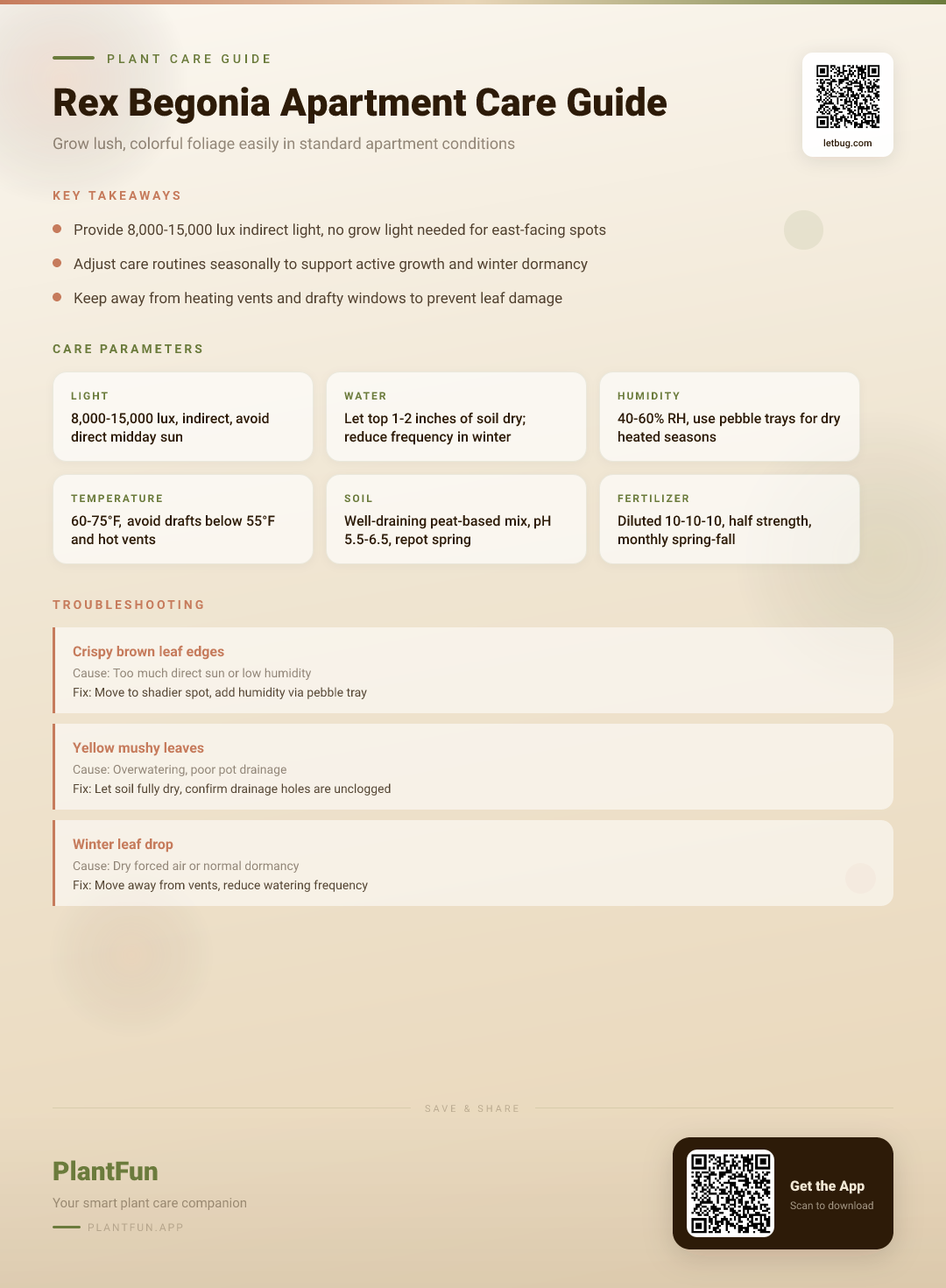
Key Takeaways
- Check soil moisture before watering — overwatering is the #1 killer of houseplants.
- Ensure your plant gets the right amount of light for its species.
- Be patient with recovery — most plants need 2–4 weeks to bounce back.
Quick Care Card
This scannable reference covers all core measurable thresholds for Rex Begonia care in standard apartments, no guesswork required:
| Parameter | Exact Threshold for Standard Apartments |
|---|---|
| Light | 8,000–15,000 lux (1–3 feet from unobstructed east-facing window, no direct midday sun) (NC State Extension, 2026) |
| Water | Only when top 1.5 inches of soil is completely dry (Osborne, 1987) |
| Humidity | 40%+ (average apartment humidity works with minor low-effort tweaks) |
| Temperature | 60–75°F (15–24°C), avoid fluctuations below 55°F (13°C) |
| Soil | Peat-based potting mix with 20% perlite for fast drainage |
| Fertilizer | Half-strength 10-10-10 balanced fertilizer every 4 weeks, spring through summer (Latifah et al, 2024) |
| Toxicity | Toxic to cats, dogs, and horses if ingested (ASPCA, 2026) |
Why Rex Begonias Thrive (or Struggle) in Standard Apartments
A common myth claims Rex Begonias require greenhouse conditions to survive, but NC State Extension (2026) confirms their thick, water-storing rhizomes make them highly adaptable to typical apartment conditions if you adjust care for seasonal fluctuations. Most apartment stressors stem from three common issues: drafty window sills that cause temperature swings, forced air heating that drops humidity to 30% or lower in winter, and inconsistent light levels as days lengthen and shorten across seasons.
If you’re unsure how to measure light levels in your apartment, follow our easy indoor light testing guide to get accurate lux readings for your Rex Begonia’s spot.
Step-by-Step Weekly Care Checklist
Follow these actionable, measurable tasks every week to keep your plant healthy year-round:
- Test soil moisture by inserting a wooden chopstick 1.5 inches deep; water only if it comes out completely dry with no damp soil clinging to it
- Wipe the top and bottom of leaves with a damp microfiber cloth to remove dust that blocks light absorption
- Check ambient humidity with a low-cost hygrometer; if readings drop below 40%, set up a pebble tray under the pot
- Inspect the undersides of lower leaves and rhizome crevices for signs of mealybugs or spider mites
- Rotate the pot 1/4 turn to ensure even growth on all sides
For more tips on avoiding overwatering, check out our step-by-step soil moisture guide.
Spring Care Adjustment Routine
As days lengthen and new growth emerges, make these tweaks to support vigorous foliage development:
- Repot only if roots are growing out of the drainage holes; use a pot 1 inch larger than the current one to avoid excess soil that holds unwanted moisture (Latifah et al, 2024)
- Start applying half-strength 10-10-10 fertilizer every 4 weeks, stopping after the first frost in fall
- If your east-facing window starts receiving midday sun as the sun shifts, move the plant 1 foot further back to avoid leaf scorch
Summer Care Adjustment Routine
Hot, humid summer weather increases risk of leaf scorch and root rot; use these renter-friendly hacks to keep your plant healthy:
- Adjust watering frequency to every 5–7 days (up from 7–10 days in spring), but always test soil moisture first to avoid overwatering (Osborne, 1987)
- Open windows for 10 minutes daily or run a small portable fan on low 1 foot away from the plant to improve air circulation and reduce powdery mildew risk
- Move the plant 2 feet away from west-facing windows to avoid exposure to harsh mid-afternoon sun
Fall Care Adjustment Routine
Prep your plant for winter dormancy with these simple steps as temperatures drop and days shorten:
- Stop all fertilizer applications by mid-October to avoid forcing new growth that will be weak in low winter light
- Move the plant away from drafty window sills if nighttime temperatures drop below 55°F (13°C)
- Reduce watering frequency to every 10–14 days, as growth slows significantly in fall
Winter Care Adjustment Routine
Dry forced air heating is the biggest winter threat to Rex Begonias; use these no-modification hacks that don’t require a dedicated humidifier:
- Reduce watering to only when the top 2 inches of soil are completely dry, as dormant plants use far less water
- Group your Rex Begonia with other houseplants to raise ambient humidity by 5–10% naturally
- Keep the plant at least 3 feet away from heating vents to avoid crispy leaf edges
- Skip repotting and pruning during winter, as the plant is in its dormant phase
If you have other houseplants to prep for cold months, our renter-friendly winter plant care guide has more no-drill hacks.
Common Apartment-Specific Mistakes to Avoid
These are the 5 most frequent errors new Rex Begonia owners make in apartments, with fast fixes you can implement in 24 hours or less:
- Mistake: Placing the plant directly on top of a heating vent in winter What happens: Dry, hot air drops local humidity to 20% or lower, causing crispy leaf edges and rapid leaf drop Instead: Move the plant 3+ feet away from vents, or place a heat-resistant shelf between the vent and the plant to redirect air flow
- Mistake: Watering on a fixed weekly schedule regardless of soil moisture, especially in winter What happens: Overly wet soil leads to Pythium root rot, the leading cause of Rex Begonia death in apartments (Osborne, 1987) Instead: Only water when the top 1.5 inches of soil is completely dry, testing with a chopstick or moisture meter every 3 days
- Mistake: Leaving the plant in direct midday sun through west-facing windows in summer What happens: Bright, hot sun scorches the thin, variegated leaves, leaving permanent brown spots Instead: Hang a sheer curtain over the window, or move the plant 2 feet back from the glass
- Mistake: Using heavy, garden soil or all-purpose potting mix without added perlite What happens: Soil retains moisture for too long, leading to root rot and stunted growth Instead: Repot in a mix of 80% peat-based potting soil and 20% perlite for fast drainage
- Mistake: Ignoring dust buildup on leaves in low-light apartments What happens: Dust blocks light absorption, leading to faded leaf color and stunted growth Instead: Wipe leaves with a damp microfiber cloth once per week to remove dust buildup
FAQ
Why is my Rex Begonia dropping leaves every winter?
Mild leaf drop (10–30% of foliage) is a normal part of Rex Begonia winter dormancy, as the plant slows growth to conserve energy in low light (NC State Extension, 2026). If more than 30% of leaves drop rapidly, the most likely cause is proximity to a heating vent, which dries out foliage faster than the plant can absorb moisture. Move the plant 3+ feet away from vents and set up a pebble tray to raise local humidity.
Can I keep my Rex Begonia on my east-facing apartment shelf without a grow light?
Yes, this is the ideal spot for Rex Begonia east-facing window care. Unobstructed east-facing windows deliver 8,000–15,000 lux 1–3 feet from the glass, which exactly matches the Rex Begonia light requirements for healthy growth (NC State Extension, 2026). If your shelf is more than 3 feet from the window, you may need a small grow light, but most east-facing apartment shelves work perfectly without modifications.
How often do I need to water my Rex Begonia if my apartment is extra dry?
Always prioritize soil moisture over a fixed schedule: water only when the top 1.5 inches of soil is completely dry (Osborne, 1987). In extra dry apartments (humidity below 35%), you may need to water 1–2 days earlier than your usual schedule, but never water if the soil is still damp, as overwatering causes more damage than temporary underwatering.
Troubleshooting Quick Reference
Use this guide to diagnose and fix common Rex Begonia issues in apartments fast:
Crispy Leaf Edges
Symptom: Brown, dry edges on otherwise healthy, fully formed leaves
Likely cause: Ambient humidity below 40%, or proximity to heating vents or drafty windows
Fix:
- Move the plant 3+ feet away from vents and drafty window sills
- Set up a pebble tray: fill a tray with 1/4 inch of water, place the pot on top of pebbles so the base is not sitting in water
- Group the plant with other houseplants to raise local humidity naturally
Yellow, Mushy Leaves
Symptom: Soft, yellow leaves that fall off easily, accompanied by soggy, foul-smelling soil
Likely cause: Overwatering leading to Pythium root rot, the most common fatal Rex Begonia issue (Osborne, 1987)
Fix:
- Let the soil dry completely before watering again
- If the soil remains soggy for more than 7 days, remove the plant from the pot, trim any black, mushy roots, and repot in fresh, well-draining soil
- Adjust your watering schedule to only water when the top 1.5 inches of soil is dry
Powdery Mildew
Symptom: White, powdery coating on the top of leaves, most common in winter with poor air circulation
Likely cause: High local humidity combined with stagnant air, especially when plants are kept near cold windows in winter
Fix:
- Wipe affected leaves with a solution of 1 part milk to 9 parts water to kill mildew spores
- Run a small portable fan on low 1 foot away from the plant for 2 hours daily to improve air circulation
- Avoid misting leaves until the mildew is fully gone
Faded, Small New Growth
Symptom: New leaves are pale, small, and lack the characteristic vibrant variegation, with no new growth in spring and summer
Likely cause: Light levels below 8,000 lux, or lack of fertilizer during the growing season
Fix:
- Move the plant 1–2 feet closer to an east-facing window to increase light exposure
- Apply half-strength 10-10-10 fertilizer every 4 weeks during spring and summer
- Wipe leaves weekly to remove dust that blocks light absorption
Printable Seasonal Care Checklist
Download our free, one-page Rex Begonia care checklist PDF to stick on your fridge. It includes all weekly tasks, seasonal adjustment reminders, and threshold measurements so you never have to guess at care again.
References
- NC State Extension. (2026). The Complete Rex Begonia — NC State Extension Gardener Plant Toolbox. https://plants.ces.ncsu.edu/plants/begonia-care/. Accessed 2026-03-02.
- Osborne, L. (1987). Effects of Chlorpyrifos and Pythium splendens on Growth of Rex Begonia. Plant Disease. https://doi.org/10.1094/pd-71-0525. Accessed 2026-03-02.
- Latifah, Z.; Wurjani, W.; Sutini, S. (2024). Impact of cutting types and commercial plant growth regulators on the propagation of red star begonia (Begonia rex-cultorum). Jurnal Ilmiah Pertanian. https://doi.org/10.31849/jip.v21i2.19126. Accessed 2026-03-02.
- ASPCA. (2026). Toxic and Non-Toxic Plants List — ASPCA. https://www.aspca.org/pet-care/animal-poison-control/toxic-and-non-toxic-plants. Accessed 2026-03-02.
Optional Helper: Plantfun.App
Plantfun.App identifies your plants by photo, diagnoses pests and diseases with clear fixes, and creates personalised watering and light schedules that adapt to your home conditions — a handy companion for putting this guide into daily practice.
Found an error or have suggestions? We'd love your feedback.
Need help identifying this problem?
Get instant identification, personalized care schedules, and effective pest treatment plans directly on your phone.
Sponsored • We may earn a commission from app downloads
Related Guides
The Complete Rex Begonia Care Checklist for Resilient Growth in Small Urban Apartments
Grow lush, vibrant Rex Begonias even in your cramped urban apartment. Get exact light, water, and humidity thresholds plus space-saving tips for resilient, pest-free growth year-round.
Care GuideRex Begonia Care Checklist for 500 Sq Ft Apartments: Grow Vibrant, Resilient Foliage
Grow lush, colorful Rex Begonia foliage even in a tiny 500 sq ft studio apartment. Get exact light levels, watering amounts, and space-saving hacks to keep your plant thriving year-round.
Care GuideRex Begonia Care Checklist: Seasonal Routines for Resilient Growth in Typical Apartments
Grow lush, colorful rex begonia leaves without a fancy greenhouse. Get a seasonal checklist, exact light, water, and humidity thresholds for resilient growth in your apartment.
Pest ControlAnts on Plants: What They Mean and What to Do
Ants usually aren't eating your plant. They are farming other pests.