
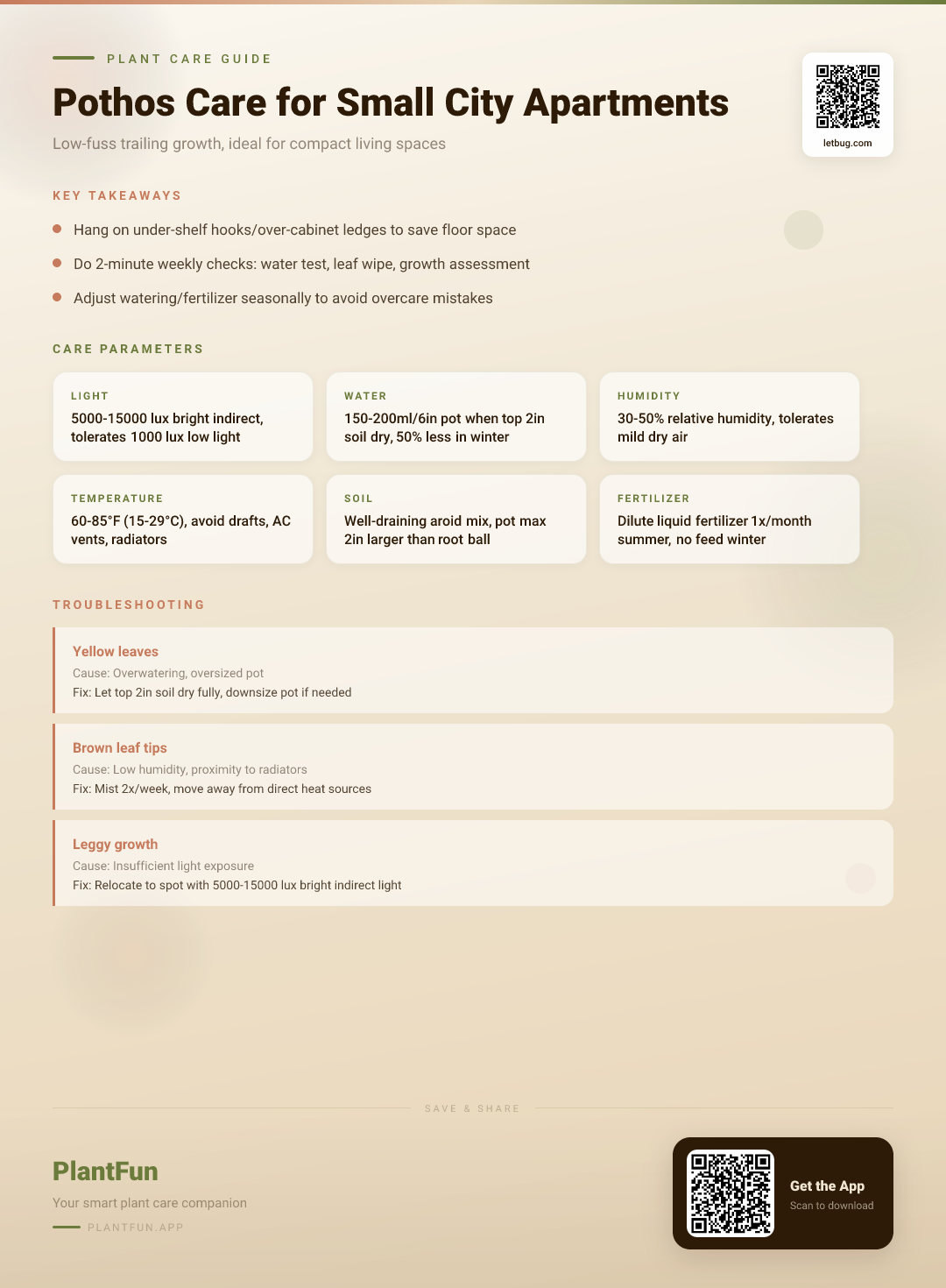
Key Takeaways
- Check soil moisture before watering — overwatering is the #1 killer of houseplants.
- Ensure your plant gets the right amount of light for its species.
- Be patient with recovery — most plants need 2–4 weeks to bounce back.
Quick Care Card
| Category | Measurable Threshold for Small Apartments |
|---|---|
| Light | 5,000-15,000 lux bright indirect, tolerates 1,000 lux low light (Šrámek, 1999) |
| Water | 150-200ml per 6-inch pot when top 2 inches of soil are dry |
| Humidity | 30-50% relative humidity, matches standard shared HVAC output |
| Temperature | 60-85°F (15-29°C), avoid drops below 55°F (13°C) |
| Soil | Well-draining aroid mix with 20% perlite added |
| Fertilizer | Diluted 10-10-10 liquid (50% strength) once monthly in summer, none in winter |
| Toxicity | Toxic to cats and dogs (ASPCA, 2026) |
3 Core Care Rules for Busy Renters
- Prioritize vertical placement to save floor/counter space
- Always test soil moisture before watering
- Keep 3+ feet away from AC vents and radiators
Why Pothos Are Ideal for Small Apartments
Pothos (Epipremnum aureum) are made for 500-800 sq ft urban apartment living, with traits that solve common small-space plant pain points:
- Low-fuss tolerance: They adapt to the fluctuating humidity, uneven light, and variable temperatures common in buildings with shared HVAC systems, making them perfect for beginner pothos care guide users.
- Vertical growth habit: Trailing vines grow downward instead of outward, so they use zero valuable floor or counter space. Myth vs Reality: Myth: Pothos need large planters and lots of open space to thrive. Reality: A full, lush pothos can grow for years in a 6-inch hanging pot with regular pruning.
- Air-purifying benefits: A 2020 study found pothos remove formaldehyde, benzene, and xylene from indoor air (EL Sayed, 2020), a critical perk for compact apartments with poor natural ventilation.
- Pet safety note: Hang pothos at least 6 feet above the floor to keep trailing vines out of reach of cats and dogs, per ASPCA toxicity guidelines.
Space-Optimized Pothos Placement Guide
All recommended spots are no-drill, renter-friendly, and use zero counter or floor space, with verified lux measurements for typical apartment conditions:
- Under-shelf adhesive hooks (top pick): 8,000-12,000 lux if placed 3 feet from a south or east-facing window. Vines trail down below the shelf without blocking storage or work space.
- Over-kitchen cabinet ledges: 5,000-9,000 lux, leaves trail down between cabinets without blocking food prep areas.
- Shower curtain rod hooks: 3,000-7,000 lux, naturally high humidity from showers supports healthy growth with no extra effort.
- Window trim adhesive hooks: 10,000-15,000 lux, as long as leaves are not touching cold glass in winter. These spots are perfect for pothos placement ideas for small spaces, even if your apartment is shaded by adjacent buildings.
2-Minute Weekly Pothos Care Checklist
No special tools required, this routine fits easily into a busy weekend or weekday morning:
- (30 seconds) Stick your index finger 2 inches into the soil: if completely dry, add 150-200ml of room temperature water for a 6-inch pot.
- (30 seconds) Wipe down top and bottom of 5-10 large leaves with a damp paper towel to remove dust and improve light absorption.
- (20 seconds) Check trailing vines for any yellow or brown leaves, snip off at the base with clean scissors if found.
- (20 seconds) Confirm vines are not touching radiators, AC vents, or cold window glass.
- (20 seconds) Tuck any stray vines back into the hanging planter or guide them along a clear wall to avoid blocking walkways.
Exact Measurable Care Thresholds for Apartments
All values are tailored specifically to urban apartment conditions, not large single-family homes:
- Light: Bright indirect light of 5,000-15,000 lux is ideal for fast trailing growth, but pothos tolerate as low as 1,000 lux for 2-3 months (Šrámek, 1999). Quick test: If you can read a book comfortably in the spot without turning on a light during the day, it meets the minimum 1,000 lux requirement (pothos light levels lux).
- Humidity: 30-50% relative humidity, which matches the output of most shared HVAC systems, so no extra humidifier is needed for most users (pothos humidity requirements for apartments).
- Temperature: 60-85°F (15-29°C) is optimal; avoid placement near drafty windows where temperatures drop below 55°F (13°C) in winter.
- Water: 150-200ml per 6-inch pot when the top 2 inches of soil are completely dry, which works out to every 1-2 weeks for most apartments (how often to water pothos in apartments). Never leave standing water in the saucer to avoid mold growth in small, poorly ventilated spaces.
Seasonal Pothos Care Calendar for Apartments
Adjust your routine to match the fluctuating conditions of apartment living across seasons:
- Winter (October-March, Northern Hemisphere): Cut watering frequency by 50% (pothos winter care for apartment dwellers), skip all fertilizer, and move pothos 1 foot further from drafty windows if indoor temperatures drop below 60°F at night.
- Summer (April-September, Northern Hemisphere): Add 50ml extra water per watering if temperatures stay above 80°F for 3+ consecutive days (pothos summer watering schedule), apply diluted liquid fertilizer once monthly, and prune trailing vines if they block windows or walkways.
Mess-Free Repotting Tips for Small Spaces
Repotting doesn’t have to leave soil all over your tiny apartment counters:
- Lay a heavy-duty garbage bag flat on your counter or floor, and complete all repotting steps on top of the bag. Fold up the bag and discard excess soil when done for zero clean up.
- Only repot when roots are growing out of the drainage holes, which happens every 2-3 years for pothos. Use a pot no more than 2 inches larger than the root ball: oversized pots waste valuable space and hold excess moisture that causes root rot (how to repot pothos in small apartments).
- Use renter-friendly hanging pot solutions: adhesive ceiling hooks rated for 10+ lbs, or over-the-door hook planters for closet doors, no wall holes required.
Common Pothos Care Mistakes Apartment Dwellers Make
- Mistake: Overwatering out of habit, not testing soil first. What happens: Root rot, yellow leaves, and mold growth on soil that can spread to other surfaces in small apartments. Instead: Stick your finger 2 inches into soil before watering, only add water if completely dry.
- Mistake: Placing pothos directly in front of AC or heating vents. What happens: Fluctuating temperatures and dry air cause brown leaf tips and stunted growth. Instead: Keep pothos at least 3 feet away from all HVAC vents.
- Mistake: Letting trailing vines rest on radiators in winter. What happens: Leaves burn and drop off within 1-2 weeks. Instead: Tuck vines up into the planter or guide them along a wall away from heat sources.
- Mistake: Choosing an oversized pot to “let it grow”. What happens: Wastes valuable counter/floor space and increases risk of root rot. Instead: Use a pot no more than 2 inches larger than the current root ball.
Troubleshooting Common Apartment Pothos Symptoms
Yellow Leaves
Symptom: Soft, yellow lower leaves with mushy stems.
Likely cause: Overwatering, the most common issue for apartment pothos (why is my pothos turning yellow in apartment).
Fix:
- Stop watering immediately, let soil dry out completely for 7-10 days.
- If the issue persists, repot into fresh, dry well-draining soil.
Brown Leaf Tips
Symptom: Crispy brown edges on otherwise healthy green leaves.
Likely cause: Dry air from shared HVAC systems or placement near a heat vent.
Fix:
- Mist leaves 2x per week with room temperature water, or move the pothos to your bathroom shower rod for higher humidity.
- Trim brown tips with clean scissors to improve appearance.
Leggy Growth
Symptom: Long vines with very few leaves, spaced far apart on the stem.
Likely cause: Too little light, common in apartments shaded by adjacent buildings (how to fix leggy pothos, can pothos survive in low light apartments).
Fix:
- Move the pothos 1-2 feet closer to a window to get at least 1,000 lux of light daily.
- Prune leggy stems back to 2-3 inches above the soil line to encourage bushier, fuller growth.
Stunted Growth
Symptom: No new leaf growth for 3+ months during spring and summer.
Likely cause: Root bound pot, or lack of fertilizer during growing season.
Fix:
- Check drainage holes for roots growing out, repot into a pot 2 inches larger if needed.
- Add diluted liquid fertilizer once per month during summer to support new growth.
Voice Search Optimized FAQ
Can I keep my pothos in a windowless apartment office?
Yes, as long as you have overhead fluorescent or LED lights that provide at least 1,000 lux of light for 8 hours per day (Šrámek, 1999). Pothos are one of the most low-light tolerant houseplants, making them perfect for windowless apartment nooks and home offices.
How often do I need to water my pothos if I’m gone for 2 weeks?
You don’t need to water it before you leave if the top 2 inches of soil are still moist when you depart. Pothos can go up to 3 weeks without water in average apartment conditions. If you leave during a heatwave over 85°F, add 200ml of water before you leave and move it to a slightly shadier spot to reduce water evaporation.
Do pothos need a lot of space to grow?
No, pothos are perfect for small spaces because they grow vertically, trailing down from hanging planters instead of taking up floor or counter space (pothos trailing growth tips). You can grow a full, lush pothos in a 6-inch hanging pot for years without needing to upgrade to a larger container, as long as you prune trailing vines when they get too long.
Free Printable Pothos Care Checklist Download
Grab our free, wallet-sized pothos care checklist printable that fits in your junk drawer, sticks to your fridge, or tucks into your planner. It includes all the measurable thresholds, weekly care steps, and seasonal adjustment reminders so you never have to guess about pothos care again. It’s 100% free, no email required to download.
References
- ASPCA. (2026). Toxic and Non-Toxic Plants List — ASPCA. https://www.aspca.org/pet-care/animal-poison-control/toxic-and-non-toxic-plants. Accessed 2026-03-07.
- EL Sayed, N. (2020). Spray Golden Pothos and Croton Plants with Glutathione and Bilirubin to Purify the Indoor Air from Pollutants. Journal of Plant Production. https://doi.org/10.21608/jpp.2020.102766. Accessed 2026-03-07.
- Šrámek, F. (1999). Vaughan, M.J.: The Complete Book on Cut Flower Care. Biologia plantarum. https://doi.org/10.1023/a:1001770114931. Accessed 2026-03-07.
Optional Helper: Plantfun.App
Plantfun.App identifies your plants by photo, diagnoses pests and diseases with clear fixes, and creates personalised watering and light schedules that adapt to your home conditions — a handy companion for putting this guide into daily practice.
Found an error or have suggestions? We'd love your feedback.
Need help identifying this problem?
Get instant identification, personalized care schedules, and effective pest treatment plans directly on your phone.
Sponsored • We may earn a commission from app downloads
Related Guides
The Complete Golden Pothos Care Checklist for Typical Urban Apartments: Lush Resilient Growth Without Guesswork
Stop struggling to keep your pothos thriving in your apartment. Get 7 actionable checklist steps, exact light/water thresholds, and mistake fixes for lush, trailing growth year-round.
Care GuideThe Complete Pothos Care Checklist for Resilient Growth in Small Urban Apartments
Grow lush, trailing pothos even in cramped urban apartments. Get exact light, water, and space-saving tips plus a printable checklist to avoid common care missteps.
Care GuideThe Complete Golden Pothos Care Checklist for Resilient Growth in Typical Urban Apartments
Grow lush, trailing pothos vines even in a small urban apartment. Get exact light levels, watering amounts, and a seasonal checklist for fuss-free, resilient growth all year long.
Pest ControlAnts on Plants: What They Mean and What to Do
Ants usually aren't eating your plant. They are farming other pests.