
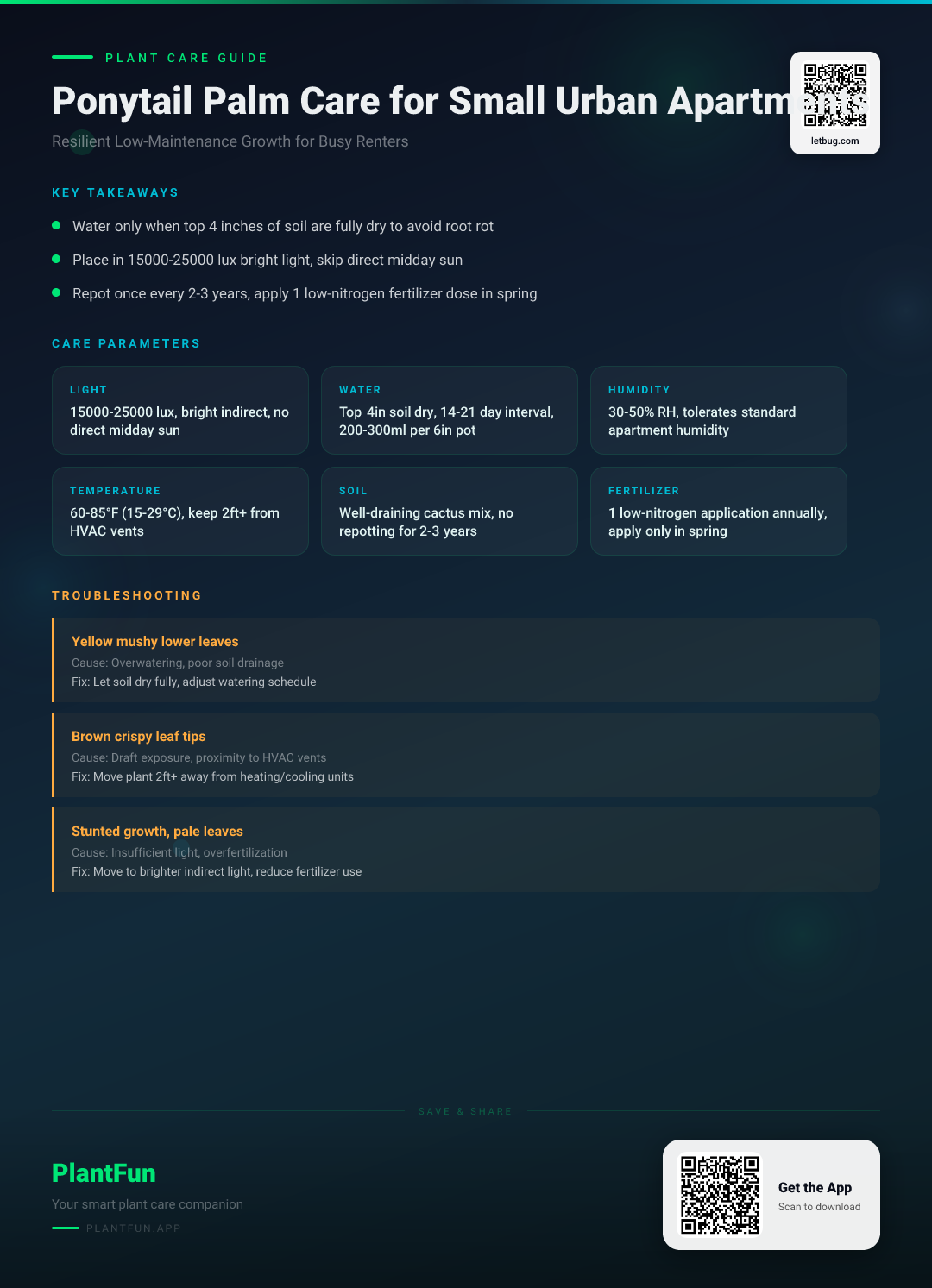
Key Takeaways
- Check soil moisture before watering — overwatering is the #1 killer of houseplants.
- Ensure your plant gets the right amount of light for its species.
- Be patient with recovery — most plants need 2–4 weeks to bounce back.
Quick Care Card
| Care Parameter | Apartment-Specific Threshold |
|---|---|
| Light | 15,000-25,000 lux, bright indirect, no direct midday sun |
| Water | Top 4 inches of soil fully dry, 200-300ml per 6-inch pot every 14-21 days |
| Humidity | 30-50% RH (standard apartment levels, no humidifier required) |
| Temperature | 60-85°F (15-29°C) |
| Soil | Well-draining cactus/succulent mix |
| Fertilizer | 1 half-strength low-nitrogen cactus fertilizer application annually in spring |
| Toxicity | Non-toxic to cats, dogs, and humans (ASPCA, 2026) |
Introduction
Ponytail Palms (Beaucarnea recurvata) are made for busy urban renters: they store water in their bulbous caudex (the swollen base of the stem), tolerate missed waterings, and thrive in the low-humidity, variable light conditions common in small apartments (Gilman & Watson, 2003). Generic Ponytail Palm care advice often fails apartment dwellers, though, because it doesn’t account for low airflow, HVAC drafts, and restrictions on modifying windows or adding permanent fixtures. This guide delivers renter-specific, evidence-based rules to avoid common pitfalls like overwatering, stunted growth, and brown leaf tips without expensive tools or space changes.
Symptom-to-Action Framework Overview
This guide skips generic filler to let you diagnose and fix issues in 3 quick steps:
- Identify the exact symptom your plant is showing (brown tips, yellow leaves, stunted growth, mushy caudex)
- Jump to the corresponding section of the guide for targeted fixes
- Apply the renter-friendly adjustment with no permanent space modifications required For example, if you’re asking “why is my Ponytail Palm turning brown,” you can go straight to the Humidity section and FAQ without reading through potting or fertilizer guidance unless you suspect those are the cause.
Step 1: Optimal Placement for Apartments
Ponytail Palm light requirements sit at 15,000-25,000 lux of bright indirect light, with no exposure to direct midday sun that burns delicate leaf tips (Gilman & Watson, 2003). This works even for renters with limited window options:
- West-facing windows: Place 2 feet back from the glass, and use a cheap removable sheer curtain to block harsh midday summer sun
- North-facing windows: Place 1-2 feet directly in front of the glass. If your window delivers less than 10,000 lux, pair it with an affordable grow light per our small apartment grow light guide for consistent results
- No window access: Place under a LED grow light 6 inches above the plant, run for 8 hours per day Myth vs Reality: Contrary to popular advice, you don’t need a south-facing window to grow a healthy Ponytail Palm. They tolerate lower light levels for months at a time, though growth will slow if light stays below 10,000 lux long-term.
Step 2: Watering Routine for Apartment Conditions
The #1 killer of Ponytail Palms in apartments is overwatering, caused by low airflow that slows soil drying. Follow this exact rule to avoid root rot: water only when the top 4 inches of soil are fully dry (NC State Extension, 2026). For a standard 6-inch pot, this equals 200-300ml of water every 14-21 days, or every 10-14 days for Ponytail Palm summer watering when temperatures are above 80°F. Quick test: Stick a wooden chopstick 4 inches into the soil. If it comes out completely clean with no soil stuck to it, it’s time to water. If you’re unsure how to spot early root rot, check our overwatered plant diagnosis guide to catch issues before they become fatal.
Step 3: Soil, Potting, and Feeding Rules for Renters
Ponytail Palms are low-fuss for renters, with almost no repotting or feeding requirements:
- Soil: Use a well-draining cactus/succulent mix to prevent water retention (Annals of Agricultural Science, Moshtohor, 2014). You can buy pre-made mix or make your own following our DIY cactus soil recipe with common household ingredients
- Potting: Do not repot for 2-3 years after bringing your plant home. Ponytail Palms thrive when root-bound, and overpotting is a common cause of root rot. When learning how to repot a Ponytail Palm in an apartment, only go up 1 pot size max, and use a pot with drainage holes
- Feeding: Apply 1 half-strength low-nitrogen cactus fertilizer once annually in spring, no more. Too much nitrogen causes soft, weak growth that’s prone to damage
Step 4: Humidity and Temperature Adjustments
Ponytail Palm humidity needs are perfectly matched to standard apartment conditions: they tolerate 30-50% relative humidity with no additional misting or humidifiers required (Gilman & Watson, 2003). Keep temperatures between 60-85°F (15-29°C), and never place your plant within 2 feet of heating or cooling vents. Dry, forced air from vents is the most common cause of brown leaf tips for apartment-grown Ponytail Palms.
Seasonal Care Calendar for Apartment Dwellers
Adjust your care routine quarterly to account for apartment-specific seasonal changes:
- Spring (March-May): Apply your annual fertilizer, check soil moisture as temperatures rise, and move the plant away from heating vents if you’ve been running heat over winter
- Summer (June-August): Shorten watering intervals to 10-14 days, block west-facing midday sun with a sheer curtain, and move the plant at least 3 feet away from AC vents
- Fall (September-November): Stretch watering intervals to 21-28 days, stop all fertilizer applications, and check light levels as days get shorter
- Winter (December-February): For Ponytail Palm winter care, water only when the top 6 inches of soil are fully dry, add a grow light if natural light drops below 10,000 lux, and keep the plant at least 3 feet away from radiators and space heaters. For more seasonal guidance, see our renter-friendly winter houseplant care guide
Common Apartment-Specific Mistakes to Avoid
- Mistake: Watering on a fixed schedule without checking soil moisture first What happens: Low apartment airflow slows soil drying, leading to root rot, mushy caudex, and leaf drop Instead: Use the chopstick test to check the top 4 inches of soil before every watering
- Mistake: Placing the plant within 2 feet of HVAC vents, entry doors, or drafty windows What happens: Rapid temperature swings and dry forced air cause brown leaf tips, stunted growth, and leaf drop Instead: Pick a permanent spot at least 3 feet away from all vents and drafty entry points
- Mistake: Repotting into a pot more than 1 size larger than the current pot What happens: Excess unused soil holds moisture for weeks, leading to hidden root rot Instead: Only repot every 2-3 years, and go up 1 pot size max
- Mistake: Moving the plant to different rooms every week to chase light What happens: Ponytail Palms are sensitive to frequent environmental changes, leading to stress and leaf drop Instead: Pick a permanent spot that meets light requirements, and only move temporarily if there’s an extreme temperature event
Voice Search Optimized FAQ
Why is my Ponytail Palm getting brown tips?
The most common cause for apartment-grown plants is placement too close to HVAC vents, or underwatering. For a quick Ponytail Palm brown tips fix: move the plant at least 2 feet away from all vents, check if the top 4 inches of soil are fully dry, and water if needed. You can trim brown tips with clean scissors, leaving a tiny sliver of brown edge to avoid damaging healthy leaf tissue.
Can I keep my Ponytail Palm in a dark apartment?
Yes, for short periods. Ponytail Palms can tolerate light levels as low as 10,000 lux for 2-3 months without permanent damage, but long-term low light leads to stunted, leggy growth. If your apartment has no bright windows, add a cheap LED grow light 6 inches above the plant, run for 8 hours per day to support healthy growth.
How often should I water my Ponytail Palm in winter?
In winter, when growth slows and heating dries out apartment air, water only when the top 6 inches of soil are fully dry. For a standard 6-inch pot, this equals one watering every 28-35 days, depending on your indoor temperature.
Is Ponytail Palm care for beginners easy?
Absolutely. Ponytail Palms are one of the most resilient houseplants, tolerating missed waterings, low light, and standard apartment humidity better than most common species. This checklist eliminates guesswork to help even first-time plant owners keep their Ponytail Palm thriving for decades.
Final Resilient Growth Quick Checklist
Print this 5-item list and post it near your plant to remember core rules without re-reading the full guide:
- Place in 15,000-25,000 lux of bright indirect light, no direct midday sun, at least 2 feet away from HVAC vents
- Water only when the top 4 inches of soil are fully dry, using 200-300ml per 6-inch pot
- Use well-draining cactus mix, repot only every 2-3 years, and go up 1 pot size max
- Apply 1 half-strength low-nitrogen cactus fertilizer once annually in spring
- Adjust watering and light seasonally, and avoid frequent moving to reduce stress Follow these steps for consistent Ponytail Palm resilient growth, even with a busy schedule and limited apartment space.
References
- Gilman, E.; Watson, D. (2003). Beaucarnea recurvata: Ponytail palm. EDIS. https://doi.org/10.32473/edis-st093-1993. Accessed 2026-02-26.
- Annals of Agricultural Science, Moshtohor. (2014). Effect of different growing media and chemical fertilization on growth and chemical composition of ponytail palm (Beaucarnea recurvata) plant. Annals of Agricultural Science, Moshtohor. https://doi.org/10.21608/assjm.2014.111131. Accessed 2026-02-26.
- ASPCA. (2026). Toxic and Non-Toxic Plants List. https://www.aspca.org/pet-care/animal-poison-control/toxic-and-non-toxic-plants. Accessed 2026-02-26.
- NC State Extension. (2026). The Complete Ponytail Palm. https://plants.ces.ncsu.edu/plants/palm-care/. Accessed 2026-02-26.
Optional Helper: Plantfun.App
Plantfun.App identifies your plants by photo, diagnoses pests and diseases with clear fixes, and creates personalised watering and light schedules that adapt to your home conditions — a handy companion for putting this guide into daily practice.
Found an error or have suggestions? We'd love your feedback.
Need help identifying this problem?
Get instant identification, personalized care schedules, and effective pest treatment plans directly on your phone.
Sponsored • We may earn a commission from app downloads
Related Guides
The Complete Ponytail Palm Care Guide for Small Urban Apartments: Resilient Growth Made Easy
Grow a thriving ponytail palm even in a tiny urban apartment. Get exact light levels, watering amounts, space-saving tips, and a seasonal care calendar for resilient, low-fuss growth.
Care GuideThe Complete Ponytail Palm Care Checklist for Resilient Growth in Typical Apartments
Nurture a tough, lush ponytail palm in your apartment with our seasonal checklist. Get exact light, water, and humidity thresholds plus 3 common mistake fixes to avoid brown tips for good.
Care GuidePonytail Palm in Typical Apartments: The Only Care Checklist You'll Ever Need
Grow a lush, low-fuss ponytail palm even in your small apartment. Get exact light, water, and soil specs plus common mistake fixes to avoid brown tips and stunted growth.
Pest ControlAnts on Plants: What They Mean and What to Do
Ants usually aren't eating your plant. They are farming other pests.