
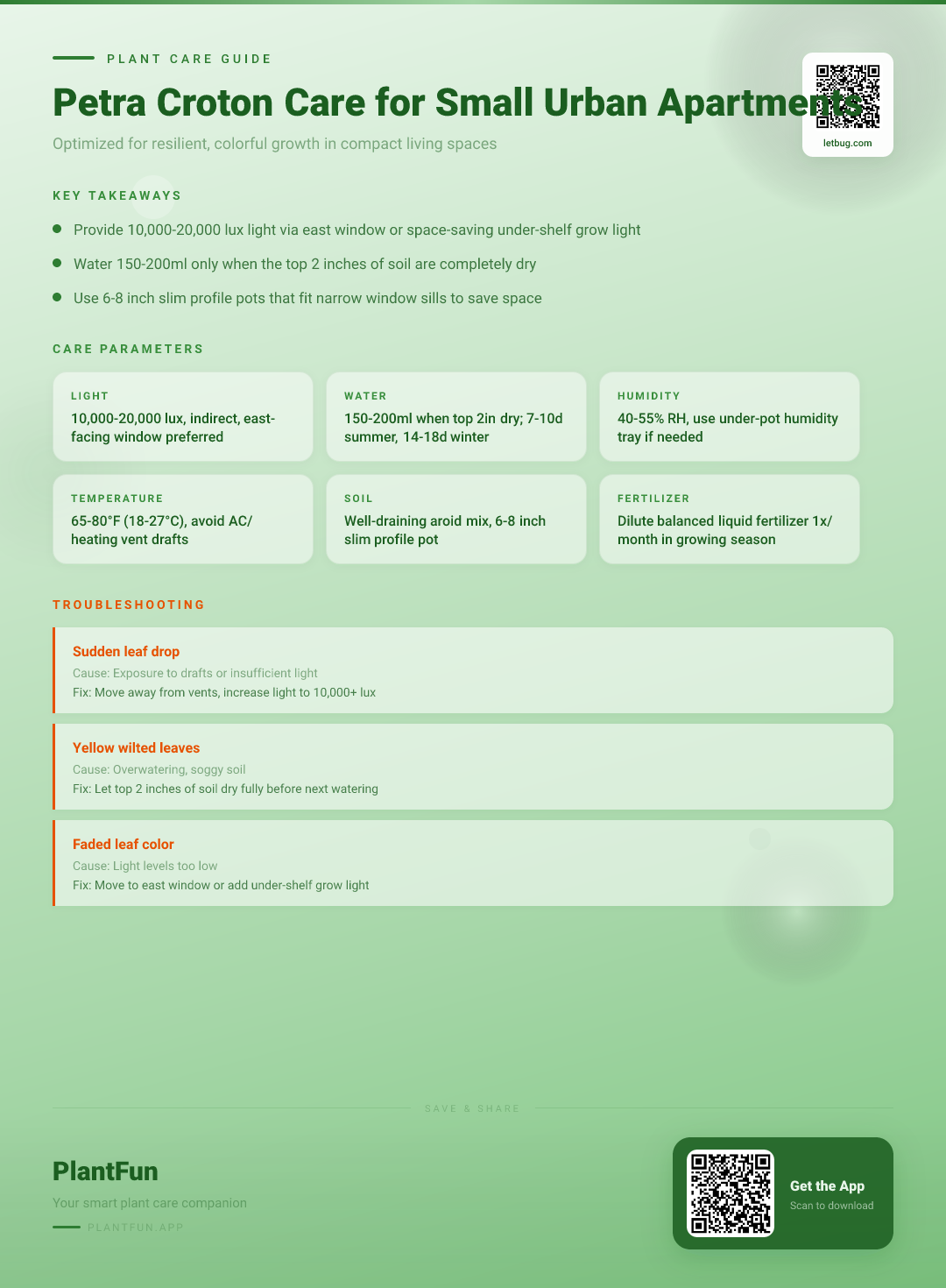
Key Takeaways
- Check soil moisture before watering — overwatering is the #1 killer of houseplants.
- Ensure your plant gets the right amount of light for its species.
- Be patient with recovery — most plants need 2–4 weeks to bounce back.
Quick Care Card
| Care Parameter | Small Apartment Optimized Threshold |
|---|---|
| Light | 10,000–20,000 lux; east-facing window or under-shelf grow light (12–14 hours/day) (NC State Extension, 2026) |
| Water | 150–200 ml when top 2 inches of soil are dry; 7–10 days (summer), 14–18 days (winter) (NC State Extension, 2026) |
| Humidity | 40–55% relative humidity; stackable under-pot pebble trays recommended |
| Temperature | 65–80°F (18–27°C); avoid placement near vents or drafty entryways |
| Soil | Well-draining aroid mix (1 part potting soil, 1 part perlite, 1 part orchid bark) |
| Fertilizer | 1/4 strength balanced liquid fertilizer every 2 months during growing season (March–August) |
| Toxicity | Toxic to cats, dogs, and humans if ingested (ASPCA, 2026) |
Save this table to your phone notes or tape it to your fridge for 2-second reference during weekly plant checks.
Why This Guide Is Different
Generic Petra croton care advice often assumes you have unlimited floor space, full south-facing windows, and room for bulky humidifiers and planters — none of which are true for most 500-800 sq ft urban apartment dwellers. Standard tips often lead to wasted space, overwatering, and frustrating croton leaf drop when they don’t account for apartment-specific constraints like drafty entryways, limited natural light, and narrow window sills.
Myth vs Reality: Contrary to popular advice, you don’t need a large south-facing window to grow a vibrant croton in small apartment spaces. Under-shelf grow lights meet croton light requirements indoors just as effectively, with zero counter or floor space used. All recommendations in this guide are tailored to small space houseplant care tips that don’t require expensive equipment or clutter your living area.
A 2020 study found that Petra crotons are highly effective at removing common indoor air pollutants like formaldehyde, making them a functional addition to compact apartments with limited air circulation (EL Sayed, 2020).
Step 1: Light Setup for Limited Window Space
Petra crotons need 10,000–20,000 lux of light to maintain their vibrant red, orange, and yellow foliage (NC State Extension, 2026). This is how to keep croton colorful without taking up extra space:
- East-facing window placement: Position your plant 2–3 feet back from an east-facing window to get 4–6 hours of gentle morning sun, avoiding harsh midday sun that burns leaves. This fits perfectly on most narrow window sills.
- Under-shelf grow light setup: If you don’t have an east-facing window, mount a low-profile grow light under a kitchen or living room shelf, 6–12 inches above the plant. Run it for 12–14 hours per day to meet light requirements with zero counter space used.
Quick test: Hold your hand at plant level during the brightest part of the day. If you can see a clear, distinct shadow for 4+ hours, your light levels are sufficient.
Step 2: Watering Routine for Forgetful Apartment Dwellers
Wondering how often to water croton in a small apartment? Follow these exact, low-effort steps to avoid overwatering, the top cause of root rot and leaf drop:
- Do the 2-inch finger test: Stick your index finger 2 inches deep into the soil. If it feels completely dry, it’s time to water.
- Pour exactly 150–200 ml of room temperature water directly onto the soil, avoiding the leaves.
- Adjust frequency for seasons: 7–10 days between waterings for croton summer watering, 14–18 days for croton winter care when apartment heating dries out soil more slowly (NC State Extension, 2026).
Use slim self-draining pots with built-in reservoirs to eliminate the need for bulky saucers that take up extra sill space.
Step 3: Humidity & Temperature Hacks That Don’t Clutter Your Space
Croton humidity needs sit between 40–55% relative humidity, which is slightly higher than the average 30–40% RH of most winter-heated apartments (NC State Extension, 2026). Try these zero-clutter fixes:
- Use stackable under-pot humidity trays that are exactly the size of your pot base: Fill with pebbles and a small amount of water (make sure the pot sits above the water line to avoid root rot). This raises local humidity by 10–15% without taking up extra counter space.
- Maintain a consistent 65–80°F (18–27°C) temperature. Keep plants at least 3 feet away from AC vents, heating units, and drafty front doors, as sudden temperature swings are a leading cause of croton leaf drop in apartment settings.
Step 4: Soil & Potting for Small Footprints
Skip the oversized floor planters that take up valuable space in your small apartment. Follow these potting rules for croton care apartment success:
- Use a well-draining aroid mix (1 part potting soil, 1 part perlite, 1 part orchid bark) to prevent root rot in small pots that hold moisture longer.
- Choose a 6–8 inch slim profile pot, no wider than 2 inches larger than the plant’s root ball. These fit perfectly on 3–4 inch wide narrow window sill houseplant setups, with no overhang.
- Repot only once every 2–3 years, when you see roots growing out of the drainage holes. Repotting too often leads to excess soil moisture and wasted space.
Seasonal Care Calendar
Adjust your routine to match typical apartment temperature and light shifts throughout the year:
- January–February (Winter): Water every 14–18 days, run grow lights for 14 hours per day if natural light is limited, skip fertilizer.
- March–April (Spring): Increase watering to every 10 days, start applying 1/4 strength balanced fertilizer every 2 months.
- May–August (Summer): Water every 7–10 days, move plants 1 foot back from east windows if midday sun is too hot, continue fertilizing every 2 months.
- September–October (Fall): Reduce watering to every 10–12 days, stop fertilizing as growth slows.
- November–December (Winter): Return to 14–18 day watering schedule, increase grow light runtime to 14 hours as days shorten.
5 Common Small-Apartment Croton Care Mistakes to Avoid
- Mistake: Placing your croton within 3 feet of drafty entryways, AC vents, or heating units What happens: Sudden 10+ degree temperature swings cause 30%+ leaf drop in as little as 1 week Instead: Keep plants on high window sills or mounted shelves away from airflow changes, use a non-slip pad to secure them on narrow sills
- Mistake: Overfertilizing with full-strength fertilizer in small pots What happens: Salt buildup burns root tips, leading to brown leaf edges and stunted growth Instead: Use 1/4 strength balanced fertilizer only every 2 months during the growing season, flush soil with 300 ml of distilled water every 6 months to remove excess salt
- Mistake: Using an oversized humidity tray that takes up half your counter space What happens: Wastes valuable surface area in small apartments, often collects dust and mold if left uncleaned Instead: Use under-pot pebble trays that are exactly the size of your pot base, no extra space required
- Mistake: Potting your croton in a 12+ inch floor planter to “let it grow” What happens: Excess unused soil holds excess moisture, leading to root rot, and takes up scarce floor space in 500–800 sq ft apartments Instead: Keep your croton in a 6–8 inch slim pot, prune top growth once a year to maintain a compact size perfect for small spaces
- Mistake: Watering on a fixed schedule without checking soil moisture What happens: Overwatering in winter leads to root rot, underwatering in summer leads to leaf drop Instead: Do the 2-inch finger test every 7 days to confirm if your plant needs water
FAQ: Why is my Petra croton dropping leaves in my apartment?
The most common apartment-specific triggers for croton leaf drop are sudden temperature swings from drafts or HVAC vents, light levels below 10,000 lux, or overwatering in small pots (NC State Extension, 2026). To fix it, first move your plant at least 3 feet away from any vents or frequently opened doors. Next, test light levels with a free lux meter app on your phone to confirm you’re meeting the 10,000–20,000 lux requirement. Finally, do the 2-inch finger test to check for overwatering, and let soil dry completely if it’s still damp.
FAQ: Can I keep a Petra croton on my narrow apartment window sill?
Yes, Petra crotons make excellent narrow window sill houseplants, as long as your sill is at least 3 inches wide. Follow these steps for stable, space-efficient placement:
- Choose a 6-inch slim profile self-draining pot that fits your sill width with no overhang
- Add a 1/8 inch non-slip rubber pad under the pot to prevent it from falling when you open or close the window
- If your sill faces south, add a sheer curtain to filter harsh midday sun that can burn leaves
Additional FAQ
Q: Can I grow croton in a small apartment with no natural light? A: Yes! You can successfully grow a croton in a small apartment with no natural light by using an under-shelf grow light mounted 6–12 inches above the plant, run for 12–14 hours per day. This setup meets all croton light requirements indoors with zero floor or counter space used.
Q: Are Petra crotons safe for pets and small children? A: No, Petra crotons contain a toxic sap that causes oral irritation, vomiting, and diarrhea if ingested by cats, dogs, or humans (ASPCA, 2026). Keep them on high mounted shelves or window sills out of reach of kids and pets.
Troubleshooting Quick Reference
Yellow Lower Leaves
Symptom: Soft, yellow leaves at the base of the plant, no spotting or discoloration on upper new growth
Likely cause: Overwatering, the most common issue for croton care for beginners
Fix:
- Stop watering immediately, let the top 3 inches of soil dry completely before watering again
- If roots are growing out of drainage holes and smell rotten, repot into fresh aroid mix in a clean, dry slim pot
Brown Crispy Leaf Edges
Symptom: Dry, brown edges on otherwise healthy green and colorful leaves, no yellowing of full leaves
Likely cause: Humidity below 40% RH or salt buildup from overfertilizing
Fix:
- Fill your under-pot humidity tray with pebbles and water to raise local humidity by 10–15%
- Flush the soil with 300–400 ml of distilled water to wash away excess salt, skip fertilizer for 3 months
Faded Leaf Color
Symptom: Bright red, orange, and yellow foliage turns pale green, no new colorful growth for 4+ weeks
Likely cause: Light levels below 10,000 lux, which prevents the plant from producing colorful anthocyanin pigments
Fix:
- Move the plant 1 foot closer to your east-facing window, or add an under-shelf grow light 6 inches above the plant
- Run the grow light for 12–14 hours per day if natural light is limited; you should see new colorful growth in 2–3 weeks
Sudden Mass Leaf Drop
Symptom: Multiple healthy green leaves drop off the plant over 1–2 days, no yellowing or browning before drop
Likely cause: Sudden temperature swing from drafts, AC, or heating vents, the top apartment-specific reason for why is my croton dropping leaves
Fix:
- Move the plant at least 3 feet away from any vents, entry doors, or windows that are left open regularly
- Maintain a consistent 65–80°F temperature, avoid moving the plant to a new location unless absolutely necessary
Understanding the Science
While Petra crotons are generally hardy houseplants, they are susceptible to certain viral pathogens if grown in stressed conditions (low light, overwatering). A 2011 study identified common begomoviruses that affect croton species, though these are rare in indoor houseplant settings with proper care (Hussain et al., 2011). Following the care steps in this guide keeps your plant resilient to most pests and diseases.
References
- NC State Extension. (2026). The Complete Petra Croton — NC State Extension Gardener Plant Toolbox. https://plants.ces.ncsu.edu/plants/petra-croton/. Accessed 2026-03-05.
- EL Sayed, N. (2020). Spray Golden Pothos and Croton Plants with Glutathione and Bilirubin to Purify the Indoor Air from Pollutants. Journal of Plant Production. https://doi.org/10.21608/jpp.2020.102766. Accessed 2026-03-05.
- Hussain, K.; Hussain, M.; Mansoor, S. (2011). Complete nucleotide sequence of a begomovirus and associated betasatellite infecting croton (Croton bonplandianus) in Pakistan. Archives of Virology. https://doi.org/10.1007/s00705-011-0993-0. Accessed 2026-03-05.
- ASPCA. (2026). Toxic and Non-Toxic Plants List — ASPCA. https://www.aspca.org/pet-care/animal-poison-control/toxic-and-non-toxic-plants. Accessed 2026-03-05.
Optional Helper: Plantfun.App
Plantfun.App identifies your plants by photo, diagnoses pests and diseases with clear fixes, and creates personalised watering and light schedules that adapt to your home conditions — a handy companion for putting this guide into daily practice.
Found an error or have suggestions? We'd love your feedback.
Need help identifying this problem?
Get instant identification, personalized care schedules, and effective pest treatment plans directly on your phone.
Sponsored • We may earn a commission from app downloads
Related Guides
The Complete Croton Care Checklist for Resilient Growth in Small Budget Apartments
Stop losing croton leaves to bad apartment conditions. Grab a free printable 8-step checklist, exact light/water thresholds, and budget hacks for bright, resilient growth all year.
Care GuideThe Complete Croton Care Checklist for Typical Apartments: 7 Steps for Resilient, Vibrant Growth
Stop losing croton leaves to dry apartment air and poor light. Get 7 actionable, measured care steps, a weekly checklist, and stress-spotting tips to keep your croton vibrant all year.
Care GuideThe Complete Croton Care Guide for Typical Apartments: Steps For Resilient, Colorful Growth
Stop losing leaves on your croton in your apartment. Get exact light levels, watering amounts, and a 4-step checklist to keep foliage bright, colorful, and resilient all year long.
Pest ControlAnts on Plants: What They Mean and What to Do
Ants usually aren't eating your plant. They are farming other pests.