
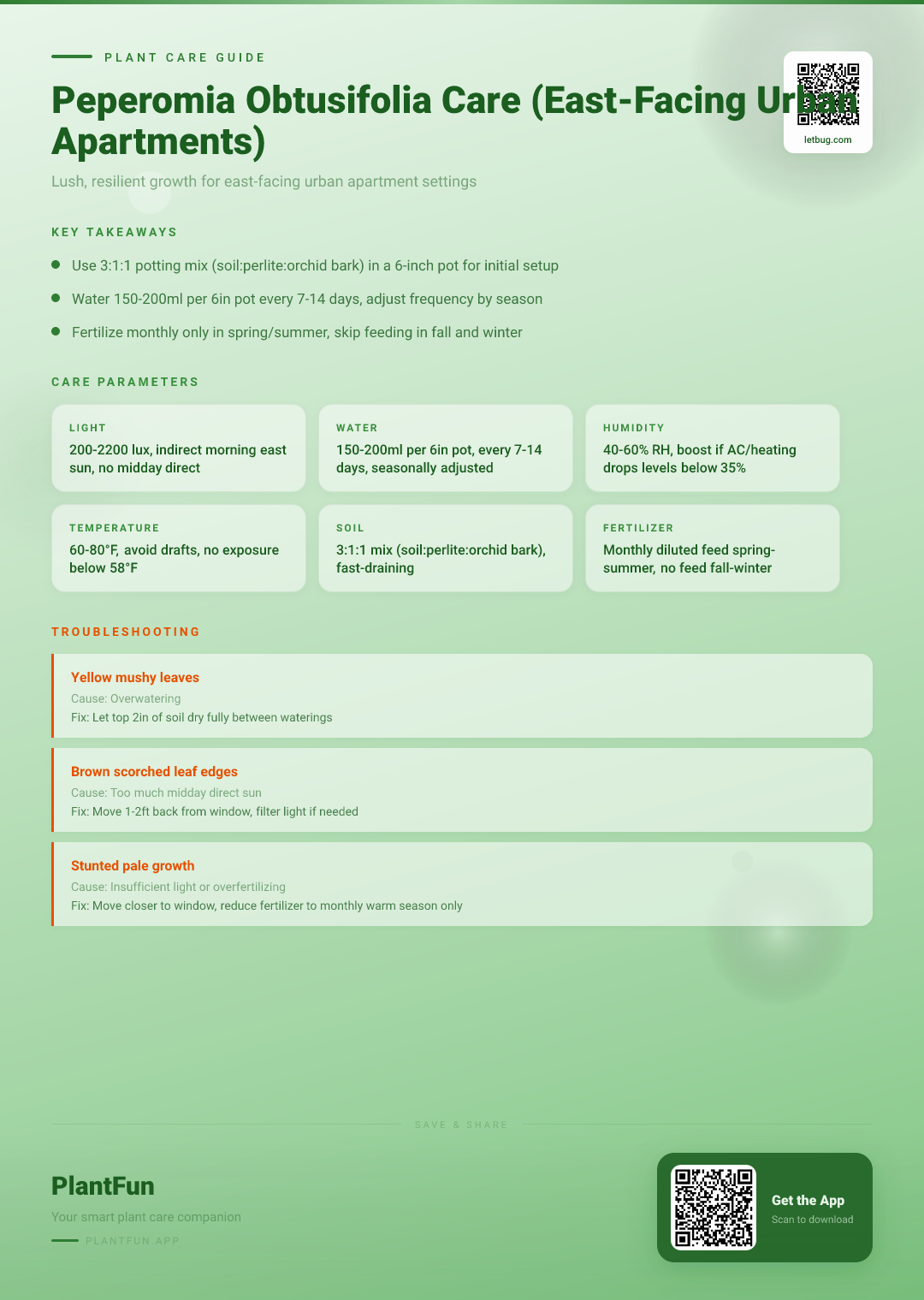
Key Takeaways
- Check soil moisture before watering — overwatering is the #1 killer of houseplants.
- Ensure your plant gets the right amount of light for its species.
- Be patient with recovery — most plants need 2–4 weeks to bounce back.
Quick Care Card: At-a-glance measurable thresholds for light, water, humidity, temperature, soil, and fertilizer for peperomia obtusifolia in east-facing apartments
| Parameter | Threshold for East-Facing Urban Apartments |
|---|---|
| Light | 1000-3000 lux, 2-3 hours of direct soft morning sun, no midday sun exposure |
| Water | 150-200ml per 6-inch pot every 7-14 days, only when soil is dry 2 inches deep |
| Humidity | 40-60% relative humidity |
| Temperature | 60-80°F, avoid sustained temps below 58°F |
| Soil | 3:1:1 ratio of organic potting soil:perlite:fine orchid bark |
| Fertilizer | 10-10-10 NPK diluted to 50% strength, monthly only in spring and summer |
| Toxicity | Non-toxic to cats, dogs, and humans (ASPCA, 2026) |
Why Generic Peperomia Care Fails for East-Facing Apartments
Generic peperomia care guides assume consistent, controlled light and temperature conditions that rarely exist in small urban apartments. East-facing units get soft, low-intensity morning sun followed by deep afternoon shade, plus extreme swings from winter heating systems and summer AC that dry out air 2-3x faster than average home conditions (NC State Extension, 2026). A common myth is that peperomia needs 6+ hours of bright indirect light daily; in reality, east-facing morning sun is perfectly calibrated for growth, and extra light will scorch leaves (Gilman, 2007). One-size-fits-all watering schedules also lead to the two most common issues: root rot from overwatering in low-light winter months, and crispy foliage from underwatering during AC-heavy summer days.
Step-by-Step Initial Setup for New Peperomia Obtusifolia
Follow these steps to acclimate your new plant to your apartment and prevent transplant shock:
- Wait 2 weeks after bringing your plant home to acclimate to your space before repotting. Avoid moving it around during this period.
- Prepare a well-draining 3:1:1 potting mix: 3 parts organic potting soil, 1 part perlite, 1 part fine orchid bark, which matches the epiphytic root needs of peperomia (NC State Extension, 2026). This mix is critical for peperomia root rot prevention.
- Repot into a 6-inch terracotta pot with at least 2 drainage holes, no more than 2 inches larger than the nursery pot to avoid excess soil that holds unused moisture.
- Choose one of these 3 optimal placement spots for peperomia in east-facing apartment setups:
- 1-2 feet away from the east-facing window (best for meeting peperomia obtusifolia light requirements)
- East-facing kitchen window sill (if no cold drafts)
- Floating shelf 3 feet from the east window (if you have curious pets that chew foliage)
Spring Peperomia Care Routine (March-May)
Spring is active new growth season for peperomia, as light levels increase steadily after short winter days:
- Water with 150ml of room-temperature distilled or rainwater per 6-inch pot every 9 days. Always do the quick finger test: stick your index finger 2 inches into soil, and delay watering for 2 days if the soil is still damp.
- Fertilize once a month with 10-10-10 NPK diluted to 50% strength. A 1985 HortScience study found that regular light fertilization encourages lateral branching, which is how to make peperomia grow faster and fuller (Henny, 1985).
- Prevent fungus gnats by adding a ½-inch layer of horticultural sand to the top of the soil, which stops gnat larvae from reaching the surface to breed. Empty any water that collects in the pot saucer within 30 minutes of watering.
Summer Peperomia Care Routine (June-August)
Summer brings higher temperatures, AC use, and occasional midday sun spill as the sun rises higher in the sky:
- Follow peperomia obtusifolia summer watering guidelines: 200ml per 6-inch pot every 7 days, adjusting for humidity levels in your unit.
- Avoid leaf scorch: if midday sun (after 10am) hits your plant, hang a sheer curtain over the east window or move the plant 1 foot further back from the glass.
- Boost humidity to meet peperomia obtusifolia humidity needs, as AC can drop indoor humidity to 30% or lower. Low-effort hacks include grouping your peperomia with other tropical plants, or placing it on a pebble tray filled with ½ inch of water (roots should not sit in standing water).
Fall Peperomia Care Routine (September-November)
Light levels drop steadily in fall, and peperomia growth slows as it prepares for winter dormancy:
- Taper off fertilizer completely by the end of September, as the plant will not use extra nutrients during dormant months.
- Reduce watering to 150ml per 6-inch pot every 12 days. Check soil moisture more frequently, as cooler temperatures mean soil takes longer to dry out.
- Protect your plant from drafty window sills: if your east window leaks cold air at night, move the plant 3 feet back from the glass to avoid exposure to temps below 58°F, which can cause leaf drop (NC State Extension, 2026).
Winter Peperomia Care Routine (December-February)
Peperomia obtusifolia winter care requires adjustments for short days, dry heating air, and dormancy:
- Adjust light exposure: move your plant to 1 foot away from the east window to maximize limited winter sun. Wondering can peperomia grow in low light? It tolerates low light temporarily, but if light levels stay below 1000 lux for more than 2 weeks, add a grow light 6 inches above the plant for 4 hours a day.
- Water with 150ml per 6-inch pot every 14 days, only when soil is dry 3 inches deep. Overwatering in winter is the top peperomia yellow leaves cause, as dormant roots absorb very little moisture.
- Avoid placing your plant within 2 feet of radiators or heating vents, which dry out foliage and cause sudden leaf drop.
6 Common Peperomia Obtusifolia Mistakes to Avoid in East-Facing Apartments
- Mistake: Overwatering on a fixed schedule without checking soil moisture What happens: Soggy soil leads to root rot, the most common cause of yellow, mushy lower leaves (Gilman, 2007) Instead: Use the 2-inch finger test before every watering, and follow the seasonal watering amounts outlined above
- Mistake: Placing more than 4 feet away from the east-facing window What happens: Low light leads to leggy growth, pale leaves, and no new leaf production Instead: Keep your plant within 3 feet of the east window year-round, and use a grow light in winter if light levels are low
- Mistake: Fertilizing year-round or using full-strength fertilizer What happens: Salt buildup in soil burns root tips, leading to brown leaf tips and stunted growth Instead: Only fertilize monthly in spring and summer, dilute to 50% strength, and flush soil with 2x the pot volume of distilled water every 3 months
- Mistake: Ignoring humidity drops from AC or heating systems What happens: Crispy brown leaf edges, slowed growth, and increased susceptibility to spider mites Instead: Use a pebble tray or group with other plants to keep humidity above 40% year-round
- Mistake: Repotting in winter when the plant is dormant What happens: Disturbed roots cannot absorb excess moisture, leading to root rot and widespread leaf drop Instead: Only repot in spring when new growth emerges, using a pot no more than 2 inches larger than the current one
- Mistake: Leaving the plant within 2 feet of HVAC vents What happens: Rapid temperature swings and dry air cause sudden leaf drop, even if you are watering correctly Instead: Place your peperomia at least 3 feet away from all heating, AC, and ventilation vents
FAQ 1: Why is my peperomia obtusifolia dropping leaves in the winter?
The most common cause is dry air from central heating combined with cold drafts from leaky east-facing windows (NC State Extension, 2026). First, check if your plant is within 2 feet of a radiator or drafty window sill, and move it to a spot with consistent 60-70°F temperatures. Add a pebble tray to boost humidity above 40%, and make sure you are not overwatering (root rot can also cause leaf drop). For more tips, see our guide to fixing sudden leaf drop in indoor plants.
FAQ 2: Can I keep my peperomia obtusifolia on my east-facing kitchen window sill?
Yes! This is one of the best spots for peperomia in east-facing apartment setups. The extra humidity from cooking supports peperomia obtusifolia humidity needs, and the soft morning sun is perfectly calibrated for growth. Just make sure the sill is not drafty in winter, and avoid placing it directly next to a stove that produces extreme heat spikes. Per the ASPCA (2026), peperomia is non-toxic, so it is safe if you have curious cats or dogs that jump on counters.
FAQ 3: How often should I water my peperomia obtusifolia when I’m away on vacation?
For trips 7-10 days long, water thoroughly with 200ml per 6-inch pot right before you leave, and place the pot on a pebble tray filled with water to keep humidity steady. For trips longer than 2 weeks, ask a friend to water only when the soil is dry 2 inches deep, or use a self-watering spike set to release 10ml of water per day. Avoid leaving the plant sitting in a tray of standing water for more than 3 days to prevent root rot. For more tips, see our guide to caring for houseplants while you are away.
Troubleshooting Quick Reference Table
| Symptom | East-Facing Apartment Specific Cause | Exact Fix |
|---|---|---|
| Yellow, mushy lower leaves | Overwatering in low-light winter months, or pot with no drainage holes | Let soil dry 3 inches deep, repot into 3:1:1 mix if root rot is present, adjust to winter watering schedule |
| Brown, crispy leaf tips | Dry air from AC or central heating, or fertilizer salt buildup | Flush soil with 2x pot volume of distilled water, add a pebble tray to boost humidity above 40% |
| Sudden widespread leaf drop | Drafty east window sill in fall/winter, or placement near HVAC vents | Move to spot with consistent 60-75°F temps, 3+ feet away from vents and drafty windows |
| Scorched brown spots on leaf tops | Midday sun spill through east window in summer, when sun sits lower in the sky | Add a sheer curtain to the window, move plant 1 foot further back from glass |
| Leggy, pale growth with gaps between leaves | Placed too far from east window, especially in short winter days | Move within 2 feet of the window, add a grow light for 4 hours a day in winter if light levels are below 1000 lux |
| Mushy black stems at soil line | Severe root rot from overwatering, or sitting in standing water for multiple days | Cut away all rotted roots and stems, repot into fresh 3:1:1 mix, reduce watering frequency |
References
- Gilman, E. (2007). Peperomia obtusifolia Peperomia, Baby Rubber Plant. EDIS. https://doi.org/10.32473/edis-fp466-1999. Accessed 2026-03-07.
- Henny, R. (1985). BA Induces Lateral Branching of Peperomia obtusifolia. HortScience. https://doi.org/10.21273/hortsci.20.1.115. Accessed 2026-03-07.
- ASPCA. (2026). Toxic and Non-Toxic Plants List — ASPCA. https://www.aspca.org/pet-care/animal-poison-control/toxic-and-non-toxic-plants. Accessed 2026-03-07.
- NC State Extension. (2026). The Complete Peperomia Obtusifolia — NC State Extension Gardener Plant Toolbox. https://plants.ces.ncsu.edu/plants/peperomia-obtusifolia/. Accessed 2026-03-07.
Optional Helper: Plantfun.App
Plantfun.App identifies your plants by photo, diagnoses pests and diseases with clear fixes, and creates personalised watering and light schedules that adapt to your home conditions — a handy companion for putting this guide into daily practice.
Found an error or have suggestions? We'd love your feedback.
Need help identifying this problem?
Get instant identification, personalized care schedules, and effective pest treatment plans directly on your phone.
Sponsored • We may earn a commission from app downloads
Related Guides
The Complete Peperomia Obtusifolia Care Checklist for Resilient Growth in Small Urban Apartments
Grab a free actionable Peperomia obtusifolia care checklist tailored for small urban apartments, with exact light, water, and humidity thresholds to keep your plant lush and pest-free all year.
Care GuidePeperomia Obtusifolia Care Checklist for Resilient Growth in Typical Small Urban Apartments
Grow a lush, hardy peperomia obtusifolia even in a low-humidity small apartment. Get our printable seasonal checklist, exact light, water, and humidity thresholds to avoid common care mistakes.
Care GuideThe Complete Peperomia Obtusifolia Care Checklist for Small Urban Apartments for Lush, Resilient Growth
Stop guessing at Peperomia care. Get 8 actionable checklist items, exact light, water and humidity thresholds, and simple fixes for common issues to keep your Peperomia obtusifolia thriving in small urban apartments.
Safety GuidePeperomia Obtusifolia on Living Room Coffee Tables: Pet & Child Safe Placement Guide
Keep your toddlers and cats safe while adding greenery to your living room. Get exact placement tips, Peperomia obtusifolia care specs, and 3 pet-safe substitute plants for your coffee table.