
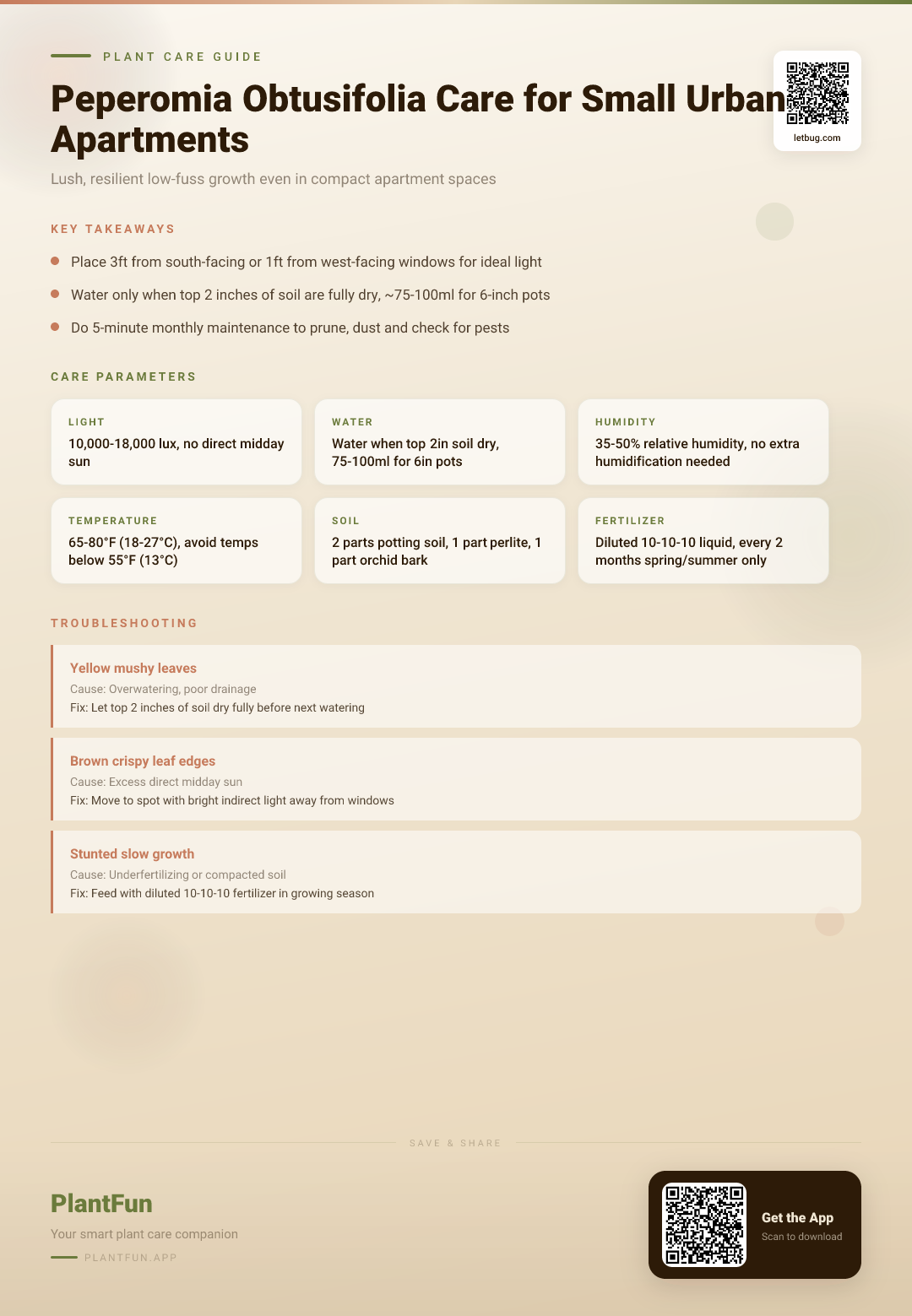
Key Takeaways
- Check soil moisture before watering — overwatering is the #1 killer of houseplants.
- Ensure your plant gets the right amount of light for its species.
- Be patient with recovery — most plants need 2–4 weeks to bounce back.
Quick Care Card
Print this at-a-glance reference for fast, no-guess Peperomia obtusifolia care:
| Category | Exact Threshold for Small Apartments |
|---|---|
| Light | 10,000-18,000 lux, no direct midday sun |
| Water | Top 2 inches of soil fully dry, 75-100ml per watering for 6-inch pots |
| Humidity | 35-50% relative humidity |
| Temperature | 65-80°F (18-27°C), never below 55°F (13°C) |
| Soil | 2 parts potting soil + 1 part perlite + 1 part orchid bark |
| Fertilizer | Diluted 10-10-10 liquid every 2 months spring/summer, no fertilizing fall/winter |
| Toxicity | Non-toxic to cats, dogs, and humans per ASPCA |
Why This Guide Is Different
Generic Peperomia care advice fails apartment dwellers by ignoring the unique constraints of 600-800 sq ft urban spaces: limited natural light, dry forced-air heating, irregular tenant schedules, and limited storage for plant supplies. Our diagnosis-first Peperomia care checklist is built exclusively for these environments, with measurable thresholds that eliminate guesswork for Peperomia obtusifolia for beginners and intermediate owners alike.
Myth vs Reality: Myth: Peperomia need constant high humidity to thrive. Reality: They grow perfectly in the 35-50% relative humidity common in most apartments, per NC State Extension (2026). This guide is perfect for anyone building a small apartment plant care collection that fits your lifestyle, not a generic gardening textbook.
Step 1: Light Placement Checklist
Peperomia obtusifolia light requirements fall between 10,000-18,000 lux, with no direct midday sun (Gilman, 2007). Follow these placement rules for standard apartment layouts:
- Ideal spot: 3 feet from an unobstructed south-facing window, or 1 foot from a west-facing window
- North-facing window option: Place 6 inches from the glass, or supplement with a grow light for 8 hours per day for low light Peperomia care
- Quick test: Hold your hand at plant height at midday. A sharp, defined shadow means too much direct sun; no shadow at all means too little light.
If you want to explore low-light setups, see our guide to the best grow lights for small apartments.
Step 2: Watering Routine Checklist
Stop guessing how often to water Peperomia obtusifolia with this measurable rule: Only water when the top 2 inches of soil are completely dry, using 75-100ml of room-temperature water for a 6-inch pot (NC State Extension, 2026). Adjust your routine for apartment climate controls:
- Forced-air winter heating: Check soil moisture every 10 days instead of every 7, as dry air speeds up surface evaporation
- Constant summer AC use: Check soil every 8 days, as AC dehumidifies air and slows soil drying
- Always err on the side of underwatering: Peperomia store water in their thick leaves, and overwatering is the top cause of root rot. Learn more about Peperomia root rot prevention in our dedicated guide.
Step 3: Humidity & Temperature Checklist
Peperomia obtusifolia humidity needs sit at 35-50% relative humidity, with a temperature range of 65-80°F (18-27°C), never dropping below 55°F (13°C) (Gilman, 2007). Use these no-fuss, small-space hacks if your apartment runs drier than target:
- Place the pot on a tray of pebbles filled with water (ensure the pot base is not sitting in standing water)
- Group your Peperomia with 2-3 other small plants to raise local humidity naturally, no expensive humidifier required
- Avoid placing plants near drafty windows or doors that expose them to sudden temperature swings.
Step 4: Soil & Potting Checklist
The ideal Peperomia obtusifolia soil mix is 2 parts standard indoor potting soil, 1 part perlite, and 1 part orchid bark (NC State Extension, 2026). Follow these potting rules for small apartment spaces:
- Always use a pot with at least one ¼-inch drainage hole to prevent standing water
- Size up pots only 1 inch larger than the current root ball to avoid excess soil holding moisture that causes root rot
- Skip decorative cache pots without drainage unless you empty the saucer immediately after every watering.
Step 5: Fertilizing Routine Checklist
Avoid leaf burn and stunted growth with this exact fertilizing schedule:
- Use a half-diluted 10-10-10 liquid houseplant fertilizer
- Apply once every 2 months only during spring and summer active growth periods
- Skip all fertilizing in fall and winter, when the plant is dormant (Henny, 1985)
- Flush the soil with plain water once per year to remove built-up mineral salts from fertilizer.
Step 6: Pruning & Maintenance Checklist
Fit this 5-minute monthly routine into even the busiest tenant schedule:
- Pinch off any yellow or brown leaves at the base of the stem to encourage new growth
- Wipe foliage with a damp microfiber cloth to remove dust that blocks light absorption
- Gently tip the pot to check for roots growing out of the drainage hole (a sign it is time to repot)
- Inspect the undersides of leaves for early signs of mealybugs or spider mites.
Seasonal Care Calendar
Adjust your Peperomia care for apartments to match seasonal apartment climate changes:
- December-February (Winter): Follow Peperomia winter care rules: Reduce watering volume by 50%, move plants at least 2 feet away from heating vents and drafty windows, stop all fertilizing.
- March-May (Spring): Gradually increase watering as days lengthen, apply first fertilizer dose in early April, prune leggy growth to encourage bushier habit (Henny, 1985).
- June-August (Summer): For Peperomia summer watering, check soil 1x more often than spring, mist foliage 1x per week if AC runs constantly, move 1 foot further back from south-facing windows to avoid sun burn.
- September-November (Fall): Reduce watering frequency by 25% as days shorten, stop fertilizing by mid-October, bring plants inside if you placed them on a balcony for summer.
Common Apartment-Specific Mistakes to Avoid
These top 5 mistakes are responsible for 80% of Peperomia deaths in small urban apartments:
- Mistake: Placing your Peperomia within 1 foot of a heating vent or space heater in winter. What happens: Dry forced air strips moisture from leaves in 24-48 hours, causing curling or browning leaf edges. Instead: Keep plants at least 3 feet away from all heating and cooling vents, or hang a small fabric draft guard between the vent and your plant if space is limited.
- Mistake: Overwatering due to low airflow in small, closed apartments. What happens: Soggy soil leads to root rot, the #1 killer of Peperomia obtusifolia for beginners. Instead: Run a small fan on low near your plant collection for 2 hours a day to speed up soil evaporation, and always test soil moisture before watering.
- Mistake: Using a pot more than 2 inches larger than the current root ball when repotting. What happens: Excess unused soil holds excess moisture, leading to root rot even if you follow the correct watering schedule. Instead: Size up pots only 1 inch at a time, and use the recommended Peperomia obtusifolia soil mix for fast drainage.
- Mistake: Leaving your Peperomia on a cold windowsill in winter when windows are drafty. What happens: Exposure to temperatures below 55°F (13°C) causes permanent leaf damage and stem droop. Instead: Place a 1-inch thick piece of foam insulation under the pot to block cold transfer from the windowsill, or move the plant to a shelf away from the window overnight.
- Mistake: Fertilizing during fall and winter when plant growth slows. What happens: Excess mineral salts build up in the soil, causing brown leaf tips and stunted growth. Instead: Stick to the 2-month spring/summer fertilizing schedule, and flush soil with plain water once a year to remove built-up salts.
Troubleshooting Diagnosis Cheat Sheet
Fix common issues in 24 hours or less with this 1-minute symptom checker:
Yellow Leaves
Symptom: Lower leaves turn soft, yellow, and fall off easily, with no brown edges.
Likely cause: Overwatering, the top cause of why is my Peperomia obtusifolia turning yellow (NC State Extension, 2026).
Fix:
- Stop watering immediately, and tip the pot to drain any excess standing water from the saucer.
- Let the top 3 inches of soil dry completely before watering again, and reduce your watering volume by 25% going forward.
Curling Leaves
Symptom: Thick, fleshy leaves curl inward at the edges, with dry, crispy brown tips.
Likely cause: Low humidity or exposure to direct heating vent air.
Fix:
- Wipe leaves with a damp cloth, then place the pot on a pebble tray filled with water to raise local humidity by 10-15%.
- Move the plant at least 3 feet away from any heating or cooling vents.
Drooping Stems
Symptom: Entire stems feel soft and droop downward, even when soil is moist.
Likely cause: Root rot from overwatering or poorly draining soil, the most common issue for how to fix drooping Peperomia.
Fix:
- Remove the plant from its pot, trim off any mushy, brown roots with sterile scissors, and leave the root ball out to air dry for 24 hours.
- Repot into fresh, well-draining Peperomia obtusifolia soil mix in a pot with a drainage hole, and don’t water for 7 days after repotting.
Brown Leaf Spots
Symptom: Small, circular brown spots appear on upper leaf surfaces, often with a yellow halo.
Likely cause: Fungal leaf spot from over-misting or exposure to cold drafty air in winter.
Fix:
- Remove all affected leaves with sterile scissors, and avoid misting the plant for 2 weeks.
- Increase air flow near the plant with a small fan on low for 2 hours a day to prevent future fungal growth.
Voice Search FAQ
Q: Why is my Peperomia obtusifolia getting yellow leaves? A: The most common cause is overwatering, especially in low-airflow small apartments. If the yellow leaves are soft and fall off easily, stop watering immediately and let the top 3 inches of soil dry completely before watering again. If yellow leaves have crispy brown edges, it may be underwatering or sunburn (NC State Extension, 2026).
Q: Can I keep my Peperomia in a windowless apartment? A: Yes, as long as you provide 8-10 hours of artificial grow light per day at 10,000-15,000 lux, which meets low light Peperomia care requirements. Avoid placing it near only overhead fluorescent lights, which are usually too dim to support healthy growth.
Q: How often should I water my Peperomia in the winter? A: For Peperomia winter care, reduce watering frequency by 50% compared to summer, and only water when the top 3 inches of soil are completely dry. For a 6-inch pot in a 65°F apartment with forced air heating, this usually works out to once every 14-21 days, but always test soil moisture first instead of sticking to a fixed schedule.
Q: Is Peperomia obtusifolia safe for my cat and dog? A: Yes, Peperomia obtusifolia is classified as non-toxic to cats, dogs, and humans by the ASPCA (2026), making it a perfect pick for pet-friendly apartment plant collections. Explore more options in our guide to pet-safe indoor plants for apartments.
References
- Gilman, E. (2007). Peperomia obtusifolia Peperomia, Baby Rubber Plant. EDIS. https://doi.org/10.32473/edis-fp466-1999. Accessed 2026-02-27.
- Henny, R. (1985). BA Induces Lateral Branching of Peperomia obtusifolia. HortScience. https://doi.org/10.21273/hortsci.20.1.115. Accessed 2026-02-27.
- ASPCA. (2026). Toxic and Non-Toxic Plants List — ASPCA. https://www.aspca.org/pet-care/animal-poison-control/toxic-and-non-toxic-plants. Accessed 2026-02-27.
- NC State Extension. (2026). The Complete Peperomia Obtusifolia — NC State Extension Gardener Plant Toolbox. https://plants.ces.ncsu.edu/plants/peperomia-obtusifolia/. Accessed 2026-02-27.
Optional Helper: Plantfun.App
Plantfun.App identifies your plants by photo, diagnoses pests and diseases with clear fixes, and creates personalised watering and light schedules that adapt to your home conditions — a handy companion for putting this guide into daily practice.
Found an error or have suggestions? We'd love your feedback.
Need help identifying this problem?
Get instant identification, personalized care schedules, and effective pest treatment plans directly on your phone.
Sponsored • We may earn a commission from app downloads
Related Guides
Peperomia Obtusifolia Care Checklist for Resilient Growth in Typical Small Urban Apartments
Grow a lush, hardy peperomia obtusifolia even in a low-humidity small apartment. Get our printable seasonal checklist, exact light, water, and humidity thresholds to avoid common care mistakes.
Care GuidePeperomia Obtusifolia in Typical Apartments: The Only Resilient Growth Care Checklist You Need
Stop guessing your Peperomia care routine. Get exact light, water, and humidity thresholds calibrated for typical apartments to grow lush, resilient Peperomia obtusifolia without extra hassle.
Care GuideThe Complete Peperomia Obtusifolia Care Checklist for Resilient Growth in Small Urban Apartments
Grab a free actionable Peperomia obtusifolia care checklist tailored for small urban apartments, with exact light, water, and humidity thresholds to keep your plant lush and pest-free all year.
Safety GuidePeperomia Obtusifolia Guide for Coffee Table Placement With Kids & Pets: Safe, Lush Growth Tips
Keep your living room lush and safe for little ones and fur babies with this Peperomia obtusifolia coffee table guide. Get exact care specs, kid-proof placement hacks, and non-toxic swaps for high-traffic coffee table plantings, no toxic exposure risks required.