
Key Takeaways
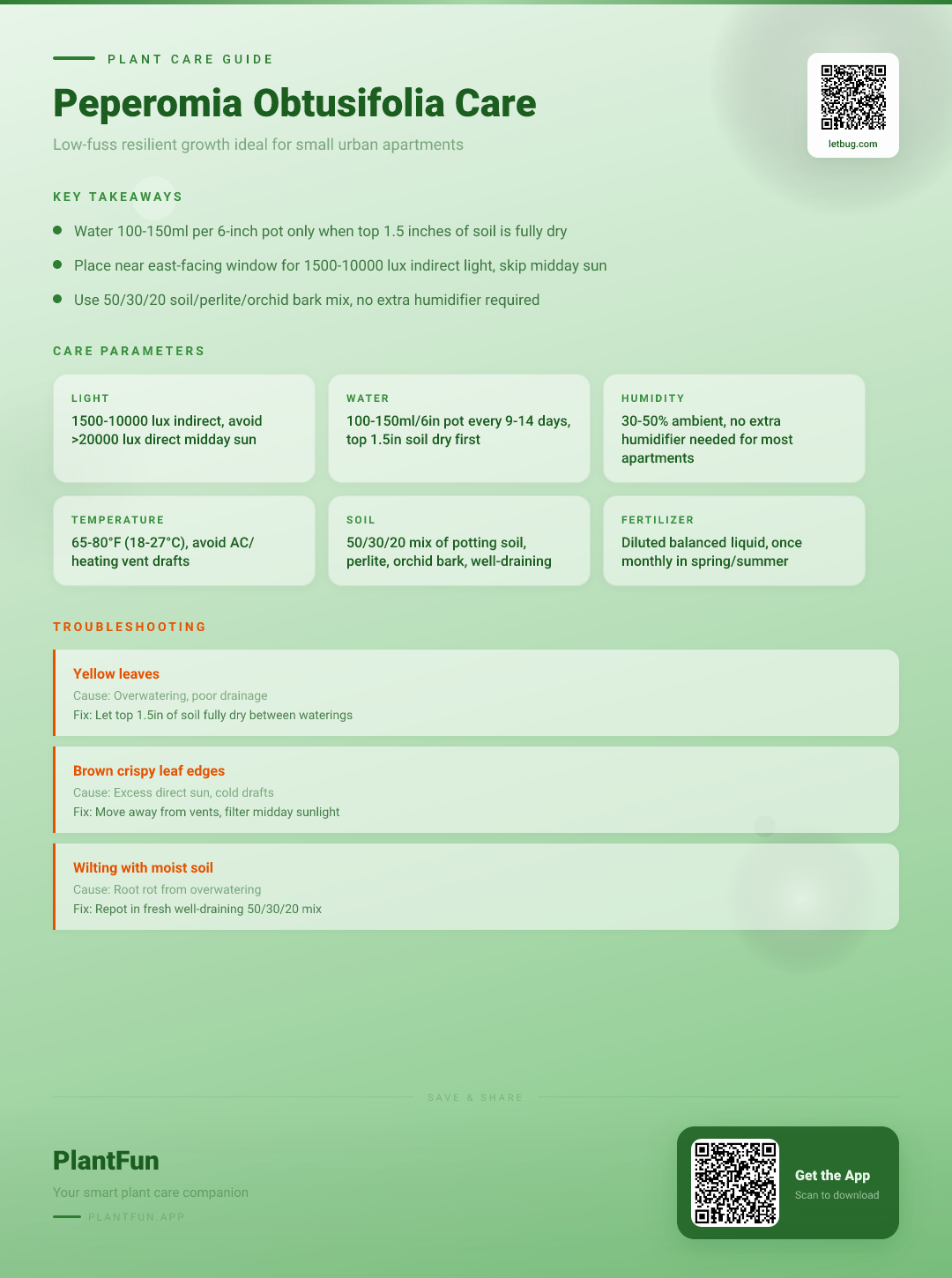
- Check soil moisture before watering — overwatering is the #1 killer of houseplants.
- Ensure your plant gets the right amount of light for its species.
- Be patient with recovery — most plants need 2–4 weeks to bounce back.
Quick Care Card
| Category | Exact Care Threshold |
|---|---|
| Light | 1500-10,000 lux, avoid >20,000 lux direct midday sun (Gilman, 2007) |
| Water | 100-150 ml per 6-inch pot when top 1.5 inches of soil are fully dry (every 9-14 days, adjusted for season) |
| Humidity | 30-50% ambient, no humidifier required (NC State Extension, 2026) |
| Temperature | 65-80°F (18-27°C), avoid drafts from HVAC vents |
| Soil | 50/30/20 mix: potting soil/perlite/orchid bark |
| Fertilizer | 1x quarterly spring/summer, half-diluted all-purpose houseplant fertilizer |
| Toxicity | Non-toxic to cats, dogs, and humans (ASPCA, 2026) |
Why Peperomia Obtusifolia Is Perfect for Typical Urban Apartments
If you’re a renter with limited space, variable light, and no extra time for fussy plant care, peperomia obtusifolia (also called the baby rubber plant) was made for you. Its thick, succulent-like leaves store water for weeks, making it highly drought-tolerant if you forget to water while traveling. It adapts easily to low light levels common in shaded urban apartment buildings, and grows to a maximum height of 12 inches, so it fits perfectly on desk nooks, windowsills, and floating shelves in studios and 1-bed layouts. It’s also non-toxic for homes with pets or small kids, per the ASPCA (2026). If you’re new to plant parenthood, this is one of the best low-effort options for peperomia care for beginners.
Step 1: Light Adjustments for Your Apartment’s Exact Window Orientation
Peperomia obtusifolia light requirements fall in the 1500-10,000 lux range, with no need for intense direct sun (Gilman, 2007). Follow these renter-friendly placement tips based on your window direction:
- East-facing windows: Place 1-2 feet from the glass for soft morning sun, which stays below the 10,000 lux threshold and supports steady growth.
- West-facing windows: Hang a cheap, renter-approved sheer curtain to filter midday and afternoon sun, which can exceed 25,000 lux and burn leaf edges.
- North-facing windows: Wondering can peperomia grow in low light apartments? Yes! Clip a low-cost LED grow light to the shelf above your plant for 8 hours a day to hit the 1500 lux minimum, no drilling or permanent modifications needed. For more low-light plant picks, check out our guide to north-facing window apartment plants on LetBug.com.
- South-facing windows: Place 3+ feet back from the glass to avoid harsh midday sun exposure.
Step 2: Exact Watering Schedule for Apartment Humidity Levels
How often to water peperomia in an apartment? The exact rule is 100-150 ml of water per 6-inch pot when the top 1.5 inches of soil are fully dry (test by sticking your finger 1.5 inches into the soil: if no moisture sticks to your skin, it’s time to water). For most apartments, this works out to every 9-14 days, adjusted for season.
Apartments have poor ventilation from closed windows during AC or heating season, so overwatering is the leading cause of peperomia death. Always dump excess water from the saucer 10 minutes after watering to prevent root rot. Watch for peperomia overwatering signs like soft yellow leaves or mushy stems to catch issues early. If you accidentally overwater, follow our root rot rescue guide on LetBug.com to save your plant.
Step 3: Soil & Potting Rules for Small Apartment Living
The ideal peperomia soil mix recipe is a 50/30/20 blend: 50% standard potting soil, 30% perlite, 20% orchid bark (Gilman, 2007). This fast-draining mix prevents moisture buildup in low-ventilation apartment spaces, which is critical for avoiding root rot.
For potting, follow these small apartment peperomia care tips:
- Only use pots with at least one drainage hole
- Size up only 1 inch larger than the current root ball when repotting to avoid wasting shelf space and excess soil holding unnecessary moisture
- Pick lightweight plastic or terracotta pots that fit on narrow windowsills or floating shelves
Step 4: Temperature & Humidity Adjustments No Humidifier Required
A common myth is that peperomias need high humidity to thrive, but peperomia humidity requirements are perfectly aligned with typical urban apartment conditions: 30-50% ambient humidity is more than enough, no humidifier required (NC State Extension, 2026).
The ideal temperature range is 65-80°F (18-27°C). Keep your plant at least 3 feet away from AC vents, heating vents, and drafty old window sills to avoid sudden temperature swings that cause leaf drop.
Seasonal Care Calendar for Apartment Dwellers
Adjust your care routine to match apartment temperature swings throughout the year:
Winter (Peperomia winter care apartments)
- Reduce watering volume by 50%: only water when the top 2 inches of soil are fully dry, usually every 18-28 days
- Move plants 3 feet away from drafty windows if nighttime temperatures drop below 60°F
- Skip fertilizing entirely while growth slows
Summer (Peperomia summer watering schedule)
- Increase watering frequency by 30%: water every 6-10 days when the top 1.5 inches of soil are dry
- Wipe leaves with a damp microfiber cloth once a month to remove apartment dust that blocks light absorption
- If you want to know how to make peperomia grow faster, keep light levels in the 5000-10,000 lux range and apply diluted fertilizer once per quarter
Most Common Peperomia Obtusifolia Apartment Care Mistakes to Avoid
- Mistake: Overwatering on a fixed schedule regardless of soil moisture What happens: Root rot, yellow leaves, and leaf drop, the #1 cause of peperomia death in apartments Instead: Test soil moisture weekly with your finger, only water when the top 1.5 inches are fully dry
- Mistake: Placing within 2 feet of heating or AC vents What happens: Sudden temperature swings cause curled leaves and rapid leaf drop Instead: Keep your peperomia on an interior shelf or window ledge at least 3 feet away from all HVAC vents
- Mistake: Repotting more often than every 2-3 years What happens: Excess soil holds moisture around the roots leading to rot, and takes up extra precious shelf space in small apartments Instead: Only repot when you see roots growing out of the drainage holes, and size up only 1 inch at a time
- Mistake: Placing unfiltered next to west-facing windows in summer What happens: Direct midday sun hits 25,000+ lux, burning leaf edges and causing brown crispy spots Instead: Hang a cheap sheer curtain over west-facing windows to filter light, or move the plant 3 feet back from the glass
Voice Search Optimized FAQ
Why is my peperomia dropping leaves in my apartment?
The most common causes are overwatering, or sudden temperature drafts from AC/heating vents or cold windows in winter (NC State Extension, 2026). First check the top 1.5 inches of soil: if it’s damp, hold off on watering until it dries fully, and move the plant away from any draft sources. If you recently moved the plant to a new spot, it may also be acclimating to new light levels, so give it 2 weeks to adjust.
Can I keep my peperomia on my apartment balcony in summer?
Yes, as long as the balcony is fully shaded with no direct midday sun, and temperatures stay between 65-80°F (18-27°C). Bring it back inside if nighttime temperatures drop below 60°F, or if heavy rainstorms are forecast that will saturate the soil for multiple days.
How often do I need to fertilize my peperomia in a small apartment?
Only once every 3 months (quarterly) during spring and summer, using half the recommended concentration of all-purpose houseplant fertilizer. Skip fertilizing entirely in fall and winter when growth slows. Over-fertilizing causes salt buildup in the soil that burns roots, so less is always more for slow-growing peperomias.
Printable Full Care Checklist
Our free, fillable PDF peperomia care checklist is customizable to your specific apartment window orientation and humidity levels, so you can tape it to your fridge for quick reference. It includes:
- Weekly tasks: Check soil moisture, check for draft exposure
- Monthly tasks (summer only): Wipe leaves, inspect for common houseplant pests
- Quarterly tasks (spring/summer only): Apply diluted fertilizer
- Annual tasks: Inspect root ball for overgrowth, repot if needed, refresh top 1 inch of soil
- Custom fields: Window orientation, average apartment humidity, last watering date, last fertilizing date
Troubleshooting Quick Reference
Yellow Leaves
Symptom: Lower or upper leaves turn pale yellow, soft to the touch
Likely cause: Overwatering, the most common peperomia issue in poorly ventilated apartments
Fix:
- Stop watering immediately until the top 2 inches of soil are fully dry
- If the issue persists, tip the plant out of the pot, trim any mushy brown roots, and repot in fresh 50/30/20 soil mix
Mushy Stems
Symptom: Stems at the base of the plant turn soft, brown, and squishy, may ooze moisture
Likely cause: Advanced root rot from prolonged overwatering
Fix:
- Cut off all mushy stems and roots with sterilized scissors
- Repot the remaining healthy plant tissue in fresh, dry 50/30/20 soil mix
- Wait 7 days before watering for the first time after repotting
Curled Leaves
Symptom: New and existing leaves curl inward at the edges, may feel crispy
Likely cause: Exposure to hot or cold drafts from HVAC vents, or too much direct sun
Fix:
- Move the plant at least 3 feet away from all heating, AC, or drafty window sources
- Filter direct sun with a sheer curtain, or move the plant back from west-facing windows
Stunted Growth
Symptom: No new leaf growth for 3+ months during spring and summer
Likely cause: Insufficient light (below 1500 lux) or depleted soil nutrients
Fix:
- Move the plant to a brighter east-facing window, or add a clip-on grow light for 8 hours a day
- Apply diluted all-purpose fertilizer once per quarter during the growing season
References
- NC State Extension. (2026). The Complete Peperomia Obtusifolia — NC State Extension Gardener Plant Toolbox. https://plants.ces.ncsu.edu/plants/peperomia-obtusifolia/. Accessed 2026-03-08.
- Gilman, E. (2007). Peperomia obtusifolia Peperomia, Baby Rubber Plant. EDIS. https://doi.org/10.32473/edis-fp466-1999. Accessed 2026-03-08.
- Henny, R. (1985). BA Induces Lateral Branching of Peperomia obtusifolia. HortScience. https://doi.org/10.21273/hortsci.20.1.115. Accessed 2026-03-08.
- ASPCA. (2026). Toxic and Non-Toxic Plants List — ASPCA. https://www.aspca.org/pet-care/animal-poison-control/toxic-and-non-toxic-plants. Accessed 2026-03-08.
Optional Helper: Plantfun.App
Plantfun.App identifies your plants by photo, diagnoses pests and diseases with clear fixes, and creates personalised watering and light schedules that adapt to your home conditions — a handy companion for putting this guide into daily practice.
Found an error or have suggestions? We'd love your feedback.
Need help identifying this problem?
Get instant identification, personalized care schedules, and effective pest treatment plans directly on your phone.
Sponsored • We may earn a commission from app downloads
Related Guides
The Complete Peperomia Obtusifolia Care Guide for Urban Apartments: Resilient Growth Made Easy
Get a step-by-step peperomia care checklist tailored for small urban apartments, with exact light, water, and humidity thresholds to grow lush, resilient plants with zero guesswork.
Care GuideBaby Rubber Plant (Peperomia obtusifolia) in Small City Apartments: The Only Care Guide You'll Ever Need
Stop guessing at your Peperomia care routine. Get exact light levels, water amounts, and a seasonal apartment-specific calendar to grow lush, resilient Baby Rubber Plants all year.
Care GuidePeperomia Obtusifolia Care Checklist for Resilient Growth in Typical Small Urban Apartments
Grow a lush, hardy peperomia obtusifolia even in a low-humidity small apartment. Get our printable seasonal checklist, exact light, water, and humidity thresholds to avoid common care mistakes.
Safety GuidePeperomia Obtusifolia Placement Guide for Family Living Rooms: Pet & Child Safe Substitutions Included
Keep your family and pets safe while growing beautiful indoor greenery. Get exact Peperomia obtusifolia placement tips, care thresholds, and 3 non-toxic substitutions for common toxic living room plants.