
Key Takeaways
- Check soil moisture before watering — overwatering is the #1 killer of houseplants.
- Ensure your plant gets the right amount of light for its species.
- Be patient with recovery — most plants need 2–4 weeks to bounce back.
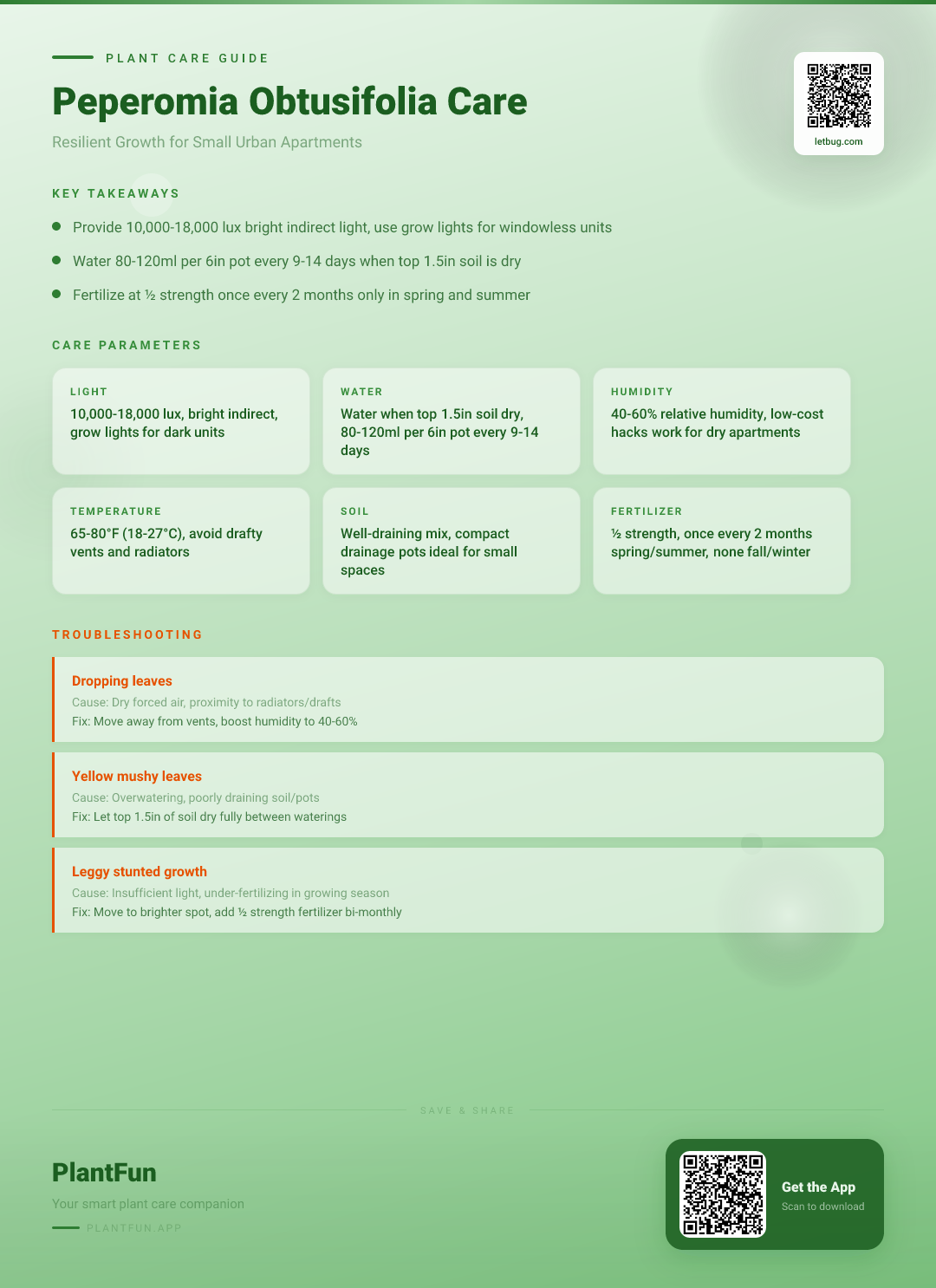
Quick Care Card: At-a-glance printable checklist snippet with all measurable care thresholds for fast, no-fuss reference
| Care Category | Exact Apartment-Adjusted Threshold |
|---|---|
| Light | 10,000-18,000 lux bright indirect; 12 hours daily of full-spectrum grow light for windowless units |
| Water | Water when top 1.5 inches of soil is dry; 80-120ml per 6in pot every 9-14 days |
| Humidity | 40-60% relative humidity |
| Temperature | 65-80°F (18-27°C) |
| Soil | 2 parts potting soil + 1 part perlite + 1 part orchid bark |
| Fertilizer | ½ strength balanced liquid fertilizer once every 2 months (spring/summer only) |
| Toxicity | Non-toxic to cats, dogs, and humans (ASPCA, 2026) |
Why Your Apartment Might Be Stunting Your Peperomia Obtusifolia
Most generic Peperomia obtusifolia care guides ignore the unique stressors of small urban apartments, which are the #1 cause of stunted growth, leaf drop, and root rot for indoor baby rubber plants. The three most common apartment-specific stressors are:
- Dry forced air: Heating in winter and AC in summer drop humidity well below the plant’s preferred range, causing crispy leaf edges.
- Low north-facing light: Many urban apartments only have north-facing windows, which deliver less than 8,000 lux of light — too low for healthy Peperomia growth.
- Irregular renter watering schedules: Busy work schedules, travel, and forgetfulness lead to either overwatering or underwatering for most renters.
Quick diagnostic test: Run your finger along the plant’s leaves and feel the top 2 inches of soil. Crispy edges = low humidity, mushy yellow leaves = overwatering, leggy stretched growth = insufficient light. For more help identifying common houseplant stress signs, check out our beginner’s guide to houseplant troubleshooting.
Step 1: Light Requirements for Apartment Peperomia
Peperomia obtusifolia needs 10,000-18,000 lux of bright indirect light to thrive (NC State Extension, 2026). This Peperomia obtusifolia light requirement is easy to meet even in small apartments:
- Optimal placement: 3-5 feet from an east or south-facing window, shaded by a sheer curtain to avoid direct sun burn.
- North-facing window placement: Add a grow light to boost levels, as north-facing windows only deliver 5,000-8,000 lux on bright days.
- Windowless unit hack: Use a 10W full-spectrum LED grow light placed 12-18 inches above the plant, run for 12 hours per day. For tips on measuring light levels, see our Peperomia obtusifolia grow light guide.
Myth vs reality: Myth: Peperomia can survive in dark bathroom corners with no supplemental light. Reality: It will survive for 2-3 months, but will stop growing and drop leaves long-term without meeting the 10,000 lux minimum.
Step 2: Watering Routine for Busy Renters
Wondering how often to water Peperomia obtusifolia in an apartment? Follow this measurable rule: Water only when the top 1.5 inches of soil is completely dry, applying 80-120ml of water per 6-inch pot every 9-14 days (Gilman, 2007).
Seasonal adjustments:
- Peperomia obtusifolia summer watering: Every 9-11 days, as AC use dries out soil faster.
- Winter heating season: Every 12-14 days, as plant growth slows and soil takes longer to dry.
Quick test: Stick your index finger 1.5 inches into the soil. If no soil sticks to your finger, it’s time to water. If soil clings to your skin, wait 2-3 more days and test again.
Step 3: Soil & Potting Rules for Small Spaces
Peperomia obtusifolia has a small, shallow root system, making it perfect for Peperomia obtusifolia small space care setups on shelves and narrow counters. Follow these rules:
- Optimal soil mix: 2 parts general-purpose potting soil, 1 part perlite, 1 part orchid bark (NC State Extension, 2026). This mix drains fast to prevent root rot. For custom mix recipes, see our DIY houseplant potting mix guide.
- Drainage requirement: Use a pot with at least one 0.5-inch drainage hole. Add a 0.5-inch layer of pebbles at the bottom if you’re using a decorative cache pot without drainage.
- Pot size: Choose a pot only 1 inch larger than the current root ball. Oversized pots hold excess moisture and take up unnecessary counter space. 4-6 inch pots fit perfectly on standard 6-inch deep floating shelves.
Step 4: Humidity & Temperature Adjustments for Dry Apartments
Peperomia obtusifolia humidity needs fall between 40-60% relative humidity, with a preferred temperature range of 65-80°F (18-27°C) (Gilman, 2007). You don’t need a bulky humidifier to hit these levels in a dry apartment — try these no-cost hacks:
- Group your Peperomia with other houseplants to trap moisture through transpiration.
- Place a tray of water with pebbles under the pot, making sure the bottom of the pot never sits directly in standing water.
- Mist the leaves once every 2 days during the winter heating season.
Keep your plant at least 2 feet away from radiators, AC vents, and drafty window sills to avoid sudden temperature swings that cause leaf drop.
Step 5: Fertilizing Schedule for Low-Maintenance Growth
Follow this simple Peperomia obtusifolia fertilizing schedule to avoid leaf burn and encourage steady growth:
- Apply ½ strength balanced liquid houseplant fertilizer once every 2 months only in spring and summer, when the plant is actively growing.
- Skip all fertilizer in fall and winter, when growth slows and the plant cannot absorb excess nutrients (NC State Extension, 2026).
Overfertilizing is a common mistake for beginners: it causes brown leaf tips and stunted growth, so err on the side of less fertilizer rather than more.
Seasonal Care Calendar for Apartment Peperomia
Adjust your routine throughout the year to account for apartment climate changes:
- Winter (Peperomia obtusifolia winter care): Move plants 2 feet away from drafty windows and radiators, reduce watering volume by 20%, mist leaves 2 times per week to boost humidity, and stop all fertilizing.
- Spring: Check for new growth, inspect roots for overcrowding, and wipe leaves with a damp cloth to remove dust that blocks light. This is also a good time to do a Peperomia obtusifolia pest prevention for apartments check: look for tiny white mealybugs or spider mites on the undersides of leaves.
- Summer: Move plants 1 foot further back from south-facing windows to avoid direct sun burn, check soil moisture 1 day earlier than your usual schedule, and open windows for air circulation if outdoor temperatures stay above 65°F.
- Fall: Gradually extend the time between watering sessions as temperatures drop, and stop fertilizing by mid-October.
Common Apartment-Specific Mistakes to Avoid
- Mistake: Overwatering due to rigid, calendar-based watering schedules instead of testing soil moisture. What happens: Root rot, mushy yellow leaves, and sudden leaf drop. Instead: Test soil moisture with your finger every 7 days, and only water when the top 1.5 inches is completely dry.
- Mistake: Placing your Peperomia within 1 foot of radiators, AC vents, or drafty window sills. What happens: Rapid moisture loss, crispy leaf edges, and stunted growth. Instead: Keep your plant at least 2 feet away from all vent and draft sources.
- Mistake: Using a pot more than 2 inches larger than the current root ball to “save time repotting later”. What happens: Excess soil holds standing water, leading to root rot before the plant’s roots can grow into the new soil. Instead: Use a pot only 1 inch larger than the root ball when repotting, and opt for stackable, shelf-friendly nursery pots.
- Mistake: Repotting every year even if your plant is not root-bound. What happens: Transplant shock, slowed growth, and unnecessary stress for your plant. Instead: Only repot every 2-3 years, or when you see roots visibly growing out of the bottom drainage holes.
FAQ 1: Why is my Peperomia obtusifolia dropping leaves in my apartment?
The most common causes are overwatering, sudden temperature drafts, or light levels below 10,000 lux (Gilman, 2007). First, test the top 1.5 inches of soil: if it is still wet, hold off on watering for 3-5 days and make sure your pot has working drainage. Next, check if your plant is within 2 feet of a drafty window, radiator, or AC vent, and move it to a more temperature-stable spot if needed. If growth is leggy or pale, add a grow light to boost light levels to the 10,000 lux minimum.
FAQ 2: Can I keep my Peperomia obtusifolia in a windowless apartment with only grow lights?
Yes! Peperomia obtusifolia thrives under full-spectrum grow lights as long as you meet the 10,000-18,000 lux requirement (NC State Extension, 2026). Use a 10W full-spectrum LED placed 12-18 inches above the plant, run it for 12 hours per day, and you will see consistent, healthy growth. This is a great option for Peperomia care for beginners living in dark, low-light apartments who want to learn how to keep Peperomia obtusifolia alive in apartments without natural light.
FAQ 3: How often do I need to repot my Peperomia if I live in a small apartment?
Peperomia obtusifolia has a small, slow-growing root system, so you only need to repot every 2-3 years, or when you see roots visibly growing out of the bottom drainage holes (Gilman, 2007). Use a pot only 1 inch larger than the current root ball to save counter and shelf space, and always use a pot with drainage holes to prevent overwatering. You can keep your Peperomia in the same 6-inch pot for 3+ years if it is not root-bound, making it ideal for small space setups.
Printable Full Care Checklist
Grab our free, downloadable, fillable Peperomia care checklist to track watering, light checks, and fertilizing dates for 3 full months. The checklist includes built-in reminders for seasonal adjustments, pest checks, and soil moisture tests, so you never have to guess your care routine again. It is formatted to fit on a single 4x6 inch index card, so you can tape it to the back of your plant pot or stick it on your fridge for easy reference.
References
- NC State Extension. (2026). The Complete Peperomia Obtusifolia — NC State Extension Gardener Plant Toolbox. https://plants.ces.ncsu.edu/plants/peperomia-obtusifolia/. Accessed 2026-03-08.
- Gilman, E. (2007). Peperomia obtusifolia Peperomia, Baby Rubber Plant. EDIS. https://doi.org/10.32473/edis-fp466-1999. Accessed 2026-03-08.
- Henny, R. (1985). BA Induces Lateral Branching of Peperomia obtusifolia. HortScience. https://doi.org/10.21273/hortsci.20.1.115. Accessed 2026-03-08.
- ASPCA. (2026). Toxic and Non-Toxic Plants List — ASPCA. https://www.aspca.org/pet-care/animal-poison-control/toxic-and-non-toxic-plants. Accessed 2026-03-08.
Optional Helper: Plantfun.App
Plantfun.App identifies your plants by photo, diagnoses pests and diseases with clear fixes, and creates personalised watering and light schedules that adapt to your home conditions — a handy companion for putting this guide into daily practice.
Found an error or have suggestions? We'd love your feedback.
Need help identifying this problem?
Get instant identification, personalized care schedules, and effective pest treatment plans directly on your phone.
Sponsored • We may earn a commission from app downloads
Related Guides
Peperomia Obtusifolia Care Checklist for Resilient Growth in Typical Small Urban Apartments
Grow a lush, hardy peperomia obtusifolia even in a low-humidity small apartment. Get our printable seasonal checklist, exact light, water, and humidity thresholds to avoid common care mistakes.
Care GuideThe Complete Peperomia Obtusifolia Care Guide for East-Facing Urban Apartments for Lush, Resilient Growth
Grow lush, resilient peperomia obtusifolia in your east-facing urban apartment. Get exact light levels, watering amounts, and a seasonal care calendar to avoid common growing mistakes.
Safety GuidePeperomia Obtusifolia Placement Guide for Family Living Rooms: Pet & Child Safe Substitutions Included
Keep your family and pets safe while growing beautiful indoor greenery. Get exact Peperomia obtusifolia placement tips, care thresholds, and 3 non-toxic substitutions for common toxic living room plants.
Care GuideThe Complete Peperomia Obtusifolia Care Checklist for Small Urban Apartments for Lush, Resilient Growth
Stop guessing at Peperomia care. Get 8 actionable checklist items, exact light, water and humidity thresholds, and simple fixes for common issues to keep your Peperomia obtusifolia thriving in small urban apartments.