
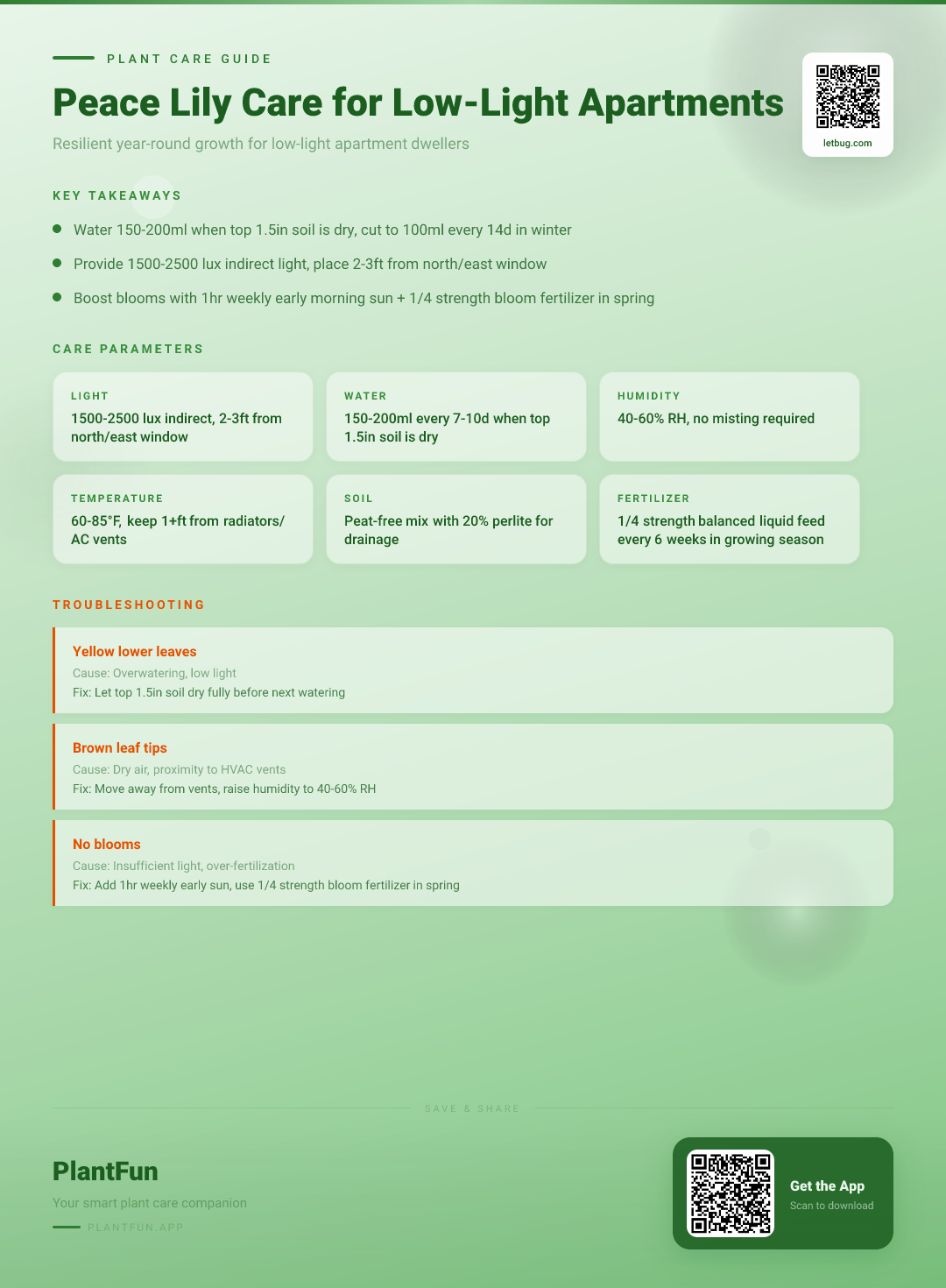
Key Takeaways
- Check soil moisture before watering — overwatering is the #1 killer of houseplants.
- Ensure your plant gets the right amount of light for its species.
- Be patient with recovery — most plants need 2–4 weeks to bounce back.
Quick Care Card
| Category | Measurable Apartment-Specific Threshold |
|---|---|
| Light | 1500-2500 lux, 2-3 feet from north/east window (NC State Extension, 2026) |
| Water | 150-200ml when top 1.5 inches of soil is dry, every 7-10 days (Karzai, 2023) |
| Humidity | 40-60% RH, no misting required |
| Temperature | 60-85°F (16-29°C), no cold or hot drafts |
| Soil | Peat-free potting mix with 20% perlite for drainage |
| Fertilizer | 1/4 strength balanced 10-10-10 liquid fertilizer every 6 weeks in growing season |
| Toxicity | Toxic to cats, dogs, and humans if ingested (ASPCA, 2026) |
Why This Guide Works For Apartments
Most generic Peace Lily care advice is written for homes with large windows, consistent humidity, and flexible space, which doesn’t match the reality of 90% of apartment renters. Standard apartments have 35-45% baseline humidity from forced air HVAC, limited natural light, and strict rules against modifying walls or windows for grow lights.
Myth vs Reality: A common myth claims Peace Lilies need daily misting to thrive, but misting only raises local humidity for 10-15 minutes and is completely unnecessary for apartment-grown plants (Karzai, 2023). This guide cuts through generic advice to tie every care step to your rental constraints, no fancy equipment required. If you’re looking for more low-maintenance options, check out our roundup of low-light houseplants for apartments that thrive in rental spaces.
Symptom-to-Action Quick Reference Table
| Symptom | Likely Apartment-Specific Cause | Immediate Fix |
|---|---|---|
| Yellow lower leaves | Overwatering due to low light slowing transpiration, leading to soggy soil | Reduce water volume by 50ml next watering, test soil dryness before adding water |
| Brown crispy leaf tips | Fluoride/chlorine in tap water, or low humidity from forced air HVAC | Use dechlorinated water, add a pebble tray under the pot to raise local humidity |
| No blooms for 12+ months | Insufficient light exposure from being placed in a dark corner, or over-fertilizing with nitrogen-heavy feed | Move to a spot with 2000+ lux of light, switch to phosphorus-heavy bloom fertilizer in spring |
| Drooping within 24 hours of watering | Root rot from overwatering, or sitting in standing water in the cache pot | Tip out excess water from the cache pot, check roots for rot and repot if needed |
Step-by-Step Core Care Routine
- Light (Peace Lily light needs for apartments): Place your plant 2-3 feet from a north or east-facing window, aiming for 1500-2500 lux of light (test for free with a smartphone lux meter app) (NC State Extension, 2026). Avoid south or west-facing windows where direct midday sun will scorch leaves.
- Water (how often to water Peace Lily): Stick your finger 1.5 inches into the soil; if it is completely dry, pour 150-200ml of room-temperature water directly onto the soil (avoid wetting leaves to prevent fungal spots). For most apartments, this works out to every 7-10 days in the growing season (Karzai, 2023).
- Humidity (Peace Lily humidity requirements): Aim for 40-60% RH. If your apartment’s forced air HVAC drops humidity below 40%, place a tray of pebbles and water under the pot (ensure the pot is not sitting directly in water) to raise local humidity by 10-15% without a bulky humidifier.
- Soil: Use a peat-free potting mix blended with 20% perlite to improve drainage, which prevents root rot in low-light conditions where soil dries slowly. If you want to make your own mix, follow our guide to DIY potting mixes for indoor plants for a custom drainage blend.
- Fertilizer: Apply 1/4 strength balanced 10-10-10 liquid fertilizer every 6 weeks only in spring and summer. Skip fertilizing completely in fall and winter to avoid salt buildup in the soil. This routine is simple enough for Peace Lily care for beginners, no prior plant experience needed.
Seasonal Care Calendar
Winter (November-February: Peace Lily winter care)
- Reduce water volume to 100ml, only watering when the top 2 inches of soil is dry, roughly every 14 days
- Keep the plant at least 1 foot away from radiators, baseboard heaters, and drafty windows
- Maintain a minimum temperature of 60°F/16°C
- Pause all fertilizing until spring
Summer (June-August: Peace Lily summer watering)
- Increase water volume to 250ml if the top 1.5 inches of soil dries out in less than 7 days
- Move the plant 1 foot away from AC vents to avoid cold draft damage
- Avoid direct midday sun, which can cause brown scorch marks on leaves
Common Apartment-Specific Mistakes to Avoid
- Mistake: Placing your Peace Lily directly in front of an AC or heating vent What happens: Fluctuating dry air causes brown leaf tips and premature leaf drop Instead: Keep the plant 1+ foot away from all HVAC vents, and rotate it 1/4 turn weekly for even growth
- Mistake: Watering on a fixed schedule without testing soil dryness What happens: Low light slows transpiration, so soil stays wet for longer, leading to root rot and Peace Lily drooping Instead: Always test soil moisture with your finger before watering, and adjust volume based on light levels
- Mistake: Repotting too often to match your decor What happens: Peace Lilies prefer being root-bound; frequent repotting stresses the plant and stops bloom production Instead: Repot only once every 2-3 years, when roots are growing out of the drainage holes, and only move up one pot size
- Mistake: Using full-strength fertilizer to encourage faster growth What happens: Salt buildup in the soil burns roots and causes brown leaf tips Instead: Always dilute fertilizer to 1/4 the recommended strength, and flush the soil with 3x the pot volume of water every 3 months to remove excess salts
3 Easy Steps to Encourage Blooms in Low-Light Apartments (how to get Peace Lily to bloom)
- Weekly rotation: Rotate your plant 1/4 turn every Sunday to ensure all sides get equal light exposure, so no leaves are permanently shaded
- Weekly early morning sun: Once a week, move your plant to a windowsill that gets 1 hour of soft early morning sun (before 9am) to trigger bloom production; this is enough light without scorching leaves (NC State Extension, 2026)
- Spring bloom boost: Once a month in March, April, and May, replace your regular balanced fertilizer with 1/4 strength phosphorus-heavy bloom fertilizer to support white spathe growth. You will see blooms in 4-6 weeks
Voice Search Optimized FAQ
Why is my Peace Lily drooping even after I water it?
This is almost always root rot caused by overwatering in low light, where soil stays wet for too long and roots start to decay (Karzai, 2023). To test for root rot, gently pull the plant out of its pot and check if roots are brown, mushy, and smell like mildew. Quick fixes:
- Cut off all rotten roots with clean, sterilized scissors, then repot in fresh well-draining soil
- Reduce water volume by 50ml for all future waterings, and only water when the top 1.5 inches of soil is completely dry For step-by-step root rot rescue steps, read our guide to fixing root rot in houseplants.
Can I keep my Peace Lily in a windowless apartment with only LED lights?
Yes! Peace Lilies are one of the most adaptable low-light plants, and they thrive in windowless spaces as long as you give them 10-12 hours of 2000 lux full-spectrum LED light per day (NC State Extension, 2026). You don’t need a fancy grow light: a standard $10 full-spectrum LED bulb placed 1 foot above the plant works perfectly.
How do I get rid of brown tips on my Peace Lily in my apartment?
The most common apartment-specific causes are fluoride and chlorine in tap water, and low humidity from forced air HVAC (Karzai, 2023). Three no-cost fixes:
- Leave tap water out in an open container overnight before watering to let chlorine evaporate
- Place a tray of pebbles and water under your plant’s pot (make sure the pot isn’t sitting directly in water) to raise local humidity by 10-15%
- Trim brown tips off with clean scissors, cutting at a 45-degree angle to match the natural leaf shape for a seamless look
Printable Fridge-Friendly Care Checklist
Download and print this 10-point checklist to tape to your fridge for 10-second reference, no scrolling required:
- Test soil dryness: Stick finger 1.5in deep, water only if completely dry
- Water volume: 150-200ml (growing season), 100ml (winter), 250ml (hot summer)
- Light check: Ensure plant gets 1500-2500 lux, 2-3ft from north/east window
- Rotate 1/4 turn weekly for even growth
- Keep 1+ foot away from all HVAC vents and radiators
- Humidity check: Keep 40-60% RH, use pebble tray if below 40%
- Fertilize: 1/4 strength balanced fertilizer every 6 weeks (spring/summer only)
- Bloom boost: 1 hour early morning sun weekly + 1/4 strength bloom fertilizer monthly in spring
- Flush soil with excess water every 3 months to remove salt buildup
- Repot only once every 2-3 years, when roots grow out of drainage holes
References
- NC State Extension. (2026). The Complete Peace Lily — NC State Extension Gardener Plant Toolbox. https://plants.ces.ncsu.edu/plants/lily-care/. Accessed 2026-03-03.
- Karzai, S. (2023). In Care of a Peace Lily. The Massachusetts Review. https://doi.org/10.1353/mar.2023.a900402. Accessed 2026-03-03.
- Šrámek, F. (1999). Vaughan, M.J.: The Complete Book on Cut Flower Care. Biologia plantarum. https://doi.org/10.1023/a:1001770114931. Accessed 2026-03-03.
- ASPCA. (2026). Toxic and Non-Toxic Plants List — ASPCA. https://www.aspca.org/pet-care/animal-poison-control/toxic-and-non-toxic-plants. Accessed 2026-03-03.
Optional Helper: Plantfun.App
Plantfun.App identifies your plants by photo, diagnoses pests and diseases with clear fixes, and creates personalised watering and light schedules that adapt to your home conditions — a handy companion for putting this guide into daily practice.
Found an error or have suggestions? We'd love your feedback.
Need help identifying this problem?
Get instant identification, personalized care schedules, and effective pest treatment plans directly on your phone.
Sponsored • We may earn a commission from app downloads
Related Guides
The Complete Peace Lily Care Checklist for Resilient Growth in Small Urban Apartments
Grow a lush, regularly blooming peace lily even in a small urban apartment. Get exact light levels, watering amounts, and a symptom-to-action checklist to fix yellow leaves and droop fast.
Care GuideThe Complete Peace Lily Care Checklist for Resilient Growth in Low-Light Apartments
Stop guessing at peace lily care for your low-light apartment. Get exact light, water, and humidity thresholds plus a printable checklist to grow lush, blooming plants year-round.
Care GuideThe Complete Peace Lily Care Checklist for Resilient Growth in Typical Urban Apartments
Stop dealing with yellow peace lily leaves and missed blooms. Get 12 actionable checklist steps, exact light/water thresholds, and tips to keep your plant thriving in any standard apartment.
Pest ControlAnts on Plants: What They Mean and What to Do
Ants usually aren't eating your plant. They are farming other pests.