
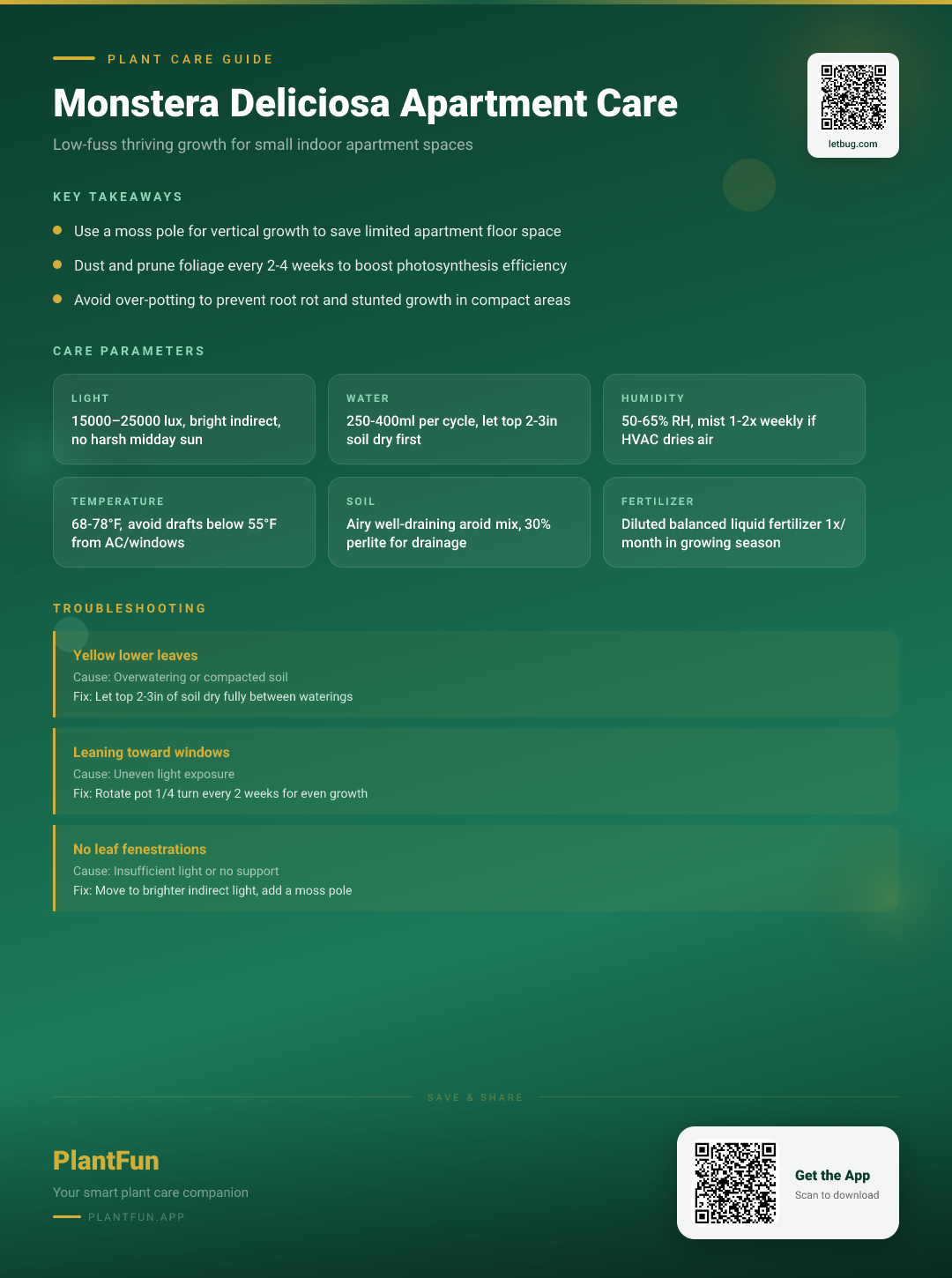
Key Takeaways
- Check soil moisture before watering — overwatering is the #1 killer of houseplants.
- Ensure your plant gets the right amount of light for its species.
- Be patient with recovery — most plants need 2–4 weeks to bounce back.
Quick Care Card: Essential Data
| Feature | Requirement |
|---|---|
| Light | 15,000–25,000 lux (bright, indirect) |
| Water | 250-400ml per cycle (top 2 inches dry) |
| Humidity | 50-65% |
| Temperature | 68-78°F |
| Soil | Chunky, well-draining aroid mix |
| Fertilizer | Balanced liquid feed (monthly in spring/summer) |
| Toxicity | Toxic to cats and dogs (ASPCA, 2026) |
TL;DR: The Apartment-Ready Monstera
To keep a Monstera deliciosa happy in an apartment, prioritize vertical support over horizontal spread. Provide bright, indirect light (15,000–25,000 lux), water when the top two inches of soil are dry, and maintain humidity levels between 50-65%. Keep the plant away from cold drafts and ensure it is trained on a moss pole to conserve floor space (NC State Extension, 2026).
My Experience: The “Jungle” Lesson
When I first brought home my Monstera, I placed it in a dark corner, thinking its reputation as a “low light” plant was true. Within a month, the leaves lost their fenestrations (the iconic splits) and the stems stretched aggressively toward the window. I learned the hard way that Monstera deliciosa apartment care isn’t about hiding the plant—it’s about training it. Once I moved it to a window with a sheer curtain and added a coco-coir pole, it stopped sprawling across my rug and began climbing, effectively doubling the plant’s beauty while occupying half the footprint.
Why Your Monstera Needs Vertical Guidance in Small Spaces
In its natural habitat, Monstera is an epiphyte—it climbs trees to reach the canopy. In an apartment, your floor is the forest floor. Without a support, the plant will naturally grow outward, quickly overwhelming your living room. Using a moss pole is essential. Training the main stem upward keeps the plant compact and encourages larger, healthier leaves.
Decoding Light: Maximizing Growth in Apartment Windows
Monstera deliciosa light requirements are often misunderstood. While they tolerate lower light, they thrive in bright, indirect light. I use a simple light meter app to ensure my plant receives at least 15,000 lux. If your leaves are small or failing to split, they are likely starving for light. Avoid direct sun, which can scorch the delicate foliage.
Hydration Habits: How Much Water Does an Apartment Monstera Actually Need?
Instead of a calendar schedule, use the “finger test.” Stick your finger two inches into the soil; if it feels dry, apply 250-400ml of water. Overwatering is the fastest way to kill a Monstera. Ensure your pot has drainage holes to prevent root rot. If you are struggling with a routine, read our guide on effective indoor irrigation.
Soil Science: Creating an Airy Mix that Prevents Root Rot
The best soil for Monstera deliciosa must be chunky. I mix high-quality potting soil with perlite and orchid bark in a 2:1:1 ratio. This allows excess water to escape and provides the oxygen that roots desperately need. Heavy garden soil will suffocate the plant and lead to yellowing leaves.
Seasonal Care Calendar: Adjusting for Apartment HVAC Cycles
Apartments are notorious for dry, recycled air.
- Spring/Summer: Growth phase. Increase water and introduce a diluted fertilizer.
- Autumn/Winter: Dormancy phase. Reduce water significantly, as lower light levels mean the plant consumes less. Keep away from HVAC vents, which can trigger leaf curling causes (NC State Extension, 2026).
FAQ: Why is my Monstera leaning toward the window?
This is phototropism—the plant is physically reaching for more light. Rotate your pot 90 degrees every time you water to ensure even growth.
FAQ: Can I keep my Monstera in a small corner without air circulation?
Technically yes, but stagnant air increases the risk of fungal issues. As noted by the research on leaf pathogens (Shaw, 1992), stagnant, humid environments can promote unwanted biological growth. Aim for a small oscillating fan near the plant.
Common Mistakes: Avoiding the Over-Potting Trap
- Mistake: Moving to a huge pot.
- What happens: Excess soil holds too much water, leading to root rot.
- Instead: Only up-pot by 1-2 inches in diameter.
Maintenance Schedule: Pruning and Dusting for Maximum Photosynthesis
I wipe the leaves with a damp cloth every two weeks. Dust acts as a sunscreen, blocking light. For a detailed look at how to keep leaves glossy, check our plant cleaning tips.
Troubleshooting: Monstera Drooping
Symptom: Leaves look limp and sad.
Likely cause: Either extreme underwatering or, more commonly, water-logged roots from poor drainage.
Fix:
- Check the soil moisture; if saturated, check roots for mushy, brown sections.
- Repot into fresh, chunky, dry soil if root rot is present.
Troubleshooting: Monstera Yellow Leaves
Symptom: Lower leaves turning yellow.
Likely cause: Nutrient deficiency or overwatering.
Fix:
- Check the soil moisture levels.
- If the soil is healthy, apply a balanced, water-soluble fertilizer at half strength.
References
- Haydon, G.; Shaw, D. (1991). Zinc Accumulation in Monstera Deliciosa Near Brisbane. Australasian Plant Pathology. https://doi.org/10.1071/app9910125. Accessed 2026-03-17.
- Shaw, D. (1992). Abnormal Internal Sori of Puccinia Paullula F.sp. Monsterae on Monstera Deliciosa. Australasian Plant Pathology. https://doi.org/10.1071/app9920123. Accessed 2026-03-17.
- ASPCA. (2026). Toxic and Non-Toxic Plants List — ASPCA. https://www.aspca.org/pet-care/animal-poison-control/toxic-and-non-toxic-plants. Accessed 2026-03-17.
- NC State Extension. (2026). The Complete Monstera Deliciosa — NC State Extension Gardener Plant Toolbox. https://plants.ces.ncsu.edu/plants/monstera-deliciosa/. Accessed 2026-03-17.
Optional Helper: Plantfun.App
Plantfun.App identifies your plants by photo, diagnoses pests and diseases with clear fixes, and creates personalised watering and light schedules that adapt to your home conditions — a handy companion for putting this guide into daily practice.
Found an error or have suggestions? We'd love your feedback.
Need help identifying this problem?
Get instant identification, personalized care schedules, and effective pest treatment plans directly on your phone.
Sponsored • We may earn a commission from app downloads
Related Guides
Monstera Deliciosa in a Low-Light Apartment: The Complete Care Guide for Resilient Growth
Stop guessing your Monstera's needs. Master the exact light levels, water cycles, and humidity thresholds to keep your Swiss Cheese Plant thriving in any apartment.
Care GuideMonstera Deliciosa in a Studio Apartment: The Ultimate Care Guide for Resilient Growth
Master Monstera Deliciosa care in your small apartment. Get exact lux, humidity, and pruning secrets to keep your plant healthy, compact, and perfectly shaped.
Care GuideMonstera Deliciosa in Apartment Living: The Resilient Growth Guide for Consistent, Lush Foliage
Unlock lush Monstera growth in your apartment. Master seasonal watering, specific light thresholds, and foliage care to keep your plant vibrant all year round.
Pest ControlHow to Spot Early Pest Warning Signs on Your Monstera Deliciosa & Stop Infestations Fast
Catch pest infestations before they ruin your east-facing dining room Monstera deliciosa. Get a 5-minute weekly inspection checklist, early warning signs, and step-by-step rescue plans you can use today to avoid full-blown outbreaks.