
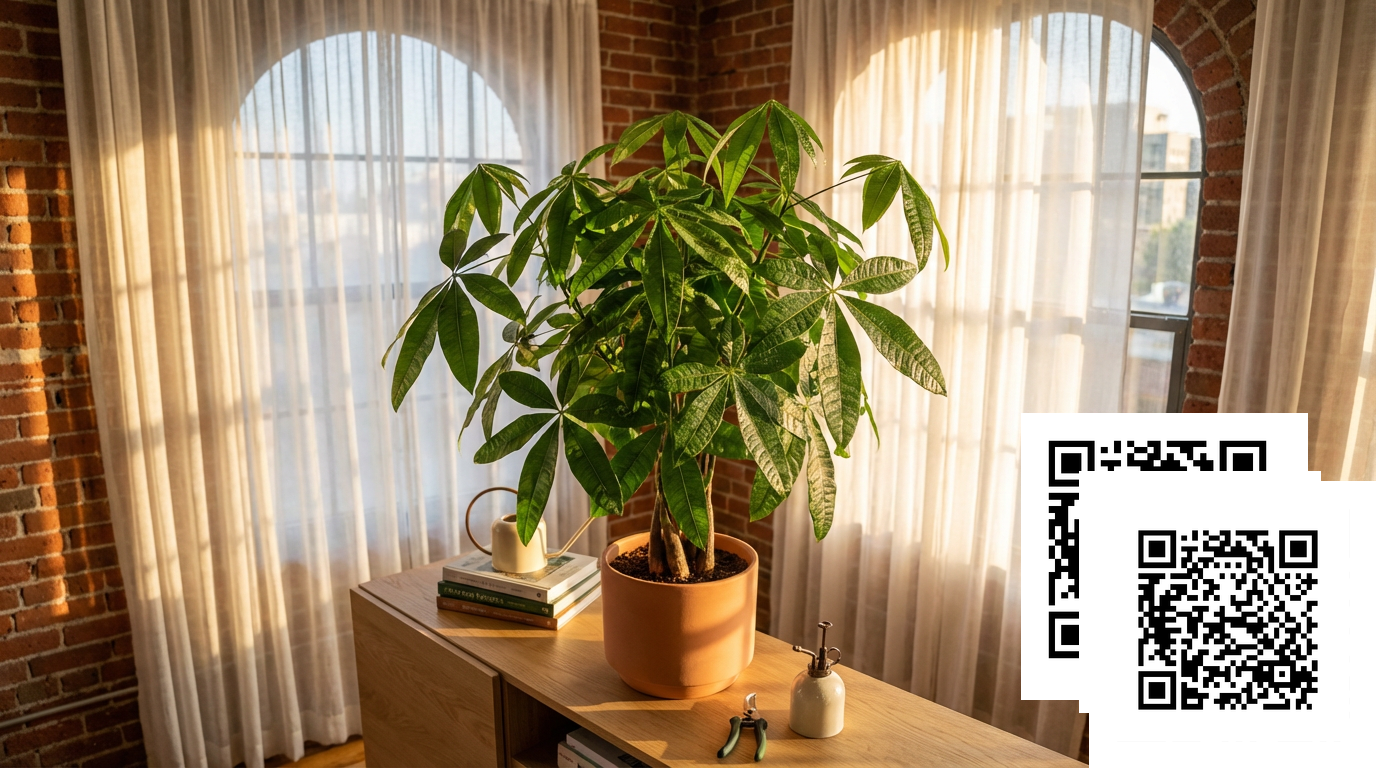
Key Takeaways
- Check soil moisture before watering — overwatering is the #1 killer of houseplants.
- Ensure your plant gets the right amount of light for its species.
- Be patient with recovery — most plants need 2–4 weeks to bounce back.
Quick Care Card
| Parameter | Exact Threshold (Apartment-Specific) |
|---|---|
| Light | 10,000–20,000 lux bright indirect light; 3–5ft from east/south windows, grow light supplement for north-facing units |
| Water | 150–250ml per 10in pot, only when top 2–3in of soil is completely dry; 7–12 days spring/summer, 14–21 days winter |
| Humidity | 40–60% relative humidity; avoid placement within 3ft of HVAC vents |
| Temperature | 65–80°F (18–27°C); never expose to temperatures below 55°F (13°C) |
| Soil | Well-draining aroid mix; pot with 1–2in drainage hole required |
| Fertilizer | Half-strength 10-10-10 balanced fertilizer once every 4–6 weeks in spring/summer; no fertilization fall/winter |
| Toxicity | Non-toxic to humans, cats, and dogs (ASPCA, 2026) |
Why Apartment Money Tree Care Is Unique
Generic Pachira aquatica care guidance is designed for controlled home environments, but 600–800 sq ft urban apartments present unique stressors that directly impact money tree health: drafty window seals that cause 10°F+ temperature swings overnight, forced-air HVAC that can drop humidity by 20% or more in a single heating cycle, limited natural light blocked by adjacent high-rise buildings, and restricted shelf/floor space that leads to overpotting or poor placement. This checklist is calibrated exclusively for these conditions, eliminating guesswork for beginner and intermediate plant owners.
Pre-Check: Diagnose Your Current Money Tree Health
Complete this 2-minute assessment first to prioritize the checklist items that address your plant’s specific issues:
- Foliage check: Yellow lower leaves signal overwatering or insufficient light; crispy brown leaf edges indicate low humidity or draft exposure; sudden leaf drop points to recent temperature shock.
- Trunk check: Squeeze the base of the trunk gently. Soft, mushy spots mean root rot from overwatering; a firm, slightly flexible trunk is healthy.
- Growth check: No new growth in 3+ months, or new leaves that are significantly smaller than mature foliage, means stunted growth from insufficient light or nutrients.
If you spot a specific symptom (e.g., money tree soft trunk), jump directly to the relevant checklist section first before working through the full list.
Checklist Step 1: Light Setup for Apartment Spaces
Money tree light requirements indoors are 10,000–20,000 lux of bright indirect light (NC State Extension, 2026). For most apartments, the ideal small apartment money tree placement is 3–5ft from an east or south-facing window, filtered by a sheer curtain to block more than 1 hour of direct midday sun.
- Quick light test: Hold your hand at the plant’s placement at midday. A faint, soft shadow means you’ve hit the perfect light level; a dark, sharp shadow means too much direct sun, and no shadow means too little light.
- For north-facing units or windowless spaces: Use a full-spectrum grow light placed 12–18in above foliage, run for 12–14 hours daily to meet the lux requirement.
Checklist Step 2: Exact Watering Schedule for Apartments
Myth vs Reality: Many apartment owners assume dry HVAC air means they need to water more often, but closed apartment environments actually hold moisture in the root zone longer, making overwatering the #1 cause of money tree yellow leaves and root rot. Follow these exact rules for how often to water money tree in apartments:
- For a standard 10in pot, water 150–250ml directly onto the soil (avoid pouring on the trunk) only when the top 2–3in of soil is completely dry (stick your finger 2in into the soil; no moisture on your skin when you pull out means it’s time to water) (Falkenstrom, 1995).
- This equals every 7–12 days in spring and summer, and every 14–21 days in winter, when growth slows.
- Always empty excess water from cachepots 10 minutes after watering to prevent roots from sitting in standing water.
Checklist Step 3: Humidity & Temperature Management
The ideal money tree humidity level for apartment-grown plants is 40–60% relative humidity (NC State Extension, 2026). Forced-air heat in winter often drops apartment humidity to 20% or lower, leading to crispy leaf edges. Use these quick fixes for low humidity:
- Place a pebble tray filled with water under the pot (ensure the pot is sitting on pebbles, not directly in water) to raise local humidity by 10–15%.
- Group your money tree with other houseplants to create a shared humid microclimate.
- Run a small humidifier near the plant for 2–3 hours daily if humidity stays below 40% for multiple days. Keep temperatures between 65–80°F (18–27°C), and never expose your plant to temperatures below 55°F (13°C), which can cause permanent leaf drop.
Checklist Step 4: Soil & Potting for Small Spaces
Use a well-draining aroid mix (1 part perlite, 1 part orchid bark, 1 part all-purpose potting soil) to prevent excess moisture retention around roots. Follow these small-space potting rules:
- Mandate a 1–2in drainage hole in all pots used for your money tree. If you prefer a decorative pot without drainage, use it as a cachepot and empty excess water immediately after watering.
- When repotting, only size up to a pot 1–2in larger than the current root ball. Larger pots hold excess soil that stays wet for weeks, leading to root rot, and take up unnecessary space in small apartments. Repot only once every 2–3 years, when roots are growing out of the drainage hole.
Checklist Step 5: Fertilizing & Pruning
If you’re wondering how to make money tree grow faster in your apartment, follow these fertilizing and pruning rules:
- Use half-strength balanced 10-10-10 fertilizer once every 4–6 weeks in spring and summer only. Do not fertilize in fall and winter, when growth is dormant, as this causes salt buildup that burns roots (Day Care and Early Education, 1974).
- Prune off yellow or brown leaves at the base with clean, sharp shears to redirect energy to new growth.
- To encourage bushy growth (instead of leggy, tall growth that takes up vertical space in small apartments), snip 1–2in off the top of the main stem in early spring. This triggers new side shoots to grow, creating a fuller, more compact plant. Never prune more than 20% of the foliage at one time.
Seasonal Apartment Care Calendar
Adjust your care routine seasonally to account for changing apartment conditions:
Winter Adjustments (Money Tree Winter Care Apartment)
- Reduce watering frequency by 50%: Wait for the top 3in of soil to dry completely before watering.
- Move the plant 2ft away from drafty windows and exterior doors to avoid cold temperature shock.
- Stop fertilizing entirely, and keep the plant at least 3ft away from space heaters to prevent low humidity damage.
Summer Adjustments (Money Tree Summer Watering Schedule)
- Check soil moisture every 5 days, as warmer temperatures speed up evaporation.
- If humidity drops below 40%, mist foliage 2x weekly to prevent crispy edges.
- Rotate the plant 1/4 turn every 2 weeks to ensure even light exposure and balanced growth.
- Keep the plant at least 3ft away from AC vents to avoid cold draft damage.
Common Apartment Money Tree Mistakes to Avoid
- Mistake: Placing your money tree within 1ft of AC or heat vents. What happens: Sudden temperature swings and extremely low humidity cause widespread leaf drop and crispy leaf edges. Instead: Keep plants 3ft away from all HVAC vents, or use a vent deflector to redirect air if you have limited placement space.
- Mistake: Overpotting in a pot more than 2in larger than the root ball. What happens: Excess unused soil holds moisture for weeks after watering, leading to root rot and money tree soft trunk issues that are often fatal. Instead: Only size up 1–2in when repotting, and use a lightweight plastic pot to reduce weight for shelf placement in small apartments.
- Mistake: Overwatering in winter because you assume dry HVAC air dries out the soil faster. What happens: Soggy root zones lead to widespread yellow leaves and root rot, the top cause of money tree death in apartments. Instead: Check soil moisture every 10 days in winter, and only water when the top 3in of soil is completely dry. Use a pebble tray to raise humidity instead of watering more often.
- Mistake: Exposing your money tree to more than 1 hour of direct west-facing sun in summer. What happens: Intense afternoon sun burns foliage, leaving unsightly brown scorch marks on leaves. Instead: Hang a sheer curtain over west-facing windows, or move the plant 5ft away from west windows during summer months.
- Mistake: Tucking your money tree in a dark corner for decor purposes. What happens: Insufficient light leads to stunted, leggy growth and frequent leaf drop. Instead: Use a low-profile full-spectrum grow light if you don’t have access to bright indirect window light, to meet the 10,000–20,000 lux requirement.
Voice Search FAQ
Why is my apartment money tree dropping leaves?
The most common causes of leaf drop in apartment-grown money trees are sudden temperature swings from drafty windows or HVAC vents, overwatering, or insufficient light (NC State Extension, 2026). First, check if your plant is within 3ft of a vent or drafty exterior door, then test soil moisture to confirm you’re not watering too often, and verify your plant is getting at least 4 hours of bright indirect light daily.
Can I keep a money tree in my apartment bedroom?
Yes, money trees are excellent for apartment bedrooms! They are non-toxic to humans, cats, and dogs (ASPCA, 2026), so they are safe even if you have pets or small children. They also release oxygen overnight, which can improve bedroom air quality. Just ensure your chosen placement gets at least 4 hours of bright indirect light daily, or supplement with a small grow light.
How often do I water my money tree in a dry apartment?
Dry HVAC air only dries out the top 1in of soil, so you don’t need to water more often than the standard schedule: every 7–12 days in spring and summer, every 14–21 days in winter, only when the top 2–3in of soil is completely dry (Falkenstrom, 1995). Watering more frequently to compensate for low humidity will lead to root rot; instead, use a pebble tray or small humidifier to raise local humidity around the plant.
Are money trees good for apartments?
Absolutely! Money trees are ideal for small urban apartments: they are low-maintenance, tolerant of typical apartment light and humidity conditions, take up minimal space when pruned to stay compact, and are non-toxic for pets and kids. They are also believed to bring good luck in feng shui, making them a popular choice for small living spaces.
References
- NC State Extension. (2026). The Complete Money Tree — NC State Extension Gardener Plant Toolbox. https://plants.ces.ncsu.edu/plants/pachira-aquatica/. Accessed 2026-03-02.
- Falkenstrom, K. (1995). The money tree plant. Rhetoric Review. https://doi.org/10.1080/07350199509359197. Accessed 2026-03-02.
- Day Care and Early Education. (1974). How to grow a money tree. Day Care and Early Education. https://doi.org/10.1007/bf02353449. Accessed 2026-03-02.
- ASPCA. (2026). Toxic and Non-Toxic Plants List — ASPCA. https://www.aspca.org/pet-care/animal-poison-control/toxic-and-non-toxic-plants. Accessed 2026-03-02.
Optional Helper: Plantfun.App
Plantfun.App identifies your plants by photo, diagnoses pests and diseases with clear fixes, and creates personalised watering and light schedules that adapt to your home conditions — a handy companion for putting this guide into daily practice.
Found an error or have suggestions? We'd love your feedback.
Need help identifying this problem?
Get instant identification, personalized care schedules, and effective pest treatment plans directly on your phone.
Sponsored • We may earn a commission from app downloads
Related Guides
The Complete Pachira Aquatica (Money Tree) Care Checklist for Resilient Growth in Typical Apartments
Stop guessing at money tree care. Get exact light, water, humidity thresholds and a 12-point checklist tailored to typical apartment conditions to keep your plant resilient and lush.
Care GuideThe Complete Money Tree Care Checklist for Resilient Growth in Typical Apartments
Stop guessing at money tree care. Get a 12-step apartment-specific checklist, exact light, water, and humidity thresholds to grow a lush, resilient plant with zero extra effort.
Care GuideThe Complete Pachira Aquatica (Money Tree) Care Checklist for Apartments: Grow Resilient Lush Plants Easily
Stop guessing at your money tree care. Grab this apartment-specific checklist with exact light, water, and humidity parameters to grow resilient, lush Pachira aquatica all year round.
Pest ControlAnts on Plants: What They Mean and What to Do
Ants usually aren't eating your plant. They are farming other pests.