
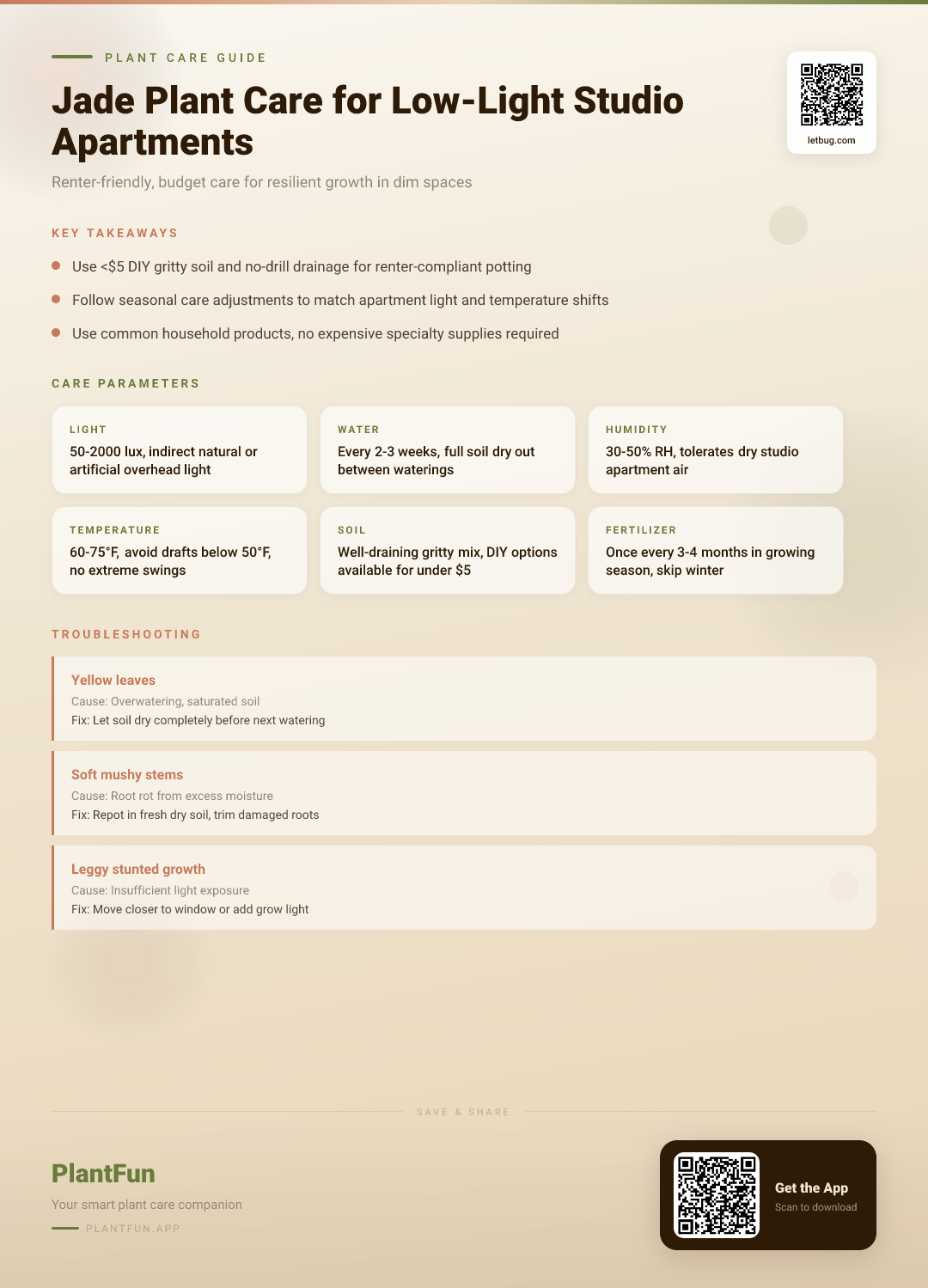
Key Takeaways
- Check soil moisture before watering — overwatering is the #1 killer of houseplants.
- Ensure your plant gets the right amount of light for its species.
- Be patient with recovery — most plants need 2–4 weeks to bounce back.
Quick Care Card: At-a-glance printable checklist of all key care thresholds for jade plants in low-light studio apartments, no fine print
| Parameter | Threshold for Low-Light Studio Apartments |
|---|---|
| Light | 1500-3000 lux (within 2ft of north/east window, no direct midday sun) |
| Water | 100-150ml per 6-inch pot, only when top 2 inches of soil are completely dry |
| Humidity | 20-40% (no humidifier required, works with standard apartment dry air) |
| Temperature | 60-75°F (15-24°C), avoid drops below 50°F (10°C) or drafts |
| Soil | 3 parts generic potting soil + 2 parts perlite (or crushed egg cartons) |
| Fertilizer | Half-strength balanced liquid fertilizer, 1x in spring and 1x in summer only |
| Toxicity | Mildly toxic to cats and dogs (ASPCA, 2026) |
Why This Guide Is Different
Generic jade plant care advice often calls for 6+ hours of direct sun, drilled drainage holes, humidifiers, and large outdoor planters — none of which work for renters in dim, space-constrained studio apartments. Most guidance fails to account for the 1500-3000 lux average light levels in north-facing studios, dry forced air from radiators and AC units, and rules against modifying fixtures or planters.
Myth vs Reality: The common myth that jade plants need full sun to survive is untrue; they adapt well to low indoor light levels when other care parameters are adjusted correctly (Gautam et al, 2021). If you’re new to succulent care, check our beginner’s guide to low-light succulent care for renters for more foundational tips.
Key Non-Negotiable Care Thresholds
Stick to these measurable, science-backed thresholds to avoid common issues and support steady, resilient growth:
- Light: Minimum 1500 lux, maximum 4000 lux. Test with a free phone lux app to confirm your spot meets requirements. Avoid direct midday sun, which scorches jade leaves (Gautam et al, 2021). This is the best place to put jade plant in apartment: within 2 feet of a north or east-facing window.
- Water: 100-150ml of room temperature water per 6-inch pot, only when the top 2 inches of soil are completely dry. Overwatering is the #1 cause of jade plant death in apartments (Šrámek, 1999).
- Humidity: 20-40% is ideal, so jade plant care no humidifier is fully possible — no extra moisture is needed even with dry apartment heating or AC.
- Temperature: Keep between 55°F and 80°F (13°C and 27°C). Avoid placing jade within 1 foot of radiators, AC vents, or drafty window sills in winter.
Note: The ASPCA classifies jade plants as mildly toxic to cats and dogs, so place them on high, out-of-reach shelves if you have pets (ASPCA, 2026).
Step-by-Step Budget Care Routine
All steps use common household items, no expensive specialty products required:
Weekly
- Stick your index finger 2 inches deep into the soil. If it feels completely dry, water with 100-150ml of room temperature water; if damp, skip watering that week.
- Wipe leaves with a damp paper towel to remove dust, which blocks light absorption in low-light spaces.
- Test light levels with a free phone lux app. If levels drop below 1500 lux, move the plant 1 foot closer to the nearest window.
Monthly
- Rotate the pot 90 degrees to prevent lopsided, uneven growth as the plant stretches toward light.
- Check leaf undersides for small white mealybugs, the most common jade pest. Wipe affected areas with a cotton swab dipped in rubbing alcohol if spotted. For more no-cost pest control tricks, see our natural indoor plant pest remedies guide on LetBug.com.
Quarterly
- In spring and summer only, add 1 tbsp of diluted balanced liquid fertilizer (half the recommended strength) to the soil.
- Gently lift the plant out of its pot to check for root binding. If roots are circling the bottom of the pot, repot into a container 1 size larger.
Seasonal Care Calendar
Adjust your routine to match common studio apartment light and temperature swings:
- Winter (Dec-Feb, jade plant winter care): Water 1x every 3-4 weeks, skip fertilizer entirely. Keep 3 feet away from radiators to avoid leaf scorch. If temperatures drop below 50°F near windows, move the plant to a warmer spot overnight.
- Spring (Mar-May): Increase watering to 1x every 2 weeks as light levels rise. Add 1 half-strength dose of fertilizer to support new growth.
- Summer (Jun-Aug, jade plant summer watering): Water 1x every 10-14 days, and mist leaves with tap water once a week if you run AC constantly. Keep out of direct west-facing sun, which can burn leaves in hot months.
- Fall (Sep-Nov): Reduce watering to 1x every 2-3 weeks, stop fertilizing, and move away from drafty windows as outdoor temperatures drop. For more easy seasonal adjustment tips, check our 10-minute seasonal indoor plant care checklist.
Renter-Friendly Potting & Soil Hacks
No drilling or expensive supplies needed:
Cheap jade plant soil mix (under $5 for 2 gallons)
Mix 3 parts dollar-store generic potting soil with 2 parts perlite (or crushed clean egg cartons if you don’t have perlite). This mix drains fast enough to prevent root rot, even in low-light conditions where soil dries slower.
No-drill drainage solutions
- Add a 1-inch layer of pebbles or broken ceramic pieces to the bottom of your decorative pot before adding soil, to catch excess water without drilling holes.
- Keep your jade in a cheap plastic nursery pot with pre-drilled holes, and set it inside a decorative cache pot. Empty any excess water from the cache pot 10 minutes after watering to prevent root rot.
For more no-drill drainage solutions, see our renter’s guide to potting without modifying planters.
Common Mistakes to Avoid
-
Mistake: Watering on a fixed schedule instead of checking soil moisture first.
What happens: Root rot, yellow mushy leaves, and eventual plant death.
Instead: Use the 2-inch finger test every week, and only water when the soil is completely dry. -
Mistake: Placing your jade more than 3 feet away from any window.
What happens: Leggy, stretched growth, sparse leaves, and weak stems that break easily.
Instead: Keep the plant within 2 feet of a north or east-facing window for consistent low indirect light. -
Mistake: Repotting into a pot more than 2 sizes larger than the current root ball.
What happens: Excess unused soil holds too much moisture, leading to root rot even if you water correctly.
Instead: Only repot into a container 1 size larger, every 2-3 years when the plant is root bound. -
Mistake: Fertilizing more than twice a year in low-light conditions.
What happens: Fertilizer burn, brown leaf tips, and stunted growth.
Instead: Fertilize only once in spring and once in summer, at half the recommended strength. -
Mistake: Using regular potting soil with no drainage amendments.
What happens: Soil stays wet for weeks after watering, leading to yellow leaves and root rot.
Instead: Use the cheap DIY 3:2 soil mix outlined above for fast drainage.
FAQ: Why is my jade plant getting leggy even when I water it regularly?
Leggy growth is almost always caused by insufficient light (less than 1500 lux) (Gautam et al, 2021). Even if you water perfectly, jade plants stretch to reach more light in dim studio spaces. To fix it, move the plant within 2 feet of a north or east-facing window, or add a $10 LED desk lamp 1 foot above the plant for 8 hours a day if you have no available window space.
FAQ: Can I keep my jade plant on my studio apartment desk that only gets artificial overhead light?
Yes, can jade plants grow in apartments with only artificial light, as long as the overhead light provides at least 1500 lux (test with a free phone lux app). Overhead LED or fluorescent lights work if they are within 2 feet of the plant. Rotate the pot 90 degrees weekly to prevent lopsided growth, and wipe dust off leaves every 7 days to maximize light absorption.
FAQ: How often do I need to fertilize my jade plant if it’s growing in low light conditions?
Low light jade plants grow 50-70% slower than those in bright direct sun, so they need very little fertilizer to thrive. Only fertilize twice a year maximum: once in early spring, and once in mid summer, using a balanced liquid fertilizer diluted to half the recommended strength. Skip fertilizing entirely in fall and winter, when growth slows to a halt.
Troubleshooting Quick Reference
Yellow Leaves
Symptom: Lower leaves turn pale yellow, mushy, and fall off easily when touched.
Likely cause: Overwatering or poorly draining soil that stays wet for more than 1 week after watering.
Fix:
- Stop watering immediately, and let the soil dry completely for 2-3 weeks before watering again.
- Repot into the fast-draining DIY soil mix outlined earlier if the soil stays wet for more than 10 days after watering.
Soft Mushy Stems
Symptom: Lower sections of the main stem turn brown, soft, and squishy to the touch.
Likely cause: Severe root rot from long-term overwatering that has spread to the stems.
Fix:
- Cut off the healthy top 3-4 inches of the plant with a clean pair of scissors, removing all mushy stem tissue.
- Let the cut end dry for 3 full days, then plant it in fresh dry DIY soil, and do not water for 1 full week after planting.
Stunted New Growth
Symptom: No new leaves grow for 3+ months, and existing new leaves are small and pale.
Likely cause: Insufficient light (under 1500 lux) or lack of nutrients in the growing season.
Fix:
- Move the plant to a brighter spot with at least 1500 lux of light, or add an LED desk lamp 1 foot above the plant for 8 hours a day.
- Add 1 half-strength dose of balanced fertilizer in spring if you haven’t fed the plant in over 6 months.
Final Printable Recap Checklist: 1-page simplified checklist you can tape to your fridge for easy, quick reference
- Weekly: Do the 2-inch finger soil test, water only if completely dry
- Weekly: Wipe leaves with a damp paper towel, test light levels to ensure they stay above 1500 lux
- Monthly: Rotate pot 90 degrees, check leaf undersides for mealybugs
- Spring & Summer: Add 1 half-strength dose of fertilizer each season, water every 2 weeks
- Fall & Winter: Water every 3-4 weeks, skip fertilizer, keep away from radiators and cold drafts
- Every 2-3 years: Repot 1 size up using the 3:2 DIY soil mix, use no-drill drainage solutions if needed
References
- Šrámek, F. (1999). Vaughan, M.J.: The Complete Book on Cut Flower Care. Biologia plantarum. https://doi.org/10.1023/a:1001770114931. Accessed 2026-02-28.
- Gautam, B.; Dubey, R.; Kaur, N. (2021). GROWTH RESPONSE OF INDOOR ORNAMENTAL PLANT SPECIES TO VARIOUS ARTIFICIAL LIGHT INTENSITIES (LED) IN AN INDOOR VERTICAL GARDEN. PLANT ARCHIVES. https://doi.org/10.51470/plantarchives.2021.v21.no1.096. Accessed 2026-02-28.
- ASPCA. (2026). Toxic and Non-Toxic Plants List. American Society for the Prevention of Cruelty to Animals. https://www.aspca.org/pet-care/animal-poison-control/toxic-and-non-toxic-plants. Accessed 2026-02-28.
Optional Helper: Plantfun.App
Plantfun.App identifies your plants by photo, diagnoses pests and diseases with clear fixes, and creates personalised watering and light schedules that adapt to your home conditions — a handy companion for putting this guide into daily practice.
Found an error or have suggestions? We'd love your feedback.
Need help identifying this problem?
Get instant identification, personalized care schedules, and effective pest treatment plans directly on your phone.
Sponsored • We may earn a commission from app downloads
Related Guides
The Complete Jade Plant Care Checklist for Resilient Growth in Small Urban Apartments
Grow a lush, unkillable jade plant even in a tiny urban apartment. Get exact light levels, watering amounts, space-saving hacks, and a seasonal checklist for resilient, compact growth.
Care GuideThe Complete Jade Plant Care Checklist for Resilient Growth in Typical Urban Apartments
Stop dealing with leggy, dropping jade plant leaves. Get a printable checklist, exact light, water, and soil thresholds to keep your jade plump, resilient, and long-lived in your apartment.
Care GuideThe Complete Jade Plant Care Checklist for Thriving Growth in Small Urban Apartments
Grow a lush, resilient jade plant in your small urban apartment with this zero-cost checklist, including exact light levels, watering amounts, and seasonal care tips you can implement today.
Pest ControlAnts on Plants: What They Mean and What to Do
Ants usually aren't eating your plant. They are farming other pests.