
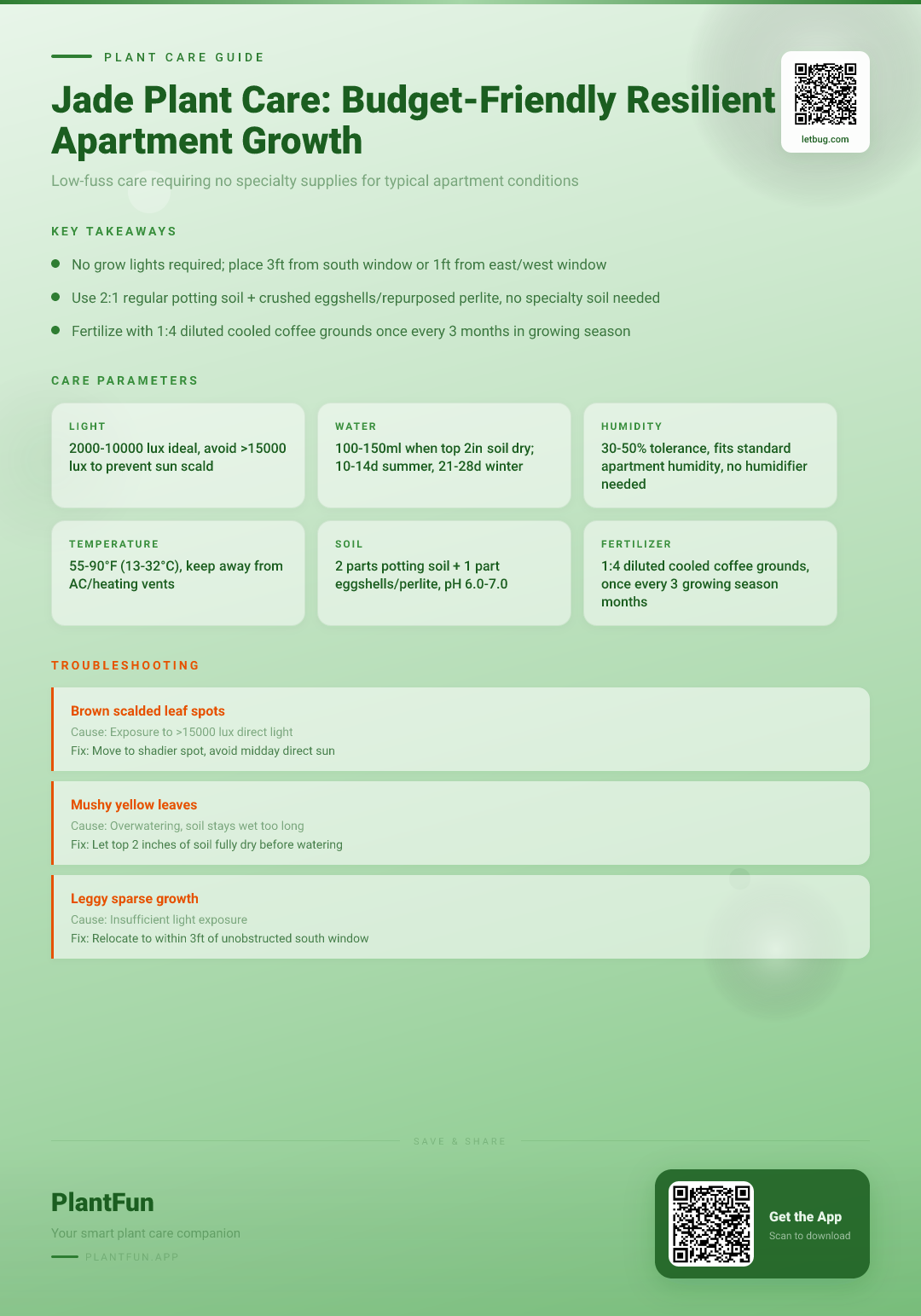
Key Takeaways
- Check soil moisture before watering — overwatering is the #1 killer of houseplants.
- Ensure your plant gets the right amount of light for its species.
- Be patient with recovery — most plants need 2–4 weeks to bounce back.
Quick Care Card
| Category | Measurable Threshold |
|---|---|
| Light | 2,000–10,000 lux (1–3 hours direct sun daily, no grow light required) |
| Water | 100–150ml only when top 2 inches of soil are fully dry; 10–14 days summer, 21–28 days winter |
| Humidity | 30–50% (standard apartment humidity, no humidifier needed) |
| Temperature | 62–78°F (17–26°C) ideal, avoid <55°F (13°C) or >90°F (32°C) |
| Soil | 2 parts regular potting soil + 1 part crushed eggshells/repurposed perlite, pH 6.0–7.0 |
| Fertilizer | Diluted cooled coffee grounds (1:4 with water) once every 3 months growing season |
| Toxicity | Mildly toxic to cats, dogs, and humans if ingested (ASPCA, 2026) |
| No-Cost Supply List | Regular potting soil, crushed eggshells, repurposed perlite from old pots, cooled pasta/coffee water, clean finger for moisture checks |
| Weekly 2-Minute Check | 1. Stick finger 2 inches into soil to test dryness; 2. Check for yellow/dropping leaves; 3. Rotate ¼ turn for even growth |
Why This Guide Is Calibrated For Typical Apartments
Generic jade plant care advice is often written for greenhouse environments, which have consistent high light, controlled humidity, and no drafts — conditions almost no urban apartment has. This guide is built specifically for standard apartment conditions: 35-45% average humidity, 1-3 hours of direct south-facing light daily, 62-78°F ambient temps, and occasional drafts from windows or HVAC systems. If you’ve wondered “is jade plant good for apartments?”, the answer is a resounding yes — their natural resilience makes them perfect for renters and small space dwellers, and this guide requires zero specialty purchases to get lush, bushy growth.
Step 1: Light Setup (No Grow Light Required)
If you’ve asked “do jade plants need grow lights?”, the short answer is no — natural apartment light is more than enough when placed correctly. Per a 2021 study on indoor ornamental plant light response, succulents like jades thrive at 2,000–10,000 lux of light, which is easily achievable with standard window light (Gautam et al, 2021). Avoid exposure over 15,000 lux, which causes sun scald (brown, crispy leaf edges).
Ideal apartment placement:
- 3 feet from an unobstructed south-facing window (gets 1-3 hours of gentle early afternoon direct sun, filtered by window glass)
- 1 foot from an east or west-facing window (gets soft morning or late afternoon direct sun)
If you only have north-facing windows, rest assured: can jade plants survive low light apartments? Yes, though growth will be slower. Rotate your jade ¼ turn weekly to prevent uneven, leaning growth.
Myth vs Reality: Myth: Jades need 6+ hours of full direct sun daily. Reality: That rule applies to outdoor jades. Apartment window glass filters 30% of harsh UV rays, so 1-3 hours of direct sun is more than enough to support thick, healthy growth.
Step 2: Budget Soil Mix (Uses Household Scraps)
Skip the expensive specialty cactus soil — our DIY jade plant soil mix uses items you already have at home for perfect drainage and nutrient levels. The recipe is:
- 2 parts regular all-purpose potting soil (leftover from other houseplants works perfectly)
- 1 part drainage amendment (50% crushed, rinsed eggshells + 50% repurposed perlite from old succulent pots you no longer use)
Crushed eggshells add calcium and adjust the soil pH to 6.0–7.0, the ideal range for jade plants (Šrámek, 1999). Quick test to confirm your mix is correct: Squeeze a handful of damp mix in your palm. If it crumbles when you open your hand, it’s perfect. If it clumps into a tight ball, add more eggshells or perlite to improve drainage.
Step 3: Exact Watering Schedule For Apartment Humidity
The number one question new owners ask is “how often to water jade plant?” For standard 35-45% apartment humidity, follow this measurable schedule:
- Water 100–150ml (roughly half a cup) only when the top 2 inches of soil are completely dry
- Summer (April to August): 10–14 days between waterings (this is your jade plant summer watering schedule)
- Winter (December to February): 21–28 days between waterings, when jades are dormant
Quick test: Stick your index finger 2 inches deep into the soil. If it feels even slightly damp, wait 3 more days and test again. Pro budget tip: Use leftover cooled, unsalted pasta water to water your jade — it’s packed with free nitrogen and minerals that support healthy growth, no commercial plant food needed.
Myth vs Reality: Myth: Water your jade on a fixed weekly schedule no matter the season. Reality: Fixed schedules are the leading cause of overwatering, the #1 killer of apartment jades. Always test soil moisture first before watering.
Step 4: Temperature & Humidity Adjustments (No Humidifier Needed)
Jades are perfectly adapted to standard 30–50% apartment humidity, so you never need to buy a humidifier or set up a pebble tray (Šrámek, 1999). The only adjustments you need to make are:
- Keep your jade 3+ feet away from AC vents, heating vents, and space heaters, which blast extreme dry air that can cause leaf drop
- Avoid exposing your jade to temperatures below 55°F (13°C) or above 90°F (32°C), both of which trigger stress responses
- If you have drafty old windows, move your jade 1 foot away from the glass in winter to avoid cold damage
Step 5: No-Cost Fertilizing Routine
Skip the expensive succulent fertilizer — our homemade jade plant fertilizer uses leftover coffee grounds you’d otherwise throw away. The routine is:
- Mix 1 part cooled, used coffee grounds with 4 parts tap water
- Pour the mixture over the soil once every 3 months, only during the growing season (March to September)
Coffee grounds add slow-release nitrogen and potassium that jades need to grow thick, fleshy leaves and strong stems. Never fertilize in winter, when jades are dormant and won’t absorb extra nutrients.
Step 6: Pruning & Shaping For Small Apartment Spaces
Prevent leggy growth and keep your jade compact for small apartment shelves with this 2-minute no-tool pruning tip, the easiest jade plant leggy growth fix:
- Pinch off the top ½ inch of new growth at the end of each stem using your clean fingernails, every 2-3 months during the growing season
This simple pinch encourages branching, so your jade grows bushy and full instead of tall and sparse. If you already have long, leggy stems, you can pinch them off and propagate them to make free new jades — follow our guide to succulent propagation for beginners for step-by-step instructions.
Seasonal Care Calendar
Adjust your care routine easily with this month-by-month calendar calibrated for apartment conditions:
- March (start of growing season): Start checking soil moisture every 7 days, give your first diluted coffee fertilizer feeding, and move your jade 6 inches closer to your window for extra light.
- April to August (summer): Follow the 10–14 day jade plant summer watering schedule, rotate ¼ turn weekly for even growth, and move 6 inches further from south-facing windows if midday sun causes leaf scald.
- September to November (fall): Reduce watering frequency by 50%, stop fertilizing, and move away from windows if nighttime temps drop below 60°F.
- December to February (winter): Follow jade plant winter care best practices: water every 21–28 days only, keep 1 foot away from cold window glass, and avoid pruning or fertilizing during dormancy.
Common Apartment Jade Care Mistakes To Avoid
- Mistake: Watering on a fixed weekly schedule without testing soil moisture. What happens: Overwatering leads to root rot, which kills the majority of apartment jades. Instead: Stick your finger 2 inches into the soil, only water when it’s completely dry. If you notice signs of root rot, follow our root rot rescue guide to save your plant.
- Mistake: Placing your jade more than 5 feet from a window. What happens: Insufficient light causes leggy growth, with long thin stems and sparse leaves. Instead: Keep your jade within 3 feet of a south window, or 1 foot of an east/west window, for 2,000+ lux of light (Gautam et al, 2021).
- Mistake: Using straight regular potting soil without drainage amendments. What happens: Dense soil holds too much moisture, leading to root rot and leaf drop. Instead: Use our DIY jade plant soil mix with crushed eggshells and repurposed perlite for fast drainage.
- Mistake: Fertilizing monthly with commercial succulent fertilizer. What happens: Overfertilizing causes salt buildup in soil, leading to brown leaf tips and stunted growth. Instead: Use diluted coffee grounds once every 3 months only in the growing season, no commercial fertilizer needed.
FAQ
Why is my apartment jade plant dropping leaves?
The most common cause is overwatering: check if the top 2 inches of soil are damp, and hold off on watering until it’s completely dry if so. If the soil is bone dry for more than 30 days, underwatering is the issue. Other causes include placement too close to AC/heating vents, or sudden cold drafts from windows. Adjust your watering schedule and move your jade away from vents to resolve the issue.
Can I grow a jade plant on my apartment balcony in winter?
Only if your winter temperatures stay consistently above 55°F (13°C). Jades are sensitive to frost and cold temps, so if your area gets freezes or nighttime temps below 50°F, bring it inside for winter. If you keep it on the balcony in summer, make sure it gets shade during midday sun to avoid sun scald. If you’re looking for more balcony-friendly plants, check out our list of hardy balcony succulents.
How often do I need to repot my jade plant in a small apartment?
Jades have shallow root systems and prefer being slightly root bound, so you only need to repot every 2–3 years, when you see roots growing out of the drainage holes of your pot. When repotting, only go up one pot size (1–2 inches larger diameter) to avoid excess soil holding moisture, and use our DIY budget soil mix. This makes how to repot a jade plant in small space simple, no large pots or special supplies required.
Safety note: Per the ASPCA (2026), jade plants are mildly toxic to cats, dogs, and humans if ingested, causing vomiting and diarrhea, so keep them out of reach of small children and pets.
References
- Šrámek, F. (1999). Vaughan, M.J.: The Complete Book on Cut Flower Care. Biologia plantarum. https://doi.org/10.1023/a:1001770114931. Accessed 2026-02-28.
- Gautam, B.; Dubey, R.; Kaur, N. (2021). GROWTH RESPONSE OF INDOOR ORNAMENTAL PLANT SPECIES TO VARIOUS ARTIFICIAL LIGHT INTENSITIES (LED) IN AN INDOOR VERTICAL GARDEN. PLANT ARCHIVES. https://doi.org/10.51470/plantarchives.2021.v21.no1.096. Accessed 2026-02-28.
- ASPCA. (2026). Toxic and Non-Toxic Plants List — ASPCA. https://www.aspca.org/pet-care/animal-poison-control/toxic-and-non-toxic-plants. Accessed 2026-02-28.
Optional Helper: Plantfun.App
Plantfun.App identifies your plants by photo, diagnoses pests and diseases with clear fixes, and creates personalised watering and light schedules that adapt to your home conditions — a handy companion for putting this guide into daily practice.
Found an error or have suggestions? We'd love your feedback.
Need help identifying this problem?
Get instant identification, personalized care schedules, and effective pest treatment plans directly on your phone.
Sponsored • We may earn a commission from app downloads
Related Guides
Jade Plant in Small Urban Apartments: The Only Resilient Growth Checklist You Need
Stop killing your jade plant with generic care advice. Get our 8-step apartment-specific checklist, exact light/water thresholds, and common mistake fixes to grow thick, resilient, long-lasting foliage.
Care GuideThe Complete Jade Plant Care Checklist for Thriving Growth in Small Urban Apartments
Grow a lush, resilient jade plant in your small urban apartment with this zero-cost checklist, including exact light levels, watering amounts, and seasonal care tips you can implement today.
Care GuideThe Complete Jade Plant Care Checklist for Resilient Growth in Low-Light Studio Apartments
Grow a lush, thriving jade plant even in your dim studio apartment. Grab our free budget-friendly care checklist with exact light, water, and soil tips to avoid common growth issues.
Pest ControlAnts on Plants: What They Mean and What to Do
Ants usually aren't eating your plant. They are farming other pests.