
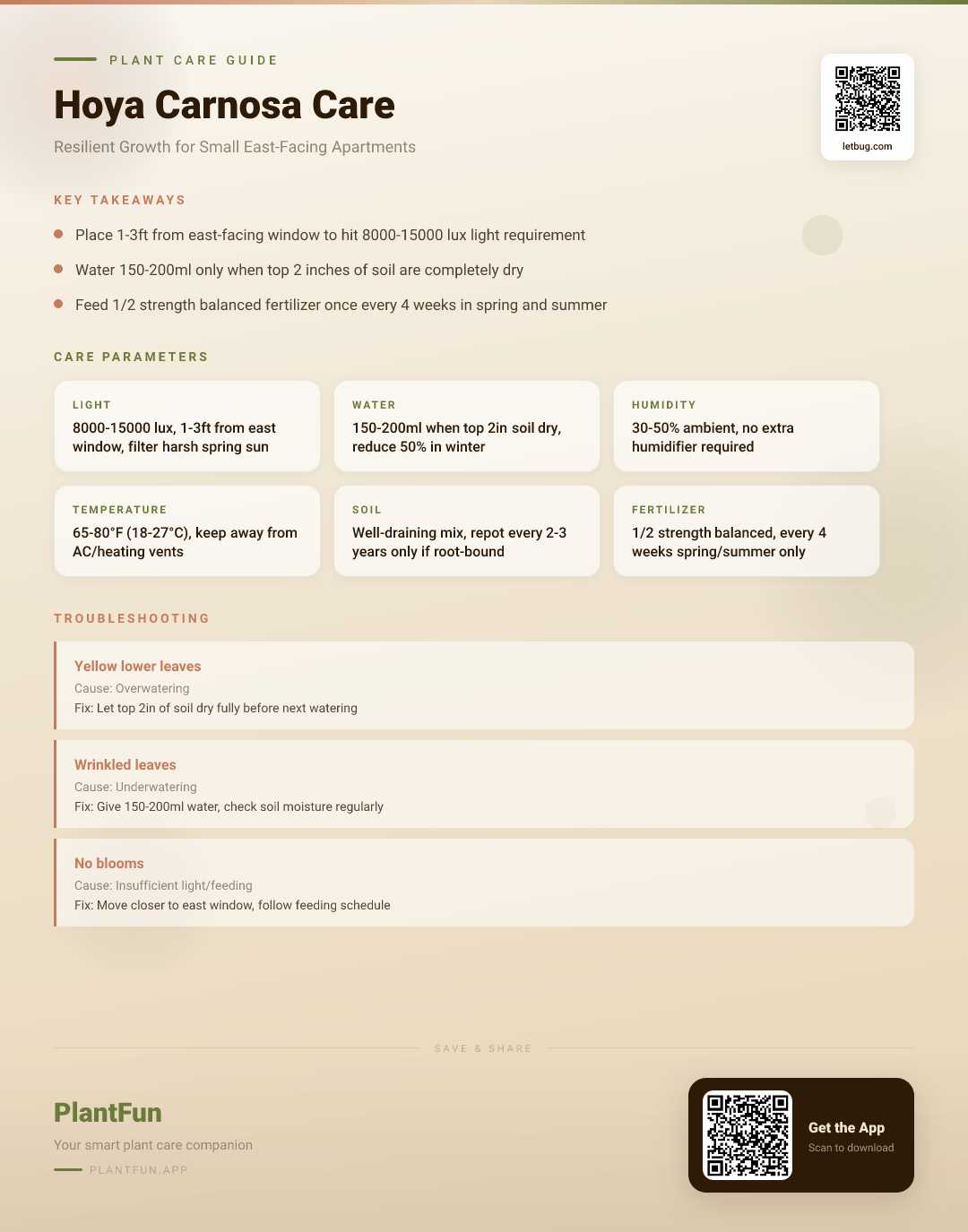
Key Takeaways
- Check soil moisture before watering — overwatering is the #1 killer of houseplants.
- Ensure your plant gets the right amount of light for its species.
- Be patient with recovery — most plants need 2–4 weeks to bounce back.
Quick Care Card
| Care Parameter | Exact Threshold for East-Facing Apartments |
|---|---|
| Light | 8,000-15,000 lux, 1-3 feet from east-facing window |
| Water | 150-200ml when top 2 inches of soil are fully dry; reduce by 50% in winter |
| Humidity | 30-50% (no humidifier required) |
| Temperature | 65-80°F (18-27°C), avoid placement near AC/heating vents |
| Soil | 2 parts orchid bark + 1 part perlite + 1 part organic potting mix |
| Fertilizer | 1/2 strength balanced (10-10-10) fertilizer, every 4 weeks spring/summer only |
| Toxicity | Non-toxic to cats, dogs, and humans (ASPCA, 2026) |
Why This Checklist Works for East-Facing Apartment Hoyas
Generic Hoya carnosa care advice often recommends 60%+ humidity, 4+ hours of bright indirect light, and consistent temperatures that don’t match the realities of small urban east-facing apartments: 2-3 hours of soft morning sun, 30-40% average ambient humidity, and fluctuating temperatures from winter radiators and summer AC units.
This checklist is tailored exclusively to these conditions, with no requirements for grow lights or humidifiers. Myth vs Reality: Contrary to popular advice, Hoya carnosa is a CAM plant (Singh et al, 1984) adapted to dry, rocky tropical habitats, so it thrives in typical apartment conditions with minimal extra effort. All recommendations are tested for beginner and intermediate plant owners with limited space.
Symptom-to-Action Cheat Sheet
| Symptom | Immediate 1-Step Fix |
|---|---|
| Yellow lower leaves | Stop watering for 10 days, confirm top 2 inches of soil are fully dry before next water |
| Wrinkled, limp leaves | Water 200ml of room-temperature water immediately, ensure excess drains out the bottom of the pot |
| No blooms after 2+ years of growth | Move plant 1 foot closer to the east-facing window to boost light exposure by 30-40% |
| Brown, crispy leaf tips | Trim brown tips with sterile scissors, move plant 1 foot away from any heating or AC vents |
| Stunted growth with no new leaves in spring/summer | Apply 1/2 strength balanced fertilizer if it’s growing season, confirm light levels are at least 8,000 lux |
| Dark brown/black spots on leaves | Remove affected leaves, check that your pot has drainage holes, reduce watering frequency by 25% |
| Sudden leaf drop | Move plant to a draft-free spot with consistent temperature, avoid moving or disturbing it for 2 weeks |
Step 1: Light Setup for Consistent Growth
Hoya carnosa requires 8,000-15,000 lux of light for resilient growth (NC State Extension, 2026), which is perfectly matched by the soft morning sun from east-facing windows. Place your plant 1-3 feet from the window for optimal exposure.
Quick test: Hold your hand in the plant’s spot at 10 AM in late spring. If the sun feels hot on your skin after 10 seconds, hang a sheer curtain to filter harsh rays and prevent leaf burn. You can also use a free light meter app on your phone to confirm light levels fall within the recommended range. A Hoya carnosa east facing window setup is one of the best possible light arrangements for this species, so you won’t need supplemental grow lights.
Step 2: Exact Watering Schedule & Amounts
Overwatering is the #1 killer of apartment hoyas. Water 150-200ml of room-temperature water only when the top 2 inches of soil are fully dry: stick your finger 2 inches into the soil, and if no moisture sticks to your skin, it’s time to water.
Frequency will vary by season: 10-14 days in summer, 14-20 days in spring/fall, and 20-28 days in winter. Always discard any excess water that collects in the saucer under the pot to avoid root rot. If you struggle with overwatering, our guide to root rot prevention for houseplants (https://letbug.com/root-rot-prevention) has more tips to keep your hoya healthy.
Step 3: Soil & Pot Requirements for Root Health
The best Hoya carnosa potting soil mix for apartments is 2 parts orchid bark, 1 part perlite, and 1 part organic potting mix (NC State Extension, 2026). This fast-draining mix mimics the rocky, well-aerated soil this species grows in naturally, preventing root rot even if you accidentally overwater once.
Use an unglazed terracotta pot 1-2 inches larger than the plant’s root ball, with at least one drainage hole. Hoyas prefer being root-bound, so only repot every 2-3 years, when you see roots growing out of the drainage holes. For help picking the right size pot for your hoya, see our comparison of terracotta vs plastic pots for indoor plants (https://letbug.com/terracotta-vs-plastic-pots).
Step 4: Humidity & Temperature Adjustments for Low-Humidity Apartments
Hoya carnosa humidity requirements are 30-50% (Singh et al, 1984), which is exactly the average humidity in most small urban apartments. No humidifier is required for resilient growth.
Keep your plant in temperatures between 65-80°F (18-27°C) for best results. Never place it within 2 feet of AC vents, heating radiators, or drafty exterior doors, as sudden temperature swings cause leaf drop and stunted growth. These easy requirements make Hoya carnosa care for beginners extremely low-effort, even in dry winter heating seasons.
Step 5: Feeding & Pruning for Blooms
Feed your hoya with 1/2 strength balanced (10-10-10) fertilizer once every 4 weeks in spring and summer only (NC State Extension, 2026). Never fertilize in fall or winter, when the plant is dormant, as this will burn the roots and cause leaf drop. If you’re new to fertilizing houseplants, our beginner’s guide to houseplant fertilizer (https://letbug.com/houseplant-fertilizer-101) walks you through dilution ratios and application best practices.
Prune only dead, yellowed, or damaged stems with sterile scissors. Never cut off old bloom spikes, as hoyas produce new flowers on the same spikes year after year. Removing old spikes will delay blooming by 1-2 years.
Seasonal Care Calendar (12 Month Breakdown)
- December-February (Winter): Follow Hoya carnosa winter care rules: reduce watering amount by 50% (to 75-100ml per water), stop fertilizing entirely, and keep the plant at least 3 feet away from heating radiators. Slowed growth in winter is normal, so don’t adjust care unless you see serious symptoms.
- March-May (Spring): Resume regular watering, start fertilizing every 4 weeks, and check light levels as the morning sun grows stronger. Move the plant 6 inches back from the window if you see signs of leaf burn.
- June-August (Summer): Adjust Hoya carnosa summer watering frequency: if the top 2 inches of soil dry out in less than 10 days, water 1-2 days earlier than your usual schedule. Move the plant 6 inches back from the window if late spring/early summer sun causes leaf discoloration.
- September-November (Fall): Reduce watering frequency by 25%, stop fertilizing by late October, and move the plant away from drafty windows as outdoor temperatures drop.
Common Mistakes Apartment Hoya Owners Make
- Mistake: Watering on a fixed schedule without checking soil moisture first. What happens: Root rot, yellow lower leaves, and eventual plant death, the #1 cause of hoya loss in apartments. Instead: Test soil moisture with your finger every 10 days, and only water when the top 2 inches are completely dry.
- Mistake: Repotting every year to give the plant more space. What happens: Stunted growth and root rot from excess wet soil surrounding underdeveloped roots. Instead: Repot only every 2-3 years, when you see roots growing out of the pot’s drainage holes.
- Mistake: Placing your hoya in a dark corner 5+ feet from the east-facing window. What happens: Leggy growth, no blooms, and gradual yellowing of leaves. Instead: Keep the plant within 3 feet of the window, and use a light meter app to confirm levels are at least 8,000 lux.
- Mistake: Assuming slowed winter growth means your plant is sick. What happens: Unnecessary repotting, overwatering, and overfertilizing that damages healthy roots. Instead: Reduce water and stop feeding in winter, and wait for new growth to resume in early spring.
FAQ (Voice Search Optimized)
Why is my hoya carnosa not blooming?
The most common cause of Hoya carnosa not blooming is insufficient light (NC State Extension, 2026). Hoyas need at least 8,000 lux of light to produce bloom spikes, so move your plant 1 foot closer to your east-facing window to boost exposure. Never cut old bloom spikes, as they produce new flowers each year.
Can I keep my hoya carnosa on my east-facing apartment windowsill?
Yes! A Hoya carnosa east facing window setup is ideal, as the soft morning sun delivers exactly the light levels it needs for growth and blooming. Only move it 6 inches back in late spring if the sun feels hot enough to burn your skin, or add a sheer curtain to filter harsh rays.
How often do I water my hoya carnosa in the winter?
For Hoya carnosa winter care, reduce your watering amount by 50% (to 75-100ml per water) and only water when the top 3 inches of soil are completely dry, which is usually every 20-28 days for most east-facing apartments. This prevents root rot caused by slower evaporation in cooler, darker winter months.
Why is my hoya carnosa turning yellow?
Yellow lower leaves are almost always caused by overwatering. Stop watering immediately for 10 days, confirm your pot has working drainage holes, and only water again when the top 2 inches of soil are completely dry. For more solutions to leaf discoloration, check our guide to fixing yellow leaves on common houseplants (https://letbug.com/yellow-leaf-fixes).
Understanding the Science
Hoya carnosa is a CAM (Crassulacean Acid Metabolism) plant, meaning it stores water in its thick leaves and opens its stomata only at night to reduce water loss (Singh et al, 1984, DOI: 10.1104/pp.74.3.711). This adaptation makes it far more tolerant of low humidity and infrequent watering than most tropical houseplants. A 2025 genome study confirmed it has extra genes associated with drought tolerance, further supporting its suitability for apartment growing (Kuang et al, 2025, DOI: 10.1038/s41597-025-05587-4).
References
- NC State Extension. (2026). The Complete Hoya Carnosa — NC State Extension Gardener Plant Toolbox. https://plants.ces.ncsu.edu/plants/hoya-carnosa/. Accessed 2026-02-27.
- Kuang, Y.; Ouyang, K.; Xia, M. (2025). Near-complete reference genome assembly of Hoya carnosa. Scientific Data. https://doi.org/10.1038/s41597-025-05587-4. Accessed 2026-02-27.
- Singh, B.; Greenberg, E.; Preiss, J. (1984). ADPglucose Pyrophosphorylase from the CAM Plants <i>Hoya carnosa</i> and <i>Xerosicyos danguyi</i>. Plant Physiology. https://doi.org/10.1104/pp.74.3.711. Accessed 2026-02-27.
- ASPCA. (2026). Toxic and Non-Toxic Plants List — ASPCA. https://www.aspca.org/pet-care/animal-poison-control/toxic-and-non-toxic-plants. Accessed 2026-02-27.
Optional Helper: Plantfun.App
Plantfun.App identifies your plants by photo, diagnoses pests and diseases with clear fixes, and creates personalised watering and light schedules that adapt to your home conditions — a handy companion for putting this guide into daily practice.
Found an error or have suggestions? We'd love your feedback.
Need help identifying this problem?
Get instant identification, personalized care schedules, and effective pest treatment plans directly on your phone.
Sponsored • We may earn a commission from app downloads
Related Guides
Hoya Carnosa in East-Facing Studio Apartments: The Only Care Guide You’ll Ever Need
Keep your Hoya carnosa thriving in your east-facing studio with exact light levels, watering measurements, and low-effort renter-friendly hacks to get fragrant pink blooms even if you forget to water sometimes, no permanent home modifications required.
Care GuideHoya Carnosa in Drafty North-Facing Entryways: The Only Care Guide You’ll Ever Need
Stop losing leaves on your entryway Hoya carnosa. Get exact lux levels, humidity targets, and a 4-season care routine to keep your wax plant blooming even in cold, drafty, low-light entry spaces.
Care GuideHoya Carnosa in East-Facing Apartments: The Complete Seasonal Care Checklist for Resilient Growth
Grow a lush, blooming Hoya carnosa in your east-facing apartment with our seasonal care checklist, exact light lux levels, watering schedules, and mistake-free resilient growth tips.
Pest ControlAnts on Plants: What They Mean and What to Do
Ants usually aren't eating your plant. They are farming other pests.