
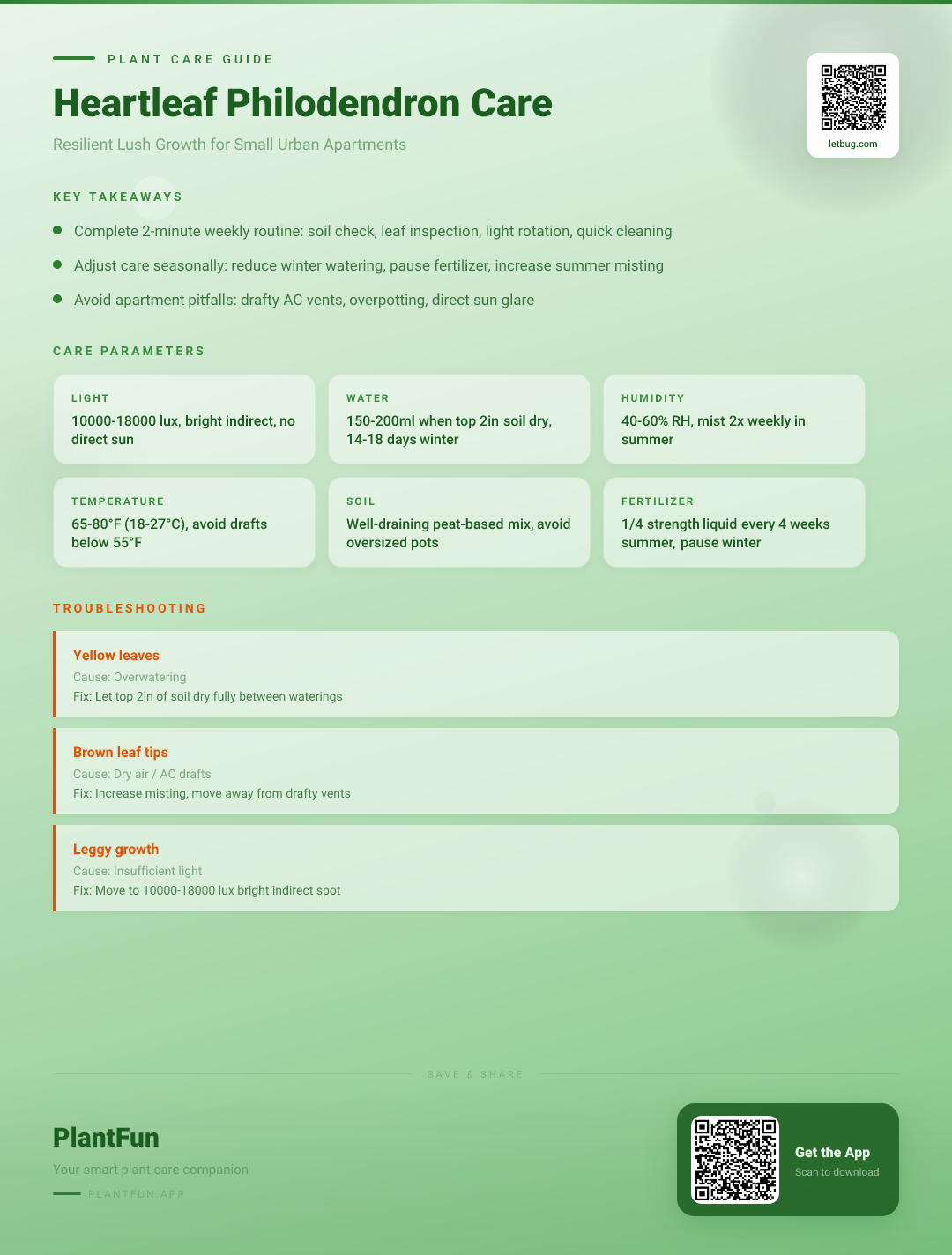
Key Takeaways
- Check soil moisture before watering — overwatering is the #1 killer of houseplants.
- Ensure your plant gets the right amount of light for its species.
- Be patient with recovery — most plants need 2–4 weeks to bounce back.
Quick Care Card: At-a-glance table of all measurable care thresholds for heartleaf philodendron in urban apartments, including light, water, humidity, temperature, and fertilizer amounts
| Care Factor | Urban Apartment Threshold | Quick Notes |
|---|---|---|
| Light | 10,000–18,000 lux bright indirect light | Avoid direct midday sun over 20,000 lux |
| Water | 150–200ml room-temperature water when top 2 inches of soil are dry | Use filtered or rainwater if your tap has high chlorine |
| Humidity | 40–60% relative humidity | Local humidity near the plant matters more than whole-apartment levels |
| Temperature | 65–80°F (18–27°C) | Avoid temperatures below 60°F (15°C) for extended periods |
| Soil | Well-draining aroid mix (3 parts potting soil, 1 part perlite, 1 part orchid bark) | Must have drainage holes to prevent root rot |
| Fertilizer | 1/4 strength balanced liquid fertilizer every 4 weeks in summer | Pause fertilization completely in winter |
| Toxicity | Toxic to cats, dogs, and small children if ingested (ASPCA, 2026) | Keep trailing stems out of reach of curious pets |
Why This Guide Is Built for Small Urban Apartments
Generic heartleaf philodendron care advice ignores the unique constraints of small city living: fluctuating HVAC humidity that drops to 20% in winter, shared window light blocked by neighboring buildings or fire escapes, and limited planter space on shelves or tiny window sills. This guide cuts through vague advice like “bright indirect light” to give you measurable thresholds tailored to these conditions. Myth: Heartleaf philodendrons can survive any dark corner. Reality: They need at least 10,000 lux to produce lush trailing growth, a bar many low-light apartment spots miss. If you’re still shopping for plants that fit your small space, check out our list of the best low-light indoor plants for apartments at https://letbug.com/best-indoor-plants-for-low-light-apartments.
Step-by-Step Weekly Care Checklist: Printable 2-minute routine covering soil moisture checks, leaf inspection, light rotation, and quick cleaning steps
- Soil test (30 seconds): Stick your index finger 2 inches deep into the soil. If it’s completely dry, water with 150–200ml of room-temperature water. If it’s still damp, skip watering.
- Leaf check (30 seconds): Inspect the top and bottom of 5–6 mature leaves for yellowing, brown tips, or tiny pest spots.
- Rotate (15 seconds): Turn the pot 1/4 of a full turn to ensure all sides get equal light exposure, preventing lopsided or leggy growth.
- Dust wipe (45 seconds): Wipe 2–3 large leaves with a damp microfiber cloth to remove dust that blocks light absorption and slows growth.
Exact Care Thresholds Deep Dive: Explains the science behind each measurable requirement: 10,000-18,000 lux bright indirect light, 40-60% relative humidity, 65-80°F (18-27°C) temperature range, and 150-200ml water when top 2 inches of soil are dry
- Light: The 10,000–18,000 lux range is proven to support healthy foliage and trailing growth for philodendron species (Han & Park, 2008). This is typically found 3–6 feet from an unobstructed west or east-facing window. You can measure your indoor light levels easily with a free smartphone lux meter app, and learn more about interpreting lux readings in our complete guide at https://letbug.com/how-to-measure-indoor-light-lux. Levels below 8,000 lux will lead to slow, leggy growth.
- Water: Giving exactly 150–200ml when the top 2 inches of soil are dry prevents overwatering, the top cause of heartleaf philodendron death in apartments. This amount is calibrated for 4–6 inch planters, the most common size for small apartment shelving.
- Humidity: 40–60% relative humidity prevents calcium deficiency, which presents as brown leaf tips (Hershey & Merritt, 1987). Even if your whole apartment is dry, you can raise local humidity near the plant with simple tricks. Check out our easy DIY humidity tricks for houseplants at https://letbug.com/diy-humidity-tricks-for-houseplants if you struggle with dry HVAC air.
- Temperature: The 65–80°F (18–27°C) range matches the native tropical habitat of heartleaf philodendrons, supporting consistent growth year-round (Han & Park, 2008). Exposures to temperatures below 60°F for more than 2 days will slow growth significantly.
Seasonal Care Calendar: Adjustments for winter (reduce watering to every 14-18 days, pause fertilizer) and summer (increase misting 2x weekly, feed with 1/4 strength liquid fertilizer every 4 weeks)
Winter (October to March, Northern Hemisphere)
- Reduce watering frequency to every 14–18 days, as lower light slows transpiration and soil takes longer to dry (this is core heartleaf philodendron winter care).
- Pause all fertilizer applications, as the plant enters a semi-dormant growth phase.
- Move plants at least 3 feet away from radiators or baseboard heating vents to avoid rapid humidity drops.
Summer (June to August, Northern Hemisphere)
- Check soil moisture every 3 days, as warmer temperatures and brighter light will dry soil faster. This is key for proper heartleaf philodendron summer watering.
- Mist leaves 2x weekly to raise local humidity during heatwaves when AC runs constantly.
- Feed with 1/4 strength balanced liquid fertilizer every 4 weeks to support fast trailing growth, if you want to know how to make philodendron grow faster, this step makes a noticeable difference.
Symptom-to-Action Troubleshooting Guide: Matches common apartment-specific symptoms (yellow leaves, brown tips, leggy growth) to immediate fixes and root cause solutions
Yellow Lower Leaves
Symptom: Older lower leaves turn soft, pale yellow with no brown or black spots.
Likely cause: Overwatering from following a fixed watering schedule instead of testing soil moisture.
Fix:
- Let the soil dry completely to 3 inches deep before watering again.
- If soil stays soggy for 7+ days, repot into fresh, well-draining aroid mix to prevent root rot.
Brown Leaf Tips
Symptom: Crispy, light brown tips on new and old leaves, with no surrounding yellowing.
Likely cause: Low humidity from running HVAC, or calcium deficiency (Hershey & Merritt, 1987).
Fix:
- Mist leaves 2x weekly or place a pebble tray filled with water under the planter to raise local humidity.
- Add 1/8 teaspoon of calcium nitrate to your watering can once every 2 months to correct deficiency.
Leggy Sparse Growth
Symptom: Long stems with 2+ inches of space between leaves, and small, pale new growth.
Likely cause: Insufficient light below 10,000 lux, common in apartments blocked by neighboring buildings.
Fix:
- Move the plant to within 6 feet of a west or east-facing window, or add a small grow light if natural light is limited.
- Prune leggy stems 1 inch above a leaf node to encourage bushier, fuller trailing growth (these are top heartleaf philodendron trailing growth tips).
Scorched Brown Leaf Spots
Symptom: Dry, dark brown spots on leaves facing the window, often surrounded by a thin yellow halo.
Likely cause: Direct midday sun exposure through unobstructed west-facing windows, which can hit 30,000+ lux, far above the plant’s tolerance.
Fix:
- Cut off scorched leaves at the base of the stem, as they will not recover.
- Hang a sheer curtain over the window to filter direct sunlight, or move the plant 6 feet back from the glass.
Common Apartment Care Mistakes to Avoid: Covers pitfalls like placing near drafty AC vents, overpotting in too-large planters, and leaving in direct window glare that burns leaves
- Mistake: Placing your plant directly next to or above a running AC or heating vent. What happens: Rapid, repeated humidity drops near vents cause brown tips and leaf drop even if your whole apartment humidity measures 40%. Instead: Keep plants at least 3 feet away from all HVAC vents, or hang a small fabric draft blocker between the vent and plant.
- Mistake: Overpotting in a planter more than 2 inches larger than the root ball to skip frequent repotting. What happens: Excess unused soil holds water for weeks, leading to root rot and yellow leaves, the top cause of heartleaf philodendron death in small apartments. Instead: Repot only when roots are growing out of the drainage holes, and size up just 1–2 inches at a time.
- Mistake: Leaving your plant in direct west-facing window glare during summer afternoons. What happens: Midday sun hits leaves at 30,000+ lux, burning leaf tissue and leaving permanent scorch marks. Instead: Use a sheer curtain to filter light, or move the plant 6 feet back from the window, which is a perfect spot for philodendron in west facing apartment setups.
FAQ: Why is my heartleaf philodendron getting brown tips after I turned on my apartment AC?
AC units pull moisture out of the air as they cool, dropping relative humidity near vents to 20% or lower, far below the 40–60% heartleaf philodendron humidity needs (Hershey & Merritt, 1987). First, move the plant at least 3 feet away from the AC vent to avoid direct dry air blasts. Add a pebble tray with 1 inch of water under the planter, and mist leaves 2x weekly to raise local humidity around the plant.
FAQ: Can I keep my heartleaf philodendron on a shelf 6 feet away from my west-facing window?
Yes! Light levels 6 feet from an unobstructed west-facing window typically measure 12,000–16,000 lux, which falls perfectly within the ideal heartleaf philodendron light requirements range (Han & Park, 2008). Rotate the pot 1/4 turn weekly to ensure even growth on all sides, and wipe dust off leaves monthly to keep light absorption high.
FAQ: How often should I water my heartleaf philodendron if I only have low indirect apartment light?
In light levels below 8,000 lux, your plant’s transpiration rate drops significantly, so you will only need to water every 10–14 days, or when the top 3 inches of soil are completely dry. Overwatering is the biggest risk in low light, so never water on a fixed schedule and always test soil moisture first. If your apartment has very limited natural light, you can find more low-light care tips in our guide to low-light houseplant care at https://letbug.com/low-light-houseplant-care-guide.
Printable Pocket Checklist Download: Link to free, wallet-sized checklist for quick weekly care checks
Grab our free, wallet-sized 2-minute heartleaf philodendron care checklist to keep on your fridge or carry with you for quick checks when you’re short on time. Download it here: https://letbug.com/free-heartleaf-philodendron-checklist. The checklist includes all key steps from this guide, plus a quick symptom cheat sheet for troubleshooting on the go.
References: Peer-reviewed horticultural sources on Philodendron hederaceum growth requirements and indoor stress tolerance
- ASPCA. (2026). Toxic and Non-Toxic Plants List — ASPCA. https://www.aspca.org/pet-care/animal-poison-control/toxic-and-non-toxic-plants. Accessed 2026-03-07.
- Hershey, D.; Merritt, R. (1987). Calcium Deficiency Symptoms of Heartleaf Philodendron. HortScience. https://doi.org/10.21273/hortsci.22.2.311. Accessed 2026-03-07.
- Han, B.; Park, B. (2008). In vitro micropropagation of Philodendron cannifolium. Journal of Plant Biotechnology. https://doi.org/10.5010/jpb.2008.35.3.203. Accessed 2026-03-07.
Optional Helper: Plantfun.App
Plantfun.App identifies your plants by photo, diagnoses pests and diseases with clear fixes, and creates personalised watering and light schedules that adapt to your home conditions — a handy companion for putting this guide into daily practice.
Found an error or have suggestions? We'd love your feedback.
Need help identifying this problem?
Get instant identification, personalized care schedules, and effective pest treatment plans directly on your phone.
Sponsored • We may earn a commission from app downloads
Related Guides
The Complete Heartleaf Philodendron Care Checklist for East-Facing Urban Apartments: Boost Lush Resilient Growth
Stop guessing at heartleaf philodendron care in your east-facing apartment. Get exact light lux levels, water amounts, humidity targets, and a diagnostic checklist to grow lush trailing vines year-round.
Care GuideThe Complete Heartleaf Philodendron Care Checklist for Resilient Growth in Typical Urban Apartments
Grow a lush, resilient heartleaf philodendron even in a small, low-light urban apartment. Get exact light levels, watering amounts, and a free printable checklist to avoid common care mistakes.
Care GuideThe Complete Heartleaf Philodendron Care Guide for Small Urban Apartments: Seasonal Resilient Growth Tips
Grow a lush, trailing heartleaf philodendron even in a cramped city apartment. Get exact light, water, and humidity thresholds plus a 4-season care routine for zero-fuss resilient growth.
Pest ControlAnts on Plants: What They Mean and What to Do
Ants usually aren't eating your plant. They are farming other pests.