
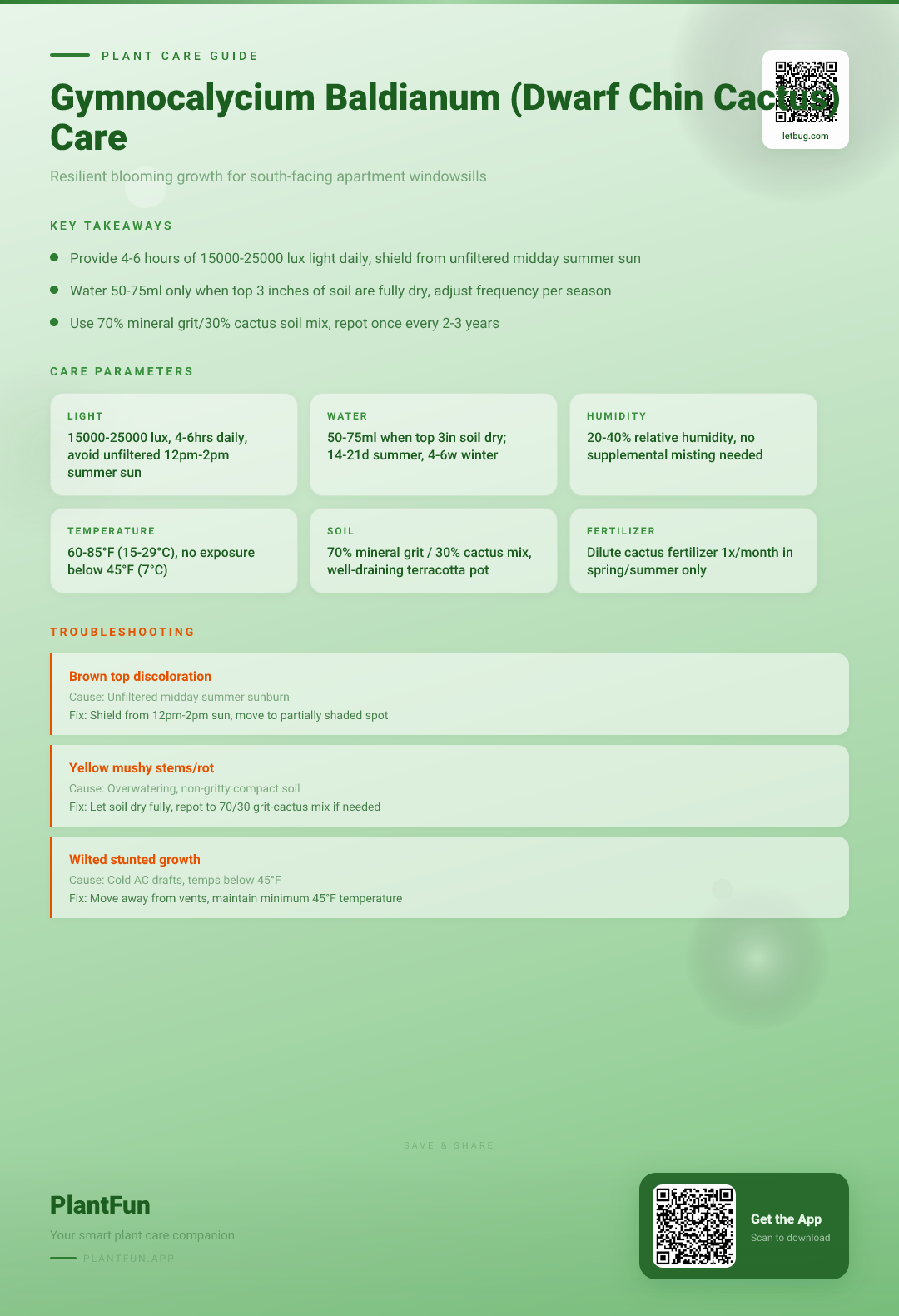
Key Takeaways
- Check soil moisture before watering — overwatering is the #1 killer of houseplants.
- Ensure your plant gets the right amount of light for its species.
- Be patient with recovery — most plants need 2–4 weeks to bounce back.
Quick Care Card
| Category | Core Threshold |
|---|---|
| Light | 15,000-25,000 lux for 4-6 hours daily, avoid unfiltered 12pm-2pm summer sun |
| Water | 50-75ml only when top 3 inches of soil are fully dry: 14-21 days summer, 4-6 weeks winter |
| Humidity | 20-40% relative humidity, no humidifier required |
| Temperature | 60-85°F (15-29°C), minimum 45°F (7°C) |
| Soil | 70% mineral grit / 30% cactus potting mix |
| Fertilizer | Diluted 10-10-10 cactus fertilizer once in spring, once in early summer |
| Toxicity | Non-toxic to cats, dogs, and humans (ASPCA, 2026) |
Skimmed the card? Grab our full printable checklist at the end of this guide for quick, no-guess reference on your windowsill or fridge.
Why Gymnocalycium Baldianum Thrives (or Fails) on South-Facing Apartment Windowsills
Native to the semi-arid grasslands of Argentina, Gymnocalycium baldianum (common name dwarf chin cactus) evolved under partial shade from tall prairie grasses, with consistent mild temperatures and low humidity (NC State Extension, 2026). This makes it an ideal pick for [small cactus care for apartment windowsills], but generic outdoor cactus advice often leads to failure for south-facing apartment growers.
Myth vs Reality: Myth: All cacti need full unfiltered sun all day to thrive. Reality: Gymnocalycium baldianum’s native habitat only gets 4-6 hours of gentle direct sun daily, so unfiltered south-facing midday summer sun (which can exceed 30,000 lux) will burn its fleshy tissue. Common apartment stressors that trigger stunted growth or discoloration include cold AC drafts blowing directly on the windowsill, overly moisture-retentive soil, and inconsistent watering that ignores indoor humidity levels.
Step-by-Step Core Care Checklist (8 Actionable Items)
Follow these measurable steps to eliminate guesswork from your Gymnocalycium baldianum care routine:
- Test light levels with a low-cost lux meter twice monthly to confirm you hit the 15,000-25,000 lux target for 4-6 hours daily.
- Insert a wooden skewer 3 inches into the potting mix before watering; only water if the skewer comes out completely dry with no clumps of soil attached.
- Pour 50-75ml of room-temperature filtered water directly onto the soil, avoiding the crown of the cactus to prevent rot.
- Use a digital thermometer to confirm your windowsill stays between 60-85°F (15-29°C) year-round.
- Plant your cactus in a 4-inch terracotta pot with at least 1 drainage hole to wick away excess moisture.
- Use a 70% mineral grit / 30% cactus soil mix, the best soil for gymnocalycium baldianum in low-airflow apartment spaces.
- Relocate your cactus 12+ inches away from AC vents to avoid cold draft damage.
- Apply diluted cactus fertilizer once in March and once in June to encourage bright pink or red blooms (learn more about [how to get gymnocalycium baldianum to bloom] in our dedicated guide).
Measurable Light Requirements
Gymnocalycium baldianum needs 15,000-25,000 lux of direct or filtered light for 4-6 hours daily (NC State Extension, 2026). South-facing apartment windows easily meet this requirement for most of the year, but between 12pm and 2pm in summer, unfiltered light can spike to 35,000+ lux, which causes permanent brown sunburn scars.
Quick test to avoid sunburn: Hold your bare hand between the cactus and the window at 1pm on a summer day. If your skin develops a sharp, uncomfortable sunburn sensation after 60 seconds, the light is too intense. Fix this by hanging a sheer curtain over the window during midday hours, or moving the cactus 6 inches back from the glass. This is the core rule for successful gymnocalycium south-facing windowsill care.
Exact Watering Schedule for Apartment Conditions
One of the most common questions we get is how often to water gymnocalycium baldianum in apartment settings. Unlike outdoor cacti, indoor cacti grow in low-airflow spaces where soil dries much slower, so overwatering is the #1 cause of death.
Follow these measurable rules: Water 50-75ml only when the top 3 inches of soil are completely dry. For most apartments, this translates to:
- Gymnocalycium baldianum summer watering (May-Aug): Every 14-21 days
- Winter (Dec-Feb): Every 4-6 weeks
Quick test: Stick your index finger 3 inches into the soil. If you feel any moisture at all, hold off on watering for another 3-5 days. If you struggle with consistent moisture checks, our [soil moisture testing for houseplants] guide has more simple hacks.
Optimal Temperature & Humidity Thresholds
Maintain a windowsill temperature of 60-85°F (15-29°C) year-round, never dropping below 45°F (7°C) (NC State Extension, 2026). Gymnocalycium baldianum thrives in 20-40% relative humidity, which matches most apartment indoor air, so you never need to use a humidifier for this plant.
If you’re wondering can cactus survive AC drafts, the short answer is yes — as long as cold air is not blowing directly on the plant. Cold drafts from AC units or leaky window seals can cause cell damage, leading to yellow or brown discoloration and stunted growth. Fix draft issues by placing a small foam draft stopper between the AC vent and your cactus, or moving the plant 18 inches away from the vent.
Soil & Potting Requirements
The best soil for gymnocalycium baldianum in apartment settings is a 70/30 mix of mineral grit (perlite, pumice, or coarse horticultural sand) and organic cactus potting mix (NC State Extension, 2026). This mix drains extremely fast, preventing root rot even if you accidentally water too frequently.
Use a 4-inch unglazed terracotta pot with at least 1 drainage hole. Terracotta wicks excess moisture away from the roots, which is perfect for low-airflow indoor spaces. Repot your cactus only every 2-3 years, when you see roots growing out of the drainage hole. This cactus stays small (max 4 inches wide at maturity) and prefers tight root space, so you never need a pot larger than 6 inches.
Seasonal Care Calendar for Apartment Dwellers
Adjust your care routine with the seasons to keep your cactus thriving and encourage blooming:
- Summer (May-Aug): 4-6 hours of filtered sun daily, water every 14-21 days, apply second fertilizer dose in early June, avoid unfiltered midday sun.
- Fall (Sept-Nov): Gradually reduce watering to every 3-4 weeks, stop fertilizing, move cactus closer to the window as daylight hours shorten.
- Winter (Dec-Feb): Follow gymnocalycium baldianum winter care rules: Water every 4-6 weeks only if soil is completely dry, maintain temperature above 45°F (7°C), no fertilizer, keep near the sunniest window to compensate for short days.
- Spring (Mar-Apr): Increase watering to every 2-3 weeks, apply first diluted fertilizer dose, check light levels as the sun gets stronger to avoid sunburn, watch for flower bud formation at the crown of the cactus.
Common Mistakes to Avoid
- Mistake: Watering on a fixed weekly schedule without checking soil moisture. What happens: Root rot, yellowing mushy tissue, sudden cactus death. Instead: Use the 3-inch skewer test every 2 weeks to confirm soil is fully dry before watering.
- Mistake: Using regular potting soil or skipping mineral grit in your mix. What happens: Soil retains too much moisture, leading to root rot even with infrequent watering. Instead: Stick to the 70% grit / 30% cactus soil ratio for optimal drainage.
- Mistake: Leaving cactus exposed to unfiltered 12pm-2pm summer south-facing sun. What happens: Brown sunburn spots on the top of the cactus, stunted growth, permanent scarring. Instead: Hang a sheer curtain over the window during midday hours, or move the cactus 6 inches back from the glass.
- Mistake: Placing cactus directly under or next to an AC vent. What happens: Cold draft damage, discoloration, wilting, flower bud drop. Instead: Relocate the cactus at least 12 inches away from vents, or use a small draft blocker between the vent and cactus.
Voice Search FAQ
Why is my gymnocalycium baldianum turning brown on the top?
Hard, dry brown spots on the top of your dwarf chin cactus are almost always sunburn from unfiltered midday south-facing summer sun (NC State Extension, 2026). The spots are permanent, but you can prevent new ones by hanging a sheer curtain over the window between 12pm and 2pm, or moving the cactus 6 inches back from the glass. If the brown spots are soft and mushy, it’s likely root rot from overwatering, so you should check the root system and repot in fresh, dry soil if needed.
How often do I need to water my dwarf chin cactus in an apartment?
In a typical apartment, water your dwarf chin cactus 50-75ml only when the top 3 inches of soil are completely dry, which works out to every 14-21 days in summer and every 4-6 weeks in winter (NC State Extension, 2026). Never water on a fixed schedule without checking soil moisture first, as humidity and temperature levels vary between apartments, which changes how fast soil dries out.
Can I keep my gymnocalycium on a windowsill with an AC unit below it?
You can keep your gymnocalycium on a windowsill with an AC unit below it as long as the cold air from the AC is not blowing directly on the cactus. If the vent is pointed at the windowsill, move the cactus at least 12 inches away from the AC unit, or place a small draft stopper between the vent and the cactus to block cold air flow. Long exposure to temperatures below 45°F (7°C) from AC drafts will cause permanent cell damage to your cactus.
Printable Care Checklist Download Link
Grab your free, high-resolution 1-page Gymnocalycium baldianum care checklist for quick reference! Print it out and tape it to your fridge, plant shelf, or window frame to never guess about care again. The checklist includes all measurable thresholds, seasonal reminders, and common mistake warnings to keep your dwarf chin cactus thriving. [Download Printable Checklist Here]
References
- NC State Extension. (2026). The Complete Gymnocalycium Baldianum — NC State Extension Gardener Plant Toolbox. https://plants.ces.ncsu.edu/plants/gymnocalycium-baldianum/. Accessed 2026-03-07.
- ASPCA. (2026). Toxic and Non-Toxic Plants List — ASPCA. https://www.aspca.org/pet-care/animal-poison-control/toxic-and-non-toxic-plants. Accessed 2026-03-07.
- Pfeiffer, C. (1989). First Report of Dichotomophthora indica as a Pathogen of Myrtillocactus geometrizans and Gymnocalycium mihanovichii var. friedrichii in Arizona. Plant Disease. https://doi.org/10.1094/pd-73-0081e. Accessed 2026-03-07.
- Martino, P.; Gurvich, E.; Las Peñas, M. (2022). DNA CONTENT AND CYTOGENETIC CHARACTERISTICS OF Gymnocalycium quehlianum (CACTACEAE) ALONG AN ALTITUDINAL GRADIENT. Journal of Basic and Applied Genetics. https://doi.org/10.35407/bag.2022.33.01.04. Accessed 2026-03-07.
Optional Helper: Plantfun.App
Plantfun.App identifies your plants by photo, diagnoses pests and diseases with clear fixes, and creates personalised watering and light schedules that adapt to your home conditions — a handy companion for putting this guide into daily practice.
Found an error or have suggestions? We'd love your feedback.
Need help identifying this problem?
Get instant identification, personalized care schedules, and effective pest treatment plans directly on your phone.
Sponsored • We may earn a commission from app downloads
Related Guides
Anthurium andraeanum in Small Urban Apartments: The Complete Resilient Growth Checklist for Year-Round Blooms
Stop watching your Anthurium wilt and drop blooms. Get exact light, water, and humidity thresholds, plus a 12-point checklist to keep it thriving in your apartment year-round.
Care GuideBunny Ear Cactus Apartment Care Checklist: Budget Tips for Resilient Year-Round Growth
Keep your bunny ear cactus thriving in your apartment for under $10 a year. Get exact light, water, and soil thresholds plus a printable care checklist to avoid common growing mistakes.
Care GuideBunny Ear Cactus Care Guide for Small Low-Light Apartments: Resilient Growth On A Budget
Grow a thriving bunny ear cactus in your small low-light apartment without expensive supplies. Get exact light, water, and soil specs, plus a free weekly checklist for resilient, low-fuss growth.
Pest ControlAnts on Plants: What They Mean and What to Do
Ants usually aren't eating your plant. They are farming other pests.