
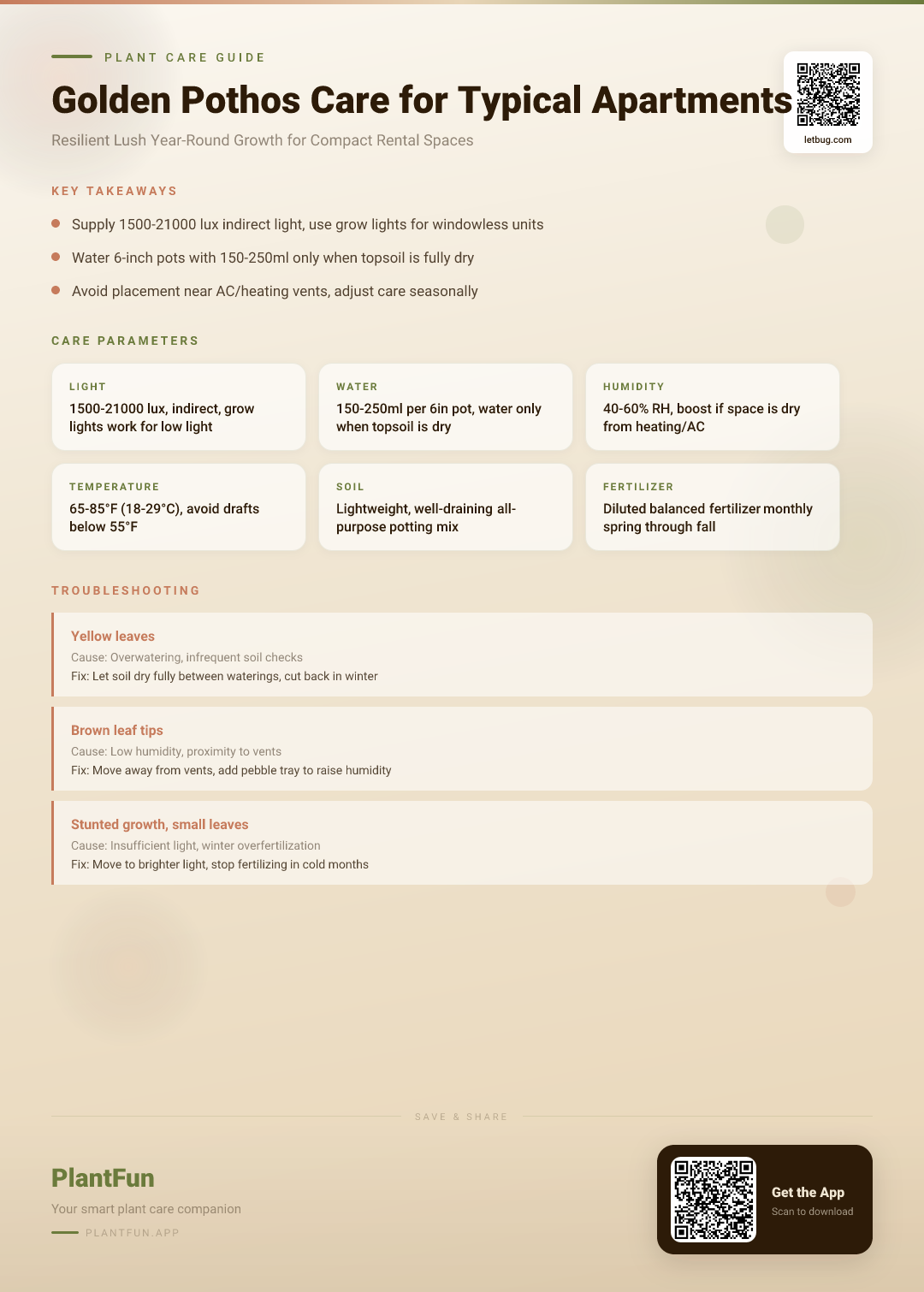
Key Takeaways
- Check soil moisture before watering — overwatering is the #1 killer of houseplants.
- Ensure your plant gets the right amount of light for its species.
- Be patient with recovery — most plants need 2–4 weeks to bounce back.
Quick Care Card
| Parameter | Exact Apartment-Specific Threshold |
|---|---|
| Light | 1,500–21,000 lux; avoid direct midday sun over 25,000 lux |
| Water | 150–250ml per 6-inch pot when top 2 inches of soil is completely dry |
| Humidity | 40–60% relative humidity (RH) |
| Temperature | 65–85°F (18–29°C); avoid drops below 55°F (13°C) |
| Soil | 3 parts indoor potting mix + 1 part perlite + 1 part orchid bark |
| Fertilizer | ½-strength balanced 10-10-10 NPK every 4–6 weeks spring to fall; no fertilizer in winter |
| Toxicity | Toxic to cats, dogs, and small children if ingested (ASPCA, 2026) |
This compact cheat sheet fits on a fridge magnet or index card for quick reference, no guesswork required for golden pothos care for beginners.
Why Golden Pothos Thrive (Or Struggle) In Typical Apartments
Golden pothos (Epipremnum aureum) are naturally epiphytic tropical vines, adapted to grow in dappled forest light and variable moisture levels, making them well suited to most rental units. They are also proven to remove common indoor air pollutants like formaldehyde and benzene from apartment air, making them a functional addition to small spaces (EL Sayed, 2020).
That said, three common rental stressors often cause avoidable health issues:
- Low, inconsistent natural light (especially in north-facing or windowless units)
- Extreme temperature swings and dry air from forced heating and AC systems
- High mineral/chlorine content in hard city tap water
Myth vs Reality: Myth: Golden pothos can grow in total darkness indefinitely. Reality: While they tolerate low light better than most tropical plants, they need a minimum of 1,500 lux to maintain growth and avoid leggy stems, per horticultural research (Current Science International, 2019).
Step 1: Apartment Light Setup Guide
Golden pothos light requirements fall between 1,500–21,000 lux, a wide range that fits most apartment layouts:
- East-facing windows: Place directly on the windowsill for 1-2 hours of soft morning sun, delivering 5,000–12,000 lux for most of the day, ideal for fast trailing growth.
- South-facing windows: Keep 3+ feet back from the glass to avoid leaf scorch from midday sun, which can exceed 25,000 lux and burn foliage.
- North-facing windows: Place directly on the windowsill for 1,500–6,000 lux, perfect for golden pothos for low light apartments.
Quick light test: Hold your hand where the plant sits at noon. If you see a faint, soft shadow, you have at least 1,500 lux. If you see no shadow, you need supplemental light.
For windowless units: Use an affordable 10W LED grow light hung 12 inches above the plant, run 10–12 hours per day to deliver 2,000–4,000 lux, enough to sustain steady growth.
Step 2: Exact Watering Routine for Apartments
Wondering how often to water golden pothos? Skip fixed schedules and use this measurable routine instead:
- Test soil dryness first: Stick your index finger 2 inches deep into the soil. Only water if it is completely dry to the touch.
- Use the correct volume: For a standard 6-inch nursery pot, pour 150–250ml (½–1 cup) of water slowly until it drains out the bottom of the pot.
- Adjust for hard tap water: Leave water in an open jug for 24 hours before watering to let chlorine evaporate, or collect rainwater from your balcony if available.
Golden pothos summer watering tip: Increase frequency by 30% if you run AC regularly, as cold dry air dries soil much faster than average room conditions.
Step 3: Humidity & Temperature Tweaks
Golden pothos humidity needs are lower than many tropical plants, making them ideal for apartment living, but small adjustments prevent common issues like brown leaf tips:
- Target humidity: 40–60% RH. If your winter forced heating drops humidity below 30%, use one of these no-fuss hacks: group your pothos with other plants to raise humidity by 10–15%, set the pot on a tray of pebbles filled with water (do not let the pot sit directly in water), or run a small humidifier for 2–3 hours per day.
- Golden pothos temperature range: 65–85°F (18–29°C). Avoid placing plants within 2 feet of heating vents, AC units, or drafty exterior windows, as temperature swings below 55°F (13°C) cause leaf drop and cold damage.
Step 4: Soil & Repotting Checklist for Small Spaces
Pothos have shallow, aerial roots that need well-draining, lightweight soil to avoid root rot:
- Soil mix recipe: Combine 3 parts general indoor potting mix, 1 part perlite, and 1 part orchid bark for a fast-draining mix that replicates the pothos’s natural forest growing environment.
- Repotting triggers (only repot in spring):
- Roots are growing out of the pot’s drainage holes
- Soil dries out completely in less than 24 hours after watering
- No new growth for 2+ months during the growing season
- Space-saving pot options: Only size up 1 inch (e.g., from 6-inch to 7-inch pot) to avoid excess soil holding water. Use hanging ceiling planters, wall-mounted shelf planters, or compact windowsill pots to save floor space in small 1-2 bedroom units.
Spring Care Routine
Spring is the peak growing season for pothos, follow these steps to learn how to make golden pothos grow faster:
- Acclimate to increased light: Move your pothos 6 inches closer to its window every 3 days over 2 weeks to avoid sun scorch as spring light gets stronger.
- How to prune golden pothos for growth: Use clean scissors to cut stems ¼ inch above a leaf node (the small bump on the stem where leaves grow) to encourage branching. Root the cuttings in water to make new pothos plants for other rooms.
- Start fertilizing: Apply ½-strength balanced 10-10-10 NPK fertilizer once every 6 weeks. A 2019 study found this rate produces twice as much new growth as full-strength doses, which can burn delicate roots (Current Science International, 2019).
Summer & Fall Care Routine
Adjust your routine to account for warmer temperatures and AC use:
- Check soil dryness every 5–7 days for golden pothos summer watering, as warm air and AC speed up evaporation.
- If your AC blows directly on your pothos’s spot, move it 2 feet away or hang a thin fabric curtain between the unit and plant to block cold drafts.
- In late fall, as light levels drop and temperatures cool, move your pothos away from exterior windows if the glass feels cold to the touch at night. Cut back watering frequency by 20% as growth slows.
Winter Care Routine
Golden pothos winter care focuses on avoiding stress from dry heat and low light:
- Water only when the top 3 inches of soil are completely dry, usually every 10–14 days. Use room-temperature water to avoid shocking cold roots.
- Boost humidity by misting leaves 2x per week, or keep your pothos near a small humidifier if you have forced heating.
- Keep plants at least 3 feet away from exterior windows where nighttime temperatures drop below 60°F to avoid cold damage.
- Do not fertilize in winter, as pothos enter a period of dormancy and do not need extra nutrients.
Common Apartment Pothos Mistakes to Avoid
- Mistake: Watering on a fixed weekly schedule instead of testing soil dryness first What happens: Overwatering leads to root rot, the top cause of why is my golden pothos turning yellow Instead: Stick your finger 2 inches into soil every 7 days, only water if it is completely dry
- Mistake: Placing pothos within 1 foot of heating or AC vents What happens: Extreme temperature swings and dry air cause brown leaf tips and stunted growth Instead: Keep plants at least 2 feet away from vents, or use a small draft blocker if you can’t move the plant
- Mistake: Overfertilizing in winter to “boost growth” What happens: Excess salt builds up in soil, burns roots, and causes yellow leaf edges Instead: Skip fertilizing entirely from late October to early March, resume in spring when you see new leaf growth
- Mistake: Leaving pothos in a windowless room with only overhead artificial light for months What happens: Slow or no growth, leggy stems with small leaves, and eventual plant death Instead: Add a low-cost LED grow light run 12 hours per day, or move the plant to a spot with at least faint natural light
FAQ
Can golden pothos survive in windowless apartment bedroom?
Yes, as long as you provide a 10W LED grow light hung 12 inches above the plant, run 10–12 hours per day to deliver 2,000+ lux. They can survive for 2–3 months on just standard overhead bedroom light, but will stop growing without supplemental light long-term. Keep trailing stems out of reach of pets, as pothos are toxic if ingested (ASPCA, 2026).
Why is my apartment pothos growing yellow leaves?
The most common cause is overwatering from not testing soil dryness before watering. Other common apartment-specific causes include cold drafts from AC or exterior windows, too much direct midday sun, or excess salt buildup from overfertilizing. First check if the top 2 inches of soil are soggy; if yes, hold off watering until it is completely dry. If soil is dry, check if the plant is near a drafty vent or window.
How often should I fertilize my pothos in winter?
You should not fertilize your pothos at all in winter. Golden pothos enter dormancy when light levels are low, so they do not need extra nutrients, and overfertilizing will cause root burn and yellow leaves. Resume fertilizing in spring when you see new leaf growth appear.
References
- EL Sayed, N. (2020). Spray Golden Pothos and Croton Plants with Glutathione and Bilirubin to Purify the Indoor Air from Pollutants. Journal of Plant Production. https://doi.org/10.21608/jpp.2020.102766. Accessed 2026-02-25.
- Current Science International. (2019). Growth of Golden Pothos (Epipremnum aureum) Plant as Affected by NPK Formula and rate. Current Science International. https://doi.org/10.36632/csi/2019.8.4.1. Accessed 2026-02-25.
- ASPCA. (2026). Toxic and Non-Toxic Plants List — ASPCA. https://www.aspca.org/pet-care/animal-poison-control/toxic-and-non-toxic-plants. Accessed 2026-02-25.
Optional Helper: Plantfun.App
Plantfun.App identifies your plants by photo, diagnoses pests and diseases with clear fixes, and creates personalised watering and light schedules that adapt to your home conditions — a handy companion for putting this guide into daily practice.
Found an error or have suggestions? We'd love your feedback.
Need help identifying this problem?
Get instant identification, personalized care schedules, and effective pest treatment plans directly on your phone.
Sponsored • We may earn a commission from app downloads
Related Guides
Golden Pothos in Small Urban Apartments: The Only Seasonal Care Checklist You Need
Stop guessing about golden pothos care. Get a free seasonal checklist, exact light, water, and humidity thresholds to grow lush trailing vines in your small urban apartment.
Care GuideGolden Pothos in Low-Light Studio Entryways: The Only Budget Care Guide You’ll Ever Need
Stop wasting money on fancy plant products for your golden pothos. Get free, actionable care steps, exact light/water thresholds, and a seasonal plan to keep trailing vines lush in dark entryways.
Care GuideThe Budget Golden Pothos Care Checklist for Resilient Growth in Small Urban Apartments
Grow a lush, trailing golden pothos even in a tiny, low-light urban apartment with this free budget checklist of exact light, water, and soil parameters that cost nothing to implement.
Pest ControlHow to Spot Pests on Golden Pothos in Low-Light Entryways: A Weekly Inspection & Rescue Plan
Catch pest infestations on your low-light entryway golden pothos early with our 5-minute weekly inspection plan, plus step-by-step non-toxic rescue steps to fix spider mites, mealybugs and gnats before foliage damage becomes irreversible.