
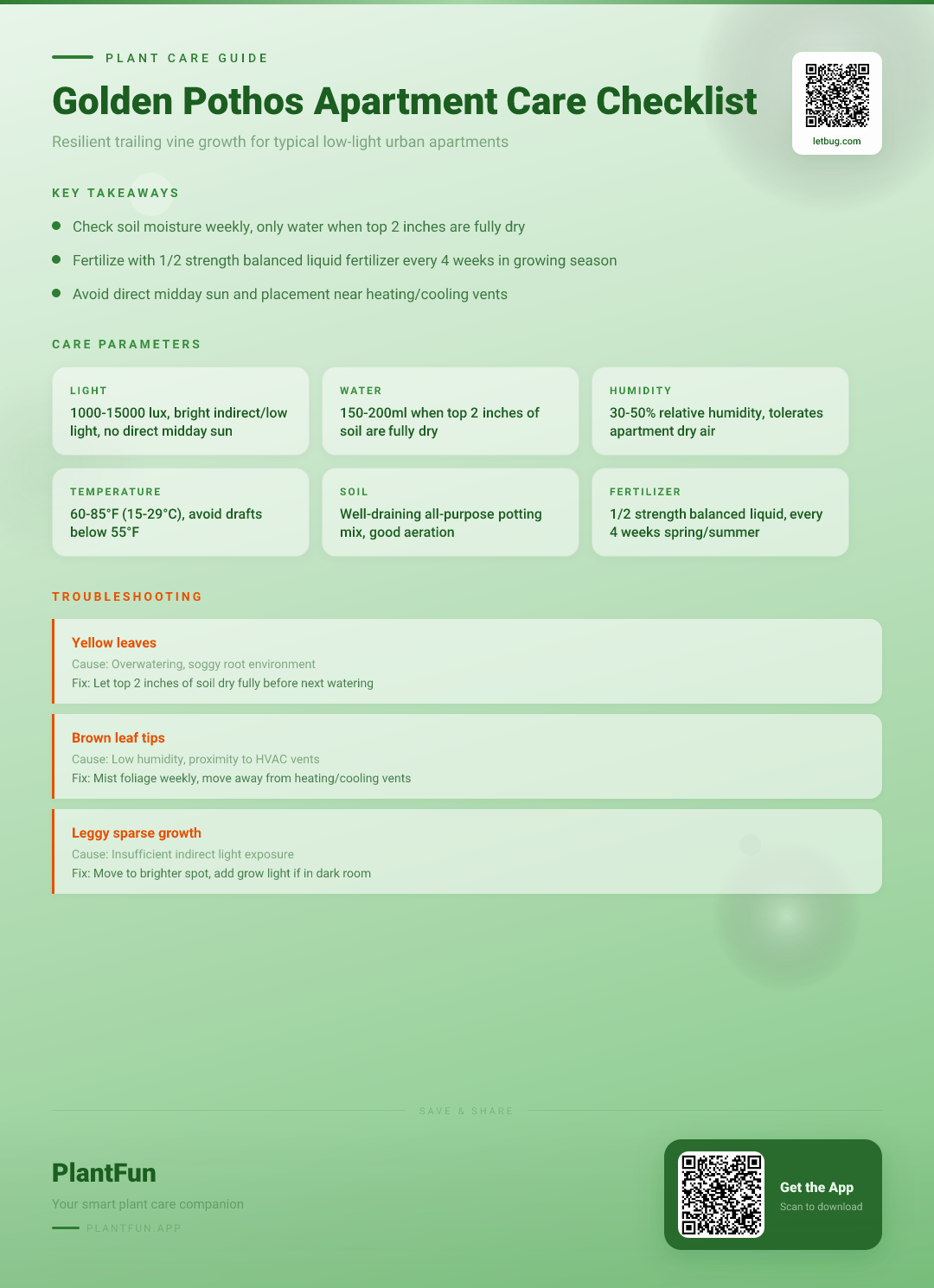
Key Takeaways
- Check soil moisture before watering — overwatering is the #1 killer of houseplants.
- Ensure your plant gets the right amount of light for its species.
- Be patient with recovery — most plants need 2–4 weeks to bounce back.
Quick Care Card
| Parameter | Apartment-Specific Threshold |
|---|---|
| Light | 1,000-15,000 lux (bright indirect to low light, no direct midday sun) (EL Sayed, 2020) |
| Water | 150-200ml room-temperature water when top 2 inches of soil are fully dry |
| Humidity | 30-50% relative humidity, matches typical urban apartment baseline (EL Sayed, 2020) |
| Temperature | 60-85°F (15-29°C), avoid exposure to temps below 55°F |
| Soil | Standard well-draining potting mix with 20% perlite added for improved drainage in low-ventilation spaces |
| Fertilizer | 1/2 strength balanced 10-10-10 liquid fertilizer, only applied spring/summer every 4 weeks |
| Toxicity | Toxic to cats, dogs, and humans if ingested (ASPCA, 2026), keep out of reach of pets and small children |
Why This Guide Is Different
Generic golden pothos care advice often assumes ideal greenhouse conditions: 50%+ humidity, consistent bright light, and strong natural ventilation. This pothos care for apartments guide is tailored specifically to the constraints most urban renters face: 30-40% baseline humidity, limited natural light, and inconsistent ventilation from HVAC systems. A common myth is that pothos requires high humidity to thrive, but peer-reviewed research confirms golden pothos adapts exceptionally well to the dry air of typical apartments (EL Sayed, 2020). This pothos care checklist eliminates guesswork with measurable thresholds, so even golden pothos care for beginners can achieve resilient, trailing growth without trial and error.
Step-by-Step Daily/Weekly Care Routine
This 2-minute weekly check-in is all you need to keep your pothos healthy, no daily maintenance required:
- Moisture test: Stick your index finger 2 inches into the soil. If the soil is fully dry, add 150-200ml of room-temperature water directly to the soil, avoiding wetting the leaves to prevent fungal spots. This answers how often to water pothos for apartment environments, as fixed schedules lead to overwatering in low-light spaces.
- Leaf inspection: Check the top and bottom of 3-5 random leaves for discoloration, pests, or damage. Wipe dusty leaves with a dry microfiber cloth to improve light absorption, which supports faster growth.
- Light check: Hold your hand 6 inches above the plant at midday. If you see a sharp, defined shadow, the light is too strong (exceeds 15,000 lux per pothos light requirements indoors) — move the plant 1-2 feet away from the window to avoid sunburn.
Spring Care Checklist
Spring is the active growth season for pothos, follow these steps to encourage bushier, faster growth:
- Pruning for growth: Cut back overgrown vines to 2-3 nodes (small bumps on the vine where leaves grow) above the soil line. This is how to prune pothos for growth, as it triggers the plant to send out multiple new trailing vines instead of growing a single long stem.
- Fertilizing schedule: Apply 1/2 strength balanced 10-10-10 liquid fertilizer every 4 weeks, immediately after watering to avoid burning delicate roots.
- Repotting triggers: Check for root bound signs: if roots are growing out of the drainage holes, or the soil dries out completely in less than 24 hours after watering, repot into a pot 1-2 inches larger than the current one, using potting mix with 20% perlite for better drainage.
Summer Care Checklist
Adjust your routine for higher temperatures and longer daylight hours:
- Adjusted pothos summer watering schedule: Check soil moisture every 3-4 days instead of weekly, as higher temperatures speed up evaporation. Still only add 150-200ml of water when the top 2 inches of soil are fully dry to avoid overwatering.
- Sunburn prevention: If your pothos is placed near a south-facing window, add a sheer curtain to block direct midday sun, which can cause irreversible leaf damage. Keep light levels within the 1,000-15,000 lux range for optimal growth.
- Propagation for overgrown vines: Cut 4-6 inch vine cuttings with at least 2 nodes, place them in a jar of room-temperature water out of direct sun. Roots will grow in 1-2 weeks, and you can plant the new cuttings in soil to expand your pothos collection or share with friends.
Fall Care Checklist
As temperatures drop and daylight hours shorten, slow down your care routine to match the plant’s dormant phase:
- Reduced watering schedule: Check soil moisture every 7-10 days, as cooler temperatures slow evaporation. Reduce water amount to 150ml if needed, to avoid soggy soil in low-ventilation spaces.
- Fertilizer pause: Stop all fertilizing starting in mid-fall, as pothos growth slows significantly in lower light. Extra fertilizer will build up in the soil and burn the roots.
- Draft protection: If your pothos is placed on a windowsill, move it 6 inches away from the glass when overnight temperatures drop below 55°F. Avoid placing it near open windows that let in cold drafts, which can cause leaf drop.
Winter Care Checklist
Follow these pothos winter care tips to keep your plant healthy through cold, dark months:
- Cold temperature protection: Keep your pothos at least 1 foot away from exterior walls and uninsulated windows, as cold surfaces can damage the plant’s roots. Ensure ambient temperatures stay above 55°F at all times.
- Supplementary light for dark apartments: If you have a pothos in low light apartment with less than 1,000 lux of daily light, add a 10W full-spectrum LED grow light 12 inches above the plant, run it for 6 hours per day to meet minimum light requirements.
- Low-humidity leaf care: If your heating system runs constantly in winter, mist the leaves 1-2 times a week with room-temperature water, or place a tray of pebbles and water under the pot to raise local humidity slightly, matching pothos humidity requirements indoors.
Common Apartment Care Mistakes to Avoid
- Mistake: Watering on a fixed weekly schedule instead of testing soil moisture. What happens: Overwatering is the leading cause of yellow pothos leaves and root rot, especially in low-light apartments where soil dries slowly. Instead: Follow the 2-inch soil test rule, only add 150-200ml of water when the top 2 inches are fully dry, per pothos resilient growth tips for urban spaces.
- Mistake: Placing pothos near heating or cooling vents. What happens: Rapid air flow from vents dries out leaves and soil faster, causing brown tips and stunted growth. Instead: Keep your pothos at least 3 feet away from all HVAC vents.
- Mistake: Ignoring root bound signs for more than 2 months. What happens: Crowded roots can’t absorb water or nutrients, leading to stunted growth and yellow lower leaves. Instead: Repot into a 1-2 inch larger pot during spring if you see roots growing out of the drainage holes.
- Mistake: Exposing pothos to direct midday sun for more than 1 hour. What happens: Harsh UV rays cause irreversible brown sunburn patches on leaves. Instead: Keep pothos in bright indirect light, or use a sheer curtain to block direct sun during midday hours.
Voice Search FAQ
Can I keep my golden pothos in a windowless apartment room?
Yes, this answers can pothos survive in windowless room. Golden pothos can thrive in windowless spaces if you provide supplementary light: use a 10W full-spectrum LED grow light placed 12 inches above the plant, run it for 6 hours per day to meet the minimum 1,000 lux light requirement (EL Sayed, 2020). Make sure to reduce watering frequency in windowless spaces, as soil dries much slower without natural light and heat.
Why is my golden pothos turning yellow in my apartment?
The most common cause of why is my pothos turning yellow in apartments is overwatering: check if the top 2 inches of soil are soggy, if so, let it dry completely before watering again. Other common causes include cold drafts near windows, root bound status, or prolonged exposure to direct midday sun. If only 1-2 lower leaves turn yellow every few months, this is natural leaf shedding and no action is needed.
How often do I need to fertilize my pothos if I live in a small apartment?
For small apartment pothos, only fertilize during the spring and summer active growth seasons, every 4 weeks with 1/2 strength balanced liquid fertilizer. Stop fertilizing completely in fall and winter, as low light levels slow growth and extra nutrients will build up in the soil and burn the roots. You do not need to fertilize newly repotted pothos for the first 3 months, as fresh potting mix contains enough nutrients for new growth.
Troubleshooting Quick Reference
Yellow Lower Leaves
Symptom: Older leaves at the base of the vine turn pale yellow, no brown spots or mushy texture.
Likely cause: Overwatering or natural leaf aging.
Fix:
- Test the top 2 inches of soil: if soggy, hold off watering until the soil is fully dry.
- If only 1-2 lower leaves turn yellow every 2-3 months, this is normal shedding, simply pluck the dead leaves to improve appearance.
Brown Leaf Tips
Symptom: Edges of leaves turn dry, crispy brown, the rest of the leaf remains healthy green.
Likely cause: Low humidity or exposure to HVAC drafts.
Fix:
- Mist leaves 1-2 times a week if indoor humidity drops below 30%.
- Move the plant at least 3 feet away from heating or cooling vents to reduce rapid air flow.
Stunted Growth
Symptom: No new vine or leaf growth for 3+ months, even during spring and summer.
Likely cause: Insufficient light or root bound status, preventing nutrient and water absorption.
Fix:
- Check daily light exposure: if it is below 1,000 lux, move the plant closer to a window or add a grow light to learn how to grow pothos faster.
- Inspect the drainage holes for growing roots: if roots are visible, repot into a 1-2 inch larger pot during spring.
Brown Sunburn Spots
Symptom: Irregular dry, crispy brown patches on leaves facing the window, no spread to other leaves on the vine.
Likely cause: Prolonged exposure to direct midday sun.
Fix:
- Move the plant 1-2 feet away from the window, or add a sheer curtain to block harsh midday UV rays.
- Cut off badly damaged leaves, as they will not heal, to redirect the plant’s energy to new growth.
References
- ASPCA. (2026). Toxic and Non-Toxic Plants List — ASPCA. https://www.aspca.org/pet-care/animal-poison-control/toxic-and-non-toxic-plants. Accessed 2026-03-06.
- EL Sayed, N. (2020). Spray Golden Pothos and Croton Plants with Glutathione and Bilirubin to Purify the Indoor Air from Pollutants. Journal of Plant Production. https://doi.org/10.21608/jpp.2020.102766. Accessed 2026-03-06.
- Tada, Y.; Matsuzaki, T.; Tanaka, Y. (2010). Isolation and characterization of formaldehyde-responsive genes from golden pothos (Epipremnum aureum). Plant Biotechnology. https://doi.org/10.5511/plantbiotechnology.27.325. Accessed 2026-03-06.
Optional Helper: Plantfun.App
Plantfun.App identifies your plants by photo, diagnoses pests and diseases with clear fixes, and creates personalised watering and light schedules that adapt to your home conditions — a handy companion for putting this guide into daily practice.
Found an error or have suggestions? We'd love your feedback.
Need help identifying this problem?
Get instant identification, personalized care schedules, and effective pest treatment plans directly on your phone.
Sponsored • We may earn a commission from app downloads
Related Guides
The Complete Golden Pothos Care Checklist for Typical Urban Apartments: Lush Resilient Growth Without Guesswork
Stop struggling to keep your pothos thriving in your apartment. Get 7 actionable checklist steps, exact light/water thresholds, and mistake fixes for lush, trailing growth year-round.
Care GuideThe Budget Pothos Care Checklist for Resilient Growth in Typical 1-Bedroom Apartments
Grow full, trailing pothos in your apartment without spending extra on fancy tools. Get exact light, water, and soil thresholds plus a free printable checklist for resilient, low-fuss growth.
Care GuideGolden Pothos Care for Apartment Living: A Resilient Guide for Dim, Small Spaces
Transform your small apartment into a lush oasis with our expert Golden Pothos care guide. Get precise light, watering, and growth thresholds for resilient vines.
Pest ControlHow to Spot Pests on Golden Pothos in Low-Light Entryways: A Weekly Inspection & Rescue Plan
Catch pest infestations on your low-light entryway golden pothos early with our 5-minute weekly inspection plan, plus step-by-step non-toxic rescue steps to fix spider mites, mealybugs and gnats before foliage damage becomes irreversible.