
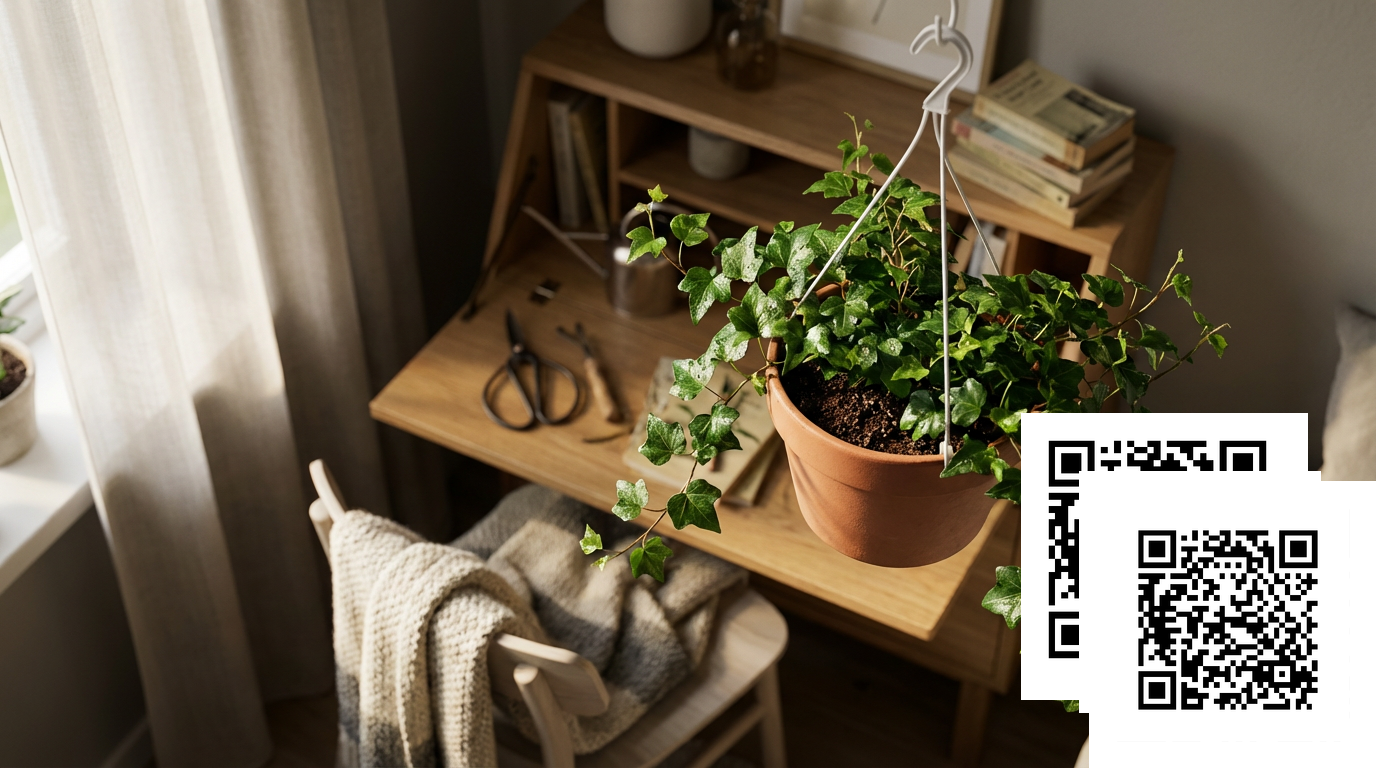
Key Takeaways
- Check soil moisture before watering — overwatering is the #1 killer of houseplants.
- Ensure your plant gets the right amount of light for its species.
- Be patient with recovery — most plants need 2–4 weeks to bounce back.
Quick Care Card
| Care Parameter | Measurable Threshold for Small Urban Apartments |
|---|---|
| Light | 8,000–15,000 lux bright indirect light, 1–2 ft from north-facing windows |
| Water | 150–200 ml when top 1.5 inches of soil is dry, every 9–12 days in climate-controlled spaces |
| Humidity | 40–50% relative humidity |
| Temperature | 60–75°F (15–24°C) |
| Soil | 2 parts standard potting mix + 1 part perlite, well-draining |
| Fertilizer | Diluted balanced liquid fertilizer once every 6 weeks in spring/summer, none in winter |
| Toxicity | Toxic to cats, dogs, and humans if ingested (ASPCA, 2026) |
Why This Guide Exists
Generic English ivy care advice rarely accounts for the unique constraints of 500-700 sq ft urban apartments: limited natural light, no-drill rental rules, and busy schedules that leave little time for frequent plant upkeep. Many generic guides claim English ivy needs full direct sun, which is almost impossible to get in city units with north-facing windows, or suggest drilling ceiling hooks for hanging, which violates most lease terms. This guide is tailored specifically for renters, with low-effort, no-permanent-modification tips perfect for English ivy care for beginners and experienced plant owners alike, focused on boosting resilience without constant maintenance.
Step 1: Space-Optimized Placement for No-Drill Renters
English ivy north facing window care is highly effective, as these windows deliver the consistent bright indirect light the plant needs without scorching leaves. Place your ivy 1-2 feet away from a north-facing window for best results (NC State Extension, 2026). For no-drill, space-saving display, use these renter-approved hacks:
- Heavy-duty adhesive ceiling hooks rated for 5+ lbs, which stick to smooth drywall and remove without residue
- Over-the-door hooks on closet or bedroom doors, so trails drape down the back of the door without taking counter or floor space
- Adhesive floating shelves mounted 1-2 feet below windows, to hold the pot and let trails hang freely Keep ivy at least 4 feet off the floor if you have pets or small children, as ingestion can cause gastrointestinal distress (ASPCA, 2026).
Step 2: Exact Light Requirements for Apartment Conditions
English ivy light requirements indoors are 8,000-15,000 lux of bright indirect light, per a 2012 HortTechnology study on indoor foliage plant light needs (Kim et al., 2012). To measure light levels easily, download a free light meter app on your phone, hold it at leaf height, and take a reading at midday on a sunny day. If your reading falls below 8,000 lux, add a cheap clip-on grow light placed 12 inches above the plant, run for 6 hours per day. Quick test: If you can read a book comfortably at the plant’s spot midday without turning on a light, it has enough bright indirect light for consistent growth.
Step 3: Precise Watering Schedule to Avoid Root Rot
If you’ve wondered how often to water English ivy in a climate-controlled apartment, follow this measurable rule: Give 150-200 ml of room-temperature water only when the top 1.5 inches of soil is completely dry, which works out to every 9-12 days for most 500-700 sq ft apartments (NC State Extension, 2026). Quick test: Stick your index finger 1.5 inches into the soil; if it feels completely dry, water, if it’s still damp, wait 2 more days and check again. Never water on a fixed calendar schedule, as humidity and temperature changes will alter how quickly soil dries out.
Step 4: Soil, Humidity, and Temperature Thresholds
- Soil: Use a mix of 2 parts standard potting mix and 1 part perlite to ensure fast drainage, which prevents root rot. Avoid heavy garden soil, which holds too much moisture for indoor ivy.
- Humidity: English ivy humidity needs are 40-50% relative humidity, which matches the standard humidity level of most climate-controlled apartments, so no fancy humidifier is required. If winter heat drops humidity below 40%, set the pot on a pebble tray filled with ¼ inch of water to boost local humidity without extra effort.
- Temperature: Keep ivy in temperatures between 60-75°F (15-24°C) to support steady growth, as sudden temperature swings can cause leaf drop (Polito et al., 1984).
Seasonal Care Calendar for Apartment Dwellers
Adjust your care routine with seasonal changes to keep your ivy resilient year-round:
- Winter (English ivy winter care indoors): Reduce watering by 50% (give 75-100 ml only when the top 2 inches of soil is dry), move the plant 3 feet away from drafty windows and heating vents, and skip fertilizer entirely.
- Summer (English ivy summer watering tips): Check soil moisture twice per week, as warmer temperatures dry soil faster, and mist leaves once weekly if humidity drops below 40%. Apply diluted balanced liquid fertilizer once every 6 weeks to support new growth.
Common Small-Apartment English Ivy Mistakes to Avoid
- Mistake: Placing ivy directly next to heating or AC vents What happens: Dry, forced air strips moisture from leaves, leading to browning edges and increased risk of spider mite infestations, which spread quickly to other plants in small spaces. Instead: Keep ivy at least 3 feet away from vents, and use a pebble tray if humidity drops below 40%.
- Mistake: Overpotting ivy in a pot more than 2 inches larger than its root ball What happens: Extra soil holds excess moisture that roots can’t absorb, leading to root rot, the top cause of yellow ivy leaves. Instead: Repot only once every 2-3 years, using a pot only 1-2 inches larger than the current one, with drainage holes.
- Mistake: Letting ivy trails drape onto dirty carpet or floors What happens: Dust and debris on trailing leaves attract aphids and spider mites, which can spread to all your houseplants in a small apartment in days. Instead: Trim trailing ends once per month, or drape trails over shelves or curtain rods to keep them off floors.
- Mistake: Drilling holes in walls or ceilings to hang ivy What happens: You will likely lose part of your security deposit, and most rental leases prohibit permanent wall modifications. Instead: Use adhesive hooks or over-the-door hangers for renter friendly English ivy care that doesn’t damage surfaces.
FAQ
FAQ 1: Can I keep my English ivy on a small apartment kitchen windowsill?
Yes, as long as the windowsill is north-facing or gets only 1-2 hours of gentle morning sun per day. Avoid south-facing kitchen windowsills, as direct midday sun will scorch ivy leaves. Keep it at least 2 feet away from the stove to avoid exposure to sudden heat and grease buildup, which clogs leaf pores. The slightly higher humidity from kitchen sinks can reduce your watering frequency by 2-3 days, which is perfect if you often forget plant care tasks.
FAQ 2: Why is my English ivy getting yellow leaves in my apartment?
The most common cause is overwatering, which occurs when you water before the top 1.5 inches of soil is dry (NC State Extension, 2026). Other causes include placement near drafty windows in winter, light levels below 8,000 lux for extended periods, or nutrient deficiency if you haven’t fertilized in over 6 months during the growing season. To fix yellow leaves, trim off damaged foliage, adjust your watering schedule, and test your light levels with a phone app to confirm you’re meeting its needs.
FAQ 3: How do I hang English ivy in my apartment without drilling holes?
There are three low-cost, renter-approved methods:
- Use heavy-duty adhesive ceiling hooks rated for up to 10 lbs, which stick to smooth drywall and remove without leaving residue
- Hang ivy from over-the-door hooks on closet or bedroom doors, so trails drape down the back of the door without taking floor or counter space
- Mount adhesive floating shelves 1-2 feet below north-facing windows, and set your ivy pot on the shelf to let trails hang down All methods require no permanent modifications and comply with most rental lease rules.
References
- NC State Extension. (2026). The Complete English Ivy — NC State Extension Gardener Plant Toolbox. https://plants.ces.ncsu.edu/plants/english-ivy/. Accessed 2026-03-02.
- Kim, J.; Kang, S.; Pak, C. (2012). Changes in Leaf Variegation and Coloration of English Ivy and Polka Dot Plant under Various Indoor Light Intensities. HortTechnology. https://doi.org/10.21273/horttech.22.1.49. Accessed 2026-03-02.
- Polito, V.; Chang, Y. (1984). Quantitative nuclear cytology of english ivy (Hedera helix L.). Plant Science Letters. https://doi.org/10.1016/s0304-4211(84)80017-6. Accessed 2026-03-02.
- ASPCA. (2026). Toxic and Non-Toxic Plants List — ASPCA. https://www.aspca.org/pet-care/animal-poison-control/toxic-and-non-toxic-plants. Accessed 2026-03-02.
Optional Helper: Plantfun.App
Plantfun.App identifies your plants by photo, diagnoses pests and diseases with clear fixes, and creates personalised watering and light schedules that adapt to your home conditions — a handy companion for putting this guide into daily practice.
Found an error or have suggestions? We'd love your feedback.
Need help identifying this problem?
Get instant identification, personalized care schedules, and effective pest treatment plans directly on your phone.
Sponsored • We may earn a commission from app downloads
Related Guides
The Complete English Ivy Care Guide for Typical Apartments: Tips for Lush, Resilient Growth
Stop struggling with brown, crispy English Ivy leaves. Get exact light levels, watering amounts, and apartment-specific care hacks that encourage lush, resilient growth year-round.
Care GuideThe Complete English Ivy Care Checklist for Small Urban Apartments: No Fancy Tools Required
Grow lush, non-yellowing English Ivy in your apartment without spending extra on fancy gear. Get our free 12-point care checklist with exact light, water, and soil parameters you can implement today.
Care GuideThe Complete English Ivy Care Checklist for Resilient Growth in Typical Apartments
Grow lush, non-leggy English ivy in your apartment without pricey tools. Get exact watering amounts, light levels, and free hacks for resilient, fast growth all year.
Pest ControlAnts on Plants: What They Mean and What to Do
Ants usually aren't eating your plant. They are farming other pests.