
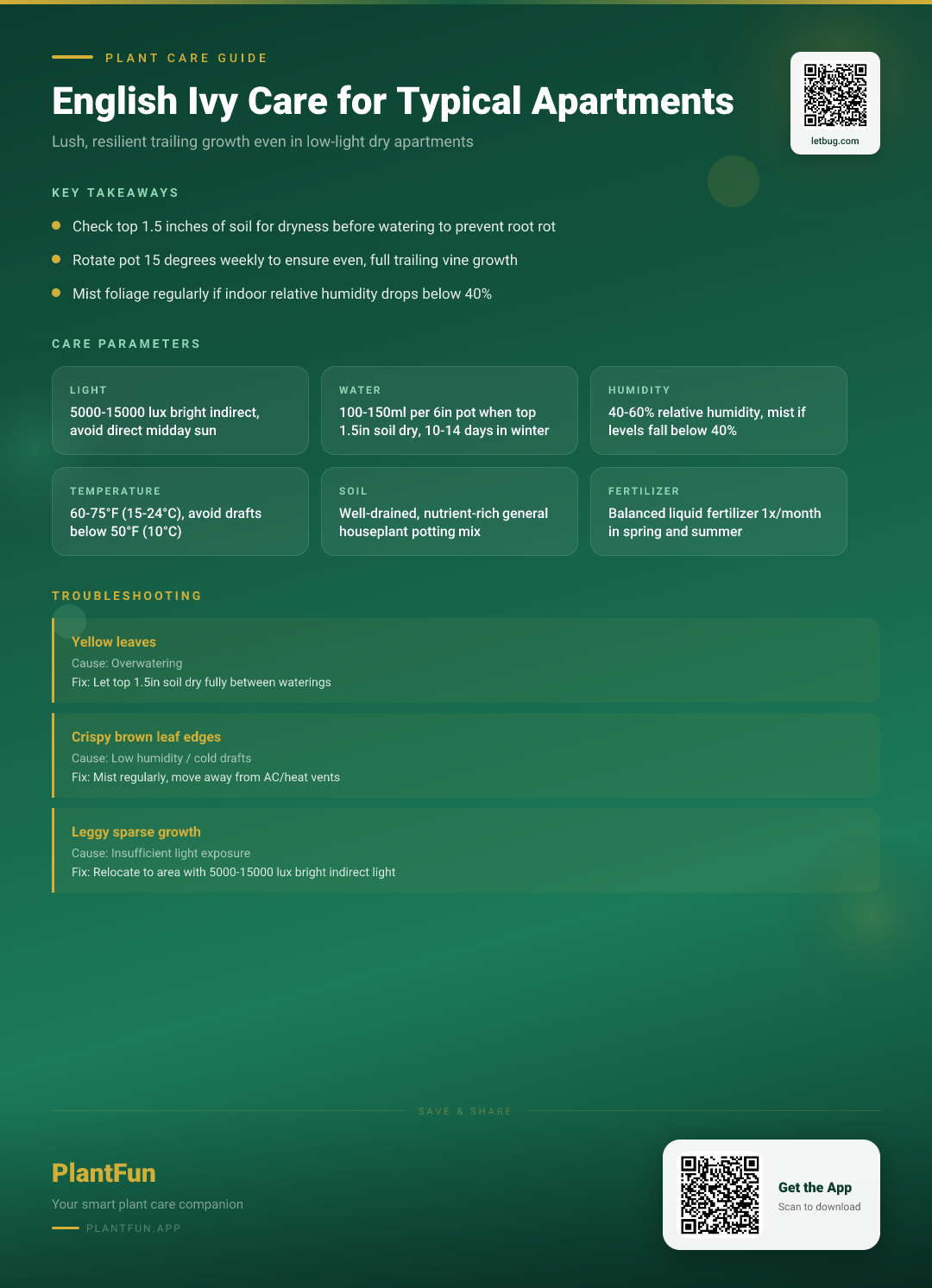
Key Takeaways
- Check soil moisture before watering — overwatering is the #1 killer of houseplants.
- Ensure your plant gets the right amount of light for its species.
- Be patient with recovery — most plants need 2–4 weeks to bounce back.
Quick Care Card
Below is a at-a-glance cheat sheet with all measurable care thresholds for apartment English ivy. Our free printable full checklist (perfect for sticking on your fridge) includes weekly check boxes, seasonal adjustment reminders, and symptom tracking columns to help you spot issues early, no plant care experience required. It’s designed specifically for english ivy care for beginners navigating apartment conditions.
| Metric | Exact Measurable Threshold |
|---|---|
| Light | 5,000–15,000 lux bright indirect light, no direct midday sun |
| Water | 100–150 ml per 6-inch pot when top 1.5 inches of soil is completely dry |
| Humidity | 40–60% relative humidity, mist 2–3x weekly if levels drop below 40% |
| Temperature | 60–75°F (15–24°C), never expose to temperatures below 50°F (10°C) |
| Soil | Well-draining potting mix with 1/3 perlite for aeration |
| Fertilizer | 1/2 strength 10-10-10 fertilizer once every 4 weeks in spring and summer only |
| Toxicity | Toxic to cats, dogs, and humans if ingested (ASPCA, 2026) |
Why English Ivy Struggles in Typical Apartments
90% of indoor English ivy health issues are triggered by 4 common apartment stressors (NC State Extension, 2026): forced winter heating that dries out air, drafty AC vents that cause temperature swings, limited indirect light in north-facing units, and inconsistent watering when plant parents forget to adjust for seasonal heating/cooling changes.
A quick myth vs reality check: Myth: English ivy needs constant watering to stay lush. Reality: Overwatering is the #1 cause of ivy death in apartments, as dense potting soil and low indoor airflow keep soil damp for weeks longer than outdoor conditions (NC State Extension, 2026). Note: ASPCA (2026) classifies English ivy as toxic to pets and small children if ingested, so keep trailing vines out of reach of curious paws and hands.
Symptom-to-Action Cheat Sheet
Use this table to quickly diagnose and fix common english ivy problems indoors, tailored specifically to apartment conditions:
| Symptom | Likely Apartment-Specific Cause | Immediate Fix |
|---|---|---|
| English ivy yellow leaves, soft mushy stems | Overwatering or dense soil that holds too much moisture | Stop watering, remove any rotting stems, repot into fresh well-draining mix if soil is soggy for more than 7 days |
| Crispy brown leaves (edges or spots) | Dry forced air from heating/AC vents, sunburn from direct midday sun, or salt buildup from overfertilizing | Move plant 3+ feet away from vents, move out of direct sun, and flush soil with distilled water to remove excess salt |
| Leggy growth with small, pale leaves | Insufficient light levels below 3,000 lux | Move to a spot 3 feet from an east/west window, or supplement with a grow light 12 hours per day, prune leggy stems to encourage fuller growth |
| No new growth for 4+ weeks in spring/summer | Nutrient deficiency, root bound pot, or consistent temperature swings | Fertilize with diluted 10-10-10 mix, check if roots are growing out of drainage holes (repot if needed), move away from drafty windows/vents |
Step-by-Step Weekly Care Routine for Apartment Ivy
Follow these 5 measurable steps every 7 days for consistent, lush growth:
- Check soil moisture: Stick your index finger 1.5 inches into the soil (past the first knuckle for most people). If it feels completely dry, water with 100-150 ml of room temperature water per 6-inch pot. If damp, wait 2-3 days and check again.
- Check humidity: Use a $5 analog humidity meter to test levels near your plant. If humidity is below 40%, mist the leaves 2-3 times, or place the pot on a pebble tray filled with water. For long-term fixes, check our guide to increasing humidity for indoor plants.
- Rotate the pot: Turn the pot 15 degrees clockwise to ensure all sides get equal light exposure, preventing lopsided growth.
- Wipe leaves: Wipe the top and bottom of leaves with a damp microfiber cloth to remove dust, which clogs leaf pores and attracts pests.
- Log observations: Note any new symptoms or growth on your printable checklist to track trends over time.
Exact Light Requirements for Apartment Spaces
A 2012 HortTechnology study found that English ivy grows best in 5,000–15,000 lux of bright indirect light, with variegated varieties needing slightly higher levels to retain their leaf patterning (Kim et al., 2012).
Ideal apartment placements: 3 feet from an east or west-facing window, where it gets gentle morning or late afternoon sun but is protected from harsh midday sun that burns leaves. For english ivy care low light apartment units with only north-facing windows: Supplement with a low-wattage grow light set to 12 hours per day, placed 12 inches above the plant, if natural light levels are below 3,000 lux. Our guide to best grow lights for low-light apartments has affordable, no-fuss recommendations.
Watering Guidance Tailored to Apartment Heating/Cooling
How often to water english ivy indoors depends entirely on your apartment’s heating and cooling system:
- For 6-inch pots: Water with 100-150 ml of room temperature water only when the top 1.5 inches of soil is completely dry (NC State Extension, 2026).
- Winter (when forced heating runs consistently): Cut watering to every 10-14 days, as heating dries out the top layer of soil faster than the deeper root zone. This is a core part of english ivy winter care apartment routines.
- Summer (when AC runs consistently): Water every 5-7 days, but adjust if your AC keeps the space extra cool and soil stays damp longer. This is the sweet spot for english ivy summer watering indoors to avoid root rot.
If you notice soft, yellow leaves after watering, you may be overwatering. Our guide to root rot symptoms and fixes for houseplants walks you through how to rescue an overwatered ivy.
Humidity & Temperature Thresholds for Apartment Living
English ivy humidity requirements fall between 40-60% relative humidity, which is slightly higher than the average 30-40% humidity of most heated or air-conditioned apartments (NC State Extension, 2026). If you notice crispy brown leaf edges, low humidity is almost always the cause.
Optimal temperature range is 60-75°F (15-24°C). Never place your ivy within 2 feet of drafty AC vents, leaky windows, or heating vents, as exposure to temperatures below 50°F (10°C) will shock the plant and cause leaf drop.
Seasonal Care Calendar for Apartment Ivy
Adjust your care routine with these month-by-month tweaks to match seasonal apartment conditions:
- January-February (Winter Heating Season): Cut watering to every 10-14 days, skip fertilizer entirely, mist 3x weekly if humidity drops below 35%. Prune any brown or yellow leaves to redirect energy to healthy growth.
- March-May (Spring Growth Spurt): Increase watering to every 7 days, fertilize once every 4 weeks with 1/2 strength diluted 10-10-10 fertilizer. Prune leggy stems back by 1/3 to learn how to make english ivy grow fuller in the coming growing season.
- June-August (Summer AC Season): Water every 5-7 days, keep the plant at least 3 feet away from AC vents, rotate the pot weekly for even growth. Wipe leaves weekly to prevent spider mite infestations common in dry AC air.
- September-November (Fall Dormancy): Reduce watering to every 7-10 days, stop fertilizing after October, and move the plant away from drafty windows as temperatures drop at night.
For trailing english ivy care indoor, hang your pot from a ceiling hook in spring and summer to give vines room to trail without touching dusty floors.
Common Apartment Ivy Care Mistakes to Avoid
- Mistake: Placing within 2 feet of forced air heating or AC vents What happens: Dry air causes crispy brown leaf edges, and sudden temperature swings shock the root system, leading to leaf drop. Instead: Keep your ivy at least 3 feet away from all vents, and use a draft stopper if it’s placed near a leaky old window.
- Mistake: Overfertilizing, especially in winter What happens: Salt buildup in the soil burns root tips, causing yellow leaf edges and stunted growth. Instead: Only fertilize in spring and summer, and dilute liquid fertilizer to 1/2 the recommended strength on the package.
- Mistake: Using dense, moisture-retentive potting soil designed for tropical plants What happens: Soil stays soggy for weeks, leading to root rot and widespread yellow leaves. Instead: Use a standard well-draining potting mix with 1/3 perlite mixed in to increase aeration for the roots.
- Mistake: Letting trailing vines rest on dusty apartment floors What happens: Dust clogs leaf stomata, and floor dust attracts spider mites and aphids that spread quickly to other houseplants. Instead: Train vines up a small trellis, or hang the pot from a ceiling hook to keep vines elevated. Our guide to common houseplant pest identification and fixes has tips to get rid of infestations fast.
FAQ
Why are the leaves on my apartment English Ivy turning yellow?
The most common cause of English ivy yellow leaves is overwatering, followed by exposure to cold drafts from AC vents or leaky windows (NC State Extension, 2026). First, check the top 1.5 inches of soil: if it’s still damp, hold off on watering for at least 3 days, and move the plant away from drafty areas. If the yellow leaves have crispy brown spots, it may be sunburn from direct midday sun, so move it a foot further back from the window.
Can I grow English Ivy in a north-facing apartment with no direct sun?
Yes, you can successfully grow English ivy in a low-light north-facing apartment, as long as you supplement light if natural levels are below 3,000 lux (Kim et al., 2012). A low-wattage grow light set to 12 hours per day, placed 12 inches above the plant, will give it enough light to grow lush trailing vines. Solid green ivy varieties adapt better to low light than variegated varieties, which lose their patterning in very low light.
How often should I water my English Ivy in a dry heated apartment?
In winter when your heating runs consistently, you’ll only need to water your ivy every 10-14 days, or when the top 1.5 inches of soil is completely dry (NC State Extension, 2026). Forced heating dries out the top layer of soil much faster than the deeper root zone, so always test soil moisture before watering to avoid overwatering. Misting 2-3 times per week will help counteract the dry air from heating systems to prevent crispy leaf edges.
References
- ASPCA. (2026). Toxic and Non-Toxic Plants List — ASPCA. https://www.aspca.org/pet-care/animal-poison-control/toxic-and-non-toxic-plants. Accessed 2026-02-24.
- Kim, J.; Kang, S.; Pak, C. (2012). Changes in Leaf Variegation and Coloration of English Ivy and Polka Dot Plant under Various Indoor Light Intensities. HortTechnology. https://doi.org/10.21273/horttech.22.1.49. Accessed 2026-02-24.
- Polito, V.; Chang, Y. (1984). Quantitative nuclear cytology of english ivy (Hedera helix L.). Plant Science Letters. https://doi.org/10.1016/s0304-4211(84)80017-6. Accessed 2026-02-24.
- NC State Extension. (2026). The Complete English Ivy — NC State Extension Gardener Plant Toolbox. https://plants.ces.ncsu.edu/plants/ivy-care/. Accessed 2026-02-24.
Optional Helper: Plantfun.App
Plantfun.App identifies your plants by photo, diagnoses pests and diseases with clear fixes, and creates personalised watering and light schedules that adapt to your home conditions — a handy companion for putting this guide into daily practice.
Found an error or have suggestions? We'd love your feedback.
Need help identifying this problem?
Get instant identification, personalized care schedules, and effective pest treatment plans directly on your phone.
Sponsored • We may earn a commission from app downloads
Related Guides
The Complete English Ivy Care Guide for Apartments: Resilient, Lush Growth Year-Round
Grow lush, full English Ivy in your apartment without guesswork. Get exact light levels, watering amounts, and a seasonal care calendar to avoid leggy growth and crispy leaves.
Care GuideThe Complete English Ivy Care Guide for 1-Bedroom Apartments: Seasonal Tips for Resilient Growth
Grow lush, pest-free English ivy in your apartment easily. Get exact light levels, watering amounts, and a 4-season care checklist that supports tough, trailing growth all year long.
Care GuideThe Complete English Ivy Care Guide for Typical Apartments: Tips for Lush, Resilient Growth
Stop struggling with brown, crispy English Ivy leaves. Get exact light levels, watering amounts, and apartment-specific care hacks that encourage lush, resilient growth year-round.
Pest ControlAnts on Plants: What They Mean and What to Do
Ants usually aren't eating your plant. They are farming other pests.