
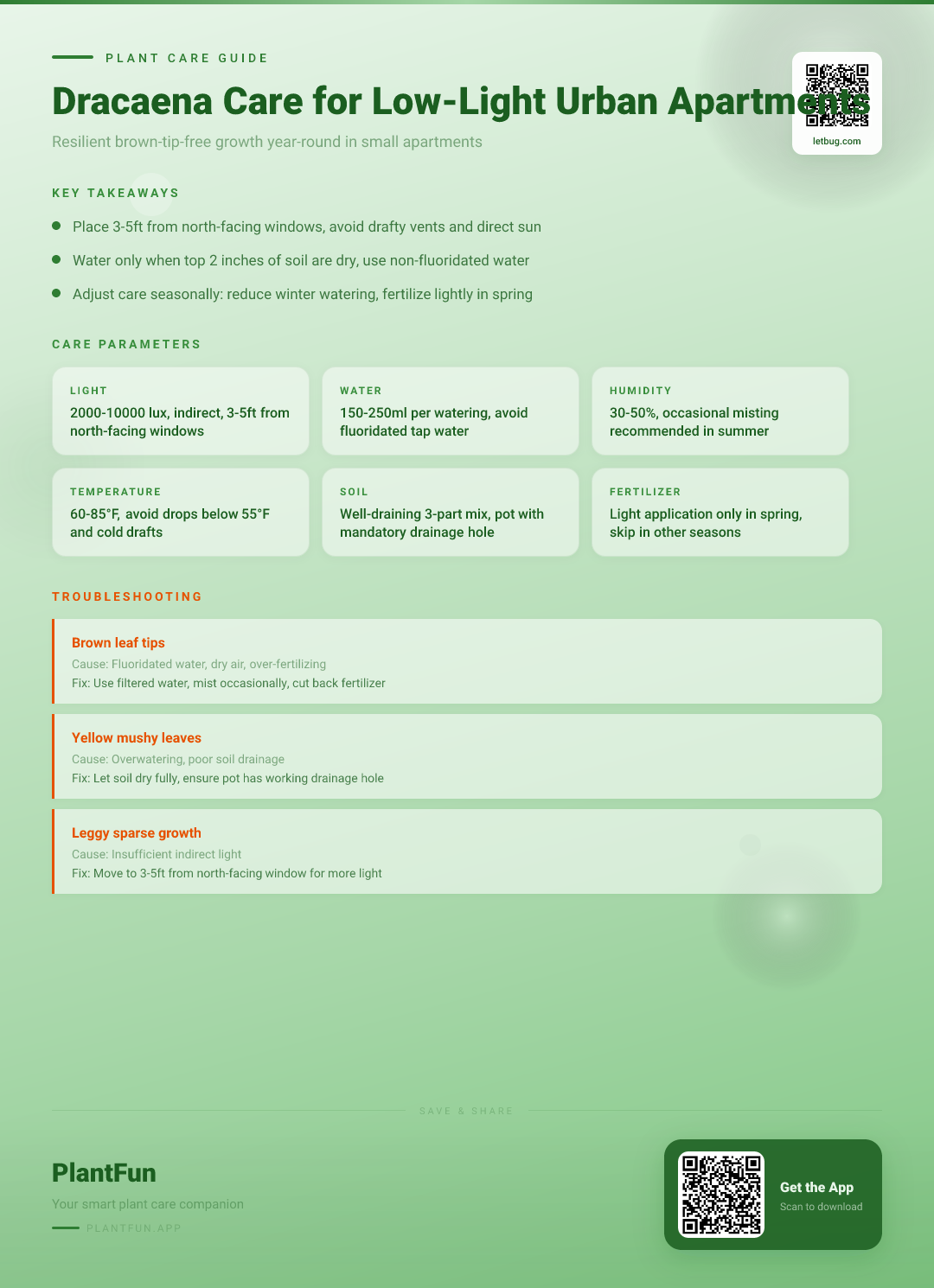
Key Takeaways
- Check soil moisture before watering — overwatering is the #1 killer of houseplants.
- Ensure your plant gets the right amount of light for its species.
- Be patient with recovery — most plants need 2–4 weeks to bounce back.
Quick Care Card
| Care Factor | 1-Sentence Rule | Measurable Threshold |
|---|---|---|
| Light | Place in bright indirect low light, no direct midday sun | 2,000–10,000 lux (NC State Extension, 2026) |
| Water | Only water when the top layer of soil is fully dry | Top 2 inches of soil completely dry before watering |
| Humidity | Tolerates dry apartment air, but occasional misting prevents brown tips | 30–50% relative humidity |
| Temperature | Keep in stable room temperature, avoid extreme drafts | 55–80°F (13–27°C) (Gilman, 2007) |
| Soil | Use a fast-draining mix to prevent root rot | 1:1:1 ratio of potting soil, perlite, orchid bark |
| Fertilizer | Only feed lightly during active growing seasons | 1/4 strength balanced fertilizer every 6 weeks in spring/summer |
| Toxicity | Keep out of reach of pets and small children | Toxic to cats and dogs (ASPCA, 2026) |
Why This Guide Is Different From Generic Dracaena Care Tips
Most generic Dracaena care guides are written for ideal home conditions, not the fluctuating environment of small urban apartments: low north-facing light, dry forced air from winter heating and summer AC, and limited space for large pots or grow lights. We’ve tailored every recommendation to these unique constraints, so you don’t need fancy equipment to keep your plant healthy.
Myth vs Reality: Contrary to popular advice, you don’t need grow lights for Dracaena care in apartments. NC State Extension (2026) confirms Dracaena low light tolerance is among the highest of common houseplants, and it will thrive in north-facing rooms if placed correctly. If you’re searching for other hardy options for your space, check our roundup of the best low-light apartment plants.
Step 1: Correct Placement For Steady Growth
Dracaena apartment care starts with the right spot, which directly impacts growth rate and leaf health:
- Light requirement: Aim for 2,000–10,000 lux of bright indirect light (Gilman, 2007). Quick test: Hold your hand at the planned spot at noon on a sunny day. If you see a faint, blurry shadow, the light is perfect. If you see a sharp, dark shadow, it’s too bright; if no shadow at all, it’s too dark.
- Ideal spots: 3–5ft from north-facing windows, which gives consistent low light without scorching direct sun. If you’re wondering can Dracaena grow in north facing rooms, the answer is yes, as long as it’s within this 3–5ft range.
- Spots to avoid: Within 3ft of heating vents, AC units, or drafty window sills, which cause sudden temperature swings.
Step 2: Watering Routine With Exact Volume Guidelines
One of the most common questions we get is how often to water Dracaena — and the answer depends on the season, not a fixed weekly schedule:
- Always test soil moisture first: Stick your index finger 2 inches deep into the soil. Only water if the soil is completely dry, no dampness at all.
- Use exact volumes based on pot size and season: For a standard 6-inch pot, use 150ml of water per watering in fall/winter, and 250ml per watering in spring/summer.
- Avoid fluoridated tap water: Fluoride and chlorine in tap water are a top cause of Dracaena brown tips (Šrámek, 1999). If you only have tap water, let it sit in an open container for 24 hours to let chemicals off-gas before using. For more tips, read our guide to safe tap water for houseplants.
If you notice yellow foliage, overwatering is the most likely answer to why is my Dracaena turning yellow. Cut back on watering immediately and check for soggy soil.
Step 3: Soil & Potting Requirements For Drainage
The best soil for Dracaena supports healthy roots while preventing excess moisture buildup, which is critical for small apartment spaces where overwatering accidents are common:
- Ideal soil mix: 1 part general potting soil, 1 part perlite, 1 part orchid bark (NC State Extension, 2026). This mix drains fast while retaining just enough moisture for root health.
- Pot size rules: Only use a pot that is 1–2 inches larger than the plant’s root ball. Oversized pots hold excess moisture that leads to root rot, even if you water correctly.
- Drainage requirement: All pots must have at least one ½-inch drainage hole. If you use a decorative cache pot, empty any excess water that collects in the bottom 10 minutes after watering. For more tips, check our root rot prevention guide.
4-Season Dracaena Care Calendar
Adjust your routine to match the fluctuating conditions in your apartment throughout the year:
- Winter (December–February): Dracaena winter care – Reduce watering to every 3–4 weeks, as growth slows in low light. Keep plants away from cold window sills where temperatures drop below 55°F (13°C) (Gilman, 2007). Dracaena dry air tolerance is high, but avoid placing directly next to heating vents.
- Spring (March–May): Start light fertilizing once every 6 weeks with 1/4 strength balanced liquid fertilizer to support new growth. This is the best answer to how to make Dracaena grow faster in low-light apartments.
- Summer (June–August): Dracaena summer watering – Water every 1–2 weeks when the top 2 inches of soil are dry. Mist leaves once a week to keep humidity around 40% and prevent brown tips. Keep away from AC vents that blow cold, dry air.
- Fall (September–November): Learn how to prune leggy Dracaena: Cut the top 1/3 of overstretched stems at a 45° angle with clean, sharp scissors. New growth will sprout from the cut site within 4–6 weeks. Gradually reduce watering as temperatures drop and light levels decrease.
Common Mistakes That Cause Brown Tips & Leggy Growth
Avoid these 5 common errors, with 24-hour quick fixes for existing issues:
- Mistake: Overwatering on a fixed schedule without testing soil moisture What happens: Yellow leaves, mushy stems, root rot, and leaf drop Instead: Only water when the top 2 inches of soil are fully dry, using the exact volume guidelines above. Quick fix: If soil is soggy, repot into fresh, dry soil immediately and skip watering for 2 weeks.
- Mistake: Placing in direct midday sun to boost growth What happens: Scorched brown spots on leaves, bleached pale foliage Instead: Keep 3–5ft from north-facing windows, or use a sheer curtain to filter light if you have south or west exposure. Quick fix: Trim burned leaves with clean scissors and relocate the plant to a lower-light spot within 24 hours.
- Mistake: Using straight fluoridated tap water for watering What happens: Crispy brown leaf tips, yellow leaf edges Instead: Use rainwater, distilled water, or tap water that has sat out for 24 hours. Quick fix: Flush the soil with 3x the pot volume of filtered water to leach excess fluoride, then trim brown tips.
- Mistake: Placing near drafty vents or window sills What happens: Sudden leaf drop, leggy stretched growth, brown leaf edges Instead: Keep at least 3ft away from all heating, AC, and drafty window openings. Quick fix: Move to a stable temperature spot and remove any damaged leaves to reduce stress on the plant.
- Mistake: Fertilizing year-round or at full strength What happens: Salt buildup in soil, brown tips, stunted growth Instead: Only fertilize in spring and summer at 1/4 strength, no feeding in fall or winter. Quick fix: Flush soil with filtered water to remove salt buildup, then skip fertilizing for 3 months.
FAQ
How do I know if my Dracaena is getting enough light in my north-facing apartment?
If your plant produces 2–3 new leaves during the spring and summer growing season, has rich dark green foliage, and no stretched gaps between leaf nodes (the spots where leaves attach to the stem), it’s getting enough light. If you see leggy growth, move the plant 1ft closer to the window to increase light exposure. Gilman (2007) confirms Dracaena grows well in north-facing light as long as it’s not placed too far from the window.
Can I keep my Dracaena next to my apartment heating vent in winter?
No. Dry forced air from heating vents pulls moisture from Dracaena leaves rapidly, leading to widespread brown tips and unexpected leaf drop (NC State Extension, 2026). If you have no other space for the plant, place a shallow tray of pebbles and water next to it to add local humidity, and mist the leaves twice a week.
How often should I fertilize my Dracaena if it’s in low light?
Only once every 6 weeks during the spring and summer growing season, using 1/4 strength balanced liquid fertilizer. Never fertilize in fall or winter, as the plant is dormant and won’t absorb excess nutrients, which leads to harmful salt buildup in the soil. If you notice leggy growth from low light, reference our guide to pruning houseplants for beginners to reshape your plant.
Printable Apartment Dracaena Care Checklist
Our free 1-page downloadable Dracaena care checklist is designed to tape to your fridge for quick, no-guesswork reference. It includes:
- Weekly tasks: Test soil moisture 2 inches deep, inspect leaves for brown tips or signs of pests
- Monthly tasks: Wipe leaves with a damp cloth to remove dust, check that the plant is not near drafty vents
- Seasonal tasks: Winter (check window sill temperatures, reduce watering), Spring (light fertilizing), Summer (weekly misting), Fall (prune leggy growth, repot if root bound)
References
- NC State Extension. (2026). The Complete Dracaena Care — NC State Extension Gardener Plant Toolbox. https://plants.ces.ncsu.edu/plants/dracaena-care/. Accessed 2026-02-27.
- Gilman, E. (2007). Dracaena fragrans ‘Massangeana’ Corn Plant, Fragrant Dracaena. EDIS. https://doi.org/10.32473/edis-fp184-1999. Accessed 2026-02-27.
- Šrámek, F. (1999). Vaughan, M.J.: The Complete Book on Cut Flower Care. Biologia plantarum. https://doi.org/10.1023/a:1001770114931. Accessed 2026-02-27.
- ASPCA. (2026). Toxic and Non-Toxic Plants List — ASPCA. https://www.aspca.org/pet-care/animal-poison-control/toxic-and-non-toxic-plants. Accessed 2026-02-27.
Optional Helper: Plantfun.App
Plantfun.App identifies your plants by photo, diagnoses pests and diseases with clear fixes, and creates personalised watering and light schedules that adapt to your home conditions — a handy companion for putting this guide into daily practice.
Found an error or have suggestions? We'd love your feedback.
Need help identifying this problem?
Get instant identification, personalized care schedules, and effective pest treatment plans directly on your phone.
Sponsored • We may earn a commission from app downloads
Related Guides
The Complete Dracaena Care Checklist for Resilient Growth in Typical Low-Light Apartments
Grow a lush, low-fuss Dracaena even in your dark, dry apartment. Get exact light, water, and humidity thresholds plus a seasonal checklist to keep leaves vibrant and growth steady all year.
Care GuideThe Budget-Friendly Dracaena Care Checklist for Resilient Growth in Small East-Facing Apartments
Skip overpriced plant supplies and get your dracaena thriving in your small east-facing apartment. Follow this free, science-backed checklist for lush, resilient growth with minimal effort.
ToolThe Complete Dracaena Care Checklist for East-Facing Apartments: Seasonal Tips for Resilient Growth
Keep your Dracaena thriving in small east-facing apartments with this science-backed seasonal checklist, complete with exact light, water, and humidity thresholds for year-round resilient growth, no fancy equipment required.
Care GuideThe Complete Dracaena Care Checklist for Resilient Growth in Typical Budget Apartments
Get a free printable Dracaena care checklist with exact light, water, and soil parameters to keep your plant thriving in a typical apartment without spending extra on fancy care supplies.