
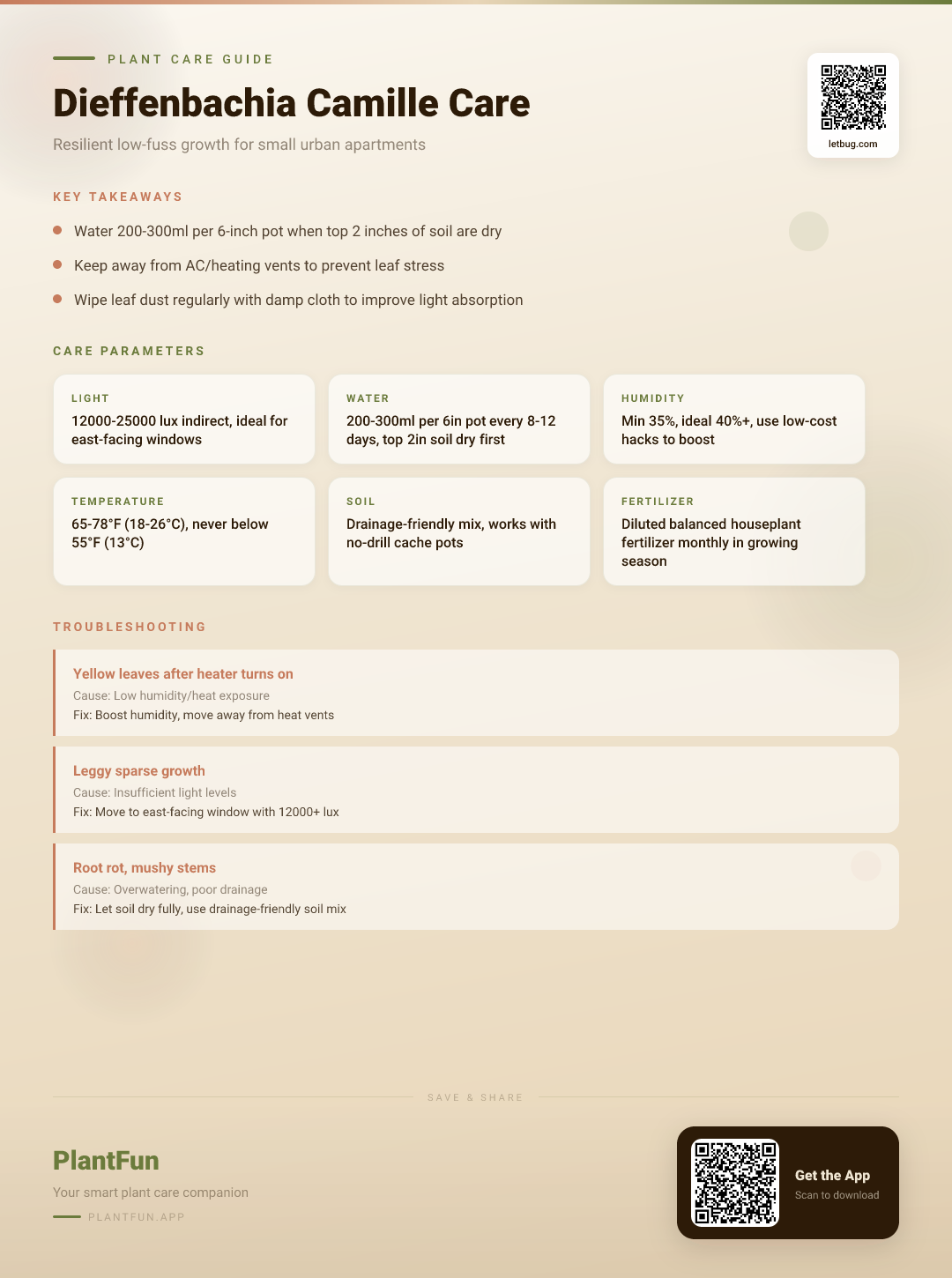
Key Takeaways
- Check soil moisture before watering — overwatering is the #1 killer of houseplants.
- Ensure your plant gets the right amount of light for its species.
- Be patient with recovery — most plants need 2–4 weeks to bounce back.
Quick Care Card
Print this at-a-glance cheat sheet for easy reference, tailored to standard 1-bed urban apartment conditions:
| Parameter | Exact Apartment-Specific Recommendation |
|---|---|
| Light | 12,000–25,000 lux (1–3ft from an east-facing window; avoids direct midday sun) |
| Water | 200–300ml per 6-inch pot when the top 2 inches of soil are completely dry (every 8–12 days for 40% RH apartments) |
| Humidity | 35–60% (minimum 35% required to avoid leaf damage) |
| Temperature | 65–78°F (18–26°C) year-round; never expose to temperatures below 55°F (13°C) |
| Soil | 60% general potting mix + 30% perlite + 10% orchid bark for fast drainage |
| Fertilizer | ½ strength balanced liquid fertilizer, once monthly only in spring and summer |
| Toxicity | Toxic to cats, dogs, and humans if ingested (ASPCA, 2026) |
Why This Guide Is Built For Renters
Generic Dieffenbachia care guides typically assume access to ideal lighting, adjustable humidity, and permission to modify pots, which doesn’t match the reality of small urban apartment living. This guide is built specifically for the most common rental stressors: dry winter heating that drops humidity to 25% or lower, limited natural light (most 1-bed apartments only have east or north-facing windows), lease rules that ban drilling drain holes, and tight space constraints.
Myth vs Reality: You don’t need a humidifier or grow lights to grow a healthy Dieffenbachia Camille. 90% of common issues like Dieffenbachia yellow leaves or stunted growth can be fixed with no-cost, lease-friendly tweaks (NC State Extension, 2026). This guide is perfect for Dieffenbachia care for beginners, with no specialized equipment required.
5-Step 2-Minute Weekly Care Checklist
Complete these quick checks every week to spot stress before it escalates, using only household items:
- Finger test: Stick your index finger 2 inches into the soil. If it is completely dry, it is time to water (answers how often to water Dieffenbachia without fancy moisture meters).
- Leaf scan: Run your fingers over the top and bottom of 3–4 large leaves to check for dust, yellow spots, or fine webbing from pests.
- Stem firmness check: Gently tug the base of the largest stem to confirm it is firm; soft, bendable stems are an early sign of stress.
- Placement check: Ensure the plant is not within 1ft of AC, heating vents, or drafty window sills.
- Quick wipe down: Use a damp paper towel to wipe any visible dust off leaves to improve light absorption.
Light Requirements for East-Facing Apartment Windows
Dieffenbachia light requirements indoors fall between 12,000–25,000 lux for optimal growth (Conover et al, 1994). For east-facing windows, place your plant 1–3ft back from the glass: this gives it access to 2–3 hours of gentle morning sun, followed by bright indirect light for the rest of the day, which avoids leaf scorch.
If you only have north-facing light access: Dieffenbachia low light tolerance means it can survive at 8,000–12,000 lux, but growth will be significantly slower. Adjust your watering schedule by 20% (wait 2–3 extra days between waterings) to avoid root rot from reduced transpiration. For entryways with less than 8,000 lux, consider pairing it with other best low light houseplants for apartments that can handle even darker conditions.
Exact Watering Guidance for 40% Average Apartment Humidity
Overwatering is the top cause of Dieffenbachia death in apartments, so we’ve tailored these guidelines to the standard 40% baseline humidity of most urban 1-bed units:
- For a 6-inch nursery pot, add 200–300ml of room temperature water when the top 2 inches of soil are completely dry, which typically works out to every 8–12 days (Ajay et al, 2024).
- Dieffenbachia summer watering adjustment: If temperatures stay above 75°F (24°C) for 3+ days, shorten the interval to every 7–10 days, as soil will dry faster.
- Winter adjustment: When heating is running, extend the interval to every 12–16 days, as dry heating air slows soil evaporation.
If you notice mushy stems or foul-smelling soil, you may have root rot. Follow our step-by-step Dieffenbachia root rot fix guide to rescue your plant before damage is permanent.
Renter-Friendly Soil & Pot Setup
Lease rules banning drilling drain holes don’t mean you have to risk root rot. Use this no-modification cache pot setup:
- Line the bottom of your decorative rental-friendly pot with 1 inch of lava rock or pebbles to create a drainage reservoir.
- Keep your Dieffenbachia in its original plastic nursery pot (with pre-drilled holes) and set it inside the decorative pot.
- Empty any standing water from the decorative pot 30 minutes after watering to ensure roots never sit in saturated moisture.
The recommended 60/30/10 soil mix (potting mix, perlite, orchid bark) reduces excess nutrient buildup and improves drainage, per research on Dieffenbachia Camille growth (Conover et al, 1994).
Temperature & Humidity Adjustments
Dieffenbachia Camille thrives in standard apartment temperatures of 65–78°F (18–26°C), and will suffer permanent damage if exposed to temperatures below 55°F (13°C) (NC State Extension, 2026).
Dieffenbachia humidity requirements are a minimum of 35% RH, which is often below the level of apartments with forced air heating in winter. Use these no-cost hacks to boost local humidity without a humidifier:
- Group your Dieffenbachia with 2–3 other houseplants to raise local humidity by 5–10% via shared transpiration.
- Set your cache pot on a DIY pebble tray filled with water, ensuring the nursery pot never sits directly in the water.
- Hang a damp dish towel near the plant on extra dry winter days.
Seasonal Care Calendar
Adjust your care routine with these simple seasonal tweaks to support consistent growth year-round:
- Spring (March–May): Apply ½ strength balanced liquid fertilizer once monthly, and increase watering frequency by 10% as new growth emerges. This is the best period for how to make Dieffenbachia grow faster, as the plant enters its active growing phase.
- Summer (June–August): Move the plant 6 inches further back from east-facing windows if you notice brown scorch marks on leaves, and adjust Dieffenbachia summer watering to every 7–10 days as temperatures rise.
- Fall (September–November): Stop fertilizing entirely, and reduce watering frequency as growth slows and days get shorter.
- Winter (December–February): Dieffenbachia winter care requires keeping the plant at least 3ft away from heating vents, wiping leaves weekly to remove dust from dry heating air, and reducing watering to every 12–16 days. For more seasonal tips, see our complete winter houseplant care guide for apartments.
4 Most Common Apartment Dieffenbachia Mistakes to Avoid
These missteps cause 90% of Dieffenbachia health issues for apartment renters:
- Mistake: Placing your Dieffenbachia within 1ft of AC or heating vents. What happens: Rapid moisture loss from leaves leads to brown tips, Dieffenbachia yellow leaves, and drooping. Instead: Keep plants at least 2ft away from vents, and rotate weekly to ensure even growth.
- Mistake: Watering on a fixed schedule instead of testing soil moisture. What happens: Overwatering leads to root rot, the top cause of Dieffenbachia death in apartments. Instead: Use the 2-inch finger test every week, only water when the soil is completely dry.
- Mistake: Ignoring dust buildup on large Dieffenbachia leaves. What happens: Dust blocks light absorption, leading to stunted growth even if you have perfect light placement. Instead: Wipe leaves with a damp paper towel once weekly during your routine check.
- Mistake: Drilling drain holes in your rental’s decorative pots. What happens: You risk losing your security deposit, and poorly drilled holes can lead to water damage on floors. Instead: Use the cache pot setup outlined earlier for drainage without modifications.
FAQ
Why is my Dieffenbachia getting yellow leaves after I turned my apartment heater on?
When you turn on forced air heating, apartment humidity can drop to 25–30% overnight, below the 35% minimum Dieffenbachia humidity requirement (NC State Extension, 2026). The dry air pulls moisture from leaf tissue faster than roots can replace it, leading to yellow lower leaves. Fix this by using a pebble tray under the pot or grouping with other plants to raise local humidity, and reduce watering frequency by 20% since dry air slows soil evaporation.
Can I keep my Dieffenbachia in my apartment’s dark entryway?
Dieffenbachia low light tolerance is higher than many tropical plants, but entryways with less than 8,000 lux (no natural light, only overhead artificial light for less than 8 hours a day) will lead to stunted growth, leggy stems, and increased risk of root rot. If your entryway gets at least 2 hours of indirect natural light a day, you can keep it there, but reduce watering by 30% to compensate for slower growth. Note that Dieffenbachia is toxic to pets and children if ingested, so keep it out of reach of small kids and pets (ASPCA, 2026).
How often do I need to repot my Dieffenbachia in a small apartment?
Dieffenbachia Camille grows slowly indoors, so you only need to repot every 2–3 years, or when you see roots growing out of the top of the soil or through the nursery pot drainage holes (Ajay et al, 2024). For small apartments, you can keep it in a 6–8 inch pot indefinitely by trimming 1/3 of the root ball and refreshing the soil every 3 years to avoid needing a larger pot that takes up valuable space.
1-Minute Troubleshooting Reference
Use this fast diagnosis guide for the most common Dieffenbachia issues:
Drooping Stems
Symptom: Soft, bending stems and wilted leaves that do not perk up 24 hours after watering.
Likely cause: Overwatering leading to early root rot, or placement near a drafty vent.
Fix:
- Test soil moisture: if the top 2 inches are wet, stop watering and let the soil dry completely for 7–10 days.
- Move the plant at least 2ft away from AC, heating, or drafty windows.
Brown Leaf Tips
Symptom: Crispy, light brown tips on the edges of mature leaves, no yellowing on the rest of the leaf surface.
Likely cause: Humidity below 35% or excess fertilizer salt buildup in soil.
Fix:
- Use a pebble tray or group with other plants to raise local humidity by 5–10%.
- Flush soil with 1 liter of distilled water every 3 months to remove accumulated fertilizer salts.
Yellow Spots on Leaves
Symptom: Irregular yellow or brown spots on the top of leaves, often with a crispy, dry edge.
Likely cause: Direct midday sun scorch, or spider mite infestation.
Fix:
- Move the plant 6 inches further from the window to avoid direct sun exposure.
- Wipe leaves with diluted neem oil if you see fine webbing on the undersides of leaves.
Stunted Growth
Symptom: No new leaf growth for 3+ months, small new leaves that are pale green in color.
Likely cause: Insufficient light, or lack of fertilizer during the active growing season.
Fix:
- Move the plant to within 2ft of an east-facing window to get 12,000+ lux of indirect light.
- Apply ½ strength balanced liquid fertilizer once a month during spring and summer.
References
- NC State Extension. (2026). The Complete Dieffenbachia Camille — NC State Extension Gardener Plant Toolbox. https://plants.ces.ncsu.edu/plants/dieffenbachia-care/. Accessed 2026-03-07.
- Conover, C.; Satterthwaite, L.; Poole, R. (1994). Plant Growth and NOx-N in Leachate from Dieffenbachia maculata ‘Camille’. Journal of Environmental Horticulture. https://doi.org/10.24266/0738-2898-12.3.119. Accessed 2026-03-07.
- Ajay, P.; Fatmi, U. (2024). Performance of Different Dieffenbachia (Dieffenbachia seguine) Varieties under Prayagraj Agro-climatic Conditions. International Journal of Plant & Soil Science. https://doi.org/10.9734/ijpss/2024/v36i74815. Accessed 2026-03-07.
- ASPCA. (2026). Toxic and Non-Toxic Plants List — ASPCA. https://www.aspca.org/pet-care/animal-poison-control/toxic-and-non-toxic-plants. Accessed 2026-03-07.
Optional Helper: Plantfun.App
Plantfun.App identifies your plants by photo, diagnoses pests and diseases with clear fixes, and creates personalised watering and light schedules that adapt to your home conditions — a handy companion for putting this guide into daily practice.
Found an error or have suggestions? We'd love your feedback.
Need help identifying this problem?
Get instant identification, personalized care schedules, and effective pest treatment plans directly on your phone.
Sponsored • We may earn a commission from app downloads
Related Guides
The Complete Dieffenbachia Care Checklist for Resilient Growth in Typical City Apartments
Grow a lush, full Dieffenbachia even in a standard city apartment. Get a 9-step actionable checklist, measurable care thresholds, and quick fixes for common leaf issues to keep your plant thriving year-round.
Care GuideThe Complete Dieffenbachia Care Guide for Typical Apartments: Grow Lush, Resilient Plants Easily
Stop dealing with yellow, drooping Dieffenbachia leaves in your apartment. Get exact light levels, watering amounts, and a weekly checklist to grow lush, resilient plants with minimal effort.
Care GuideDieffenbachia Care Checklist for Typical Apartments: 7 Steps for Lush, Resilient Growth
Grow lush, hard-to-kill Dieffenbachia even in dry, low-light urban apartments. Get 7 actionable checklist steps, exact care thresholds, and fixes for common yellow leaf issues fast.
Pest ControlAnts on Plants: What They Mean and What to Do
Ants usually aren't eating your plant. They are farming other pests.