
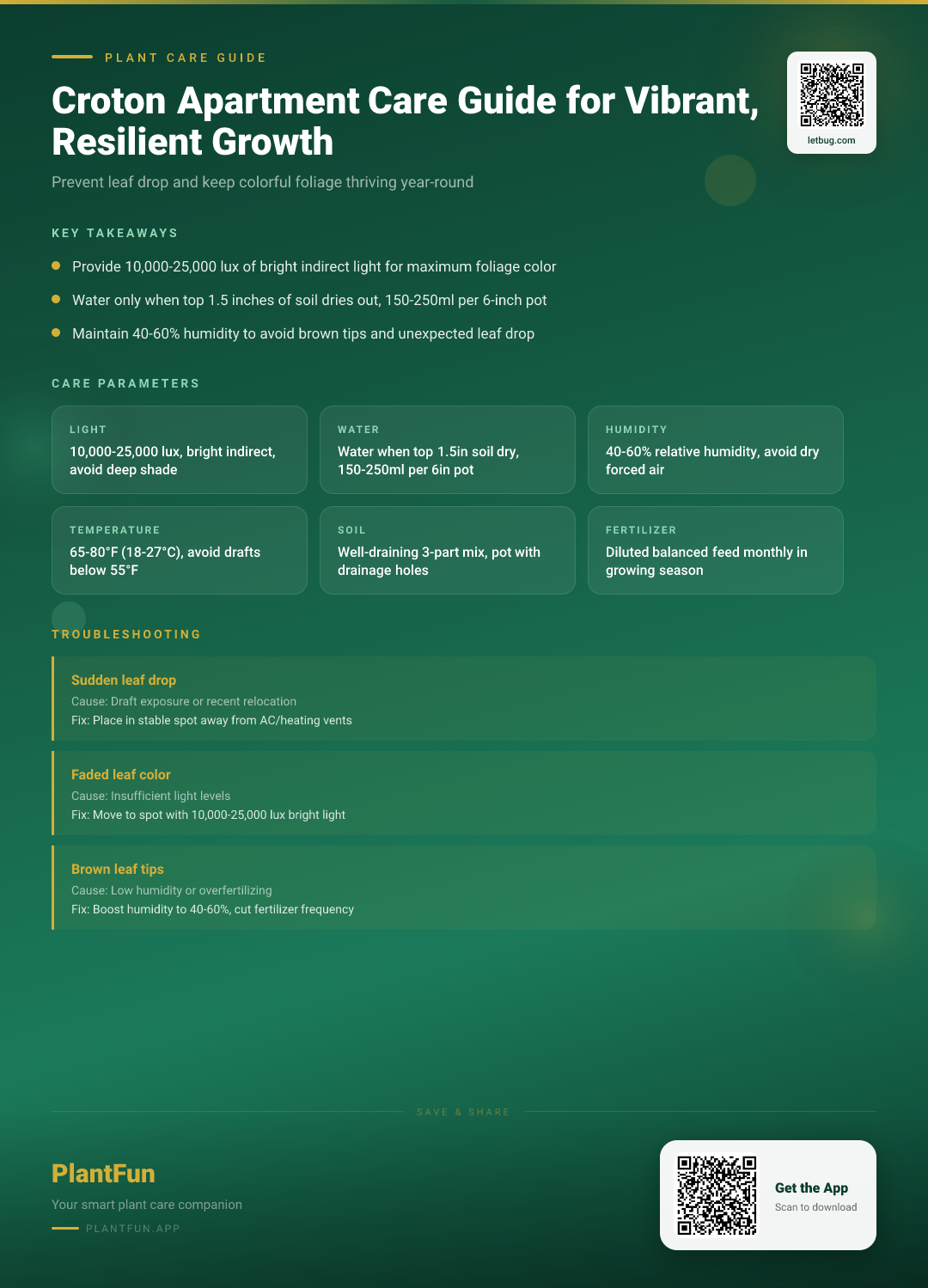
Key Takeaways
- Check soil moisture before watering — overwatering is the #1 killer of houseplants.
- Ensure your plant gets the right amount of light for its species.
- Be patient with recovery — most plants need 2–4 weeks to bounce back.
Quick Care Card: At-a-glance 1-sentence rules for each care factor, plus printable 4-step checklist download prompt
| Care Factor | 1-Sentence Rule |
|---|---|
| Light | 10,000-25,000 lux of bright indirect light, equivalent to 2-3 feet from an unobstructed east or south-facing window (EL Sayed, 2020) |
| Water | 150-250ml per 6-inch pot when the top 1.5 inches of soil is completely dry (Šrámek, 1999) |
| Humidity | 40-60% relative humidity, no humidifier required for baseline success |
| Temperature | 65-80°F (18-27°C), keep 2+ feet away from HVAC vents and drafty doors |
| Soil | 3-part mix of 1 part potting soil, 1 part perlite, 1 part orchid bark for fast drainage |
| Fertilizer | Diluted balanced 10-10-10 liquid fertilizer once annually in early spring |
| Toxicity | Toxic to cats, dogs, and humans if ingested, keep out of reach of pets and small children (ASPCA, 2026) |
Download our free printable 4-step apartment croton care checklist to stick on your fridge for quick, no-fuss reference between care sessions. If you’re worried about low light in your unit, check out our guide to testing indoor light levels without a lux meter to confirm your spot meets requirements.
Why Crotons Struggle in Typical Apartments
Crotons (Codiaeum variegatum) are often labeled as fussy, but the reality is generic croton care guides rarely account for the unique stressors of standard rental apartments: low natural light from small windows, moisture-sucking forced-air heat and AC, and drafty gaps around windows and exterior doors. These stressors trigger the most common croton complaints: leaf drop, faded variegation, and brown leaf tips. Unlike tropical greenhouses where crotons are grown, apartments don’t have consistent temperature, light, and humidity, so this guide adjusts care rules specifically for those constraints.
Diagnosis First: 60-Second Croton Health Check
Run through this quick check any time you notice unusual changes to catch issues before they become irreversible:
- Leaf drop count: If you’re seeing more than 2 fallen leaves per week, your plant is stressed.
- Variegation check: Fading bright red, orange, or yellow patterns to solid green means light levels are too low.
- Leaf edge inspection: Crispy brown tips signal low humidity or salt buildup, while soft yellow edges point to overwatering.
- Soil moisture test: Stick your finger 1.5 inches into the soil; soggy soil means overwatering, bone dry soil means underwatering.
- Stem base check: Soft, mushy tissue at the base of the stem is an early sign of root rot.
If you spot signs of root rot, follow the steps in our guide to preventing root rot in potted houseplants to save your plant before it’s too late.
Core Care Step 1: Light Requirements for Apartment Layouts
Croton light requirements indoors fall between 10,000 and 25,000 lux of bright indirect light (EL Sayed, 2020), which is easy to achieve in most 1-2 bedroom apartments without grow lights:
- Best placement: 2-3 feet away from an unobstructed east-facing window (gets gentle morning sun, no risk of leaf burn) or 3-4 feet away from a south-facing window.
- No-grow-light workarounds for low-light units: Rotate your croton ¼ turn weekly to expose all sides to the brightest spot in your home, place it near a white or light-colored wall to bounce extra light onto foliage, and trim back overgrown foliage from neighboring plants that block light.
Myth vs. Reality: You don’t need a full sun window to keep croton leaves colorful; consistent bright indirect light is actually better for avoiding leaf scorch.
Core Care Step 2: Exact Watering Schedule for Apartment Conditions
The #1 question new owners ask is how often to water croton, and the answer depends on your apartment’s heating and cooling setup:
- Hard rule: Only water when the top 1.5 inches of soil is completely dry. Test this by sticking a wooden chopstick into the soil; if it comes out clean with no damp soil clumps, it’s time to water.
- Measurable amount: 150-250ml of room-temperature water per 6-inch pot, poured directly onto the soil until a small amount runs out the drainage hole (Šrámek, 1999).
- Frequency guidelines for forced-air environments: Every 7-10 days for croton summer watering, every 14-21 days in winter when heaters are running.
Core Care Step 3: Soil & Potting Rules for Small Apartment Spaces
Croton soil mix for indoor pots needs fast drainage to avoid root rot, even in compact pots that fit on shelves or windowsills:
- Drainage requirement: Your pot must have at least one ¼-inch drainage hole. If you use a decorative cache pot without holes, empty any standing water from the bottom 30 minutes after watering.
- 3-part soil mix ratio: 1 part standard potting soil, 1 part perlite, 1 part orchid bark. If you want to make your own mix, follow our guide to making your own potting mix for houseplants for step-by-step instructions.
- Compact pot options: 4-6 inch terracotta pots are ideal for small apartment spaces, as they fit on standard 8-inch windowsills and floating shelves, and the porous material wicks away excess moisture to prevent overwatering.
Core Care Step 4: Humidity & Temperature Thresholds for Rental Units
Croton humidity requirements sit between 40-60% relative humidity, which is achievable without a humidifier in most apartments (EL Sayed, 2020):
- No-humidifier hacks: Place your pot on a tray filled with pebbles and water (make sure the pot is not sitting directly in the water), group your croton with other tropical plants to create a humid microclimate, or mist leaves 2x per week in winter when heaters are running. Low humidity is the most common cause of croton brown tips on leaves, so these hacks will resolve most edge discoloration.
- Temperature rules: Keep your croton in a 65-80°F (18-27°C) range, and place it at least 2 feet away from AC vents, radiators, and drafty exterior doors to avoid temperature shock.
If you have pets that like to nibble plants, consider swapping your croton for one of the options in our list of pet-safe tropical plants for apartments to avoid risk of poisoning.
Seasonal Care Calendar for Apartment Crotons
Adjust your care routine throughout the year to match seasonal changes in your apartment:
- Winter (croton winter care): Reduce watering by 50%, move your plant 3 feet away from radiators to avoid dry heat damage, and mist leaves 2x per week to boost humidity.
- Summer: Increase watering to every 7 days, move your plant 1 foot further back from south-facing windows to avoid midday sun scorch, and wipe down leaves monthly to remove dust that blocks light.
- Spring: Fertilize once with diluted balanced 10-10-10 liquid fertilizer, prune leggy growth to encourage bushier foliage, and repot if roots are growing out the drainage hole.
- Fall: Stop fertilizing, gradually reduce watering frequency as days get shorter, and move your plant away from drafty windows as temperatures drop.
5 Common Apartment Croton Mistakes to Avoid
- Mistake: Skipping drainage holes in decorative pots What happens: Soggy soil leads to root rot and sudden, massive leaf drop within 1-2 weeks. Instead: Drill a ¼-inch hole in the bottom of decorative pots if they don’t have drainage, or use a nursery pot inside a cache pot and empty excess water after each watering.
- Mistake: Placing near drafty doors or AC/heating vents What happens: Sudden 10+ degree temperature swings cause shock, leading to 30-50% leaf drop in 72 hours. Instead: Keep crotons at least 2 feet away from all exterior doors and HVAC vents, and avoid moving them between rooms with drastically different temperatures.
- Mistake: Overfertilizing to boost leaf color What happens: Salt buildup in soil causes brown leaf tips, stunted growth, and faded variegation. Instead: Fertilize only once per year in early spring, using a 50% diluted balanced liquid fertilizer.
- Mistake: Moving the plant too often to rearrange decor What happens: Crotons are highly sensitive to environmental changes, and frequent moves trigger leaf drop as they adjust to new conditions. Instead: Pick a permanent spot that meets light and temperature requirements, only rotating ¼ turn weekly for even growth.
- Mistake: Underwatering in winter because you assume plants need less water What happens: Forced-air heat pulls moisture from soil 2x faster than cool fall air, leading to crispy leaves and faded color. Instead: Check soil moisture every 10 days in winter, watering only if the top 1.5 inches is completely dry.
Voice Search FAQ 1: Why is my croton dropping leaves after I moved it to my apartment?
Crotons are extremely sensitive to sudden changes in light, temperature, and humidity, which almost always happen when you move a plant from a nursery or friend’s home to your apartment (Šrámek, 1999). Give it 2-3 weeks to acclimate, avoid moving it again, and only water when the top 1.5 inches of soil is dry; it will regrow new, colorful leaves once it adjusts to your space. If leaf drop continues after 3 weeks, run the 60-second health check to spot other stressors.
Voice Search FAQ 2: Can I keep a croton in a low-light apartment without grow lights?
Yes, you can absolutely keep a croton in a low-light apartment without grow lights, as long as your brightest spot provides a minimum of 10,000 lux of bright indirect light (EL Sayed, 2020), which is equivalent to the light 3 feet away from an unobstructed east or south-facing window. If your brightest spot is below that threshold, you can use a cheap LED desk bulb pointed at the plant for 8 hours per day to supplement light, but many owners see success by rotating their croton weekly to the brightest available spot and removing any obstacles that block light.
Voice Search FAQ 3: How often do I need to water my croton in a dry apartment?
In apartments with forced-air heat or consistent humidity below 40%, you’ll need to water a 6-inch potted croton every 7-10 days in the summer and every 14-21 days in the winter. Always check that the top 1.5 inches of soil is completely dry before watering to avoid overwatering, which is a far more common cause of croton death than underwatering.
References
- ASPCA. (2026). Toxic and Non-Toxic Plants List — ASPCA. https://www.aspca.org/pet-care/animal-poison-control/toxic-and-non-toxic-plants. Accessed 2026-02-26.
- Šrámek, F. (1999). Vaughan, M.J.: The Complete Book on Cut Flower Care. Biologia plantarum. https://doi.org/10.1023/a:1001770114931. Accessed 2026-02-26.
- EL Sayed, N. (2020). Spray Golden Pothos and Croton Plants with Glutathione and Bilirubin to Purify the Indoor Air from Pollutants. Journal of Plant Production. https://doi.org/10.21608/jpp.2020.102766. Accessed 2026-02-26.
Optional Helper: Plantfun.App
Plantfun.App identifies your plants by photo, diagnoses pests and diseases with clear fixes, and creates personalised watering and light schedules that adapt to your home conditions — a handy companion for putting this guide into daily practice.
Found an error or have suggestions? We'd love your feedback.
Need help identifying this problem?
Get instant identification, personalized care schedules, and effective pest treatment plans directly on your phone.
Sponsored • We may earn a commission from app downloads
Related Guides
The Complete Croton Care Checklist for Typical Apartments: 7 Steps for Resilient, Vibrant Growth
Stop losing croton leaves to dry apartment air and poor light. Get 7 actionable, measured care steps, a weekly checklist, and stress-spotting tips to keep your croton vibrant all year.
Care GuideThe Budget Croton Care Checklist for Resilient Growth in Typical Urban Apartments
Stop losing crispy, dropping leaves on your croton. Get exact light levels, watering amounts, and a budget-friendly checklist to keep your plant vibrant and thriving in any typical apartment.
Care GuideCroton Care Checklist for East-Facing Apartment Dwellers: Vibrant Foliage & No More Leaf Drop
Stop losing croton leaves to apartment conditions. Get our 8-step checklist with exact light, water, and humidity parameters to grow colorful, resilient crotons in your east-facing unit.
Pest ControlAnts on Plants: What They Mean and What to Do
Ants usually aren't eating your plant. They are farming other pests.