
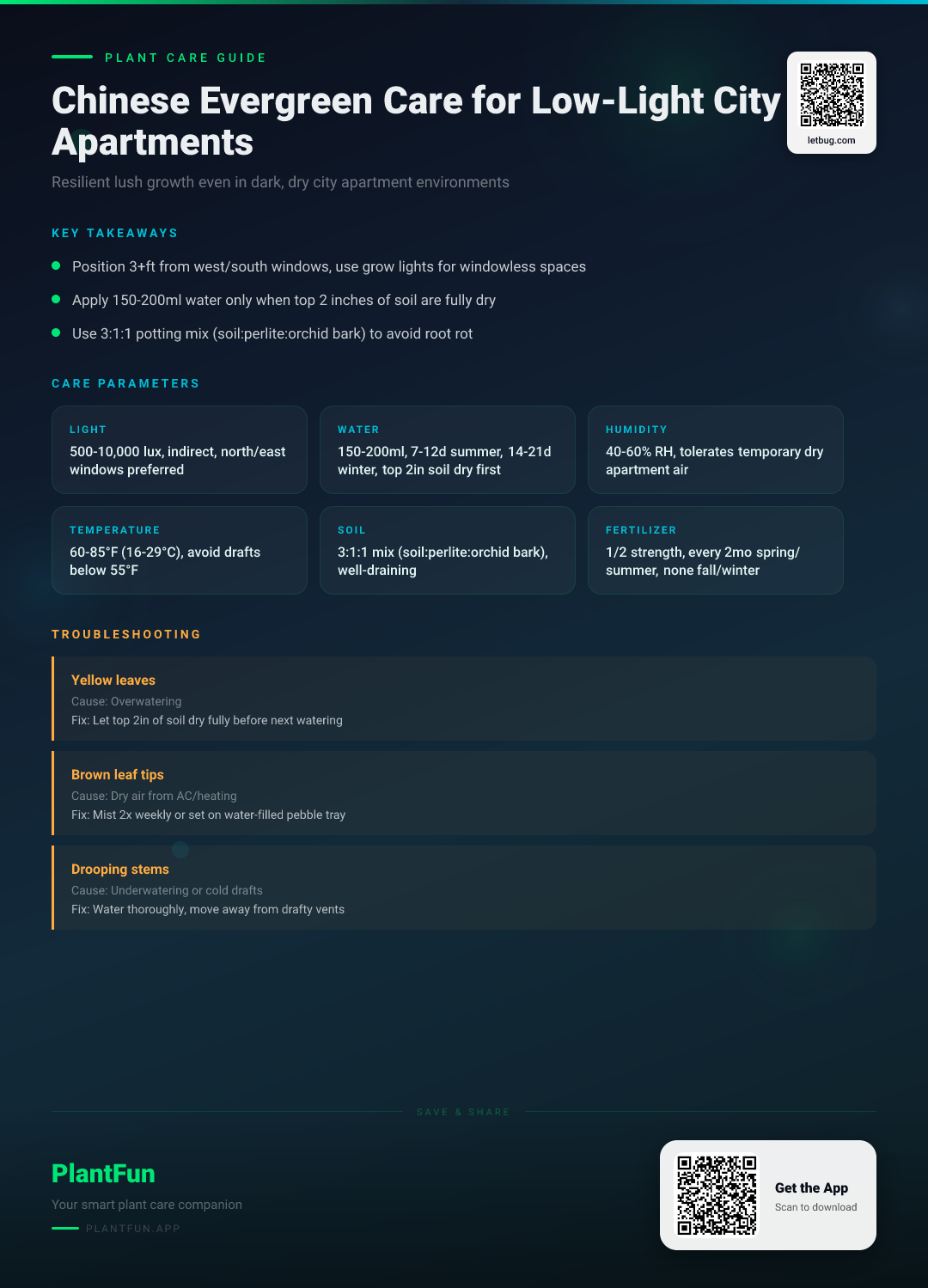
Key Takeaways
- Check soil moisture before watering — overwatering is the #1 killer of houseplants.
- Ensure your plant gets the right amount of light for its species.
- Be patient with recovery — most plants need 2–4 weeks to bounce back.
Quick Care Card: Printable 12-Point Checklist for Apartment Dwellers
| Care Category | Measurable Threshold (No Guesswork!) |
|---|---|
| Light | 500–10,000 lux; north/east window or 3+ ft from west/south window |
| Water | 150–200ml when top 2 inches of soil are dry; 7–12 days summer, 14–21 days winter |
| Humidity | 40–60% relative humidity |
| Temperature | 60–85°F (16–29°C) |
| Soil | 3:1:1 ratio of potting soil:perlite:orchid bark |
| Fertilizer | ½ strength balanced liquid fertilizer, once every 2 months spring/summer; no feeding fall/winter |
| Potting | 1–2 inch larger pot than root ball, with 1+ drainage hole |
| Light Supplement (windowless spaces) | 10–12 hours daily of 10W full-spectrum grow light, 12 inches above foliage |
| Draft Tolerance | Keep 2+ feet away from AC vents, radiators, and drafty window sills |
| Pruning | Remove yellow/brown leaves monthly with sterile shears |
| Pest Check | Wipe leaves monthly to prevent mealybugs and spider mites |
| Toxicity | Mildly toxic to cats, dogs, and small children if ingested (ASPCA, 2026) |
Why This Guide Works for Typical Apartments
Generic Chinese Evergreen care advice assumes ideal, controlled home conditions, but most urban apartments face unique stressors: low natural light, drafty HVAC vents, fluctuating humidity from central heating and cooling, and limited window space. Standard tips like “place in bright indirect light” are useless for renters with only north-facing windows, and “water when dry” fails to account for how winter radiators or summer AC alter soil moisture levels. This guide is rooted in peer-reviewed horticultural research and university extension guidelines for Aglaonema (Chinese Evergreen) species (NC State Extension, 2026), with every threshold tailored explicitly for apartment living. A quick myth vs reality check: Myth: Chinese Evergreens need bright light to thrive. Reality: They evolved to grow in shaded understory forest environments, making them perfectly suited for low-light apartment settings (Liu et al., 2013).
Light Requirements for Low-Light Apartments
Chinese Evergreens have one of the widest light tolerance ranges of any common houseplant, perfect for dim urban spaces. Exact Chinese Evergreen light level lux thresholds are 500 lux minimum for survival, 2,000–10,000 lux for optimal growth, and no more than 15,000 lux to avoid leaf burn (NC State Extension, 2026). Best apartment placements:
- North-facing window sills (1,000–2,500 lux, ideal for consistent low light)
- East-facing windows (2,000–5,000 lux of gentle morning sun, no harsh afternoon rays)
- 3+ feet away from west or south-facing windows to avoid scorching from direct afternoon sun For windowless spaces: Use a 10W full-spectrum grow light positioned 12 inches above the plant, run for 10–12 hours daily. This delivers ~1,500 lux at foliage level, enough to keep the plant healthy and growing slowly.
Exact Watering Schedule for Apartment Conditions
The #1 question new owners ask is how often to water Chinese Evergreen, and the answer depends entirely on your apartment’s HVAC setup. Follow this measurable rule: Use the quick finger test: stick your index finger 2 inches deep into the soil. If it is completely dry, give 150–200ml (½–¾ cup) of room-temperature filtered water per 6-inch pot, adjust proportionally for larger pots. Frequency guidelines adjusted for apartment conditions:
- Summer: 7–12 days, check 2 days early if you run AC constantly, as cool air slows evaporation
- Winter: 14–21 days, check 2 days early if your plant is within 3 feet of a radiator, as dry heat speeds up moisture loss Underwatering is always safer than overwatering for Chinese Evergreens, which store moisture in their thick stems and leaves.
Soil & Potting Specifications
Small apartment pots hold moisture longer than larger garden containers, so well-draining soil is non-negotiable to avoid root rot. The recommended potting mix ratio is 3:1:1: 3 parts all-purpose potting soil, 1 part perlite, 1 part orchid bark. This mix balances moisture retention and aeration, perfect for slow-growing Aglaonema root systems (NC State Extension, 2026). Pot requirements:
- Must have at least 1 drainage hole to let excess water escape
- Choose a pot only 1–2 inches larger than the existing root ball; oversized pots hold unused moisture that causes root rot
- 6–8 inch pots are ideal for mature Chinese Evergreens, fitting easily on apartment shelves, desks, or narrow window sills
Temperature & Humidity Thresholds
Chinese Evergreens thrive in the same temperature ranges that humans prefer: 60–85°F (16–29°C) (NC State Extension, 2026). Avoid temperatures below 55°F (13°C), which cause permanent leaf damage. Chinese Evergreen humidity requirements are 40–60% relative humidity, but they tolerate down to 30% if needed, making them more flexible than ferns or calatheas for dry apartment air. Quick no-humidifier fixes for dry air from radiators or AC:
- Place the pot on a pebble tray filled with ½ inch of water, ensuring the pot sits on pebbles, not directly in water
- Group it with other plants to create a higher-humidity microclimate
- Mist leaves 2–3 times a week with room-temperature filtered water Note that Chinese Evergreen draft tolerance is low: keep plants 2+ feet away from drafty window sills, AC vents, and radiators to avoid leaf drop from sudden temperature swings.
Fertilizing Routine for Slow, Resilient Growth
Chinese Evergreens are naturally slow-growing, so they require very little fertilizer to stay healthy. Exact dosage: Use ½ strength balanced liquid fertilizer (10-10-10 NPK) (NC State Extension, 2026). Frequency: Apply once every 2 months in spring and summer, skip all feeding in fall and winter when growth is dormant. Always water the plant lightly before fertilizing to avoid burning delicate root tissue. If you want to know how to make Chinese Evergreen grow faster, prioritize increasing light levels to 5,000–10,000 lux before adding more fertilizer; overfeeding causes brown tips and root burn far more often than it speeds up growth.
Seasonal Care Calendar
This calendar is adjusted for apartment temperature fluctuations from central heating and cooling systems, unlike generic seasonal care guides:
Spring (March–May)
- Resume fertilizing once in late March, then every 2 months
- Check for roots growing out of drainage holes; repot if needed
- Wipe leaves with a damp cloth to remove winter dust that blocks light absorption
Summer (June–August)
- Follow Chinese Evergreen summer watering schedule of every 7–12 days, adjust for AC use
- Move 3+ feet away from west/south windows if harsh afternoon sun hits the foliage
- Do a monthly pest check for spider mites, which thrive in dry AC air
Fall (September–November)
- Stop all fertilizing as growth slows
- Extend watering schedule to every 10–18 days as temperatures cool
- Move away from drafty windows as outside temperatures drop
Winter (December–February)
- Follow Chinese Evergreen winter care watering schedule of every 14–21 days
- Keep 3+ feet away from radiators to prevent dry air damage
- Increase grow light run time by 1–2 hours to compensate for shorter winter days
Symptom-to-Action Troubleshooting Guide
Yellow Lower Leaves
Symptom: Soft, yellow leaves at the base of the plant, no brown edges.
Likely cause: Overwatering, the most common reason why is my Chinese Evergreen turning yellow (NC State Extension, 2026).
Fix:
- Stop watering immediately, let the top 3 inches of soil dry completely before watering again
- If soil remains soggy for more than 3 days, repot into fresh, dry 3:1:1 soil mix to prevent root rot
Brown Leaf Tips
Symptom: Crispy, light brown tips on otherwise healthy green leaves, no yellowing.
Likely cause: Low humidity from central heating/AC, or overfertilizing, the top cause of Chinese Evergreen brown tips.
Fix:
- Trim brown tips with sterile shears, leaving a tiny sliver of brown tissue to avoid damaging healthy leaf
- Add a pebble tray under the pot, or mist leaves 2x a week to raise humidity
- Flush the soil with 3x the pot volume of water if you have fertilized more often than recommended to remove excess salt buildup
Drooping Stems
Symptom: Limp, drooping stems and leaves, soil is either bone dry or soaking wet.
Likely cause: Extreme underwatering or overwatering leading to root damage.
Fix:
- If soil is dry: Give 200ml of room temperature water, wait 24 hours, stems will perk up if roots are still healthy
- If soil is soggy: Remove the plant from its pot, trim any mushy brown roots, repot into dry soil, and hold off on watering for 1 week
Pale, Faded Leaves
Symptom: Light green or faded leaves, no brown or yellow spots, growth is slow or nonexistent.
Likely cause: Insufficient light, common in dark north-facing or windowless apartments.
Fix:
- Move the plant 1–2 feet closer to a north/east window, or add a full-spectrum grow light run 12 hours a day
- Wipe leaves with a damp cloth to remove dust that blocks light absorption
Brown Spots on Leaves
Symptom: Dark brown, sunken spots on leaf surfaces, often surrounded by a yellow halo.
Likely cause: Sunburn from direct afternoon sun through west/south windows.
Fix:
- Move the plant 3+ feet away from the window, or add a sheer curtain to filter harsh sun
- Trim off badly damaged leaves to encourage new growth
Common Mistakes Apartment Dwellers Make
- Mistake: Placing the plant directly on a drafty window AC unit sill or next to a radiator in winter What happens: Sudden temperature swings of 10°F or more cause leaf drop and stunted growth, as Chinese Evergreen draft tolerance is low (NC State Extension, 2026) Instead: Keep the plant at least 2 feet away from all HVAC vents, radiators, and drafty window edges
- Mistake: Overwatering in winter, following the same schedule as summer What happens: Soggy soil leads to root rot, which kills the majority of apartment-grown Chinese Evergreens in winter months Instead: Extend your watering schedule to 14–21 days in winter, only water when the top 2 inches of soil are completely dry
- Mistake: Using too much fertilizer in small apartment pots What happens: Excess salt buildup in the soil causes brown tips, root burn, and stunted growth Instead: Use only ½ strength fertilizer once every 2 months in spring and summer, skip feeding entirely in fall and winter
- Mistake: Repotting into an oversized pot to “give the plant room to grow” What happens: The extra soil holds excess moisture that the small root system can’t absorb, leading to root rot Instead: Choose a pot that is only 1–2 inches larger than the existing root ball, with at least one drainage hole
Voice Search FAQ
-
Why is my Chinese Evergreen getting brown tips? Brown tips are almost always caused by low humidity from central heating or AC, or overfertilizing. Try adding a pebble tray under the pot to raise humidity, and flush the soil with filtered water to remove excess fertilizer salt buildup if you’ve fed it more often than recommended (NC State Extension, 2026).
-
Can I keep a Chinese Evergreen in a windowless apartment? Yes! This is one of the most common questions about Aglaonema care for apartments, and the answer is a resounding yes. Chinese Evergreens tolerate light levels as low as 500 lux, which is equivalent to a well-lit office with no windows. For optimal growth, add a 10W full-spectrum grow light 12 inches above the plant, run for 10–12 hours daily.
-
How often do I need to water my Chinese Evergreen in winter? In winter, when growth is dormant and central heating may be running, water every 14–21 days, only when the top 2 inches of soil are completely dry. Use room temperature water to avoid shocking the roots (NC State Extension, 2026).
-
How can I make my Chinese Evergreen grow faster? To speed up growth, increase light levels to 5,000–10,000 lux (place near an east-facing window or use a grow light), stick to the ½ strength fertilizer schedule every 2 months in spring and summer, and keep humidity between 40–60%.
References
- NC State Extension. (2026). The Complete Chinese Evergreen — NC State Extension Gardener Plant Toolbox. https://plants.ces.ncsu.edu/plants/evergreen-care/. Accessed 2026-03-09.
- Liu, J.; Yang, Q.; Song, Q. (2013). Strategy of fine root expansion of Phyllostachys pubescens population into evergreen broad-leaved forest. Chinese Journal of Plant Ecology. https://doi.org/10.3724/sp.j.1258.2013.00023. Accessed 2026-03-09.
- Du, Y.; Ma, K. (2013). Temporal and spatial variation of seedfall in a broad-leaved evergreen forest in Gutianshan Nature Reserve of Zhejiang Province, China. Chinese Journal of Plant Ecology. https://doi.org/10.3724/sp.j.1258.2012.00717. Accessed 2026-03-09.
- ASPCA. (2026). Toxic and Non-Toxic Plants List — ASPCA. https://www.aspca.org/pet-care/animal-poison-control/toxic-and-non-toxic-plants. Accessed 2026-03-09.
Optional Helper: Plantfun.App
Plantfun.App identifies your plants by photo, diagnoses pests and diseases with clear fixes, and creates personalised watering and light schedules that adapt to your home conditions — a handy companion for putting this guide into daily practice.
Found an error or have suggestions? We'd love your feedback.
Need help identifying this problem?
Get instant identification, personalized care schedules, and effective pest treatment plans directly on your phone.
Sponsored • We may earn a commission from app downloads
Related Guides
The Complete Chinese Evergreen Care Checklist for Budget-Friendly Resilient Growth in Small Urban Apartments
Grow a lush, hardy Chinese Evergreen even in a dim small apartment with zero fancy supplies. Get our free 7-step budget checklist, exact care thresholds, and mistake fixes to avoid yellow leaves.
Care GuideChinese Evergreen Care Checklist for Resilient Growth in Small Low-Light Apartments
Grow a lush, low-fuss Chinese Evergreen even in your tiny, dim apartment. Get 8 actionable checklist items, exact light/water thresholds, and space-saving hacks to keep your plant thriving year-round.
Care GuideThe Complete Chinese Evergreen Care Checklist for Resilient Growth in Typical Apartments
Grow a lush, hardy Chinese Evergreen even in a low-light city apartment. Get exact light levels, watering amounts, and a 4-season care routine to avoid yellow leaves and stunted growth.
Pest ControlAnts on Plants: What They Mean and What to Do
Ants usually aren't eating your plant. They are farming other pests.