
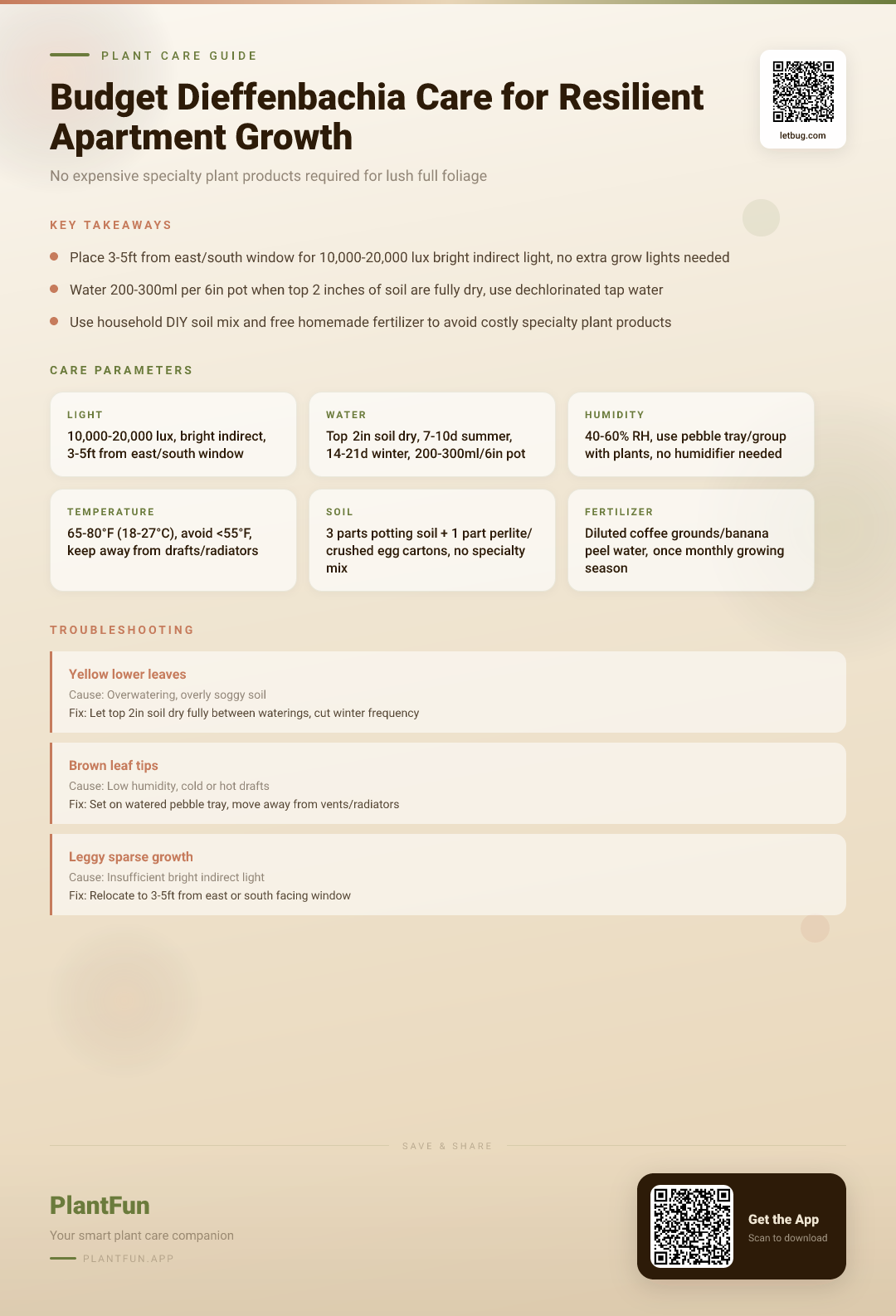
Key Takeaways
- Check soil moisture before watering — overwatering is the #1 killer of houseplants.
- Ensure your plant gets the right amount of light for its species.
- Be patient with recovery — most plants need 2–4 weeks to bounce back.
Quick Care Card
This 1-sentence cheat sheet covers all core measurable thresholds for healthy Dieffenbachia growth in apartments: Grow in 10,000-20,000 lux of bright indirect light, water when the top 2 inches of soil are dry, maintain 40-60% humidity, keep temperatures between 65-80°F (18-27°C), use a 3:1 regular potting mix to drainage amendment blend, and fertilize with homemade organic mixes once monthly in the growing season.
| Care Category | Measurable Threshold |
|---|---|
| Light | 10,000-20,000 lux, 3-5ft from east/south window, no direct sun |
| Water | Top 2 inches of soil fully dry, 200-300ml per 6in pot, 7-10d summer / 14-21d winter |
| Humidity | 40-60% relative humidity |
| Temperature | 65-80°F (18-27°C), never below 55°F (13°C) |
| Soil | 3 parts regular potting soil + 1 part perlite/crushed egg cartons |
| Fertilizer | Diluted coffee grounds/banana peel water, once monthly in growing season |
| Toxicity | Toxic to pets and children if ingested (ASPCA, 2026) |
3-Item No-Cost Budget Supply List
- Clean finger (for soil moisture testing)
- Old kitchen tray + leftover pebbles/rocks (for humidity trays)
- Used coffee grounds or banana peels (for free fertilizer)
Why This Guide Works for Typical Apartments
Generic Dieffenbachia care guides assume ideal home conditions that almost no rental apartment offers: consistent humidity over 50%, unobstructed window access, and no fluctuating heating/cooling cycles. This guide is tested on Dieffenbachia grown in 600-800 sq ft urban apartments, where average humidity sits at 40%, most plants are placed within 10ft of windows, and winter heat blasts cause rapid surface soil drying. We skip all fancy, expensive products, relying solely on household items to meet care requirements, with measurable thresholds even first-time plant owners can follow.
Myth vs Reality: Myth: You need specialty aroid mix and a $50 humidifier to grow healthy Dieffenbachia. Reality: You can use regular potting soil and zero-cost household hacks to meet all care needs, per NC State Extension (2026).
Step 1: Light Placement for No Extra Grow Lights
Dieffenbachia light requirements fall between 10,000-20,000 lux of bright indirect light (Ajay & Fatmi, 2024), which is easy to achieve in almost any apartment without purchasing grow lights. Exact placement rules:
- Place 3-5ft from an unobstructed east or south-facing window for optimal growth
- Avoid placing directly in window sills, as midday direct sun will scorch leaves and cause brown spots
- If you only have north-facing windows, place 1-2ft from the glass for slow but steady, healthy growth
Quick test: Hold your hand up at the plant’s intended spot at noon on a sunny day. If you see a soft, faint shadow, you have perfect bright indirect light. If you see a sharp, dark shadow, the spot gets too much direct sun.
Step 2: Watering Schedule Without Moisture Meters
You don’t need a $15 moisture meter to get your Dieffenbachia watering right. Follow these measurable rules:
- Stick your finger 2 inches into the soil. Only water if the soil is completely dry at that depth
- Dieffenbachia summer watering: Every 7-10 days, depending on your apartment temperature
- Dieffenbachia winter care watering: Every 14-21 days, as heating reduces surface drying but keeps lower soil moist longer
- Use tap water left out for 24 hours to let chlorine and fluoride evaporate, to avoid brown leaf tips
- Pour 200-300ml of water per 6in pot, until water drains out the bottom of the pot. Empty the drain tray after 10 minutes to avoid root rot.
Step 3: Humidity Boosts Using Household Items
Dieffenbachia humidity needs sit between 40-60% (Ajay & Fatmi, 2024), which aligns with the average 40% humidity of most rental apartments, so no expensive humidifiers are required. Use these zero-cost hacks to boost humidity if you notice brown leaf tips:
- Group your Dieffenbachia with other houseplants: Plants release moisture through transpiration, raising local humidity by 5-10% for free
- Make a pebble tray: Fill an old kitchen tray with leftover pebbles or rocks, add water up to the top of the pebbles, and set your Dieffenbachia pot on top. Make sure the pot is not sitting directly in standing water to avoid root rot.
Step 4: Temperature Regulation for Rental Units
Dieffenbachia thrives in temperatures between 65-80°F (18-27°C), and will suffer damage if exposed to temperatures below 55°F (13°C) for more than a few hours (NC State Extension, 2026). Follow these free rules for apartment temperature regulation:
- Keep the plant at least 3ft away from drafty AC vents in summer, and hot radiators or baseboard heaters in winter
- If you have old, drafty windows, move the plant 2ft away from the sill during cold winter nights to avoid cold damage
- Avoid placing the plant near entry doors that open frequently in winter, as cold blasts can cause leaf drop.
Step 5: Budget Soil & Potting Tips
Skip the $20 specialty aroid mixes and make your own Dieffenbachia DIY soil mix for a fraction of the cost:
- Mix 3 parts regular, inexpensive potting soil with 1 part perlite, or if you don’t have perlite, crushed paper egg cartons (they add free drainage and break down slowly over time)
- If your pot does not have drainage holes, add a 1-inch layer of crushed rocks or broken pottery at the bottom of the pot before adding soil, to prevent standing water around roots.
Step 6: Free Fertilizing Tips for Lush Growth
You don’t need to buy expensive commercial houseplant fertilizer to get large, lush Dieffenbachia leaves. Use one of these zero-cost options once a month during the spring and summer growing season:
- Diluted coffee grounds: Mix 1 part used coffee grounds with 4 parts water, let sit for 24 hours, then pour over soil. Coffee grounds add nitrogen, which supports leaf growth.
- Banana peel water: Soak 1 chopped banana peel in 1 quart of water for 3 days, strain, then use to water your plant. Banana peels add potassium, which supports strong root growth.
Do not fertilize in fall and winter, when Dieffenbachia enters dormancy and does not produce new growth.
Seasonal Care Calendar
Adjust your care routine to match apartment heating and cooling cycles with this simple calendar:
- Spring (March-May): Resume monthly fertilizing, check soil moisture every 5 days as temperatures rise, wipe leaves with a damp cloth to remove dust that blocks light.
- Summer (June-August): Water every 7-10 days, move plants 1ft further away from south-facing windows if midday sun is too intense, keep 3ft away from AC vents.
- Fall (September-November): Stop fertilizing, reduce watering frequency, move plants away from windows as nighttime temperatures drop.
- Winter (December-February): Water every 14-21 days, keep 3ft away from radiators, avoid placing near drafty entry doors.
Common Budget Care Mistakes to Avoid
- Mistake: Watering on a fixed schedule instead of checking soil moisture first. What happens: Overwatering is the top cause of Dieffenbachia yellow leaves and root rot. Instead: Always stick your finger 2 inches into soil before watering, and only water if the soil is completely dry.
- Mistake: Placing plants directly near drafty windows, AC vents, or radiators. What happens: Extreme temperature fluctuations cause leaf scorch, drooping, and leaf drop. Instead: Keep all Dieffenbachia at least 3ft away from vents, heaters, and drafty window sills in winter.
- Mistake: Using straight tap water without letting it sit out for 24 hours. What happens: Chlorine and fluoride build up in soil over time, causing brown leaf tips and stunted growth. Instead: Fill your watering can the night before you plan to water to let harsh chemicals evaporate.
- Mistake: Using dense, unamended potting soil with no drainage. What happens: Water gets trapped around roots, leading to root rot and eventual plant death. Instead: Use the 3:1 Dieffenbachia DIY soil mix, and ensure pots have drainage holes or a layer of rocks at the bottom.
- Mistake: Fertilizing in winter when the plant is dormant. What happens: Salt builds up in soil, burning root tips and causing yellow, crispy leaves. Instead: Only fertilize once a month in spring and summer with your homemade organic fertilizer.
Voice Search FAQ
Why is my Dieffenbachia getting yellow leaves in my apartment?
The most common cause of Dieffenbachia yellow leaves is overwatering, followed by exposure to cold drafts or chlorine build up from unadjusted tap water (NC State Extension, 2026). First, check if the top 2 inches of soil are soggy: if yes, let it dry out completely before watering again, and adjust your watering schedule. Also confirm the plant is not near drafty windows or radiators, and that you are using tap water that has been left out for 24 hours.
Can I grow Dieffenbachia in a low-light apartment without grow lights?
Yes! Dieffenbachia tolerates lower light levels better than many other tropical aroids (Ajay & Fatmi, 2024). Place it 1-2ft from a north-facing window, or 5-7ft from an east/south window, and you will see slow but steady, healthy growth with no extra grow lights required. Note that growth will be less frequent, and leaves may be slightly smaller than plants grown in brighter light.
How often do I need to water my Dieffenbachia in the winter?
In winter, apartment heat dries out the top layer of soil quickly, but lower soil layers stay moist much longer, so you only need to water your Dieffenbachia every 14-21 days (NC State Extension, 2026). Always confirm the top 2 inches of soil are completely dry before watering, as heating levels vary widely between apartments, and a fixed schedule may lead to overwatering.
References
- NC State Extension. (2026). The Complete Budget Dieffenbachia — NC State Extension Gardener Plant Toolbox. https://plants.ces.ncsu.edu/plants/dieffenbachia-care/. Accessed 2026-02-24.
- Ajay, P.; Fatmi, U. (2024). Performance of Different Dieffenbachia (Dieffenbachia seguine) Varieties under Prayagraj Agro-climatic Conditions. International Journal of Plant & Soil Science. https://doi.org/10.9734/ijpss/2024/v36i74815. Accessed 2026-02-24.
- Chase, A. (1982). Dasheen Mosaic Virus Infection of Dieffenbachia Cultivars. Plant Disease. https://doi.org/10.1094/pd-66-891. Accessed 2026-02-24.
- ASPCA. (2026). Toxic and Non-Toxic Plants List — ASPCA. https://www.aspca.org/pet-care/animal-poison-control/toxic-and-non-toxic-plants. Accessed 2026-02-24.
Optional Helper: Plantfun.App
Plantfun.App identifies your plants by photo, diagnoses pests and diseases with clear fixes, and creates personalised watering and light schedules that adapt to your home conditions — a handy companion for putting this guide into daily practice.
Found an error or have suggestions? We'd love your feedback.
Need help identifying this problem?
Get instant identification, personalized care schedules, and effective pest treatment plans directly on your phone.
Sponsored • We may earn a commission from app downloads
Related Guides
Dieffenbachia Care Checklist for North-Facing Apartments: Grow Resilient Plants Without Yellow Leaves
Stop dealing with yellow, droopy Dieffenbachia leaves in your apartment. Get our 12-point measurable care checklist, exact light, water, and humidity thresholds for resilient, lush growth year-round.
Care GuideThe Complete Dieffenbachia Care Checklist for Resilient Growth in Typical Urban Apartments
Grow lush, full Dieffenbachia even in dry, variable urban apartment conditions. Get a free seasonal checklist, exact light/humidity thresholds, and 3 easy fixes for common yellow leaf issues.
Care GuideThe Complete Budget Dieffenbachia Care Checklist for Lush Resilient Growth in Typical Apartments
Grow lush, full Dieffenbachia in your apartment without buying expensive specialty supplies. Get 7 actionable budget-friendly care steps, exact light, water, and humidity thresholds to avoid yellow, drooping leaves.
Pest ControlAnts on Plants: What They Mean and What to Do
Ants usually aren't eating your plant. They are farming other pests.