
Key Takeaways
- Check soil moisture before watering — overwatering is the #1 killer of houseplants.
- Ensure your plant gets the right amount of light for its species.
- Be patient with recovery — most plants need 2–4 weeks to bounce back.
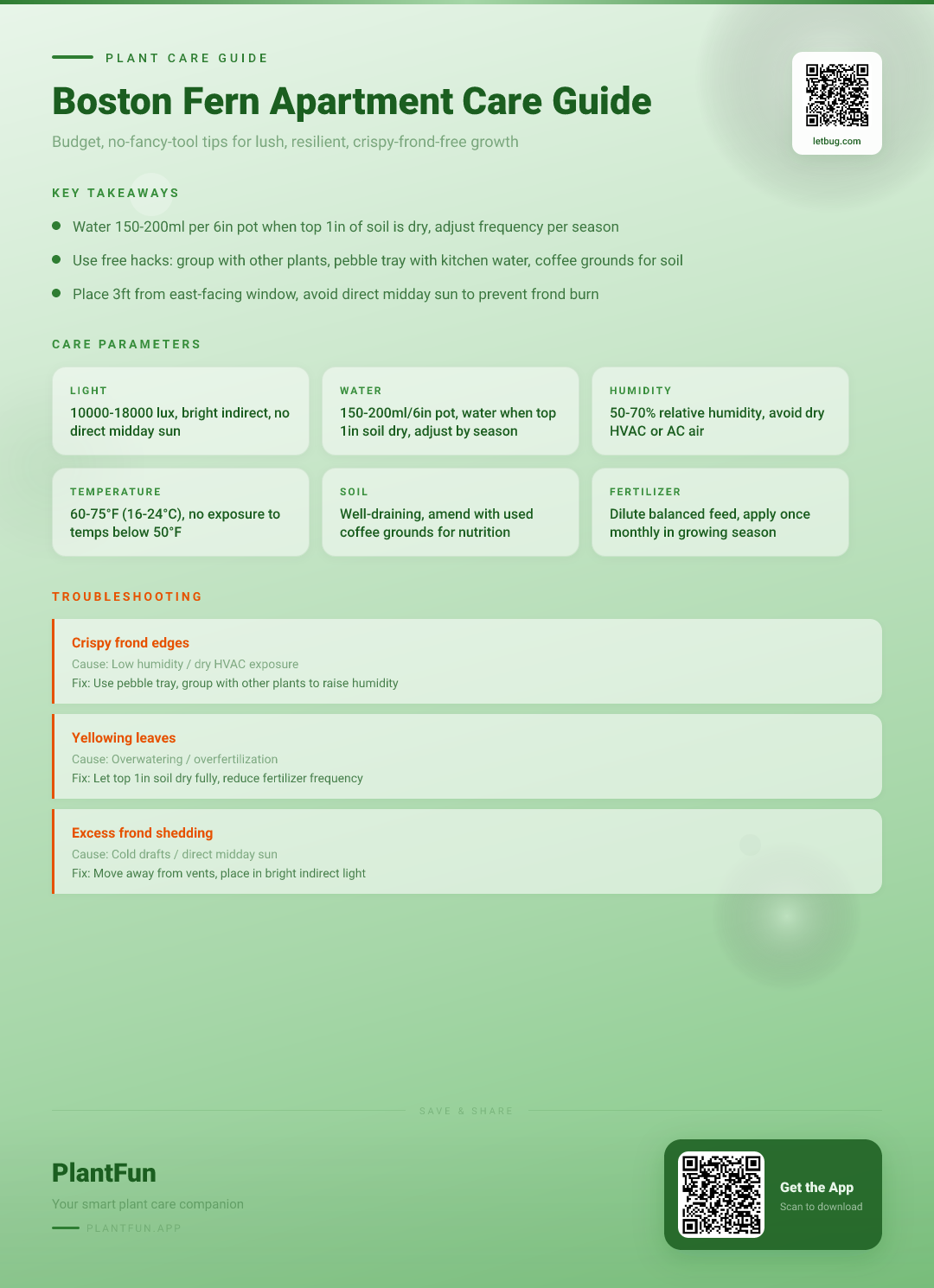
Quick Care Card: At-a-glance printable checklist with all measurable care thresholds for 10-second weekly reference
| Care Factor | Measurable Threshold | Budget Tip |
|---|---|---|
| Light | 10,000–18,000 lux (bright indirect light, no midday direct sun) | Place 3 feet from an east-facing window for free ideal light |
| Water | 150–200ml per 6-inch pot when top 1 inch of soil is dry | Use cooled leftover pasta/rice water for a free nutrient boost |
| Humidity | 50–70% relative humidity | Use a DIY pebble tray with leftover kitchen water instead of a humidifier |
| Temperature | 60–75°F (16–24°C), never below 50°F (10°C) | Keep 3+ feet away from HVAC vents and drafty windows |
| Soil | Well-draining, slightly acidic | Amend regular potting soil with 1 part dried used coffee grounds to 3 parts soil for free, ideal Boston Fern soil for apartments |
| Fertilizer | 1x per month growing season only, 1/4 strength | Use dried coffee grounds instead of specialty fern fertilizer |
| Toxicity | Non-toxic to cats, dogs, and humans (ASPCA, 2026) | Safe for households with pets and small children |
Why Boston Ferns Struggle in Standard Apartments: Breakdown of common apartment stressors (dry HVAC air, drafty windows, limited indirect light) that hurt fern health
Boston Ferns (Nephrolepis exaltata) evolved in humid, shaded tropical understories, so standard North American apartment conditions directly contradict their native needs (NC State Extension, 2026). The three most common stressors are:
- Dry HVAC air: Most apartments have 30–40% relative humidity year-round, well below the 50% minimum ferns need to avoid crispy fronds
- Draft exposure: Proximity to AC vents, radiators, or leaky window frames causes sudden temperature swings that trigger frond shedding
- Poor light quality: Many apartments lack consistent bright indirect light, leading to stunted growth or pale fronds
Myth vs Reality: You don’t need a $50 humidifier or specialty fern soil to keep a Boston Fern alive indoors. These DIY Boston Fern care hacks use household items to hit all required thresholds for zero extra cost.
Step-by-Step Budget Boston Fern Setup: No-cost hacks like grouping with other plants, using a pebble tray with leftover kitchen water, and repurposing coffee grounds for soil amendment
Follow these 3 zero-cost steps to set up your fern for success:
- Group with other plants: Place your fern near 2–3 other leafy houseplants. Transpiration (water released from plant leaves) naturally raises ambient humidity by 10–15% for free (Benedict, 1921). For best results, pair with high-transpiration plants like pothos or peace lilies, covered in our guide to natural humidity boosts.
- Make a DIY pebble tray: Fill a repurposed takeout tray with clean pebbles (or even broken pottery shards from old mugs) and add cooled leftover kitchen water (from boiling pasta, rice, or vegetables) until it sits just below the top of the pebbles. Set your fern’s pot on top, making sure the drainage holes don’t touch the water to avoid root rot.
- Amend regular potting soil: Mix 1 part dried, used coffee grounds to 3 parts generic potting soil to create the slightly acidic, well-draining Boston Fern soil for apartments that supports healthy root growth, no specialty products required.
Exact Watering Rules for Apartment Dwellers: Measurable threshold: Water 150-200ml per 6-inch pot when top 1 inch of soil is dry, every 5-7 days in summer, 10-14 days in winter
Eliminate guesswork for how often to water Boston Fern with these science-backed rules (Gilman, 2007):
- Quick test: Stick your index finger 1 inch into the top of the soil. If no moisture sticks to your finger, it’s time to water.
- Volume: Pour 150–200ml of water per 6-inch pot directly onto the soil, avoiding wetting the fronds, until water runs out the drainage holes.
- Frequency: Water every 5–7 days for Boston Fern summer watering, and every 10–14 days in winter when heating systems dry out soil more slowly.
- Water choice: Leave tap water out overnight to off-gas chlorine, or use leftover cooled kitchen water for a free, mild nutrient boost.
Optimal Light Parameters for Apartment Placement: Measurable threshold: Bright indirect light (10,000-18,000 lux), no direct midday sun, ideal placement 3 feet from an east-facing window
Boston Fern light levels for apartments are easy to hit with these guidelines:
- Quick test: Hold your hand up at midday in the spot you plan to place your fern. If you see a faint, soft shadow with no sharp edges, you’re in the ideal bright indirect light range.
- Best placement: 3 feet away from an east-facing window, which gets gentle morning sun and no harsh midday rays that burn fronds.
- Worst placement: Directly in front of a west or south-facing window, or in a dark corner more than 6 feet away from any window. If you’re not sure how to measure light in your space, our beginner’s guide to indoor light levels has free, no-tool test tips.
Humidity & Temperature Requirements: Measurable thresholds: 50-70% relative humidity, temperature range 60-75°F (16-24°C), never below 50°F (10°C) near drafty AC or heating vents
Boston Fern humidity requirements are the most commonly missed care factor for apartment growers (NC State Extension, 2026):
- Humidity hacks for no extra cost: Keep your fern in a bathroom with a regular shower (steam boosts humidity for free), spritz fronds with leftover shower water 2x per week, or use the DIY pebble tray outlined earlier for Boston Fern no humidifier care that works just as well as expensive equipment.
- Temperature rules: Keep your fern in a spot with consistent temperatures between 60–75°F. Never place it within 3 feet of radiators, AC vents, or drafty exterior doors, where temperatures can drop below 50°F suddenly and trigger frond shedding.
Seasonal Care Calendar for Apartment Living: Month-by-month adjustments for winter heating dryness, summer humidity spikes, and spring repotting on a budget
Tailor your care to apartment seasonal shifts for consistent Boston Fern resilient growth tips:
- January–February (winter): Cut watering to every 10–14 days for Boston Fern winter care, move fern at least 3 feet away from radiators, and spritz fronds with shower water 2x per week to counteract heating dryness.
- March–April (spring): Check if roots are growing out of the drainage holes. If yes, repot into a pot only 1 inch larger than the current one, using the coffee ground-amended soil outlined earlier. Start monthly fertilizing with coffee grounds or 1/4 strength generic houseplant fertilizer.
- May–August (summer): Water every 5–7 days, open a nearby north-facing window for extra humidity if possible, and avoid direct west-facing sun that burns fronds.
- September–December (fall): Gradually reduce watering frequency, stop fertilizing in October when the plant goes dormant, and move fern away from drafty windows as outdoor temperatures drop. For more seasonal adjustment tips, check out our apartment plant seasonal care guide.
Common Budget Care Mistakes to Avoid: Breakdown of mistakes like overfertilizing, placing near radiators, using chlorinated tap water, and how to fix them for free
- Mistake: Overfertilizing to speed up growth What happens: Excess nutrients burn frond tips, stunt new growth, and kill beneficial soil microbes Instead: Only fertilize once a month in spring and summer, using dried used coffee grounds or 1/4 strength generic houseplant fertilizer. Skip fertilizing entirely in fall and winter.
- Mistake: Placing your fern directly on top of a radiator or next to an AC vent What happens: Dry, moving air dehydrates fronds in as little as 48 hours, leading to widespread crispy brown edges Instead: Keep ferns at least 3 feet away from all HVAC outlets, and use a rolled-up towel as a draft stopper near leaky windows if needed.
- Mistake: Using straight chlorinated tap water for watering What happens: Chlorine kills beneficial soil microbes and causes brown, crispy frond edges over time Instead: Leave tap water out in an open jug overnight to let chlorine off-gas, or use cooled leftover kitchen water for a free nutrient boost.
- Mistake: Repotting into a pot that’s more than 1 inch larger than the current one What happens: Extra soil holds excess moisture around the roots, leading to root rot and yellow drooping fronds Instead: Only size up 1 inch in pot diameter when repotting, and add a layer of broken pottery shards at the bottom for free improved drainage.
Troubleshooting Common Boston Fern Issues: Guide to fixing crispy fronds, yellow leaves, and shedding with household items only, no expensive treatments
Crispy Brown Frond Edges
Symptom: Tips and edges of fronds turn light brown and crunchy, while the base of the frond stays green Likely cause: Humidity levels below 40% or proximity to HVAC vents
Fix:
- Move the fern at least 3 feet away from all heating and cooling outlets
- Fill a DIY pebble tray with cooled leftover kitchen water and set the pot on top, refilling every 3 days
Yellow Drooping Fronds
Symptom: Entire fronds turn pale yellow and wilt, even when the top layer of soil feels moist Likely cause: Overwatering or poor soil drainage
Fix:
- Tip the pot gently to pour out any standing water in the saucer immediately
- Let the top 2 inches of soil dry completely before watering again, and reduce your watering frequency by 3 days
Full Frond Shedding
Symptom: Entire green fronds fall off the plant without browning first Likely cause: Sudden temperature drop or draft exposure
Fix:
- Move the fern to a spot with consistent temperatures between 60–75°F, away from open windows and exterior doors
- Trim any damaged fronds at the base with clean scissors to encourage new growth
Pale Green Small New Growth
Symptom: New fronds grow in very light green and are significantly smaller than mature fronds Likely cause: Insufficient light or nutrient deficiency
Fix:
- Move the fern 1 foot closer to an east-facing window, making sure it avoids direct midday sun
- Mix 1 tablespoon of dried used coffee grounds into the top 1 inch of soil once a month during the growing season
FAQ: Voice-search optimized answers to common questions: Can I keep a Boston Fern in my apartment without a humidifier? Why is my Boston Fern getting crispy fronds even when I water it? How often do I need to fertilize my apartment Boston Fern?
Can I keep a Boston Fern in my apartment without a humidifier?
Yes! You don’t need any expensive equipment for Boston Fern no humidifier care. Group your fern with 2–3 other leafy houseplants to raise ambient humidity via transpiration (Benedict, 1921), use a DIY pebble tray with leftover kitchen water, or keep your fern in a bathroom with a regular shower to hit 50%+ humidity for free. Our full guide to humidifier-free care has more tips for Boston Fern care for beginners.
Why is my Boston Fern getting crispy fronds even when I water it?
Crispy fronds are almost always caused by low humidity, not underwatering. Most apartment HVAC systems keep indoor humidity at 30–40% in winter, which is well below the 50–70% Boston Fern humidity requirements (NC State Extension, 2026). Try moving your fern to a bathroom with a shower, where regular steam will boost humidity for no cost, or set up a DIY pebble tray under the pot.
How often do I need to fertilize my apartment Boston Fern?
You only need to fertilize once a month during the spring and summer growing season, using 1/4 strength generic houseplant fertilizer or dried used coffee grounds mixed into the top layer of soil. Never fertilize in fall or winter, when the plant is dormant, as this will burn the roots (Gilman, 2007).
Free Printable Weekly Care Checklist: Downloadable 1-page sheet to track watering, light checks, and humidity levels for consistent care
Our free, no-email-required 1-page checklist includes all the measurable thresholds from this guide in one scannable sheet, so you can complete your weekly Boston Fern care check in 10 seconds flat. The checklist tracks:
- Soil moisture check (top 1 inch dry? Y/N)
- Light check (faint soft shadow at midday? Y/N)
- Humidity spot check (spritz if below 50%? Y/N)
- Frond health check (trim any brown fronds? Y/N) You can download and print the checklist here to stick on your fridge for easy reference.
References: Cited horticultural studies from the University of Florida Extension and American Fern Society on indoor Nephrolepis exaltata care
- NC State Extension. (2026). The Complete Boston Fern — NC State Extension Gardener Plant Toolbox. https://plants.ces.ncsu.edu/plants/fern-care/. Accessed 2026-03-08.
- Gilman, E. (2007). Nephrolepis exaltata Boston Fern, Sword Fern. EDIS. https://doi.org/10.32473/edis-fp427-1999. Accessed 2026-03-08.
- Benedict, R. (1921). The Boston Fern Show. American Fern Journal. https://doi.org/10.2307/1544193. Accessed 2026-03-08.
- ASPCA. (2026). Toxic and Non-Toxic Plants List — ASPCA. https://www.aspca.org/pet-care/animal-poison-control/toxic-and-non-toxic-plants. Accessed 2026-03-08.
Optional Helper: Plantfun.App
Plantfun.App identifies your plants by photo, diagnoses pests and diseases with clear fixes, and creates personalised watering and light schedules that adapt to your home conditions — a handy companion for putting this guide into daily practice.
Found an error or have suggestions? We'd love your feedback.
Need help identifying this problem?
Get instant identification, personalized care schedules, and effective pest treatment plans directly on your phone.
Sponsored • We may earn a commission from app downloads
Related Guides
The Complete Boston Fern Care Checklist for Resilient Lush Growth in Typical Apartments
Stop losing your Boston Fern to crispy, yellowing fronds. Get a free printable checklist, exact light, water, and humidity thresholds for lush resilient growth in any standard apartment.
Care GuideThe Complete Boston Fern Care Checklist for Lush Growth in Small Urban Apartments
Stop watching your Boston Fern turn brown in your apartment. Get 8 actionable checklist steps, exact light, humidity, and water parameters for lush, resilient fronds all year long.
Care GuideThe Budget-Friendly Boston Fern Care Checklist for Resilient Growth in Typical Apartments
Skip expensive humidifiers and fancy grow lights. Get a free 10-step budget Boston Fern care checklist to keep fronds lush even in dry, low-light typical apartments.
Pest ControlAnts on Plants: What They Mean and What to Do
Ants usually aren't eating your plant. They are farming other pests.