
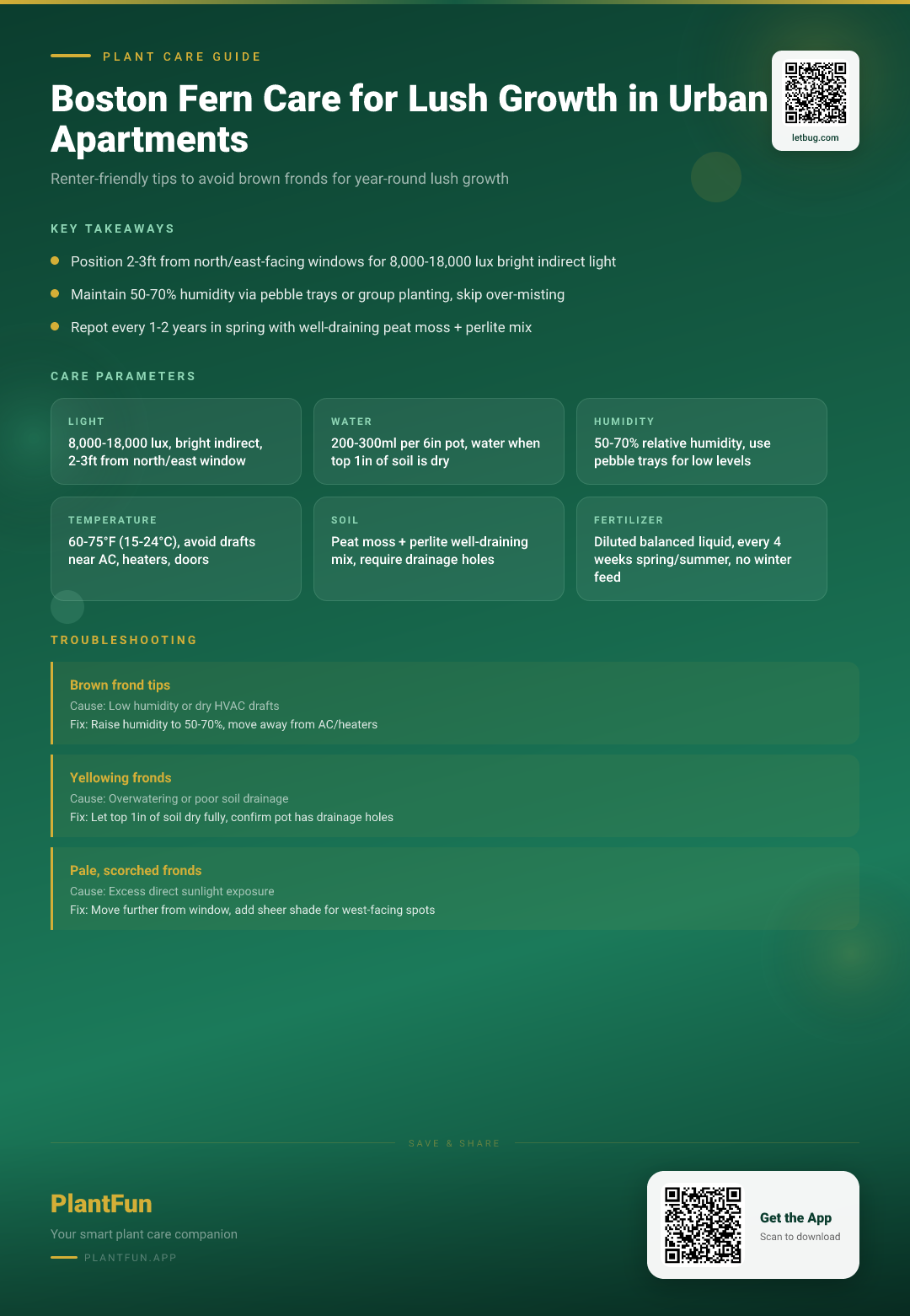
Key Takeaways
- Check soil moisture before watering — overwatering is the #1 killer of houseplants.
- Ensure your plant gets the right amount of light for its species.
- Be patient with recovery — most plants need 2–4 weeks to bounce back.
Quick Care Card
| Care Parameter | Exact Apartment-Specific Value |
|---|---|
| Light | 8,000-18,000 lux bright indirect, no midday direct sun |
| Water | 200-300ml per 6-inch pot when top 1 inch of soil is dry |
| Humidity | 50-70% relative humidity (RH) |
| Temperature | 60-75°F (15-24°C), no swings >10°F |
| Soil | 60% peat moss + 40% perlite, well-draining |
| Fertilizer | 1/2 strength balanced 10-10-10 liquid, every 4 weeks spring/summer, none in winter |
| Toxicity | Non-toxic to cats, dogs, and humans (ASPCA, 2026) |
Why Boston Ferns Struggle in Typical Apartments
Native to tropical understory habitats, Boston Ferns evolved in stable, high-humidity, warm conditions with dappled light — a stark contrast to standard urban apartment environments (Benedict, 1921). Generic care guides rarely address the unique stressors renters face: forced air HVAC that drops indoor humidity to 20-30% in winter, drafty entryways and vents that cause sudden temperature swings, limited bright indirect window space, and rules against permanent modifications like drilling for grow lights. These stressors are the leading cause of common Boston Fern issues like browning tips and frond drop, even for experienced plant owners.
Myth vs Reality: You don’t need an expensive humidifier or dedicated grow room to keep a Boston Fern thriving in an apartment. All the fixes in this guide require no permanent modifications and cost less than $10 total.
Step 1: Light Placement Checklist
Boston Ferns require 8,000-18,000 lux of bright indirect light to grow lush, full fronds (Gilman, 2007). Follow these renter-friendly rules:
- Place 2-3 feet away from a north or east-facing window for ideal filtered light
- Use a free phone lux meter app to test light levels: readings below 7,000 lux will cause sparse, pale growth, while readings above 20,000 lux will scorch fronds
- Fix for too much light: Move the fern 1 foot further back from the window, or hang a removable sheer curtain over the glass to filter harsh midday sun
- Fix for too little light: Clip a battery-powered grow light 1 foot above the fronds, set to run 12 hours per day (no drilling required) to supplement low light. This answers the common question: can Boston Fern grow in low light apartments? Yes, with minimal, temporary light supplementation.
Step 2: Watering Routine Checklist
Over and under watering are two of the top causes of drooping Boston Ferns in apartments. Follow these measurable steps:
- For a standard 6-inch potted fern, water with 200-300ml of room temperature water when the top 1 inch of soil is completely dry (test by sticking your finger 1 inch into the soil)
- Water directly onto the soil, not the fronds, until a small amount drains out the bottom of the pot
- Overwatering mistake fix (yellow fronds, mushy stems): Pour out any standing water in the saucer immediately, and let the soil dry to 2 inches deep before watering again
- Underwatering mistake fix (crispy edges, drooping fronds): Bottom water the fern by setting the pot in a tray of water for 10 minutes, then remove and let excess water drain
- How often to water Boston Fern? This works out to every 2-3 days in summer, and every 7-10 days in winter (NC State Extension, 2026). Never follow a fixed schedule — always test the soil first.
Step 3: Humidity Maintenance Checklist
Boston Fern humidity requirements sit at 50-70% RH, far higher than the 20-40% RH common in heated or air-conditioned apartments (Benedict, 1921). Low humidity is the #1 cause of Boston Fern browning tips. Use these cheap, renter-friendly hacks:
- Pebble tray: Fill a shallow tray with pebbles and water, set the fern pot on top of the pebbles (make sure the pot is not sitting directly in the water to avoid root rot). This raises local humidity by 10-15% permanently
- Group planting: Place your fern within 1 foot of other tropical plants to create a shared humid microclimate
- Skip misting alone: It only raises humidity for 10-15 minutes, so it’s not a replacement for the above methods
Step 4: Soil & Potting Checklist
Use a Boston Fern soil mix for apartments tailored to fast drainage to avoid root rot:
- Mix 60% peat moss + 40% perlite for a light, well-draining medium that holds moisture without staying soggy
- Always use a pot with drainage holes. If you want a decorative look, place the drainage hole pot inside a cache pot (no hole) and empty the cache pot after every watering
- Repot every 1-2 years in spring, only moving up 1 pot size (max 2 inches larger diameter) to avoid excess soil holding unneeded moisture
Step 5: Temperature & Airflow Checklist
Boston Ferns thrive in a stable 60-75°F (15-24°C) temperature range, with minimal fluctuations (Gilman, 2007). Follow these rules:
- Avoid placing ferns within 3 feet of AC vents, space heaters, or exterior entry doors, where temperature swings can exceed 10°F in an hour
- Fix for drafty spaces: Hang a removable thermal curtain near drafty entry doors, or move the fern to a shelf away from direct airflow
Step 6: Fertilizing Checklist
Light, regular fertilizing is the secret to how to make Boston Fern bushier:
- Use 1/2 strength balanced 10-10-10 liquid fertilizer every 4 weeks during spring and summer growing season
- Skip all fertilizer in winter, when ferns go dormant
- Overfertilization fix (brown tip burn): Leach the soil by running 3x the pot volume of water through the drainage holes to flush excess salt buildup, then wait 8 weeks before fertilizing again
Seasonal Care Calendar
Adjust your routine for seasonal apartment conditions to keep your fern thriving year round:
Winter (Boston Fern winter care)
- Reduce watering volume by 50%, and only water when the top 2 inches of soil are dry
- Add an extra pebble tray if your fern is within 5 feet of a space heater or forced air vent
- Move ferns at least 1 foot away from cold single-pane windows to avoid frost damage
Summer (Boston Fern summer watering)
- Check soil moisture daily if indoor temperatures exceed 80°F
- Add a removable sheer curtain over west-facing windows to block harsh afternoon sun
- Move ferns away from running AC units to avoid cold drafts
7 Common Boston Fern Apartment Care Mistakes & Quick Fixes
- Mistake: Placing ferns directly in front of HVAC vents What happens: Dry, fast-moving air causes 70% of Boston Fern browning tips and frond drop Instead: Move the fern 3 feet away from vents, and add a pebble tray to raise local humidity
- Mistake: Watering on a fixed schedule instead of testing soil What happens: Overwatering leads to root rot, the most common cause of drooping Boston Fern Instead: Stick your finger 1 inch into the soil every 2 days, and only water when that layer is completely dry
- Mistake: Ignoring dust buildup on fronds What happens: Dust blocks light absorption, slowing growth and leading to pale, sparse fronds Instead: Wipe fronds with a damp microfiber cloth once a month, or give the fern a quick rinse in the shower with lukewarm water
- Mistake: Using regular potting soil without added perlite What happens: Dense potting soil holds too much moisture, leading to root rot even with proper watering Instead: Use a 60% peat moss + 40% perlite mix for fast drainage
- Mistake: Fertilizing at full strength in winter What happens: Salt buildup in soil causes brown tip burn and stunted growth Instead: Stop all fertilizing in winter, and resume with 1/2 strength doses in spring
- Mistake: Placing ferns directly on a windowsill with unfiltered midday sun What happens: Direct sun scorches fronds, leaving crispy, brown patches Instead: Keep ferns 2-3 feet away from glass, or use a sheer curtain to filter light
- Mistake: Using a pot with no drainage holes What happens: Standing water at the bottom of the pot causes root rot in as little as 1 week Instead: Use a pot with drainage holes, and place it inside a decorative cache pot if you don’t want the holes visible
Voice Search FAQ
Why is my Boston Fern turning brown at the tips?
90% of brown tip cases in apartments are caused by humidity below 50% RH from forced air HVAC, or overfertilization (NC State Extension, 2026). Test your space’s humidity with a $5 hygrometer: if it’s below 50%, add a pebble tray. If you’ve fertilized in the last 4 weeks, leach the soil with 3x pot volume of water to flush excess salts.
Can I keep a Boston Fern in my bedroom with no direct sun?
Yes, as long as the space gets 8,000-18,000 lux of bright indirect light (test with a free phone lux meter app). If light levels are lower, add a renter-friendly clip-on grow light 1 foot above the fern set to run 12 hours per day. Boston Ferns are non-toxic to pets and humans, so they’re perfect for bedrooms (ASPCA, 2026).
How often should I water my Boston Fern in an apartment?
For a 6-inch pot, water with 200-300ml when the top 1 inch of soil is dry, which works out to every 2-3 days in summer and every 7-10 days in winter (NC State Extension, 2026). Avoid fixed schedules, as humidity, temperature, and light levels change week to week in apartments.
How do I make my Boston Fern bushier?
Trim off brown, dead fronds at the base every 2 months to redirect energy to new growth. Feed with 1/2 strength balanced fertilizer every 4 weeks in spring and summer, and ensure the fern gets 12,000-15,000 lux of bright indirect light daily to support new frond growth.
References
- NC State Extension. (2026). The Complete Boston Fern — NC State Extension Gardener Plant Toolbox. https://plants.ces.ncsu.edu/plants/fern-care/. Accessed 2026-02-26.
- Gilman, E. (2007). Nephrolepis exaltata Boston Fern, Sword Fern. EDIS. https://doi.org/10.32473/edis-fp427-1999. Accessed 2026-02-26.
- Benedict, R. (1921). The Boston Fern Show. American Fern Journal. https://doi.org/10.2307/1544193. Accessed 2026-02-26.
- ASPCA. (2026). Toxic and Non-Toxic Plants List — ASPCA. https://www.aspca.org/pet-care/animal-poison-control/toxic-and-non-toxic-plants. Accessed 2026-02-26.
Optional Helper: Plantfun.App
Plantfun.App identifies your plants by photo, diagnoses pests and diseases with clear fixes, and creates personalised watering and light schedules that adapt to your home conditions — a handy companion for putting this guide into daily practice.
Found an error or have suggestions? We'd love your feedback.
Need help identifying this problem?
Get instant identification, personalized care schedules, and effective pest treatment plans directly on your phone.
Sponsored • We may earn a commission from app downloads
Related Guides
The Complete Boston Fern Care Checklist for Resilient Growth in Small Urban Apartments
Stop struggling with crispy Boston Fern fronds in your apartment. Get exact humidity, light, and watering thresholds, plus a printable checklist for lush, resilient growth all year round.
Care GuideThe Budget-Friendly Boston Fern Care Checklist for Resilient Growth in Typical Apartments
Skip expensive humidifiers and fancy grow lights. Get a free 10-step budget Boston Fern care checklist to keep fronds lush even in dry, low-light typical apartments.
Care GuideThe Complete Boston Fern Care Checklist for Lush, Resilient Growth in Small Apartments
Stop watching your Boston Fern turn brown in your apartment. Grab our 10-point care checklist, exact humidity/light thresholds, and simple fixes for frond damage to keep it lush and resilient year-round.
Pest ControlAnts on Plants: What They Mean and What to Do
Ants usually aren't eating your plant. They are farming other pests.