
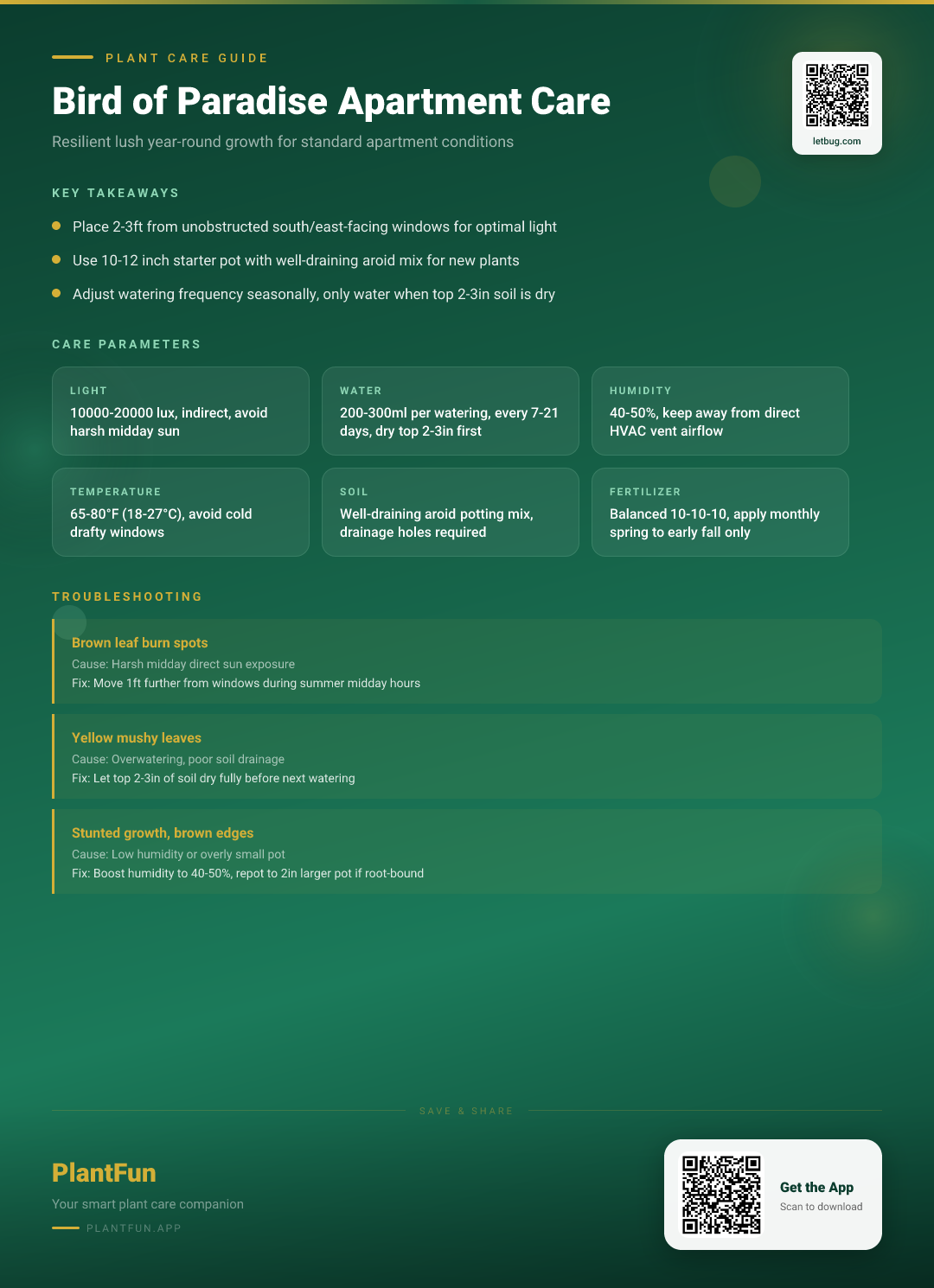
Key Takeaways
- Check soil moisture before watering — overwatering is the #1 killer of houseplants.
- Ensure your plant gets the right amount of light for its species.
- Be patient with recovery — most plants need 2–4 weeks to bounce back.
Quick Care Card
| Parameter | Exact Apartment Threshold |
|---|---|
| Light | 10,000-20,000 lux (clear midday shadow at placement spot) |
| Water | 200-300ml per watering, only when top 2-3 inches of soil are dry |
| Humidity | 40-50% relative humidity |
| Temperature | 65-80°F (18-27°C), no exposure below 55°F (13°C) |
| Soil | Well-draining aroid mix (60% potting soil, 20% perlite, 20% orchid bark) |
| Fertilizer | Half-strength 10-10-10 balanced fertilizer, monthly March-August |
| Toxicity | Toxic to cats and dogs (ASPCA, 2026) |
Why This Guide Works for Standard Apartments
Generic Bird of Paradise care advice is written for greenhouse or outdoor growing conditions, which do not match the realities of 1-2 bedroom apartments: limited natural light, dry air from heating and cooling systems, small floor plans, and drafty windows near seating areas. Native to coastal South Africa, Bird of Paradise (Strelitzia nicolai and Strelitzia reginae) evolved in sunny, mild, moderately humid conditions, but they are far more adaptable than most guides claim (NC State Extension, 2026).
Myth vs Reality: Myth: Bird of Paradise needs 6+ hours of direct full sun to grow indoors. Reality: Most apartments only get 2-4 hours of direct sun a day, which is more than enough for steady, lush growth if positioned correctly. For pet owners, note that ASPCA classifies both common Bird of Paradise species as toxic to cats and dogs, so keep plants out of reach of curious pets (ASPCA, 2026).
Understanding the Science: Strelitzia Adaptations for Apartment Living
Ornamental horticulture research confirms that Strelitzia species have thick, waxy leaves that reduce water loss, making them tolerant of the dry air common in HVAC-heated and cooled apartments (Šrámek, 1999). Their root systems are adapted to seasonal rainfall cycles, so following a seasonal watering routine instead of a fixed weekly schedule reduces the risk of overwatering, the number one cause of death for indoor Bird of Paradise plants.
Step-by-Step Basic Setup for New Bird of Paradise Owners
- Pot Selection: Choose a 10-12 inch starter pot with drainage holes, only 1-2 inches larger than the nursery pot your plant came in. Avoid oversized pots, as excess soil holds unneeded moisture that can cause root rot.
- Soil Mix: Use a well-draining Bird of Paradise soil mix for apartments: combine 60% general-purpose potting soil, 20% perlite, and 20% orchid bark to ensure excess water drains quickly (NC State Extension, 2026).
- Ideal Placement: Position your plant 2-3 feet away from an unobstructed south or east-facing window for the best light for Bird of Paradise in apartment. Quick test: Hold your hand up at the placement spot at midday on a sunny day: if you see a clear, defined shadow, you are hitting the 10,000+ lux threshold for healthy growth. If you only have north-facing windows, you can still answer the question of can Bird of Paradise grow in low light apartments: yes, but growth will be slower, and you will need to water less frequently to avoid overwatering.
Spring Care Routine (March-May)
Spring is the active new growth season for Bird of Paradise, so adjust your routine to support new leaf development:
- Watering: Follow this baseline for how often to water Bird of Paradise indoors: every 7-10 days, apply 250ml of room-temperature water when the top 2 inches of soil are completely dry.
- Fertilizer: Follow a simple Bird of Paradise fertilizing schedule indoor: apply half-strength balanced 10-10-10 fertilizer once a month to feed new growth.
- Light: Keep your plant in its 2-3 foot placement from the window to get maximum light for new leaf growth.
Summer Care Routine (June-August)
Summer brings higher temperatures, brighter midday sun, and dry air from AC use, so make these small adjustments:
- Watering: Adjust your Bird of Paradise summer watering schedule to every 7 days if indoor temperatures stay above 75°F, applying 300ml per watering when the top 2 inches of soil are dry.
- Light: Move your plant 1 foot further from windows during midday (12pm-3pm) to avoid leaf burn from intense direct sun.
- Humidity: AC use can drop indoor humidity below 40%, so group your Bird of Paradise with other plants to boost ambient levels to meet Bird of Paradise humidity requirements indoor (40-50%).
Fall Care Routine (September-November)
Fall is prep season for cold winter weather and heating system use:
- Watering: Reduce watering frequency to every 10-14 days, applying 200ml of water only when the top 2 inches of soil are dry.
- Fertilizer: Stop applying fertilizer 6 weeks before your expected first heating system turn-on, to avoid tender new growth that will be scorched by dry heater air.
- Draft Check: Test window seals near your plant for cold drafts, as Bird of Paradise draft tolerance is very low: exposure to temperatures below 55°F can damage leaves and stunt growth.
Winter Care Routine (December-February)
Winter is the dormant season for Bird of Paradise, so your goal is to protect it from stressors common to heated apartments:
- Watering: For Bird of Paradise winter care apartment routines, water only every 14-21 days, applying 200ml of water only when the top 3 inches of soil are fully dry. Growth slows significantly in winter, so the plant needs far less water.
- Draft Protection: Keep your plant at least 3 feet away from drafty windows and heater vents. If your windows get very cold in winter, move the plant to a warmer spot away from glass during cold snaps.
- Humidity: Heater air can drop humidity to 30% or lower, so use a pebble tray under the pot (fill a tray with pebbles and water, set the pot on top of the pebbles, not in the water) to boost local humidity.
Common Apartment Bird of Paradise Mistakes to Avoid
- Mistake: Overwatering during winter dormant season. What happens: Soggy soil leads to root rot, yellow leaves, and eventual plant death. Instead: Stick your finger 3 inches into the soil before watering, only water if the soil is completely dry.
- Mistake: Placing your plant within 2 feet of HVAC vents. What happens: Sudden temperature swings and dry air cause brown crispy leaf edges and leaf curl. Instead: Keep all plants at least 3 feet away from heating, cooling, and exhaust vents.
- Mistake: Using a pot that is more than 2 inches larger than the root ball. What happens: Excess soil holds moisture for weeks, leading to root rot even if you follow a correct watering schedule. Instead: Upsize pots gradually, only 1-2 inches larger, every 2-3 years when roots start growing out of the drainage holes.
- Mistake: Leaving your plant near a drafty window in winter when temperatures drop below 55°F. What happens: Leaves develop black spots, curl, and drop off, and growth is stunted for months. Instead: Move the plant to a warmer spot, or apply window insulation film to block cold drafts.
FAQ
Why is my Bird of Paradise not growing new leaves in my apartment?
If you are dealing with Bird of Paradise not growing in apartment, the most common causes are insufficient light (below 10,000 lux) or lack of fertilizer during the growing season. To learn how to get Bird of Paradise to grow new leaves, first move your plant closer to a south or east-facing window to get more light, then apply half-strength 10-10-10 fertilizer once a month during spring and summer. If you only have low light, growth will be slower, but you can add a grow light to boost levels if you want faster growth.
Can I keep my Bird of Paradise next to my apartment AC unit in summer?
No, Bird of Paradise draft tolerance is very low, and cold, dry air blowing directly from AC units will cause leaf curl, brown edges, and stunted growth. Keep your plant at least 3 feet away from AC vents, and use a standing fan to circulate air if needed, making sure the fan does not blow directly on the plant.
How often should I mist my apartment Bird of Paradise?
Misting only provides temporary humidity that evaporates within 15 minutes, so it is not an effective long-term solution for low humidity. Instead, group your plant with other plants, use a pebble tray, or a small humidifier if your indoor humidity is consistently below 40%. If you do enjoy misting, limit it to 1-2 times a week in summer, and avoid misting in winter when lower light and cooler temperatures increase the risk of fungal growth on leaves.
Troubleshooting Common Symptoms
Yellow Soft Lower Leaves
Symptom: Soft, yellow leaves at the base of the plant, no browning on leaf edges, and soggy soil.
Likely cause: Overwatering, the most common issue for indoor Bird of Paradise plants.
Fix:
- Stop watering immediately, and let the top 3 inches of soil dry completely before watering again.
- If the soil stays soggy for more than 2 weeks, repot the plant into fresh, dry aroid soil mix to prevent root rot.
Brown Crispy Leaf Edges
Symptom: Dry, brown edges on otherwise green, healthy leaves, no yellowing of the full leaf.
Likely cause: Low humidity below 40% from HVAC use, or direct airflow from vents. This is the top answer for why is my Bird of Paradise leaves turning brown for most apartment dwellers.
Fix:
- Move the plant at least 3 feet away from all heating and cooling vents to avoid direct dry airflow.
- Use a pebble tray or group with other plants to boost ambient humidity to 40-50%.
Curled Drooping Leaves
Symptom: Leaves curl inward or droop, no significant discoloration, soil is either very dry or very cold.
Likely cause: Temperature stress from drafts, underwatering, or exposure to temperatures below 55°F or above 90°F.
Fix:
- Check soil moisture: if the top 2 inches are completely dry, water with 250ml of room-temperature water.
- Move the plant away from drafty windows, AC vents, or heater units, and ensure it stays within the 65-80°F temperature range.
Stunted Growth
Symptom: No new leaves for 6+ months during spring and summer, new leaves are smaller than average.
Likely cause: Insufficient light below 10,000 lux, or lack of fertilizer during the growing season.
Fix:
- Move the plant 2-3 feet away from an unobstructed south or east-facing window to get enough light for new growth.
- Apply half-strength balanced 10-10-10 fertilizer once a month during spring and summer to support new leaf development.
References
- NC State Extension. (2026). The Complete Bird — NC State Extension Gardener Plant Toolbox. https://plants.ces.ncsu.edu/plants/paradise-care/. Accessed 2026-03-06.
- ASPCA. (2026). Toxic and Non-Toxic Plants List — ASPCA. https://www.aspca.org/pet-care/animal-poison-control/toxic-and-non-toxic-plants. Accessed 2026-03-06.
- Dunn, P.; Cockburn, A. (1996). Evolution of Male Parental Care in a Bird with Almost Complete Cuckoldry. Evolution. https://doi.org/10.2307/2410724. Accessed 2026-03-06.
- Šrámek, F. (1999). Vaughan, M.J.: The Complete Book on Cut Flower Care. Biologia plantarum. https://doi.org/10.1023/a:1001770114931. Accessed 2026-03-06.
Optional Helper: Plantfun.App
Plantfun.App identifies your plants by photo, diagnoses pests and diseases with clear fixes, and creates personalised watering and light schedules that adapt to your home conditions — a handy companion for putting this guide into daily practice.
Found an error or have suggestions? We'd love your feedback.
Need help identifying this problem?
Get instant identification, personalized care schedules, and effective pest treatment plans directly on your phone.
Sponsored • We may earn a commission from app downloads
Related Guides
The Complete Giant Bird of Paradise Care Guide for East-Facing City Apartments for Lush, Resilient Growth
Grow a lush, upright Giant Bird of Paradise in your east-facing apartment. Get exact light levels, watering amounts, and a 4-season care checklist to prevent leaf browning and stunted growth.
Care GuideGiant Bird of Paradise in Typical Apartments: The Only Care Guide You’ll Ever Need
Grow a lush, towering Giant Bird of Paradise in your apartment with our seasonal care checklist, exact light, water, and humidity thresholds, and simple tips to keep growth strong year-round.
Care GuideThe Complete Bird of Paradise Care Guide for Typical Apartments: Tips for Resilient, Lush Growth
Grow a lush, resilient Bird of Paradise even in a small standard apartment. Get exact light levels, watering amounts, and troubleshooting tips to avoid yellow leaves and stunted growth.
Pest ControlAnts on Plants: What They Mean and What to Do
Ants usually aren't eating your plant. They are farming other pests.