
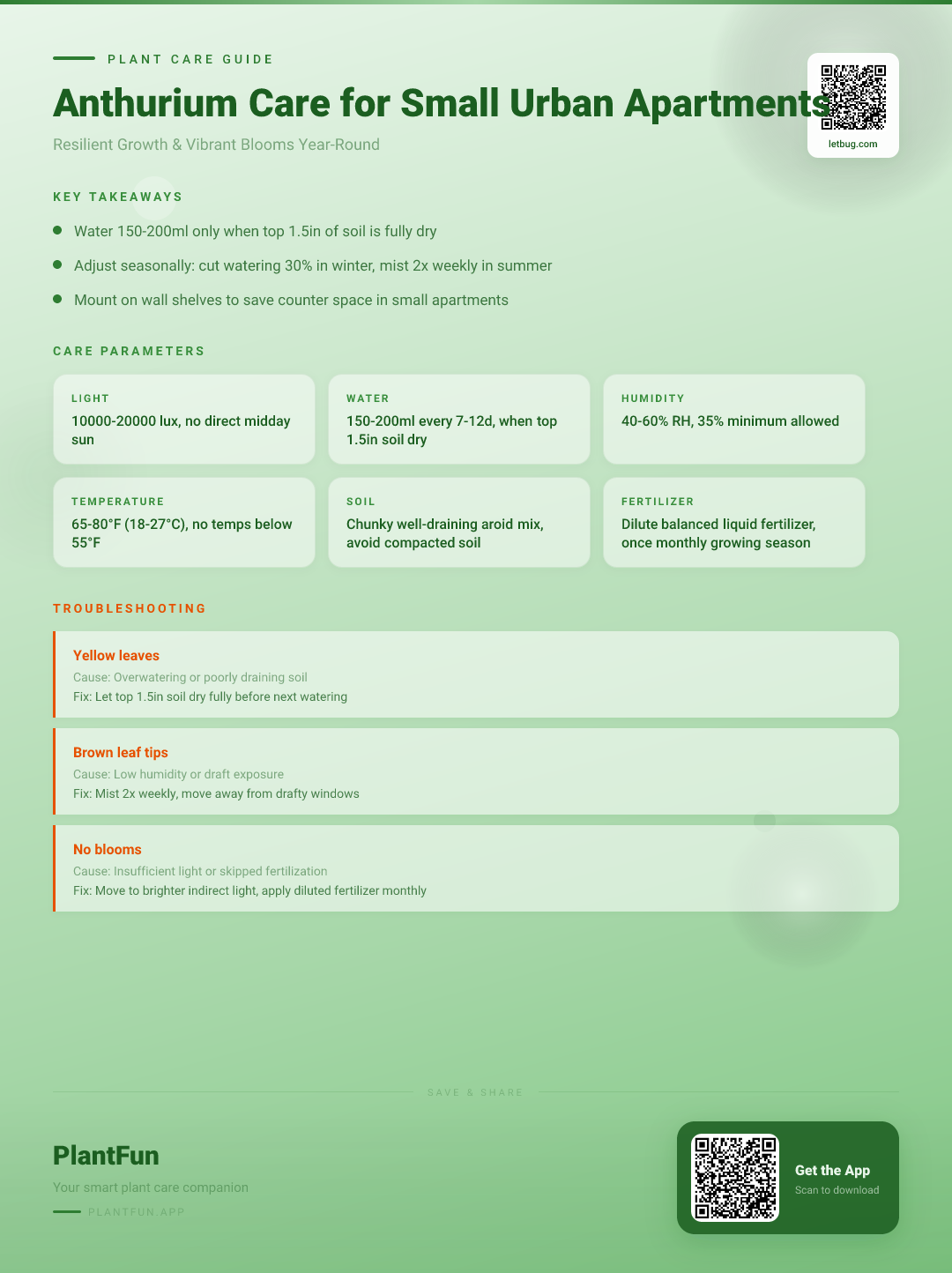
Key Takeaways
- Check soil moisture before watering — overwatering is the #1 killer of houseplants.
- Ensure your plant gets the right amount of light for its species.
- Be patient with recovery — most plants need 2–4 weeks to bounce back.
Quick Care Card: At-a-glance printable checklist for apartment-grown Anthuriums
Print this table and stick it near your plant for no-fuss routine reference:
| Parameter | Measurable Threshold |
|---|---|
| Light | 10,000-20,000 lux, bright indirect, no midday direct sun |
| Water | 150-200ml when top 1.5 inches of soil is dry, every 7-12 days |
| Humidity | 40-60% RH, 35% minimum |
| Temperature | 65-80°F / 18-27°C, never below 55°F / 13°C |
| Soil | Well-draining aroid mix (1 part orchid bark, 1 part perlite, 1 part coco coir) |
| Fertilizer | Diluted 10-10-10 liquid fertilizer (1/4 strength) every 6 weeks in spring/summer |
| Toxicity | Toxic to cats, dogs, and humans if ingested (ASPCA, 2026) |
Why This Guide Works for Apartments
Generic Anthurium care guides assume spacious home or greenhouse conditions with consistent humidity, bright light, and unlimited surface space — none of which apply to most small urban apartments. This guide is built specifically for common apartment pain points: low indirect light from north-facing windows, fluctuating humidity from central HVAC, and limited counter space.
Myth vs Reality: Myth: Anthuriums require 70%+ humidity and expensive grow lights to bloom indoors. Reality: Pot-cultured Anthurium andraeanum varieties thrive in standard apartment conditions when kept within the measurable thresholds in this guide (Journal of Plant Biotechnology, 2003). No specialized equipment is required.
Step-by-Step Routine Care Checklist
Follow these timed tasks to eliminate guesswork from your Anthurium care:
Weekly Tasks
- Stick your finger 1.5 inches into the soil to test for dryness; water with 150-200ml of room-temperature filtered water if the soil is completely dry
- Wipe leaves with a damp microfiber cloth to remove dust that blocks light absorption
- Inspect leaf undersides for signs of mealybugs or spider mites
Monthly Tasks
- Rotate the plant 90 degrees to encourage even growth and prevent leaning toward light
- Test humidity with a $5 hygrometer; mist leaves if levels drop below 35% RH
- Check that the pot is not sitting in standing water in its drainage tray
Quarterly Tasks
- Fertilize with diluted 10-10-10 liquid fertilizer during the spring and summer growing season
- Inspect drainage holes for poking roots, a sign your plant may need repotting
- Test soil pH if you notice stunted growth (target pH 5.5-6.5, per NC State Extension, 2026). If you need to adjust your mix, check out our guide to aroid potting mixes for pre-tested recipes.
Measurable Care Thresholds Deep Dive
Every value below is backed by horticultural research for indoor pot-grown Anthuriums:
- Light: 10,000-20,000 lux. Test with a free phone lux meter app held at leaf level. Levels below 10,000 lux will prevent blooming, while levels above 20,000 lux from direct midday sun will burn leaves (Šrámek, 1999).
- Humidity: 40-60% RH, with a 35% minimum. Central heating or AC can drop apartment humidity by 20-30% in extreme seasons, so monitor levels closely.
- Water: 150-200ml per watering, only when the top 1.5 inches of soil is dry. Overwatering is the #1 cause of death for apartment Anthuriums (NC State Extension, 2026).
- Temperature: 65-80°F / 18-27°C. Avoid placing plants within 2 feet of radiators, AC vents, or drafty windows, where temperatures can swing 20°F+ in a few hours.
Seasonal Care Calendar
Adjust your routine for seasonal apartment condition shifts:
- Winter (Anthurium dormancy): Reduce watering volume by 30% (100-140ml per watering), move plants 1 foot away from drafty windows, and pause fertilization. This is part of standard Anthurium winter care for heated apartments.
- Summer: Increase misting to 2x weekly if humidity drops below 40% RH, move plants 1 foot further from west-facing windows to avoid midday sun burn, and check soil moisture 1-2 days earlier than usual for Anthurium summer watering adjustments.
7 Most Common Apartment Anthurium Mistakes (And Quick Fixes)
Each fix takes 5 minutes or less to implement:
- Mistake: Watering on a fixed schedule regardless of soil moisture What happens: Root rot, Anthurium yellow leaves, mushy stems Fix: Test soil moisture with your finger before every watering, and empty drainage trays immediately after watering to prevent standing water
- Mistake: Placing plants on dark counters far from windows What happens: Stalled growth, no blooms, pale foliage Fix: Move your Anthurium to 2-3 feet from an east-facing window, which delivers ideal bright indirect light without burn
- Mistake: Placing plants directly on radiators or under AC vents What happens: Brown leaf tips, wilting, dropped blooms Fix: Move plants at least 2 feet away from HVAC outlets, and use a pebble tray to boost local humidity if needed
- Mistake: Using dense regular potting soil that holds excess moisture What happens: Soggy roots, fungal growth, root rot Fix: Repot into a well-draining aroid mix, using a pot with at least one drainage hole. If you spot mushy roots, follow our root rot troubleshooting guide to save your plant.
- Mistake: Skipping fertilization entirely What happens: Faded blooms, slow growth, smaller leaves Fix: Dilute balanced 10-10-10 fertilizer to 1/4 strength and pour over moist soil once every 6 weeks in growing season
- Mistake: Repotting every year even if roots are not overcrowded What happens: Root shock, stalled blooms for 3-6 months Fix: Only repot when roots are poking out of drainage holes, and go up just 1 pot size maximum
- Mistake: Ignoring dust buildup on leaves What happens: Reduced light absorption, higher risk of pest infestations Fix: Wipe leaves with a damp microfiber cloth once weekly; avoid commercial leaf shine products that clog leaf pores
FAQ: Why is my Anthurium not blooming in my apartment?
The two most common causes are insufficient light (below 10,000 lux) and skipped fertilization. Move your plant to a brighter spot with indirect east-facing light, and feed with diluted 10-10-10 fertilizer once every 6 weeks in growing season to trigger bloom production (NC State Extension, 2026). This is the most reliable method for how to make Anthurium bloom indoors in apartment conditions.
FAQ: Can I keep my Anthurium in a low-light apartment bedroom?
Yes, as long as you place it within 2 feet of a north or east-facing window. If light levels are below 8,000 lux, supplement with a cheap clip-on LED light for 4 hours a day to support foliage health. Note that Anthuriums will bloom less frequently in very low light, but will still produce lush, healthy leaves. For other hardy picks for dim spaces, check out our guide to low-light indoor plants.
FAQ: How often do I need to water my Anthurium in a dry heated apartment?
In winter with central heating, you will typically water your Anthurium every 10-12 days, using 100-140ml of water per watering. Always test the top 1.5 inches of soil first, as heating systems can dry soil faster or slower depending on your apartment’s temperature and air flow. This is the standard rule for Anthurium care with central heating.
Small Space Pro Tips
- Save counter space by mounting Anthuriums on floating wall shelves 2-3 feet from east-facing windows. Use lightweight plastic pots with drainage holes to reduce weight on shelf brackets.
- Budget humidity hacks (no humidifier required): Group your Anthurium with other tropical plants to create a microclimate that boosts local humidity by 10-15%, or place the pot on a pebble tray filled with 1 inch of water (ensure the pot is not sitting directly in the water to avoid root rot).
Troubleshooting Quick Reference
Yellow Leaves
Symptom: Lower leaves turn pale yellow and mushy, with stunted new growth.
Likely cause: Overwatering or poorly draining soil.
Fix:
- Stop watering immediately until the top 2 inches of soil are completely dry
- If roots are mushy, repot into fresh well-draining aroid mix and a clean pot with drainage holes
Brown Leaf Tips
Symptom: Dry, crispy brown tips on otherwise green, healthy leaves.
Likely cause: Humidity below 35% RH or exposure to hot/cold drafts from HVAC systems.
Fix:
- Move the plant at least 2 feet away from radiators, AC vents, and drafty windows
- Mist leaves 2x weekly or place on a pebble tray to raise local humidity
Wilting
Symptom: Limp, droopy leaves even when the soil feels damp.
Likely cause: Root rot from overwatering, or exposure to temperatures below 55°F / 13°C.
Fix:
- Check the root ball for mushy, brown roots, trim away damaged roots and repot if needed
- Move the plant to a spot with consistent temperatures between 65-80°F / 18-27°C
Faded Blooms
Symptom: Bright red or pink spathes fade to pale pink or green and drop early.
Likely cause: Too much direct sun, or insufficient fertilization during the growing season.
Fix:
- Move the plant 1 foot further from west or south-facing windows to avoid direct midday sun
- Feed with diluted 10-10-10 fertilizer once every 6 weeks in spring and summer to support new bloom growth
References
- NC State Extension. (2026). The Complete Anthurium Care — NC State Extension Gardener Plant Toolbox. https://plants.ces.ncsu.edu/plants/anthurium-care/. Accessed 2026-03-02.
- Šrámek, F. (1999). Vaughan, M.J.: The Complete Book on Cut Flower Care. Biologia plantarum. https://doi.org/10.1023/a:1001770114931. Accessed 2026-03-02.
- Journal of Plant Biotechnology. (2003). In Vitro Propagation of Anthurium andreanum ′Atlanta′ Developed for Pot Culture. https://doi.org/10.5010/jpb.2003.30.2.179. Accessed 2026-03-02.
- ASPCA. (2026). Toxic and Non-Toxic Plants List — ASPCA. https://www.aspca.org/pet-care/animal-poison-control/toxic-and-non-toxic-plants. Accessed 2026-03-02.
Optional Helper: Plantfun.App
Plantfun.App identifies your plants by photo, diagnoses pests and diseases with clear fixes, and creates personalised watering and light schedules that adapt to your home conditions — a handy companion for putting this guide into daily practice.
Found an error or have suggestions? We'd love your feedback.
Need help identifying this problem?
Get instant identification, personalized care schedules, and effective pest treatment plans directly on your phone.
Sponsored • We may earn a commission from app downloads
Related Guides
The Complete Anthurium Care Checklist for Resilient Growth in Typical Apartments
Stop struggling to keep your anthurium thriving in your apartment. Get our evidence-based checklist with exact light, water, humidity parameters to avoid yellow leaves and get year-round consistent blooms.
Care GuideWhy Your Anthurium Isn’t Blooming in a Low-Lit Home Office: 7 Fixes That Actually Work
Stop wondering why your office anthurium never blooms. Get exact lux levels, 50ml watering amounts, humidity targets, and 7 science-backed fixes to produce bright, long-lasting spathes all year.
Care GuideThe Complete Anthurium Care Guide for 500 Sq Ft Studio Apartments: Grow Blooms Year-Round
Grow vibrant, year-round anthurium blooms even in a tiny 500 sq ft studio apartment. Get exact light levels, measured watering amounts, and space-saving hacks that fit your small living space.
Pest ControlAnts on Plants: What They Mean and What to Do
Ants usually aren't eating your plant. They are farming other pests.