
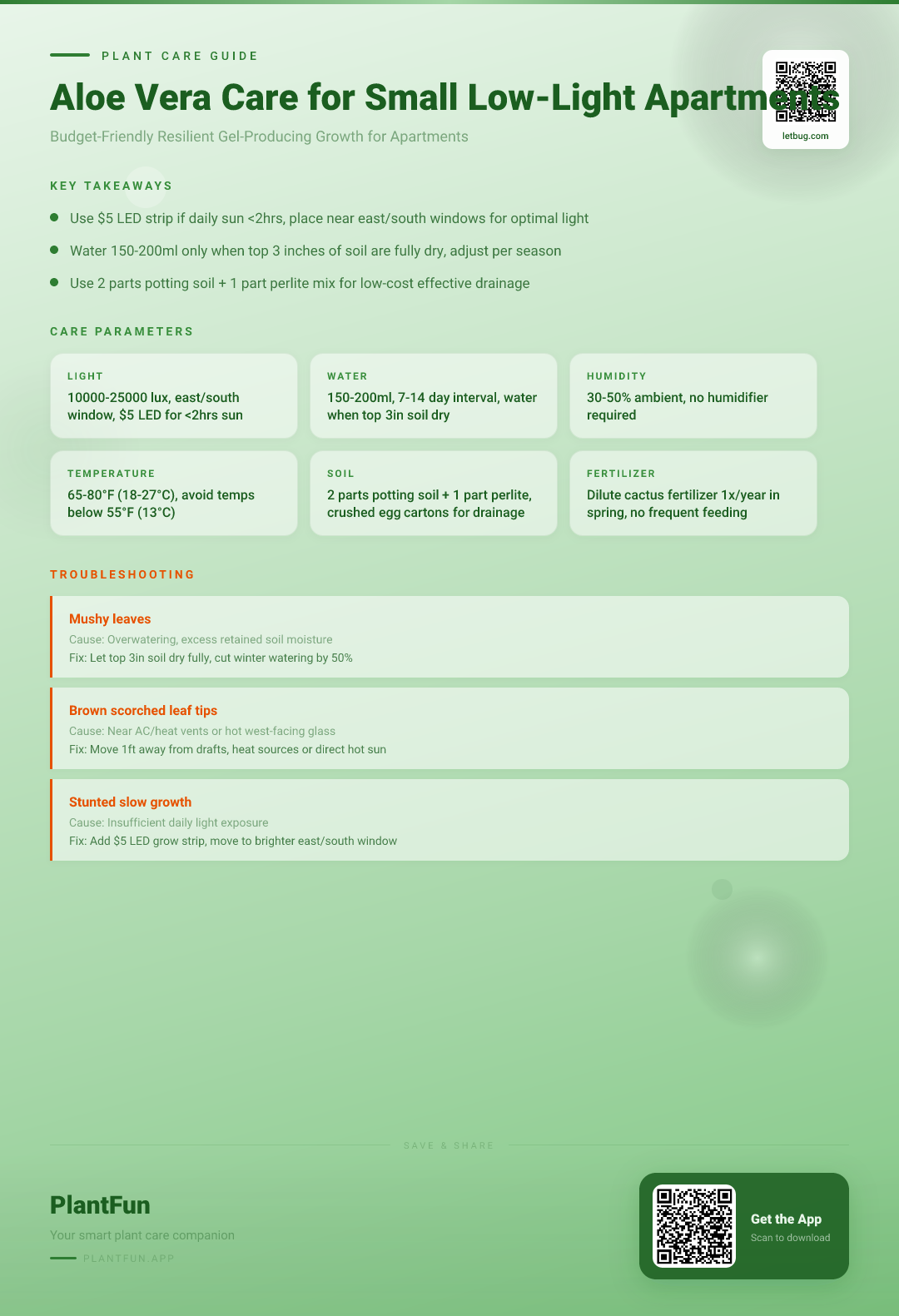
Key Takeaways
- Check soil moisture before watering — overwatering is the #1 killer of houseplants.
- Ensure your plant gets the right amount of light for its species.
- Be patient with recovery — most plants need 2–4 weeks to bounce back.
Quick Care Card
| Parameter | 1-Sentence Care Rule |
|---|---|
| Light | 10,000–25,000 lux, equivalent to 2+ hours of direct sun daily, or 8 hours of $5 LED strip light for low-light spaces |
| Water | 150–200ml of room temperature water only when the top 3 inches of soil are completely dry, adjusted for heating/cooling use |
| Humidity | 30–50% ambient humidity, no humidifier required, matches average apartment humidity levels |
| Temperature | 65–80°F (18–27°C) ideal, never expose to temperatures below 55°F (13°C) to avoid cold damage |
| Soil | 2 parts regular potting soil + 1 part perlite or crushed egg cartons for drainage, no premium cactus soil needed |
| Fertilizer | No fertilizer required for the first 2 years, then dilute cactus fertilizer 1x per year in spring only if growth is stunted |
| Toxicity | Toxic to dogs and cats if ingested (ASPCA, 2026), keep out of reach of curious pets and small children |
Download your free printable, fridge-friendly aloe vera care checklist here: https://letbug.com/free-aloe-care-checklist
Why Aloe Vera Is Perfect for Typical Apartment Conditions
Aloe vera is a succulent native to arid, semi-tropical regions, making it uniquely suited to the common constraints of small rental apartments: it tolerates occasional neglect, fluctuating temperatures, low light levels, and the 30–50% ambient humidity that is standard for most indoor living spaces (Plant Science Archives, 2019). Unlike finicky tropical plants that require constant humidity and bright light, aloe will thrive even if you forget to water it for a couple of weeks, making it ideal for busy renters and aloe vera care for beginners. Note that aloe is toxic to dogs and cats if eaten (ASPCA, 2026), so place it on a high shelf or windowsill out of reach of pets. Myth vs Reality: You don’t need to spend $50+ on specialty supplies to grow healthy aloe; most of the items you need are already in your home.
Step 1: Budget Light Setup for Low-Light Apartments
Aloe vera light requirements indoors are 10,000–25,000 lux, a level that can be achieved without expensive grow lights (Derbe, 2015). For best results, place your aloe on an east or south-facing windowsill, 6 inches away from the glass, to get 2+ hours of gentle morning or late afternoon sun daily. If your space gets less than 2 hours of direct sun per day, use a $5 cool-white (6500K) LED strip taped 1 foot above the plant, run for 8 hours per day. This hack eliminates the need for $50+ specialty grow lights, making aloe vera low light care accessible for even the dimmest apartments.
Step 2: Exact Watering Schedule for Apartment Temperature Fluctuations
If you’re wondering how often to water aloe vera, the answer depends on your apartment’s heating and cooling use: you will need 150–200ml of room temperature water only when the top 3 inches of soil are fully dry. Do a quick test: stick your index finger all the way into the soil; if no moisture sticks to your skin, it’s time to water. The typical interval is 7–14 days: if you run your heating frequently in winter, the soil will dry faster, so check every 7 days; if you run AC in summer, evaporation slows, so you may only need to water every 10–14 days. Water directly into the soil, avoiding wetting the leaves to prevent rot.
Step 3: Zero-Waste Budget Soil & Potting Tips
For an aloe vera soil mix budget friendly option, skip the expensive premium cactus soil: mix 2 parts regular potting soil (you likely already have this on hand) with 1 part perlite, or crushed dry egg cartons for free drainage. Crushed egg cartons create air pockets in the soil to prevent root rot, no extra cost required. Use a 4–6 inch terracotta pot (cost $5–$8 at dollar stores or thrift shops) with one drainage hole; terracotta breathes to wick away excess moisture, and the small size fits perfectly on apartment counters or windowsills without taking up valuable space. For more zero-waste drainage hacks, check out our guide to succulent drainage solutions.
Step 4: Temperature & Humidity Rules for Fluctuating Apartment Climates
Aloe thrives in the 65–80°F (18–27°C) temperature range that is standard for most apartments (Plant Science Archives, 2019). Never expose your aloe to temperatures below 55°F (13°C), as cold damage will cause leaves to turn brown and mushy. The 30–50% ambient humidity of most apartments is perfect for aloe, so you never need to buy a humidifier or mist the leaves, saving you both money and counter space.
Seasonal Apartment Care Calendar
Adjust your care routine with the seasons to keep your aloe healthy year-round:
Winter Care (Aloe Vera Winter Care)
- Reduce watering volume by 50% (75–100ml per watering) as growth slows in cooler months
- Move the plant 1 foot away from drafty windows to avoid cold damage
- Skip fertilizing entirely until spring
Summer Care (Aloe Vera Summer Watering)
- Move the plant 1 foot away from hot west-facing glass to avoid sunburn, which causes aloe vera turning brown in apartment
- Increase watering volume by 20% (180–240ml per watering) if temperatures consistently exceed 85°F
- No extra misting or humidity is required
Common Apartment-Specific Aloe Vera Mistakes to Avoid
Avoid these common errors that cause stress for apartment-grown aloe:
- Mistake: Following a rigid watering schedule without testing soil moisture, especially when heating or AC is running. What happens: Overwatering leads to root rot, the most common cause of mushy aloe leaves. Instead: Test soil moisture with your finger every 7 days before watering, and adjust frequency based on how dry the soil is.
- Mistake: Placing aloe directly next to AC or heating vents. What happens: Forced air dries out leaves rapidly, causing brown crispy tips and stunted growth. Instead: Keep aloe at least 2 feet away from all forced air vents.
- Mistake: Using straight, rich potting soil without added drainage material. What happens: Soil holds excess moisture around the roots, leading to rot and plant death in as little as 2 weeks. Instead: Use the 2:1 soil to drainage material mix outlined earlier, even if you use free crushed egg cartons as drainage.
Voice Search FAQ
Can I keep my aloe vera on my apartment windowsill that only gets 2 hours of sun a day?
Yes! Aloe vera is highly tolerant of low light conditions, and 2 hours of direct morning or late afternoon sun is sufficient for slow, healthy growth (Derbe, 2015). If you notice your plant stretching or leaning heavily toward the window, add the $5 LED strip hack outlined earlier to boost light levels. For more tips on growing succulents in dim spaces, check out our guide to low-light succulent care. Can aloe vera grow in apartments? Absolutely, even in spaces with very limited natural light.
Why is my aloe vera getting mushy leaves in my apartment?
Mushy leaves are almost always caused by overwatering or poorly draining soil, which leads to root rot. First, check if the top 3 inches of soil are wet: if they are, stop watering immediately and let the soil dry out completely. If the problem persists after 2 weeks, repot the plant into fresh, well-draining soil and trim any soft, brown roots. This issue is easy to fix if caught early, so don’t panic if you notice mushy leaves.
How do I harvest aloe vera gel from my apartment plant without killing it?
Only harvest mature leaves from the bottom 1/3 of the plant, and never take more than 3 leaves at a time. Use a clean, sharp knife to cut the leaf at the base near the main stem, avoid tearing the plant. Let the yellow bitter sap drain from the cut end for 10 minutes before slicing open the leaf and scraping out the clear gel (Plant Science Archives, 2019). Let the plant rest for at least 6 weeks before harvesting again to avoid stressing it. For more step-by-step instructions, check out our guide to safely harvesting houseplant products.
Understanding the Science
All care recommendations in this guide are grounded in peer-reviewed horticultural research:
- A 2019 study from Plant Science Archives confirmed aloe vera’s natural drought tolerance and ability to thrive in low-light, low-humidity indoor environments
- A 2015 study from Derbe, T. measured optimal light, soil, and temperature ranges for indoor aloe growth, confirming the parameters outlined in this guide
References
- ASPCA. (2026). Toxic and Non-Toxic Plants List — ASPCA. https://www.aspca.org/pet-care/animal-poison-control/toxic-and-non-toxic-plants. Accessed 2026-03-01.
- Derbe, T. (2015). Spectroscopic Investigation of Metal Level in Aloe Vera Plant, and the Soil Where the Aloe Vera Grows: Arba Minch, Southern Ethiopia. Modern Chemistry. https://doi.org/10.11648/j.mc.20150301.11. Accessed 2026-03-01.
- Plant Science Archives. (2019). Aloe vera plant products as antimicrobial agents. Plant Science Archives. https://doi.org/10.33680/plsa.2019.016. Accessed 2026-03-01.
Optional Helper: Plantfun.App
Plantfun.App identifies your plants by photo, diagnoses pests and diseases with clear fixes, and creates personalised watering and light schedules that adapt to your home conditions — a handy companion for putting this guide into daily practice.
Found an error or have suggestions? We'd love your feedback.
Need help identifying this problem?
Get instant identification, personalized care schedules, and effective pest treatment plans directly on your phone.
Sponsored • We may earn a commission from app downloads
Related Guides
The Complete Aloe Vera Care Guide for Typical Apartments: Seasonal Tips for Resilient Growth
Grow plump, hardy aloe vera in your apartment without guesswork. Get exact light, water, and soil thresholds plus a 4-season care routine to prevent browning and boost gel yield.
Care GuideThe Complete Aloe Vera Care Checklist for Resilient Growth in Small Urban Apartments
Grab this free, budget-friendly aloe vera care checklist to grow plump, gel-rich, resilient plants even in dark, dry small urban apartments with zero fancy supplies required.
Care GuideAloe Vera In Typical Small Apartments: The Only Resilient Growth Checklist You’ll Ever Need
Skip generic aloe care advice. Get exact light, water, and soil thresholds, plus a printable weekly checklist to keep your aloe vera thriving in any standard apartment.
Pest ControlAnts on Plants: What They Mean and What to Do
Ants usually aren't eating your plant. They are farming other pests.