
Key Takeaways
- Check soil moisture before watering — overwatering is the #1 killer of houseplants.
- Ensure your plant gets the right amount of light for its species.
- Be patient with recovery — most plants need 2–4 weeks to bounce back.
If you’re a renter in a 1-bedroom urban apartment, you’ve probably struggled to keep plants alive amid dry radiator heat, limited window space, and no permission to drill hanging shelves. Aloe vera is one of the most forgiving succulents, but generic care guides rarely account for apartment-specific constraints. This seasonal, renter-friendly guide gives you exact, measurable care thresholds to grow plump, gel-rich aloe without guesswork.
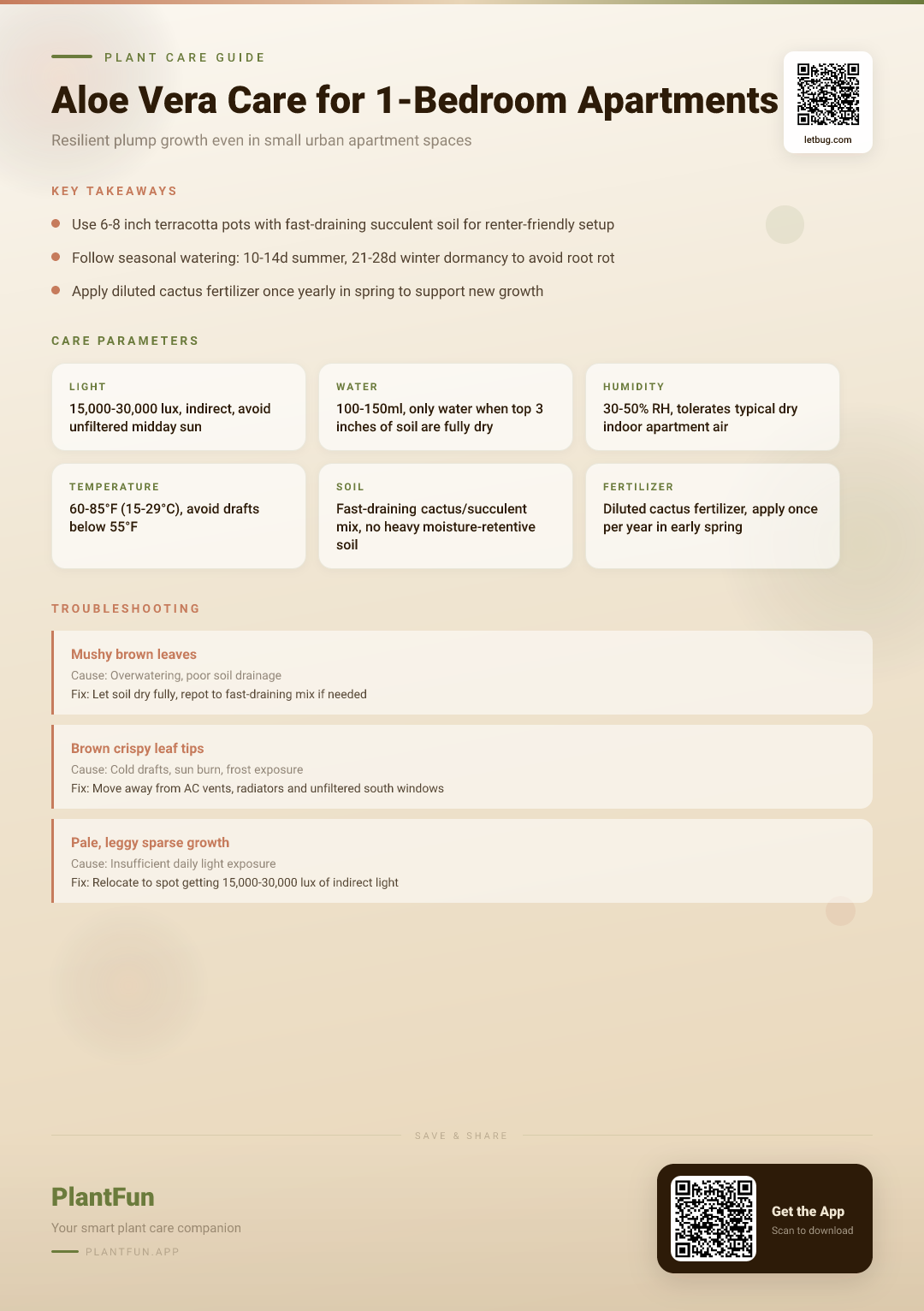
Quick Care Card
| Parameter | Exact Threshold for Apartment Aloe |
|---|---|
| Light | 15,000-30,000 lux (bright indirect light, 1-3ft from unobstructed east/south window) |
| Water | 100-150ml only when top 3 inches of soil are completely dry |
| Humidity | 30-50% (no misting required for most apartments) |
| Temperature | 60-85°F / 15-29°C (Plant Science Archives, 2019) |
| Soil | Fast-draining mix: 2 parts succulent soil + 1 part perlite |
| Fertilizer | Diluted (50% strength) cactus fertilizer 1x/year in early spring |
| Toxicity | Mildly toxic to cats and dogs if ingested (ASPCA, 2026) |
Print a condensed version of this care card to tape to your fridge for quick seasonal reminders, so you never second-guess watering or placement.
Why Aloe Vera Thrives (or Struggles) in Typical Apartments
Aloe vera is native to the arid Arabian Peninsula, so it naturally tolerates the low humidity common in heated and air-conditioned apartments (Plant Science Archives, 2019). But three common apartment stressors often lead to poor health:
- Dry forced-air heat in winter strips moisture from leaf tips, causing brown, crispy edges
- Drafty AC vents in summer shock root systems, leading to leaf drop
- Limited south-facing light leads to leggy, stretched growth and reduced gel production
A common question for new growers is: Can aloe vera survive in low light apartments? Yes, but if your light levels are below 10,000 lux (you can test this with a free phone light meter app), you’ll need a cheap clip-on grow light to supplement 4 hours a day, no drilling required.
Step-by-Step Aloe Vera Setup for Renters
No permanent modifications needed for this simple setup:
- Pot selection: Choose a 6-8 inch unglazed terracotta pot with a drainage hole. Terracotta wicks away excess moisture, making it almost impossible to overwater if you follow the soil moisture rule. Avoid plastic pots, which trap moisture for longer.
- Soil mix: The best soil for aloe vera in apartments is a fast-draining blend of 2 parts pre-mixed succulent soil and 1 part perlite. Skip regular potting soil, which retains too much moisture and leads to root rot.
- Renter-friendly placement: Pick a spot that requires no drilling:
- 1-3ft from an east or south-facing window sill
- A clip-on shelf attached to window trim with removable adhesive clips
- The top of a bookshelf within 3ft of a bright window
- A rolling cart you can move to follow seasonal light changes
Never place your aloe directly on top of a radiator or within 2ft of a running AC vent.
Spring Aloe Vera Care Routine
Spring is the start of aloe’s active growth period, so this is the best time to encourage fast, resilient growth:
- Repotting cues: If roots are growing out of the drainage hole, or the plant is pushing itself up out of the pot, repot into a terracotta pot 1 inch larger than the current one.
- Fertilizer: Apply 50% strength diluted cactus fertilizer once in early spring, this is the only fertilization your aloe needs all year to support new growth.
- Watering adjustment: As daylight hours increase, start checking soil moisture every 14 days. Water 100-150ml only when the top 3 inches of soil are completely dry.
If you’re wondering how to make aloe vera grow faster, avoid overfertilizing (which stunts growth) and make sure it gets at least 15,000 lux of light a day.
Summer Aloe Vera Care Routine
Summer requires small adjustments to avoid sunburn and overwatering:
- Watering schedule: Aloe vera summer watering runs on a 10-14 day cycle, but always check soil moisture first. If the top 3 inches are still moist, wait 3 days and check again. Never water on a fixed schedule if soil is damp.
- Sunburn prevention: Unfiltered south-facing window light over 35,000 lux can cause sunburn, which appears as permanent brown, crispy patches on leaves. To prevent this, hang a cheap sheer curtain over the window during midday hours, or move the plant 1ft further back from the glass in July and August. For aloe vera sunburn treatment, trim off damaged leaves and adjust placement to avoid further direct sun.
- AC draft protection: Keep your aloe at least 2ft away from running AC units, cold drafts can shock the plant and cause leaf drop.
Fall Aloe Vera Care Routine
As daylight hours decrease, aloe slows its growth, so adjust your routine to prepare for winter:
- Taper watering: Start checking soil moisture every 21 days, only water 100-150ml if the top 3 inches are completely dry. The plant uses far less water as growth slows.
- Prepare for heating use: If your apartment uses radiator heat, move your aloe at least 3ft away from all radiators before you turn the heat on for the season. Dry forced heat will strip moisture from leaf tips and cause brown edges.
- Adjust placement: If nighttime temperatures drop below 55°F / 13°C, move your aloe away from drafty window sills, cold glass can damage leaf tips.
Winter Aloe Vera Care Routine
Aloe goes dormant in winter, so this is the highest risk period for root rot for apartment growers. Follow these aloe vera winter care rules:
- Watering schedule: Water 100-150ml only every 21-28 days, and wait until the top 4 inches of soil are completely dry before watering. Overwatering in winter is the leading cause of apartment aloe death.
- Light adjustment: Move your aloe to the brightest spot in your apartment to compensate for shorter daylight hours. If light levels drop below 10,000 lux, use a clip-on grow light for 4 hours a day.
- Frost protection: Never let aloe leaves touch cold window glass. If outdoor temperatures drop below 32°F / 0°C, move the plant 2ft back from the window overnight to avoid frost damage to leaf tips.
Common Apartment Aloe Vera Mistakes to Avoid
These are the top 5 errors new apartment aloe growers make, with simple fixes:
- Mistake: Watering on a fixed schedule without checking soil moisture first. What happens: Overwatering leads to root rot, the #1 cause of aloe death in apartments. Aloe vera root rot signs include mushy brown leaves, a soft stem, and a sour smell coming from the soil. Instead: Stick your finger 3 inches into the soil, only water if it is completely dry, no exceptions.
- Mistake: Using regular potting soil instead of fast-draining succulent mix. What happens: Heavy soil retains moisture for weeks, causing roots to suffocate and rot. Instead: Use a mix of 2 parts succulent soil and 1 part perlite for optimal drainage.
- Mistake: Placing the plant more than 4ft away from a bright window. What happens: Low light causes leggy, stretched growth, pale leaves, and reduced gel production. Instead: Keep your aloe within 3ft of an unobstructed east or south-facing window, or use a clip-on grow light if light is limited.
- Mistake: Leaving aloe in direct unfiltered midday sun in summer. What happens: Sunburn appears as brown, crispy patches on leaves that never heal. Instead: Hang a sheer curtain over south-facing windows in summer, or move the plant 1ft further back from the glass during midday hours.
- Mistake: Fertilizing more than once a year, or using full-strength fertilizer. What happens: Excess fertilizer burns the roots, causing brown leaf tips and stunted growth. Instead: Fertilize once per year in early spring with cactus fertilizer diluted to 50% strength.
Myth vs Reality: Myth: Aloe needs regular misting to thrive in dry apartments. Reality: Aloe is adapted to arid climates, so it tolerates 30-50% humidity perfectly. Misting can cause leaf rot if water sits in the crevices between leaves, so skip this step entirely.
Frequently Asked Questions
Why is my apartment-grown Aloe Vera getting mushy brown leaves?
Mushy brown leaves are almost always a sign of root rot, caused by overwatering or poorly draining soil. To diagnose, gently tug the plant out of its pot: if roots are black and mushy instead of firm and light tan, you have root rot.
Fix:
- Cut off all mushy, black roots with clean, sharp scissors
- Let the remaining root ball air dry for 24 hours
- Repot into fresh, fast-draining succulent soil in a clean terracotta pot
- Wait 7 days before watering to let roots reestablish
Can I keep my Aloe Vera on my apartment fire escape in the summer?
Yes, as long as temperatures stay between 60-85°F / 15-29°C (Plant Science Archives, 2019). If nighttime temperatures drop below 55°F / 13°C, bring it inside immediately, as cold shock can damage leaves. Make sure it gets partial shade during midday hours, as direct unfiltered sun for more than 2 hours a day can cause sunburn. Never leave it out if rain is forecast, as excess standing water can cause root rot.
How do I harvest Aloe gel from my apartment-grown plant without killing it?
Follow this aloe vera gel harvest guide to safely get gel without harming your plant:
- Only harvest leaves from mature plants that are at least 3 years old and have at least 8 full, plump leaves.
- Choose 1-2 of the outermost, lowest leaves (these are the oldest and have the highest gel concentration).
- Cut the leaf off at the base with a clean, sharp knife. Never take more than 1/3 of the plant’s leaves at one time.
- Let the cut end of the leaf drain for 10 minutes to release aloin, a yellow sap that can irritate sensitive skin.
- Slice the leaf open lengthwise and scrape out the clear gel with a clean spoon.
Harvested gel can be stored in an airtight container in the fridge for up to 1 week. A 2015 study found that home-harvested aloe gel has the same antimicrobial properties as store-bought gel when stored properly (Derbe, 2015). Note that aloe is mildly toxic to cats and dogs if ingested, so keep harvested gel and cut leaves away from pets (ASPCA, 2026).
References
- American Society for the Prevention of Cruelty to Animals. (2026). Toxic and Non-Toxic Plants List — ASPCA. https://www.aspca.org/pet-care/animal-poison-control/toxic-and-non-toxic-plants. Accessed 2026-03-04.
- Plant Science Archives. (2019). Aloe vera plant products as antimicrobial agents. Plant Science Archives. https://doi.org/10.33680/plsa.2019.016. Accessed 2026-03-04.
- Derbe, T. (2015). Spectroscopic Investigation of Metal Level in Aloe Vera Plant, and the Soil Where the Aloe Vera Grows: Arba Minch, Southern Ethiopia. Modern Chemistry. https://doi.org/10.11648/j.mc.20150301.11. Accessed 2026-03-04.
Optional Helper: Plantfun.App
Plantfun.App identifies your plants by photo, diagnoses pests and diseases with clear fixes, and creates personalised watering and light schedules that adapt to your home conditions — a handy companion for putting this guide into daily practice.
Found an error or have suggestions? We'd love your feedback.
Need help identifying this problem?
Get instant identification, personalized care schedules, and effective pest treatment plans directly on your phone.
Sponsored • We may earn a commission from app downloads
Related Guides
Aloe Vera in Small Urban Apartments: The Budget Care Checklist for Resilient Growth
Grow plump, resilient aloe vera in your small urban apartment without spending extra on fancy plant supplies. Grab our free printable checklist with exact light, water, and soil parameters for hassle-free low-effort care.
Care GuideThe Complete Aloe Vera Care Guide for Typical Apartments: Seasonal Tips for Resilient Growth
Grow plump, hardy aloe vera in your apartment without guesswork. Get exact light, water, and soil thresholds plus a 4-season care routine to prevent browning and boost gel yield.
Care GuideThe Complete Aloe Vera Care Guide for Typical Apartments: Tips for Resilient Lush Growth
Grow plump, resilient Aloe Vera in your apartment with exact light levels, watering amounts, and a free 5-point weekly checklist that prevents common issues like mushy leaves and brown tips.
Pest ControlAnts on Plants: What They Mean and What to Do
Ants usually aren't eating your plant. They are farming other pests.