
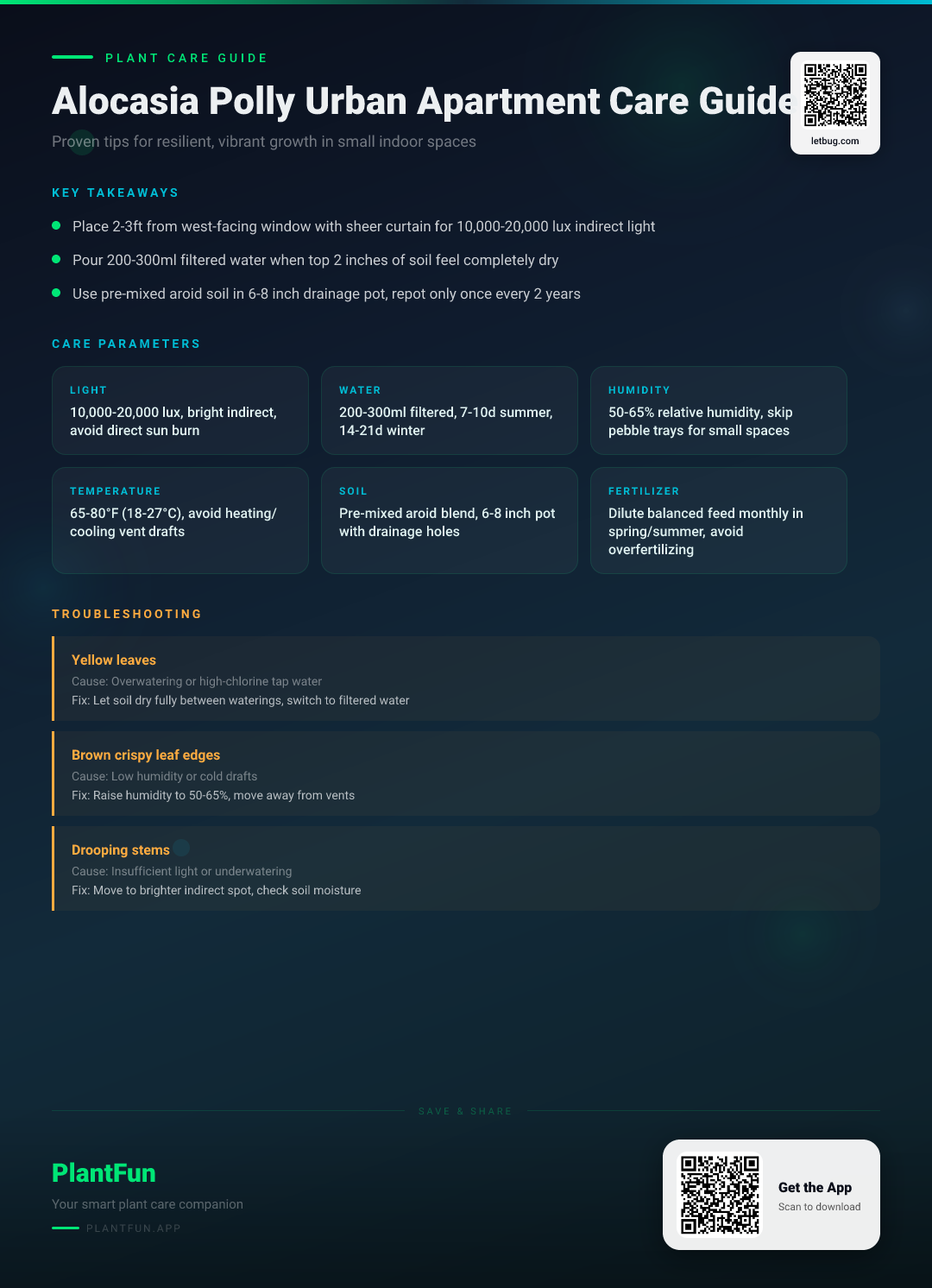
Key Takeaways
- Check soil moisture before watering — overwatering is the #1 killer of houseplants.
- Ensure your plant gets the right amount of light for its species.
- Be patient with recovery — most plants need 2–4 weeks to bounce back.
Quick Care Card: At-a-glance reference for Alocasia Polly apartment care
| Care Parameter | Apartment-Specific Measurable Threshold |
|---|---|
| Light | 10,000–20,000 lux bright indirect light, 2–3ft from west-facing window with sheer curtain |
| Water | 200–300ml filtered water when top 2 inches of soil are dry; 7–10 days in summer, 14–21 days in winter |
| Humidity | 50–65% relative humidity, no pebble trays required |
| Temperature | 65–80°F (18–27°C), keep 3ft away from HVAC vents and drafty doors |
| Soil | Pre-mixed aroid blend, 6–8 inch pot with drainage holes, repot once every 2 years |
| Fertilizer | 1/2 strength balanced aroid fertilizer, once monthly only in spring and summer |
| Toxicity | Toxic to cats, dogs, and humans if ingested (ASPCA, 2026) |
Why Alocasia Polly Struggles in Typical Apartments
Native to the Southeast Asian rainforest understory, Alocasia Polly evolved to thrive in consistent dappled light, 70–90% humidity, and steady warm temperatures year-round (NC State Extension, 2026). The average urban apartment is a stark mismatch: baseline humidity hovers at 30–40% (even lower when forced heating or AC runs), light is either too dim in interior spaces or too harsh when unfiltered through windows, and drafts from vents or exterior doors cause frequent temperature swings. This gap is the top reason new owners struggle with how to keep Alocasia Polly alive in apartments, not because the plant is inherently fussy.
Step 1: Light Placement for Small Apartment Spaces
Alocasia Polly light needs fall exactly between 10,000–20,000 lux of bright indirect light (NC State Extension, 2026) — no guesswork needed. For most apartments, the ideal spot is 2–3ft from a west-facing window, which delivers gentle morning light and soft late-afternoon sun that won’t burn leaves. If your west-facing window gets harsh summer sun, hang a 30% light-filtering sheer curtain to cut intensity without reducing total light exposure. For dim interior spaces, use a full-spectrum grow light placed 12 inches above the plant for 12 hours a day; check out our curated list of small-space grow lights perfect for apartment use if you need recommendations.
Step 2: Exact Watering Schedule for Dry Apartment Conditions
Forget generic “water when the soil feels dry” advice — we have exact measurements for apartment conditions. Pour 200–300ml of filtered, room-temperature water only when the top 2 inches of soil feel completely dry (stick your index finger 2 inches deep; no moisture on your skin means it’s time to water). Alocasia Polly summer watering falls every 7–10 days when growth is active, while in winter, you’ll only need to water every 14–21 days as growth slows and forced heating dries out air (Surahmaida & Aisa, 2025). Myth vs reality: You don’t need to drench the pot until water runs out the bottom every time; the 200–300ml amount is calibrated for 6–8 inch apartment pots to moisten the root zone without causing root rot from oversaturated soil. This answers the most common question for new owners: how often to water Alocasia Polly in dry, variable apartment conditions.
Step 3: Humidity & Temperature Adjustments for Apartments
Alocasia Polly humidity requirements are 50–65% relative humidity (NC State Extension, 2026). Skip pebble trays entirely — they only raise humidity by 2–3% at most, which is not enough to support healthy growth. Small-space apartment hacks include grouping your Alocasia with other tropical plants (transpiration from surrounding plants raises local humidity by 10–15%), running a small desktop humidifier 4–6 hours a day near the plant, or placing it in a bright bathroom that gets daily shower steam. See our full list of apartment-friendly humidity hacks for tropical plants for more low-effort ideas. Keep temperatures between 65–80°F (18–27°C) at all times, and keep the plant at least 3ft away from heating vents, AC units, and drafty exterior doors to avoid temperature shock that triggers leaf drop.
Step 4: Soil & Potting for Limited Apartment Storage
No need to store 5 different soil components for custom mixes — use a pre-mixed aroid soil blend (containing perlite, orchid bark, and coconut coir for fast drainage) to cut down on mess and storage space. If you need help picking a blend, check out our guide to the best pre-mixed aroid soils for small apartments. Use a 6–8 inch pot with drainage holes, and only repot once every 2 years, ideally in early spring, to reduce mess and avoid root shock. For Alocasia Polly small space care, choose a lightweight plastic pot with a built-in hidden saucer to catch excess water, no bulky decorative planter required.
Seasonal Care Calendar for Apartment Dwellers
This calendar is tailored specifically for apartments with forced heating and cooling:
- Spring (March–May): Once temperatures stay above 65°F consistently, start fertilizing with 1/2 strength balanced aroid fertilizer once monthly. Check soil moisture every 7 days as growth picks up.
- Summer (June–August): Follow the 7–10 day watering schedule, check humidity levels weekly to ensure they stay above 50% when AC runs. Rotate the plant 1/4 turn every 2 weeks for even growth.
- Fall (September–November): Cut back watering to every 10–14 days, stop fertilizing entirely. Move the plant away from drafty windows as nighttime temperatures drop.
- Winter (December–February): Alocasia Polly winter care requires watering only every 14–21 days when the top 2 inches of soil are dry. Keep the plant away from forced heating vents. If it drops all leaves, it is likely in Alocasia Polly dormancy in apartments — don’t throw it away, keep soil slightly moist and new growth will emerge in spring. See our complete guide to houseplant dormancy for apartment dwellers for more details.
Common Apartment Care Mistakes to Avoid
- Mistake: Placing your Alocasia Polly within 2ft of a heating vent or AC unit. What happens: Fluctuating temperatures and dry air cause Alocasia Polly brown edges, drooping, and leaf drop. Instead: Keep the plant at least 3ft away from all HVAC vents and drafty exterior doors.
- Mistake: Overfertilizing to encourage fast growth. What happens: Salt buildup in soil burns root tips, leading to Alocasia Polly yellow leaves and stunted growth. Instead: Only fertilize once monthly in spring and summer with 1/2 strength diluted liquid fertilizer, skip entirely in fall and winter.
- Mistake: Using unfiltered tap water with high chlorine or fluoride content. What happens: Chemical buildup in soil over time causes brown leaf tips and discoloration. Instead: Use filtered, rain, or distilled water, or leave tap water out in an open container for 24 hours to let chlorine evaporate before watering.
- Mistake: Repotting your Alocasia Polly immediately after bringing it home from the nursery. What happens: Root shock from the double stress of acclimation and repotting can cause leaf drop and dormancy. Instead: Wait at least 4–6 weeks after bringing it home to repot, only do so if roots are visibly growing out of the drainage holes.
How to Diagnose Common Alocasia Polly Symptoms
Use this diagnosis-first guide to fix problems fast:
Yellow Leaves
Symptom: Lower, older leaves turn uniform pale yellow, or all leaves develop yellow splotches.
Likely cause: Overwatering, or cold draft exposure.
Fix:
- Check soil moisture: if the top 2 inches are still wet, hold off watering for 3–5 days, and confirm your pot has working drainage holes.
- Move the plant away from drafty exterior doors or windows if temperatures drop below 65°F at night.
Brown Crispy Edges
Symptom: Leaf edges turn brown and crispy, often with a yellow halo around the brown area.
Likely cause: Humidity below 40%, or salt buildup from tap water/overfertilizing.
Fix:
- Test humidity with a cheap hygrometer, if it’s below 50% use a small desktop humidifier near the plant for 4 hours a day.
- Flush the soil with 3x the pot volume of filtered water once every 3 months to remove salt buildup.
Drooping Leaves
Symptom: All leaves hang limply down, even if the soil is moist.
Likely cause: Sudden light/humidity shift after moving, or temperature extremes.
Fix:
- Keep the plant in a consistent spot with your ideal light levels for 2–3 weeks to acclimate, avoid moving it around frequently.
- Check temperatures near the plant, make sure they stay between 65–80°F at all times.
Stunted Growth or Full Leaf Drop
Symptom: No new leaves for 2+ months, or all leaves drop off suddenly in winter.
Likely cause: Alocasia Polly dormancy in apartments, triggered by low light, cold temperatures, or dry air in winter.
Fix:
- Keep the soil slightly moist (water only once every 3 weeks) and leave the pot in a warm, bright spot.
- New growth will emerge from the underground corms in early spring, as light levels and temperatures rise.
Voice Search Optimized FAQs
Why is my Alocasia Polly drooping after I moved it to my apartment?
Drooping after a move is extremely common, and almost always caused by acclimation shock from sudden shifts in light, humidity, or temperature between the nursery/old space and your apartment. Give it 2–3 weeks in a consistent spot that meets the 10,000–20,000 lux light requirement, keep humidity above 50%, and avoid overwatering during this period. It will perk back up once it adjusts to your space (NC State Extension, 2026).
How often do I need to water my Alocasia Polly in a dry apartment?
In a typical dry apartment (30–40% baseline humidity), water your Alocasia Polly with 200–300ml of filtered water only when the top 2 inches of soil feel completely dry. This works out to every 7–10 days in summer when growth is active, and every 14–21 days in winter when forced heating dries out the air but plant growth slows down. Always test the soil with your finger first instead of following a strict calendar, as AC or heating use can change moisture levels quickly.
Can I keep my Alocasia Polly in my apartment’s west-facing window?
Yes, west-facing windows are actually ideal for Alocasia Polly west-facing window care, as long as you keep the plant at least 2ft away from the glass and hang a sheer light-filtering curtain to block harsh late-afternoon direct sun in the summer months. This setup will give you the perfect 10,000–20,000 lux bright indirect light the plant needs without causing leaf burn. If you place it closer than 2ft, unfiltered late afternoon sun can scorch leaves, leading to brown spots.
Optional Bonus: Tiny Apartment Propagation Tip
When you repot your Alocasia Polly every 2 years, gently separate the small pea-sized corms (underground bulb-like storage structures) from the root ball, plant them 1 inch deep in a small 3-inch pot of aroid soil, and keep them moist and warm to grow new baby Alocasia Polly plants without taking up extra large space in your apartment (Journal of Plant Biotechnology, 2004).
References
- NC State Extension. (2026). The Complete Alocasia Polly — NC State Extension Gardener Plant Toolbox. https://plants.ces.ncsu.edu/plants/polly-care/. Accessed 2026-03-03.
- Surahmaida, S.; Aisa, I. (2025). Pharmacognostic Study of Donkey Ear Taro Leaves (Alocasia polly). Jurnal Biologi Tropis. https://doi.org/10.29303/jbt.v25i3.9239. Accessed 2026-03-03.
- Journal of Plant Biotechnology. (2004). In Vitro Propagation of Alocasia cadieri Chantrier. Journal of Plant Biotechnology. https://doi.org/10.5010/jpb.2004.31.1.061. Accessed 2026-03-03.
- ASPCA. (2026). Toxic and Non-Toxic Plants List — ASPCA. https://www.aspca.org/pet-care/animal-poison-control/toxic-and-non-toxic-plants. Accessed 2026-03-03.
Optional Helper: Plantfun.App
Plantfun.App identifies your plants by photo, diagnoses pests and diseases with clear fixes, and creates personalised watering and light schedules that adapt to your home conditions — a handy companion for putting this guide into daily practice.
Found an error or have suggestions? We'd love your feedback.
Need help identifying this problem?
Get instant identification, personalized care schedules, and effective pest treatment plans directly on your phone.
Sponsored • We may earn a commission from app downloads
Related Guides
Alocasia Polly Care Checklist for Urban Apartments: Fix Yellow Leaves & Grow Resilient Foliage
Stop losing your Alocasia Polly to dry apartment air and inconsistent lighting. Get a free 10-step checklist, exact care thresholds, and fixes for yellow leaves to grow lush, resilient foliage year-round.
Care GuideThe Complete Alocasia Polly Care Checklist for Resilient Growth in Small Urban Apartments
Skip expensive humidifiers and guesswork with our budget-friendly Alocasia Polly care checklist. Get exact light, water, and humidity parameters to keep your plant thriving in any small urban apartment.
Care GuideThe Complete Alocasia Polly Care Checklist for Resilient Growth in Urban Apartments
Grow a lush, happy Alocasia Polly even in a small, drafty apartment. Get exact light levels, watering amounts, and a seasonal care calendar to prevent yellow leaves and encourage new growth.
Pest ControlAnts on Plants: What They Mean and What to Do
Ants usually aren't eating your plant. They are farming other pests.