
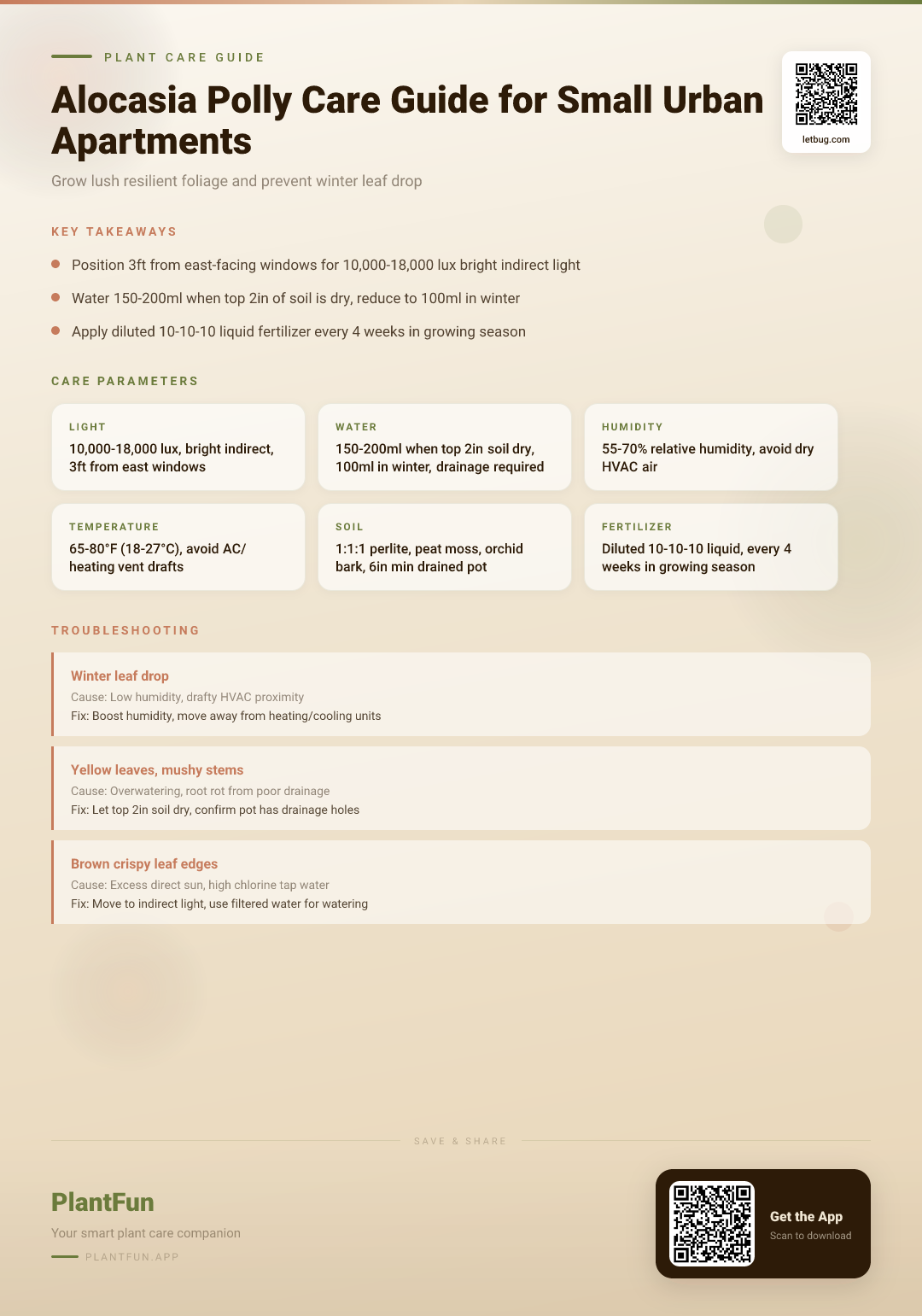
Key Takeaways
- Check soil moisture before watering — overwatering is the #1 killer of houseplants.
- Ensure your plant gets the right amount of light for its species.
- Be patient with recovery — most plants need 2–4 weeks to bounce back.
Quick Care Card
| Care Parameter | Measurable Threshold for Small Urban Apartments |
|---|---|
| Light | 10,000-18,000 lux bright indirect light |
| Water | 150-200ml when top 2 inches of soil are dry; 100ml in winter dormancy |
| Humidity | 55-70% relative humidity |
| Temperature | 65-80°F (18-27°C) |
| Soil | 1:1:1 mix of perlite, peat moss, and orchid bark |
| Fertilizer | Diluted 10-10-10 liquid fertilizer every 4 weeks in growing season (March-October) |
| Toxicity | Toxic to cats, dogs, and small children (ASPCA, 2026) |
Why Alocasia Polly Struggles in Typical Urban Apartments
Alocasia Polly, also called the African mask plant, is native to tropical Southeast Asian rainforests, so it evolved to thrive in warm, humid, evenly lit conditions — the exact opposite of most small urban apartments (NC State Extension, 2026). Common apartment stressors that trigger leaf drop, yellowing, and root rot include: drafty HVAC vents that blast hot or cold air directly on foliage, low natural light from small windows or north-facing units, fluctuating winter humidity that drops to 20-30% when heaters run, and limited shelf space that forces plants into too-small pots without proper drainage. If you’ve ever wondered why is my Alocasia Polly dropping leaves even when you water it regularly, these apartment-specific stressors are almost always the culprit, not a flaw in your care routine. As a renter, you don’t need to modify your space to grow healthy Alocasia Polly; small, low-cost adjustments to your care routine are all you need.
Step 1: Light Placement for Small Apartment Spaces
Alocasia Polly light needs for apartments sit at an exact 10,000-18,000 lux bright indirect light range (Surahmaida & Aisa, 2025). The best spot for your Alocasia Polly in a small apartment is 3 feet away from an east-facing window, which gets gentle 2-3 hours of morning sun and bright indirect light for the rest of the day.
If you live in a low-light unit with no east-facing windows, you might be asking can Alocasia Polly survive low light apartments? The answer is yes, with an affordable clip-on grow light hack: use a full-spectrum LED grow light positioned 12 inches above the foliage, run for 12 hours per day, which delivers exactly the 10,000 lux minimum it needs to grow. This is perfect for renters who can’t install permanent light fixtures, and fits easily on small shelves or desk spaces. For more affordable lighting options, check out our guide to budget grow lights for small apartments.
Step 2: Measurable Watering Schedule to Avoid Root Rot
One of the most common questions for new owners is how often to water Alocasia Polly, and generic advice to “water when dry” leaves too much room for error. Our measurable rule for apartment dwellers: water with 150-200ml of room-temperature water when the top 2 inches of soil feel completely dry (quick test: stick your index finger 2 inches deep into the soil, if no moisture clings to your skin, it’s time to water).
For your Alocasia Polly summer watering schedule, you’ll likely water every 5-7 days, while in winter you can cut volume to 100ml and only water every 10-14 days. For Alocasia Polly root rot prevention, always use pots with drainage holes, and if you use a decorative cache pot for shelf placement, add a 1-inch layer of pebbles at the bottom so the root ball never sits in standing water. If you notice yellow, mushy lower leaves, follow our root rot rescue guide for houseplants to save your plant before damage is permanent.
Step 3: Humidity & Temperature Adjustments for Apartment Living
Alocasia Polly humidity requirements sit at 55-70% relative humidity, with an ideal temperature range of 65-80°F (18-27°C) (Journal of Plant Biotechnology, 2004). Most urban apartments have humidity levels between 30-40% in winter when heaters run, which is the top cause of crispy leaf edges and leaf drop.
You don’t need an expensive full-room humidifier to hit the right humidity level, try these renter-friendly DIY hacks: group your Alocasia Polly with other tropical plants to create a microclimate of higher humidity, use a pebble tray (fill a shallow tray with pebbles and water, set your pot on top of the pebbles so the base of the pot is not submerged), or mist the leaves twice daily with room-temperature water. Keep your plant at least 3 feet away from AC vents, heating vents, and drafty windows to avoid sudden temperature fluctuations that cause stress. For more low-cost tricks, see our guide to DIY humidity hacks for indoor plants.
Step 4: Soil & Potting Recommendations for Small Containers
To support healthy growth in small apartment-friendly pots, use an exact 1:1:1 mix of perlite, peat moss, and orchid bark (NC State Extension, 2026). This mix drains quickly to prevent root rot, while retaining just enough moisture to keep the root system healthy.
Use a minimum 6-inch pot with drainage holes, which fits on most standard apartment shelves and desk surfaces without taking up extra floor space. Avoid sizing up more than 1 inch when repotting, as extra soil holds excess moisture that can cause root rot in small, enclosed apartment spaces.
Seasonal Care Calendar for Apartment Dwellers
This month-by-month calendar is tailored to the unique seasonal changes in urban apartments, including HVAC use and fluctuating light levels:
- March-May (Early Growing Season): Start feeding with diluted 10-10-10 liquid fertilizer every 4 weeks, water 150-200ml when top 2 inches of soil are dry, move to your brightest window spot as daylight hours increase.
- June-August (Summer): Check soil moisture every 3 days for your Alocasia Polly summer watering schedule, add extra misting if you run your AC frequently, rotate the pot 1 quarter turn every week to encourage even growth.
- September-October (Fall Prep): Reduce water volume to 120ml per watering, move the plant away from drafty windows that get cold at night, set up a pebble tray to prepare for dry heater air coming in winter.
- November-February (Winter Dormancy): For Alocasia Polly winter care, cut water volume to 100ml and only water when the top 3 inches of soil are dry, stop fertilizing completely, keep the plant at least 3 feet away from heating vents. Alocasia Polly dormancy care is simple: you may see 1-2 older leaves drop, which is completely normal, and new growth will restart in spring.
5 Common Apartment Alocasia Mistakes to Avoid
- Mistake: Placing your Alocasia Polly within 1 foot of AC or heating vents. What happens: Sudden temperature swings and dry air cause rapid leaf drop and crispy brown leaf edges. Instead: Keep the plant at least 3 feet away from all HVAC outlets, and use a small desk fan if you need air circulation near your plant shelf.
- Mistake: Overwatering during winter dormancy. What happens: Soggy soil leads to root rot, yellow mushy lower leaves, and even total plant death. Instead: Cut your watering volume by 50% in winter, and only water when the top 3 inches of soil are completely dry.
- Mistake: Using high-chlorine tap water directly for watering. What happens: Chlorine and fluoride build up in the soil, causing brown leaf tips and stunted growth. Instead: Leave tap water out in an open container for 24 hours before watering to let chlorine evaporate, or use collected rainwater if available.
- Mistake: Repotting during winter dormancy. What happens: Root shock causes total leaf drop, and the plant may not recover until the next growing season. Instead: Only repot in early March, right before new growth starts for the year.
- Mistake: Placing your Alocasia Polly directly on a south-facing windowsill with no light filter. What happens: Harsh midday sun causes burnt brown spots on leaves that never heal. Instead: Keep the plant 1-2 feet back from south-facing windows, or hang a cheap sheer curtain to filter direct sun.
FAQ
Can I keep my Alocasia Polly on my apartment windowsill that gets 2 hours of direct morning sun?
Yes! 2 hours of gentle morning sun falls exactly within the 10,000-18,000 lux bright indirect light range that Alocasia Polly prefers (Surahmaida & Aisa, 2025). If your windowsill gets more than 2 hours of direct sun per day, add a cheap sheer curtain to filter the light and prevent leaf burn.
Why is my Alocasia Polly dropping leaves every time I turn my apartment heater on?
Heaters drop indoor humidity to 20-30% RH, which is well below the 55% minimum Alocasia Polly humidity requirement (NC State Extension, 2026). The dry air pulls moisture out of the leaves faster than the root system can replace it, so the plant drops older leaves to conserve energy for new growth. Fix it immediately by setting up a pebble tray under the pot and misting the leaves twice daily.
How often do I need to repot my Alocasia Polly if I live in a 500 sq ft small apartment?
You only need to repot your Alocasia Polly every 2-3 years, when you see roots growing out of the drainage holes at the bottom of the pot. Keep it in a 6-8 inch pot to fit on shelves without taking up valuable floor space, and only size up 1 inch each time you repot to avoid excess soil that holds too much moisture.
Free Printable Full Alocasia Polly Care Checklist
Simplify your routine and catch stress symptoms early with our free, downloadable Alocasia Polly apartment care checklist, perfect for Alocasia Polly care for beginners and intermediate owners alike. The 10-point weekly checklist tracks watering, light exposure, humidity levels, and common stress signs, so you can fix small issues before they cause permanent leaf drop or root rot. [Download the free printable checklist here]
References
- NC State Extension. (2026). The Complete Alocasia Polly — NC State Extension Gardener Plant Toolbox. https://plants.ces.ncsu.edu/plants/polly-care/. Accessed 2026-03-09.
- Surahmaida, S.; Aisa, I. (2025). Pharmacognostic Study of Donkey Ear Taro Leaves (Alocasia polly). Jurnal Biologi Tropis. https://doi.org/10.29303/jbt.v25i3.9239. Accessed 2026-03-09.
- Journal of Plant Biotechnology. (2004). In Vitro Propagation of Alocasia cadieri Chantrier. Journal of Plant Biotechnology. https://doi.org/10.5010/jpb.2004.31.1.061. Accessed 2026-03-09.
- ASPCA. (2026). Toxic and Non-Toxic Plants List — ASPCA. https://www.aspca.org/pet-care/animal-poison-control/toxic-and-non-toxic-plants. Accessed 2026-03-09.
Optional Helper: Plantfun.App
Plantfun.App identifies your plants by photo, diagnoses pests and diseases with clear fixes, and creates personalised watering and light schedules that adapt to your home conditions — a handy companion for putting this guide into daily practice.
Found an error or have suggestions? We'd love your feedback.
Need help identifying this problem?
Get instant identification, personalized care schedules, and effective pest treatment plans directly on your phone.
Sponsored • We may earn a commission from app downloads
Related Guides
The Complete Alocasia Polly Care Checklist for Resilient Growth in Small Urban Apartments
Skip expensive humidifiers and guesswork with our budget-friendly Alocasia Polly care checklist. Get exact light, water, and humidity parameters to keep your plant thriving in any small urban apartment.
Care GuideAlocasia Polly Care Checklist for Urban Apartments: Fix Yellow Leaves & Grow Resilient Foliage
Stop losing your Alocasia Polly to dry apartment air and inconsistent lighting. Get a free 10-step checklist, exact care thresholds, and fixes for yellow leaves to grow lush, resilient foliage year-round.
Care GuideThe Complete Alocasia Polly Care Checklist for Resilient Growth in Urban Apartments
Grow a lush, happy Alocasia Polly even in a small, drafty apartment. Get exact light levels, watering amounts, and a seasonal care calendar to prevent yellow leaves and encourage new growth.
Pest ControlAnts on Plants: What They Mean and What to Do
Ants usually aren't eating your plant. They are farming other pests.